
Every Morning Cartel Shark Tank India Episode Review
Every Morning Cartel (EMC) appeared on Shark Tank India Season 5, Episode 12, with brothers Neel Kanwarjani (23, culinary trained, inspired by father’s cafe) and Rishiraj Kanwarjani (19, design student) from Mumbai seeking ₹2 Crore for 5% equity (₹40 Crore valuation) and successfully closed a deal for ₹2 Crore for 12% equity (negotiated from 14%) with Sharks Aman Gupta and Ritesh Agarwal.
The boutique Kandivali cafe operates on Japanese Omakase concept where customers trust chef’s menu selection entirely, achieving ₹1.14 Crore revenue in 7 months (FY 2025-26) with impressive 32.2% EBITDA (projected 39.9%), 4.7 Google rating, and 17-month capital recovery—completely bootstrapped. Sharks praised “Masterchef-level” food quality and unit economics, though Vineeta/Namita questioned scalability of “soul-driven” culinary business with high real estate costs, and Kunal doubted standardization of boutique processes. Operating in India’s foodservice market growing from $114.40 billion (2025) to $230 billion by 2032 (10.53% CAGR) within $20.51 billion cafes/bars market, EMC targets Gen Z/millennials (18-40) in Tier-1 cities prioritizing experiential dining over standardized menus with $22-45 monthly leisure spend, positioned in premium boutique cafes segment growing 12.78% CAGR despite 0 organic traffic requiring SEO overhaul from Wix platform.
Every Morning Cartel Website Information
- Website:- Every Morning Cartel
- Build on CMS WIX
- Poor SEO Performance, SEO Improvement Needed.
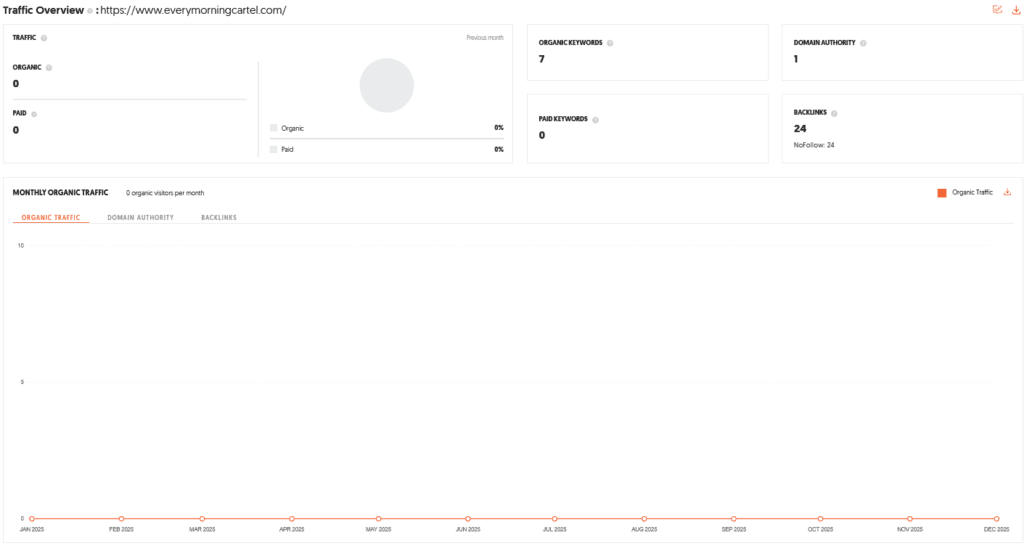
- ORGANIC TRAFFIC: 0 visitor per month.
Every Morning Cartel Founders
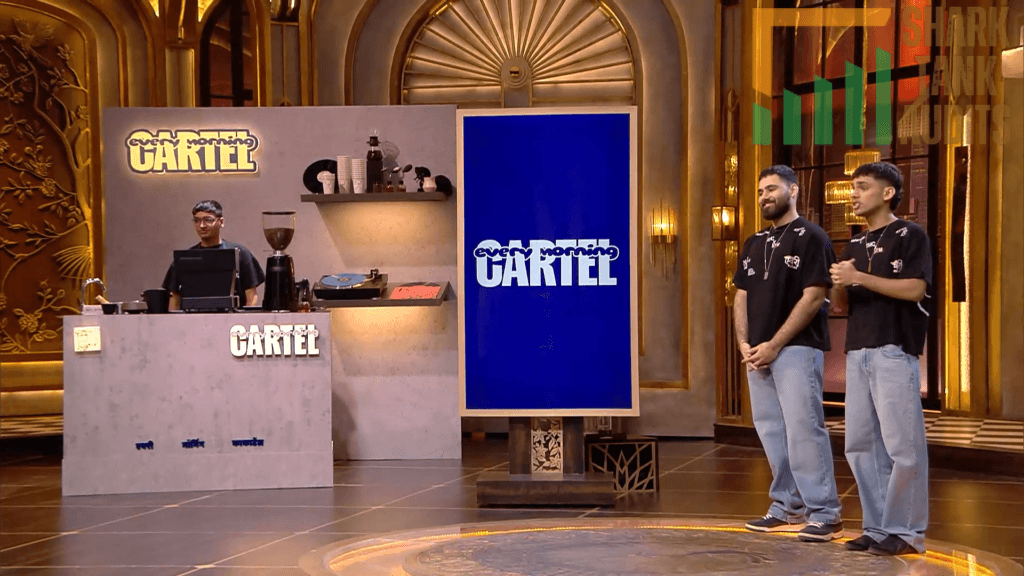
- Early Morning Cartel was founded by two brothers from Mumbai, Neel Kanwarjani (23) and Rishiraj Kanwarjani (19).
- Neel is a trained culinary student who draws inspiration from his father’s experience running a small cafe, while Rishi is currently pursuing a degree in design.
- Despite their young age, the duo has already experimented with multiple business ventures, including an athleisure brand, before finding success with EMC.
Every Morning Cartel Brand Overview
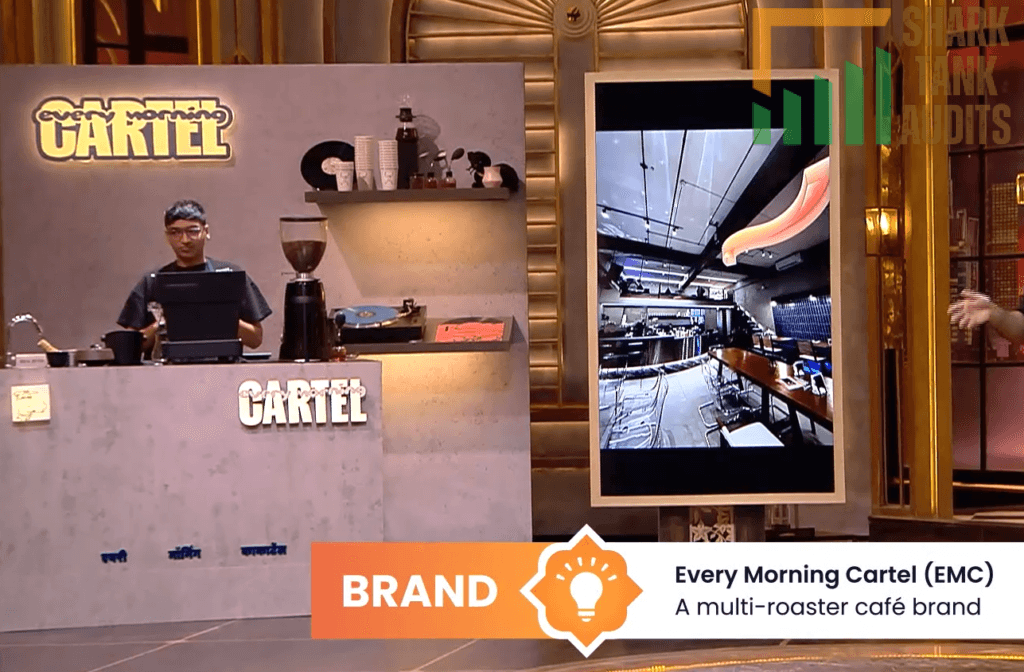
- Early Morning Cartel (EMC) is a boutique cafe located in Mumbai’s Kandivali area.
- The brand distinguishes itself by operating on the Japanese concept of Omakase, where customers leave the menu selection entirely to the chef’s discretion.
- This provides a premium, curated dining experience that focuses on culinary artistry and experimentation.
Every Morning Cartel Shark Tank India Appearance & Ask
- The founders appeared on Shark Tank India Season 5 seeking an investment of Rs 2 crores for 5% equity, which placed the company’s valuation at Rs 40 crores.
- During their presentation, they showcased their impressive financial growth, revealing a revenue of Rs 1.14 crore within just seven months of the 2025-26 fiscal year and a healthy EBITDA of 32.2%.
Every Morning Cartel Season and Episode Air Date
- Season: 05
- Episode: 12
- Episode Air Date: Tuesday, 20 January 2026
Every Morning Cartel Product Overview
- The core product of EMC is a high-end, chef-led dining experience. By utilizing the Omakase model, the cafe offers a unique surprise element to every meal.
- The Sharks lauded the food as being of “Masterchef-level” quality, highlighting Neel’s technical culinary skills and the brand’s ability to maintain a high Google rating of 4.7 while remaining completely bootstrapped.
Every Morning Cartel Investor Reactions
The investors had a mixed but ultimately respectful reaction:
- Ritesh Agarwal & Aman Gupta: Both were highly impressed by the unit economics and the recovery of the initial investment within just 17 months.
- Vineeta Singh & Namita Thapar: While they praised the founders’ passion, they expressed significant concerns regarding the scalability of a “soul-driven” culinary business and the high costs of real estate in India.
- Kunal Bahl: He opted out due to uncertainty regarding whether the boutique processes of the cafe could be standardized into a scalable model.
Every Morning Cartel Customer Engagement Philosophy
- The brand’s philosophy centers on trust and culinary expertise.
- By adopting the Omakase style, EMC removes the traditional menu and builds a relationship where the customer trusts the chef’s vision.
- Their high customer rating (4.7) suggests a deep focus on quality control and a personalized guest experience that resonates with the premium dining market.
Every Morning Cartel Product Highlights
- Innovative Concept: One of the few cafes in India successfully implementing the Japanese Omakase style in a casual-premium setting.
- Strong Financials: High EBITDA margins (projected to reach 39.9%) and a proven track record of recovering capital investment quickly.
- Founder Synergy: A blend of culinary expertise (Neel) and design-thinking (Rishi) that appeals to the Gen-Z demographic.
Every Morning Cartel Future Vision
- The founders aim to scale the brand into a significant player in the luxury dining segment.
- Neel expressed a bold ambition to grow the company to a level where he could stand as a peer to the Sharks themselves.
- While the Sharks warned about the difficulties of standardizing such a specialized experience, the partnership with Ritesh Agarwal opens doors for expansion into luxury real estate and specialty coffee segments within the hospitality industry.
Every Morning Cartel Deal Finalized or Not
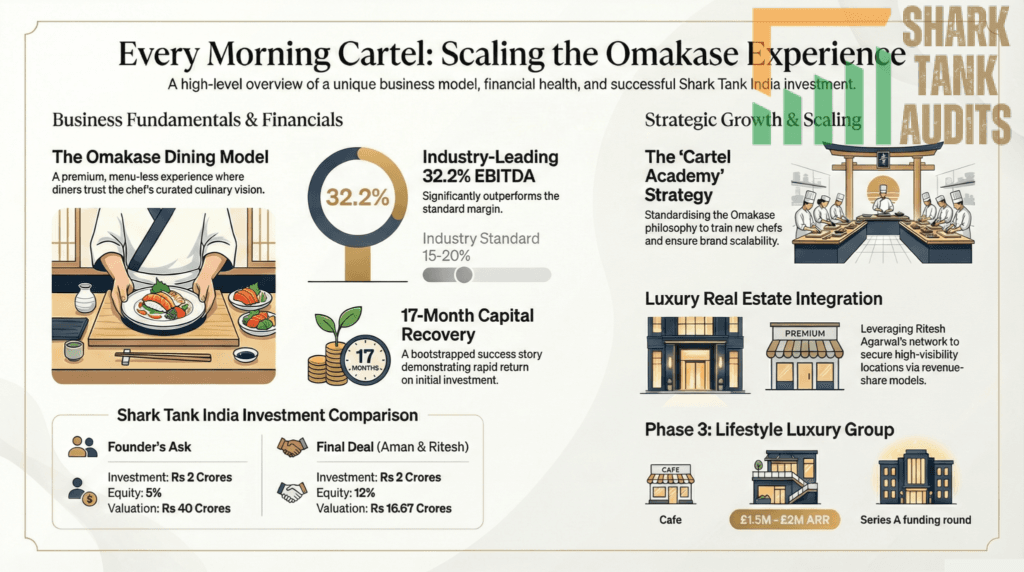
- Yes, a deal was finalized. After intense negotiations and a playful rivalry between the Sharks, the founders secured a joint deal with Aman Gupta and Ritesh Agarwal.
- The final agreement was Rs 2 crores for 12% equity, after the founders successfully negotiated down from a 14% offer.
| Parameter | Details |
|---|---|
| Website Name | Every Morning Cartel |
| Website CMS | Built on WIX |
| SEO Performance | Poor SEO performance, improvement needed |
| Organic Traffic | 0 visitors per month |
| Founders | Neel Kanwarjani (23) and Rishiraj Kanwarjani (19), brothers from Mumbai |
| Founder Background – Neel | Trained culinary student inspired by father’s café experience |
| Founder Background – Rishi | Design student with creative and aesthetic focus |
| Previous Ventures | Athleisure brand and other experiments before EMC |
| Brand Name | Early Morning Cartel (EMC) |
| Brand Location | Kandivali, Mumbai |
| Brand Category | Boutique Café / Premium Dining |
| Core Concept | Japanese Omakase-style chef-led dining |
| Unique Differentiator | No fixed menu, dishes curated entirely by the chef |
| Customer Experience | Premium, curated, surprise-driven dining |
| Shark Tank Ask | ₹2 Crores for 5% equity |
| Valuation Asked | ₹40 Crores |
| Revenue Achieved | ₹1.14 Crore in 7 months (FY 2025–26) |
| EBITDA | 32.2% |
| Season | Shark Tank India Season 05 |
| Episode Number | Episode 12 |
| Episode Air Date | Tuesday, 20 January 2026 |
| Core Product | High-end Omakase dining experience |
| Food Quality Feedback | Described as “Masterchef-level” by Sharks |
| Google Rating | 4.7 |
| Business Status | Completely bootstrapped |
| Investor Reaction – Aman Gupta | Impressed by unit economics and fast capital recovery |
| Investor Reaction – Ritesh Agarwal | Praised financials and recovery within 17 months |
| Investor Reaction – Vineeta Singh | Concerned about scalability and real estate costs |
| Investor Reaction – Namita Thapar | Questioned scalability of soul-driven food business |
| Investor Reaction – Kunal Bahl | Opted out due to lack of standardization potential |
| Customer Philosophy | Trust-based dining driven by chef’s vision |
| Engagement Approach | Personalized, quality-focused guest experience |
| Product Highlight – Concept | Rare Omakase model in casual-premium Indian café |
| Product Highlight – Financials | High margins and strong EBITDA |
| Founder Synergy | Culinary expertise combined with design thinking |
| Future Vision | Build a luxury dining brand at a national scale |
| Founder Ambition | Neel aims to grow EMC to Shark-level stature |
| Deal Status | Deal finalized |
| Final Deal | ₹2 Crores for 12% equity |
| Sharks in Final Deal | Aman Gupta and Ritesh Agarwal |
| India Foodservice Market | Expected to grow to USD 230B by 2032 |
| Market Positioning | Experience-led, premium café brand |
| Total Addressable Market | USD 20.51B café and bar market |
| Serviceable Market | Full-service dining and experiential cafés |
| Target Cities | Mumbai, Delhi, Bangalore |
| Primary Audience | Gen Z (18–25) and Millennials (26–40) |
| Customer Mindset | Experience-seeking, social-media-driven diners |
| Marketing Direction | From hidden gem to cultural landmark |
| Booking Strategy | Waitlist-only / invite-only access |
| Branding Strategy | Chef-centric storytelling |
| Digital Challenge | Zero organic traffic |
| SEO Strategy | Keyword-focused SEO overhaul |
| Content Strategy | Cinematic reels and surprise-based food visuals |
| Distribution Model | Physical boutique cafés |
| Expansion Strategy | Luxury micro-markets and premium hubs |
| Delivery Innovation | DIY Omakase kits (“Cartel at Home”) |
| Key Advantage | High margins and strong unit economics |
| Key Challenge | Scalability dependent on chef talent |
| Risk Factor | High real estate costs in Tier-1 cities |
| Mitigation Strategy | Chef training academy and revenue-share rentals |
| Short-Term Roadmap | Second outlet in South Mumbai |
| Mid-Term Roadmap | Expansion to Delhi and Bangalore |
| Long-Term Goal | ₹15–20 Crore ARR |
| Target EBITDA | 39.9% |
| Future Valuation Goal | ₹150–200 Crores Series A |
Every Morning Cartel Shark Tank India Business Plan
Every Morning Cartel: Business Potential in India
India’s foodservice market is projected to grow from USD 114.40 billion in 2025 to over USD 230 billion by 2032 (CAGR of 10.53%). Every Morning Cartel is positioned at the intersection of two high-growth trends: the rise of independent, experience-led cafes and the surge in “premiumization” among Gen Z and Millennial consumers. With a 4.7 Google rating and a 32.2% EBITDA, Every Morning Cartel demonstrates that there is a massive appetite for niche, high-margin culinary concepts in urban clusters like Mumbai.
Every Morning Cartel: Total Addressable Market (TAM)
- Total Addressable Market (TAM): The broader Indian Cafes and Bars market is estimated at USD 20.51 billion in 2026.
- Serviceable Addressable Market (SAM): The “Full Service & Independent Restaurant” segment, which accounts for ~72% of the market, specifically targeting the USD 42.09 billion full-service dining sector.
- Serviceable Obtainable Market (SOM): Premium boutique cafes in Tier-1 metros (Mumbai, Delhi, Bangalore) focusing on “Experiential Dining,” a sub-sector growing at a 12.78% CAGR. Every Morning Cartel aims to capture the top 1-2% of high-spending urban diners.
Every Morning Cartel: Ideal Target Audience and Demographics
- Primary Audience: Gen Z (18-25) and Millennials (26-40) who prioritize “Social Currency” and unique experiences over standardized menus.
- Demographics: Urban residents in Tier-1 cities with an average monthly leisure spend of USD 22-45 (approx. ₹1,800–₹3,700).
- Psychographics: Food enthusiasts, “Instagrammers,” and corporate professionals looking for exclusive, chef-led “Omakase” experiences that offer high exclusivity and low predictability.
Every Morning Cartel: Marketing Strategy
Every Morning Cartel will transition from a “Hidden Gem” to a “Must-Visit Cultural Landmark” by:
- Exclusivity Tactic: Using a “Waitlist Only” or “Invite-Only” digital booking system to maintain the Omakase allure.
- Chef-Centric Branding: Positioning Neel as a “Culinary Artist” to build personal brand trust, similar to global Michelin-star models.
- Strategic Partnerships: Collaborating with Ritesh Agarwal’s luxury real estate network to place Every Morning Cartel outlets in high-visibility, premium lifestyle hubs.
Every Morning Cartel: Content and Digital Marketing Strategy
Given the current 0 organic traffic and poor SEO, the Every Morning Cartel digital roadmap for 2026 includes:
- SEO Overhaul: Migrating from basic Wix templates to an optimized, fast-loading architecture focusing on keywords like “Best Omakase Mumbai,” “Experimental Dining Kandivali,” and “Chef-led Cafes India.”
- Video-First Strategy: Leveraging TikTok (international) and Instagram Reels (domestic) to showcase “The Art of the Surprise”—short-form cinematic clips of dish preparation without revealing the menu.
- UGC (User Generated Content): Implementing “Aesthetic Lighting” in-cafe to encourage customers to share their unique meals, turning every diner into a micro-influencer for Every Morning Cartel.
Every Morning Cartel: Distribution Strategy
- Physical Presence: Focused expansion into “Luxury Micro-Markets” (e.g., Bandra, Colaba, or Gurgaon) rather than mass-market malls.
- Exclusive Delivery: A “Cartel at Home” DIY Omakase kit, allowing high-spending customers to experience the brand’s culinary artistry via curated home-dining boxes.
- Specialty Coffee Taps: Utilizing the partnership with Aman Gupta and Ritesh Agarwal to integrate Every Morning Cartel specialty coffee corners within premium co-working spaces and luxury hotels.
Every Morning Cartel: Advantages and Challenges
| Every Morning Cartel Advantages | Every Morning Cartel Challenges |
| High Margins: 32.2% EBITDA is significantly higher than the industry average of 15-20%. | Scalability of Talent: The Omakase model relies heavily on Neel’s personal skills. |
| Bootstrapped Efficiency: Proved profitability and capital recovery in just 17 months. | Real Estate Costs: High rentals in Tier-1 cities can erode margins quickly. |
| Shark Backing: Access to Ritesh’s real estate and Aman’s brand-building expertise. | Standardization: Maintaining the “Soul” of the brand while opening multiple units. |
Every Morning Cartel: Success Reasons and Mitigation Strategies
- Why it can be Successful: Every Morning Cartel taps into the “Experience Economy.” In 2026, consumers are moving away from “fast food” toward “slow, intentional dining.”
- Mitigation for Talent Gap: Develop the “Cartel Academy,” an internal training program to standardize the philosophy of Omakase, allowing other trained chefs to lead new locations.
- Mitigation for Real Estate: Use a “Revenue Share” model with luxury property owners (via Ritesh’s network) instead of high fixed-rentals to reduce financial risk.
Every Morning Cartel: Future Business and Roadmap to Increase Valuation
- Phase 1 (0-12 Months): Optimize the flagship Kandivali store and launch the second “Signature” outlet in South Mumbai. Complete the Every Morning Cartel digital SEO overhaul.
- Phase 2 (12-24 Months): Expand to 3-5 locations across Delhi and Bangalore. Launch the “Every Morning Cartel” Specialty Coffee bean line for retail.
- Phase 3 (24+ Months): Achieve a projected revenue of ₹15-20 Crores ARR. With a target EBITDA of 39.9%, seek a Series A funding round at a valuation of ₹150-200 Crores, leveraging the brand as a “Lifestyle Luxury Group.”




Every Morning Cartel Shark Tank India Episode Review