
Shark Tank India Season 5 Episode 18 Review
Episode Overview
Episode 18 of Shark Tank India Season 5 (aired Wednesday, January 28, 2026) delivered one of the season’s most dramatic episodes, featuring three distinct consumer brands that sparked intense debates about valuation logic, product quality versus business fundamentals, and the delicate balance between founder conviction and market reality. From a heartwarming family legacy to a high-stakes valuation poker game, this episode showcased the full spectrum of entrepreneurial journeys.
Episode Summary
Success Rate: 2 out of 3 deals closed
Total Investment: ₹3.03 Crore deployed across two successful pitches
Key Theme: The episode centered on the critical question of valuation justification—when should founders stand firm on their numbers, and when does confidence cross into overvaluation?
Pitch 1
Urban Wipe Shark Tank India Episode Review

In Shark Tank India Season 5 (Episode 18), the Jaipur-based household cleaning brand Urban Wipe, led by the formidable family trio of Dr. Renu Mathur, Aapurva Mathur, and Samradhi Mathur, presented one of the most cinematic pitches of the season. Seeking ₹90 Lakhs for 2% equity at a ₹45 Crore valuation, the founders revealed that their high-performance cleaning formulas were derived from a “little red journal” left behind by Dr. Renu’s late husband.
Despite criticism from Aman Gupta regarding their “fuddu” (unappealing) packaging, the Sharks were blown away by the product’s efficacy and the brand’s explosive growth (from ₹3.47 Lakhs to ₹6.08 Crores YTD). After a heated bidding war, the founders accepted a joint deal from Anupam Mittal and Aman Gupta for ₹2 Crores for 20% equity, significantly lowering their valuation to ₹10 Crore to secure the strategic expertise needed to scale into a national household name.
Pitch 2
Antinorm Shark Tank India Episode Review
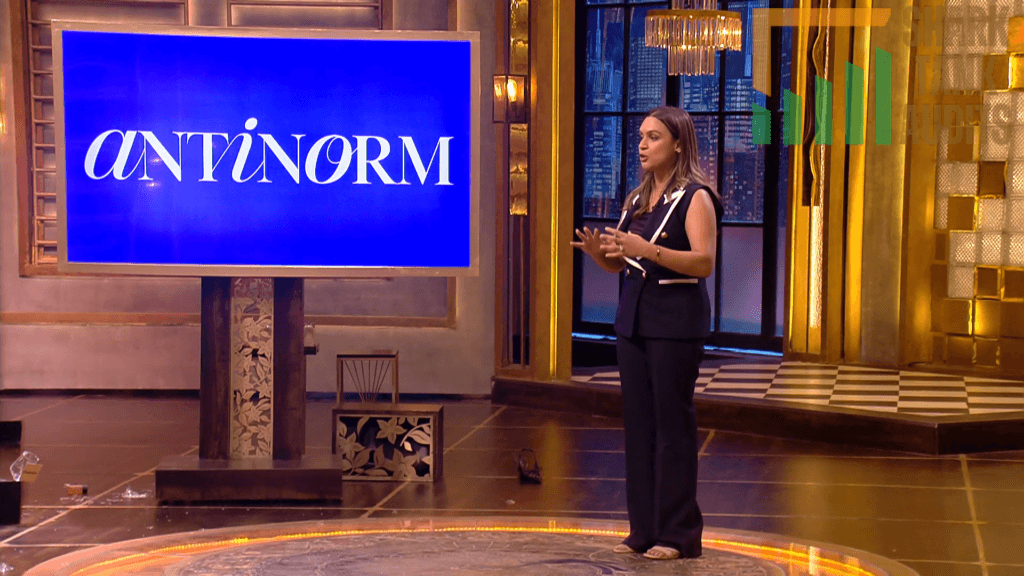
In Shark Tank India Season 5, Episode 18 (aired Wednesday, January 28, 2026), the Delhi-based beauty brand Antinorm, led by former Silicon Valley investor Aparna Saxena, delivered a masterclass in high-valuation pitching. Antinorm seeks to disrupt the cluttered beauty industry with a “minimalist play,” offering multi-functional, climate-smart products like their 7-ingredient dry shampoo and all-in-one hair hydrator. Despite being an early-stage startup with monthly sales around ₹31 lakhs, Aparna confidently sought ₹1.03 Crore for 1% equity, placing the company at a ₹103 Crore valuation.
While sharks like Namita Thapar and Mohit Yadav expressed concerns over the scalability of a “step-reduction” model, the pitch triggered a competitive battle between Kunal Bahl and Anupam Mittal. Ultimately, Aparna chose to partner with Anupam Mittal, who met her original ask of ₹1.03 Crore for 1% equity, securing a strategic mentor with deep roots in the Indian consumer internet space.
Pitch 3
Sepoy & Co Shark Tank India Episode Review
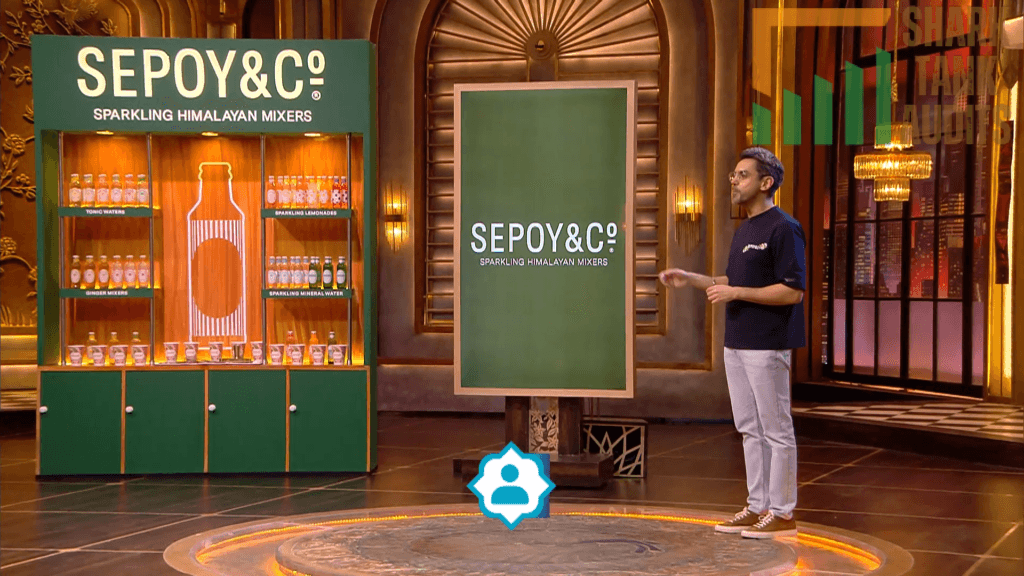
Sepoy & Co appeared on Shark Tank India Season 5, Episode 18, with founder Angad Soni (Delhi entrepreneur from family’s ₹2,000 Crore stock-listed tractor/construction machinery components business) seeking ₹3 Crore for 2% equity (₹150 Crore valuation) but left with no deal despite Sharks praising product quality.
The premium Indian mixer brand specializes in Sparkling Himalayan Mixers with natural botanicals, spring water, low sugar, and no artificial flavors, functioning as standalone mocktails or alcohol mixers (gin, vodka, rum), holding distinction as first Indian mixer company winning International Taste Awards with 12,396 monthly organic visitors. While all Sharks loved taste, premium packaging, and “Instagram-ready” bottle design, Anupam Mittal expressed “sleepless nights” concern over structural issue where bottling plant was separate founder-owned entity not included in deal, and both Anupam/Aman criticized ₹150 Crore valuation as “illogical thinking” when Angad projected ₹100-150 Crore revenue in 5 years, noting it’s illogical to value company today on unachieved future targets.
Operating in India cocktail mixers market projected to reach $304.5 million (₹2,500+ Crore) by 2030 (10.2% CAGR) within broader $11.7 billion carbonated soft drink market (2025) as Indian alcoholic beverage sector reaches ₹5,30,000 Crore by FY26, Sepoy targets top 5-10% urban population (25-30 million consumers, ages 24-45, ₹15 lakh+ household income) in Tier 1/2 cities seeking sophisticated non-alcoholic options amid “sober-curious” trend and premiumization shift from economy to premium spirits.
Episode Highlights
The Great Valuation Debate
This episode became a masterclass in valuation psychology, presenting three radically different approaches:
The Humbled Founder (Urban Wipe): Started at ₹45 Crore valuation but accepted a dramatic 78% dilution to ₹10 Crore, prioritizing strategic partnership over ego. The family’s willingness to trade equity for expertise demonstrated maturity and long-term thinking.
The Unyielding Visionary (Antinorm): Aparna Saxena stood firm on her ₹103 Crore valuation despite early-stage metrics, ultimately finding a Shark who shared her vision. Her conviction paid off—she got exactly what she asked for.
The Illogical Ask (Sepoy & Co): Angad Soni’s ₹150 Crore valuation for a brand projecting ₹100-150 Crore revenue in 5 years exemplified what Sharks called “backward logic”—valuing the company today based on unachieved future targets.
Emotional Storytelling Meets Hard Numbers
Urban Wipe’s Pitch: The episode’s most emotional moment came when the Mathur family revealed their cleaning formulas originated from a “little red journal” left by Dr. Renu’s late husband. This personal narrative, combined with undeniable product performance and explosive growth numbers, created a perfect storm that triggered a bidding war.
Product Quality vs. Business Structure
Sepoy & Co’s Dilemma: The Sharks faced an unusual situation—a product they genuinely loved (praising taste, packaging, and international awards) but couldn’t invest in due to fundamental business structure issues. The revelation that the bottling plant was a separate founder-owned entity not included in the deal raised red flags, with Anupam Mittal citing potential “sleepless nights” over this structural concern.
The Packaging Paradox
Urban Wipe’s Transformation: Aman Gupta’s blunt criticism of Urban Wipe’s “fuddu” (unappealing) packaging highlighted a critical insight—exceptional products can succeed despite poor packaging, but exceptional packaging is worthless without product efficacy. The Sharks saw the diamond in the rough and committed to funding a complete brand makeover.
Shark Dynamics
Anupam Mittal: The Episode’s Star Player
Anupam emerged as the dominant investor, closing both successful deals:
- Urban Wipe: Joint investment with Aman, bringing consumer brand scaling expertise
- Antinorm: Solo investment, meeting the founder’s exact ask despite other Sharks’ skepticism
His willingness to back high valuations when he believed in the vision (Antinorm) while simultaneously negotiating aggressive dilution when needed (Urban Wipe) showcased strategic flexibility.
The Kunal vs. Anupam Battle (Antinorm)
The episode featured a fascinating strategic showdown:
- Kunal Bahl: Offered a complex structure—₹1.03 Cr for 1% plus a conditional “follow-on” of ₹15 Cr at ₹200 Cr valuation if sales hit ₹5 Cr/month
- Anupam Mittal: Simplified approach—met the exact ask with no conditions
Aparna’s choice of Anupam over Kunal’s potentially more lucrative offer revealed that sometimes founders value clarity and aligned vision over complex financial engineering.
Aman Gupta: The Packaging Prophet
Aman’s brutal honesty about Urban Wipe’s packaging (“fuddu”) followed by his investment commitment demonstrated his ability to see beyond surface-level aesthetics to underlying potential. His joint investment with Anupam showed recognition that some brands need both consumer insight and operational expertise.
Market Insights Revealed
The episode showcased three distinct Indian consumer markets:
- Household Cleaning (Urban Wipe): Tapping into the ₹40,000+ Crore Indian home care market with premium, effective formulations
- Minimalist Beauty (Antinorm): Addressing the $27.69 Billion Indian BPC market’s shift toward “step-reduction” and multi-functional products
- Premium Mixers (Sepoy & Co): Operating in the emerging ₹2,500+ Crore cocktail mixers market driven by India’s “sober-curious” trend
Key Takeaways
1. Valuation Must Tell a Story
Success Examples:
- Urban Wipe: Growth trajectory justified high initial ask, but founders pragmatically adjusted
- Antinorm: Founder’s pedigree and clear vision supported premium valuation
Failure Example:
- Sepoy & Co: Valuing company today based on 5-year future projections is “illogical thinking”
2. Product Excellence Opens Doors, Business Structure Closes Deals
Sepoy & Co proved that even award-winning products with strong organic traffic (12,396 monthly visitors) can fail to secure investment if the business structure raises red flags. The separate bottling plant ownership became an insurmountable obstacle.
3. Know When to Hold, Know When to Fold
The Mathur family’s willingness to accept 20% equity (10x their initial offer) for ₹2 Crore showed wisdom—they recognized that ₹2 Crore with Anupam and Aman’s expertise would build more value than ₹90 Lakhs with their original equity structure.
4. Founder Pedigree Matters
Aparna Saxena’s background as a Silicon Valley investor gave Sharks confidence in her ability to deploy capital strategically and scale effectively, partially justifying the aggressive valuation despite early-stage metrics.
5. Emotional Storytelling + Hard Metrics = Irresistible
Urban Wipe’s combination of touching origin story (late husband’s journal) and explosive YTD growth (₹3.47 Lakhs to ₹6.08 Crores) created urgency among Sharks, triggering the competitive bidding war.
What Made This Episode Different
The Valuation Spectrum
Episode 18 uniquely showcased the full spectrum of valuation outcomes:
- Over-negotiated down: Urban Wipe (₹45 Cr → ₹10 Cr)
- Held firm successfully: Antinorm (₹103 Cr → ₹103 Cr)
- Over-reached fatally: Sepoy & Co (₹150 Cr → No Deal)
This provided viewers with a comprehensive education on valuation negotiation strategies and outcomes.
Quality Without Investment
Rarely does Shark Tank feature a pitch where all Sharks praise the product yet none invest. Sepoy & Co’s situation highlighted that in startup investing, structural soundness trumps product excellence—a crucial lesson for entrepreneurs.
Family Legacy Meets Modern D2C
Urban Wipe represented a beautiful bridge between traditional Indian family business values (preserving a late husband’s recipes) and modern D2C strategy, showing that heritage can be a powerful differentiator in crowded markets.
Behind the Numbers
Urban Wipe’s Explosive Growth Trajectory
- Starting Point: ₹3.47 Lakhs early revenue
- Current YTD: ₹6.08 Crores (1,652% growth)
- Post-Deal Projection: With ₹2 Crore and Shark expertise, potential to reach ₹50+ Crore in 2-3 years
Antinorm’s Bold Bet
- Monthly Sales: ₹31 Lakhs (₹3.72 Crore annual run rate)
- Valuation Multiple: 27.7x annual revenue
- Justification: First-mover in “utility beauty,” climate-adaptive formulations, strategic founder
Sepoy & Co’s Missed Opportunity
- Organic Traffic: 12,396 monthly visitors (strongest SEO among all three)
- Award Recognition: First Indian mixer company winning International Taste Awards
- Fatal Flaw: Bottling plant ownership structure and valuation-to-projection ratio
Episode Wisdom
For Founders:
- Growth trajectory can justify high valuations, but be prepared to negotiate
- Structural issues in your business (separate entities, unclear ownership) will derail deals
- Sometimes taking more money at lower valuation beats less money at higher valuation
- Product quality alone won’t close deals—business fundamentals matter more
For Investors:
- Look beyond packaging to product efficacy and market response
- Founder background and execution capability can justify premium valuations
- Never invest when structural concerns will cause “sleepless nights”
- Complex deal structures with conditions may lose to simple, clear offers
For Viewers:
- Valuation is both art and science—conviction matters, but so does market logic
- Family businesses can successfully transition to modern D2C with right partnerships
- Being “right” about product quality doesn’t guarantee investment success
- The best deals balance founder vision with investor value creation


Leave feedback about this
You must be logged in to post a comment.