
Shark Tank India Season 5 Episode 33 Review
Aired on Wednesday, February 18, 2026, Episode 33 of Shark Tank India Season 5 was a showcase of innovation aimed at solving fundamental human needs. The episode, titled “Purpose-Driven Pitches,” took us on a journey from the high-tech robotics labs of Chennai to the traditional fashion hubs of Uttar Pradesh, finally landing in the fast-paced world of e-commerce logistics.
The common thread this week was democratization: whether it was Kelvin6K making housing affordable through 3D printing, ANA Apparels empowering women through modest fashion, or EzPac lowering the entry barrier for custom branding. However, as the Sharks often remind us, a noble mission must be backed by “math that maths.” From “Moon & Mars” visions to heated debates over the defensibility of a clothing line, Episode 33 pushed the entrepreneurs to prove that their purpose-driven models could survive the shark-infested waters of Indian commerce.
Pitch 1
Kelvin6k Shark Tank India Episode Review
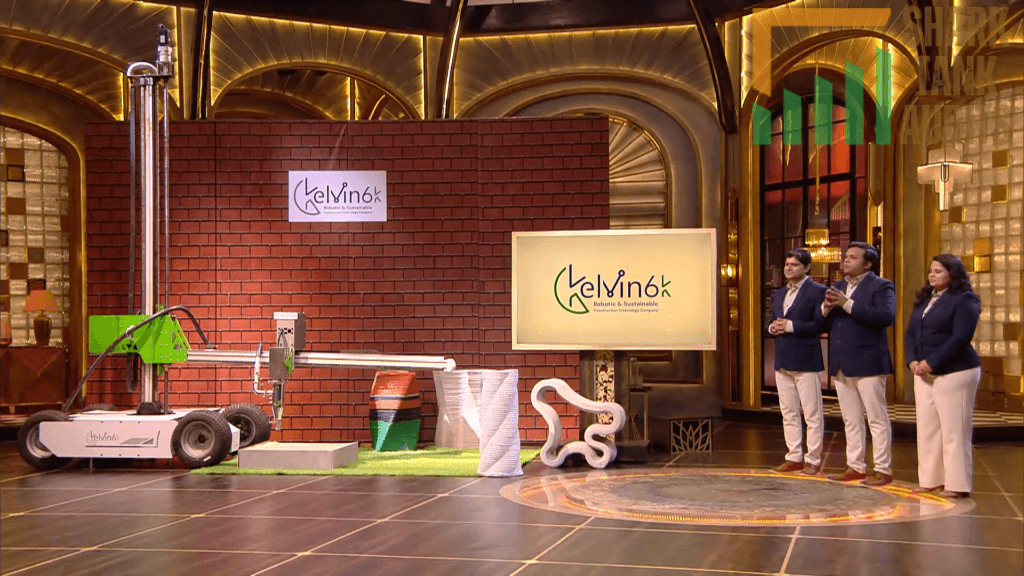
Kelvin6K appeared on Shark Tank India Season 5, Episode 33, with Chennai-based founders Dr. Pradeep Kumar Sundarraj, Dr. Ravi Kant Upadhyay, and Deepiga Sugumar seeking ₹1 Crore for 1.3% equity (₹76.92 Crore valuation) and successfully closed a deal for ₹1 Crore for 2.86% equity + 2.14% advisory equity (₹35 Crore valuation) with Shark Ritesh Agarwal after most Sharks stepped back though impressed by “Made in India” robotics.
The deep-tech Construction-as-a-Service (CaaS) startup utilizes proprietary mobile autonomous 3D printing technology through flagship ATOM robotic arm (printing 2-foot pillar in 20 minutes, entire education center in 15 days, 2,500 sq ft house in <30 days) and Builder Bot Mini for on-site deployment, manufacturing machines entirely in-house with multiple patents (India/US) using fly ash-based geopolymer “ink” (90% carbon emission reduction versus traditional cement) reducing construction timelines 60% and costs 30%, achieving EBITDA losses -₹39 lakh/-₹20 lakh in previous years with 3 monthly organic visitors requiring SEO overhaul. Sharks reacted cautiously to niche deep-tech nature and early financial stage though ultimately Ritesh bet on long-term infrastructure sector impact.
Operating in Indian 3D printing construction market valued at $227 million (2025, 10-21% CAGR) within broader billion-dollar building construction market targeting ₹10,000+ Crore affordable housing and rapid infrastructure segment (bus shelters, public toilets, low-rise clinics) amid India’s urban population projected at 600 million by 2031 and government PM Awas Yojana (Housing for All)/Smart Cities Mission demanding tech-driven affordable construction, Kelvin6K targets B2G (municipal corporations, Military Engineer Services, state housing boards), B2B real estate developers (mid-sized affordable housing townships reducing 30% labor costs), and B2B industrial (manufacturing firms needing specialized quick-build warehouses/site offices) among decision-makers (35-55, Chief Engineers/Real Estate Directors/Urban Planners) aiming 2-5% specialized CaaS market capture in South India by 2027, planning hub-and-spoke regional deployment model (Chennai 500km radius), franchise-as-a-service leasing hardware while providing software/training/material ink, GeM (Government e-Marketplace) direct procurement, IIT-Madras consortium proposing safety standards to Bureau of Indian Standards addressing regulatory code gaps, high-margin consultancy/printer-leasing offsetting early losses, global expansion with proprietary geopolymer ink technology licensing, and “Moon & Mars” vision by 2030 executing extraterrestrial construction R&D grants positioning as global deep-tech leader with $500M+ valuation developing solar-based construction using sand/local materials creating habitats without traditional cement fostering smart green fully automated ecosystem.
Pitch 2
ANA Apparels Shark Tank India Episode Review
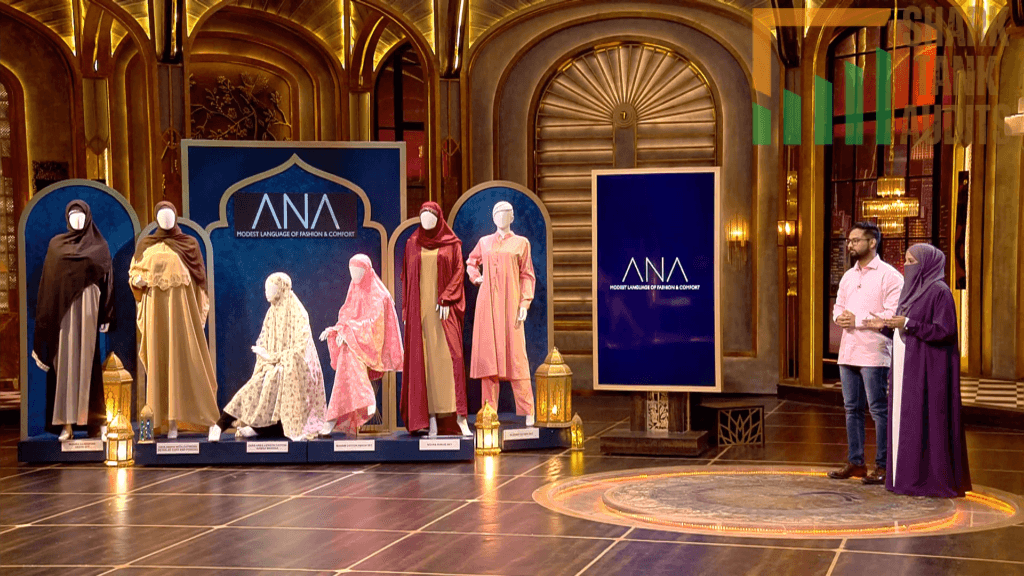
In Shark Tank India Season 5, Episode 33 (aired Wednesday, February 18, 2026), the modest fashion brand ANA Apparels presented a pitch that balanced cultural pride with strong business fundamentals. Founded by NIFT graduate Asma Nafis Ansari and her husband Zeeshan Kareem, the Mau-based startup specializes in premium, designer modest wear such as abayas, hijabs, and niqabs. Despite a lean operation with a notable 20% EBITDA and revenue scaling from ₹39 lakhs to ₹2 crores in just two years, the founders’ seek for ₹80 lakhs for 4% equity (at a ₹20 crore valuation) did not result in a deal. While the Sharks lauded Asma’s design excellence and the brand’s profitability, they ultimately cited concerns regarding the ease of replication in the fashion industry and the perceived difficulty in scaling a niche, community-driven business to a venture-level size.
The Shark panel, including Aman Gupta, Vineeta Singh, and Ritesh Agarwal, engaged in a deep discussion about the “defensibility” of the brand. Aman Gupta highlighted that without a proprietary fabric or a massive “brand pull,” designs in the modest wear space could be easily copied by local manufacturers, a sentiment echoed by others who viewed the business more as a successful lifestyle venture than a high-growth startup. Ritesh Agarwal specifically advised streamlining the product range to avoid operational bloat, while Namita Thapar suggested that the brand was still in an early stage where scaling further independently would be more beneficial than taking external capital. Consequently, ANA Apparels exited the tank without an investment but with significant praise for its “made in India” craftsmanship and its mission to empower women through identity-focused fashion.
Looking ahead, ANA Apparels aims to hit a revenue target of ₹4 crores for FY 25-26 by deepening its D2C presence and expanding its product line into modest sportswear and office wear. To mitigate the Sharks’ concerns about market size, the brand plans to pivot its narrative toward “Global Modest Fashion,” targeting the broader segment of women seeking elegant, full-coverage clothing regardless of religious affiliation. By leveraging its existing organic community on Instagram and a robust Shopify-led model, the brand intends to prove its scalability. Their long-term roadmap includes exploring international shipping to the GCC and European markets, where designer modest wear commands higher premiums, eventually aiming for a valuation inflection point through strategic partnerships with major fashion platforms.
Pitch 3
EzPac Shark Tank India Episode Review
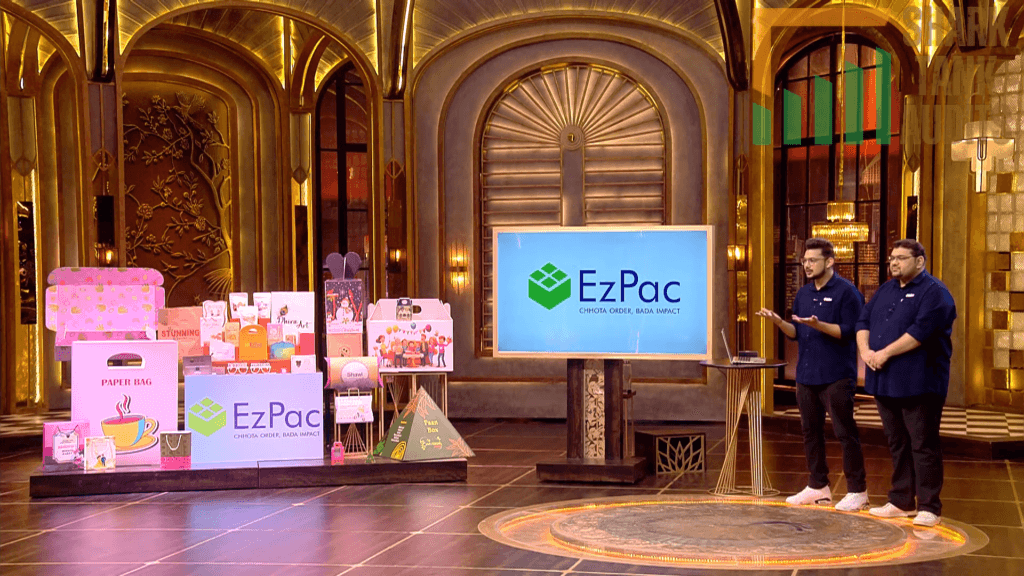
EzPac appeared on Shark Tank India Season 5, Episode 33, with Mumbai-based founder brothers Paarth Shah (CEO, MBA International Business from Brandeis University, IT degree) and Vatsal Shah (COO, Technical Business Analyst) seeking ₹2.5 Crore for 5% equity (₹50 Crore valuation) but left with no deal after all five Sharks declined citing valuation concerns and business model issues.
Established 2023, the packaging-as-a-service platform functions as tech-enabled bridge between high-end physical branding and small-scale businesses offering custom-printed sustainable paper packaging (labels, tags, marketing materials, custom boxes, courier bags, mailer boxes) with 3D design tools and instant pricing for MSMEs/creators/D2C brands through “democratized” approach allowing low MOQs (10 units versus thousands typically required) solving “high minimum order” barrier, growing from ₹6 lakh revenue (FY 24) to projected ₹2.5 Crore (FY 26) with 24 monthly organic visitors requiring SEO overhaul though only investing ₹47 lakh themselves. Sharks reacted harshly—Aman famously remarked “The math is not mathing” noting he could start five similar businesses for their ask price, Vineeta pointed out cutthroat industry with razor-thin margins suggesting 100% online pivot, Namita viewed industry too cluttered with ₹2.5 Crore ask as excessive risk, Kunal labeled it “leaky bucket business” where customers leave once they scale though offered Unicommerce/Shiprocket integration, and Ritesh advised picking one lane (B2B or D2C) versus trying both without sufficient runway.
Operating in Indian packaging market valued at $75 billion within $160 billion e-commerce market (2025-26) with $15 billion custom/secondary packaging SAM for D2C/MSMEs and sustainable packaging segment growing 15-18% CAGR due to plastic ban and eco-friendly consumer preference, EzPac targets 63 million MSMEs shifting to D2C models specifically budding D2C founders (22-40, Tier 1/2 cities Mumbai/Delhi/Bangalore), home-grown entrepreneurs (Etsy sellers, Instagram bakers, boutique jewelry), and corporate gifting managers seeking personalized low-volume seasonal packaging among tech-savvy individuals valuing aesthetic appeal and “unboxing experiences,” planning SEO overhaul targeting high-intent keywords (“custom boxes low MOQ India,” “eco-friendly packaging small business”), Shiprocket/Unicommerce platform integration as “in-app” packaging vendor, hub-and-spoke central Mumbai tech-hub with regional printing partners reducing shipping costs/lead times, 100% online pivot ensuring upfront payments with zero credit cycles, subscription model (EzPac Prime) for recurring orders/design storage fixing “leaky bucket” retention, gang-run batch printing achieving large-firm economies of scale for aggregated small orders, biodegradable inserts/smart-packaging (QR code-integrated) expansion, and “Packaging-as-a-Service” API transition commanding 4x-6x revenue multiple targeting ₹500 Crore SOM over 5 years.
The Episode Verdicts
Episode 33 was a night of polar extremes. While the Sharks were willing to bet big on futuristic infrastructure technology, they were equally quick to walk away from business models that felt “easily replicable” or overpriced.
| Pitch | Brand | Ask | Deal Status | Shark(s) Involved |
| Pitch 1 | Kelvin6k | ₹1 Cr for 1.3% | ₹1 Crore Deal | Ritesh Agarwal (at ₹35 Cr valuation + advisory) |
| Pitch 2 | ANA Apparels | ₹80 Lakh for 4% | No Deal | Sharks cited scalability and replication concerns. |
| Pitch 3 | EzPac | ₹2.5 Cr for 5% | No Deal | All Sharks out due to steep valuation and low margins. |
Key Takeaways from the Tank
- The Deep-Tech Jackpot: Kelvin6K proved that “Made in India” deep-tech is finally gaining investor confidence. Despite high entry costs, Ritesh Agarwal’s bet on their autonomous 3D printing robotic arm signaled a major shift toward supporting long-term infrastructure plays.
- The “Moat” Debate: ANA Apparels faced the classic “fashion vs. business” dilemma. Despite 20% EBITDA and strong design, the Sharks’ refusal to invest highlighted their search for a “proprietary moat” (like unique fabric or massive brand pull) that protects a startup from local imitators.
- Valuation Realism: EzPac’s pitch served as a reality check for early-stage founders. Aman Gupta’s blunt “math is not mathing” comment underscored that a ₹50 Crore valuation requires more than just a 3D design tool and a middleman strategy in a cutthroat, low-margin industry like packaging.

Leave feedback about this
You must be logged in to post a comment.