
Shark Tank India Season 5 Episode 41 Review
Aired on Monday, March 2, 2026, Episode 41 of Shark Tank India Season 5, titled “The Urban Pulse,” perfectly captured the evolving needs of the modern Indian city-dweller. This episode was a showcase of resilience, from a founder who chose her bakery over an IIM seat to a fintech team standing firm under a barrage of Shark skepticism.
The panel—Anupam Mittal, Aman Gupta, Namita Thapar, Vineeta Singh, and Kunal Bahl, navigated a diverse range of business models. We saw a premium eggless confectionery brand from Kolkata, a smart-wallet solution aiming to declutter the “Urban Hustler’s” pockets, and a health-tech platform tackling the rising epidemic of PCOD in India. The episode underscored a critical lesson for 2026 entrepreneurs: while a strong product is the entry ticket, it is the founder’s grit and clarity of vision that ultimately closes the deal in the Tank.
Pitch 1
Modge Shark Tank India Episode Review
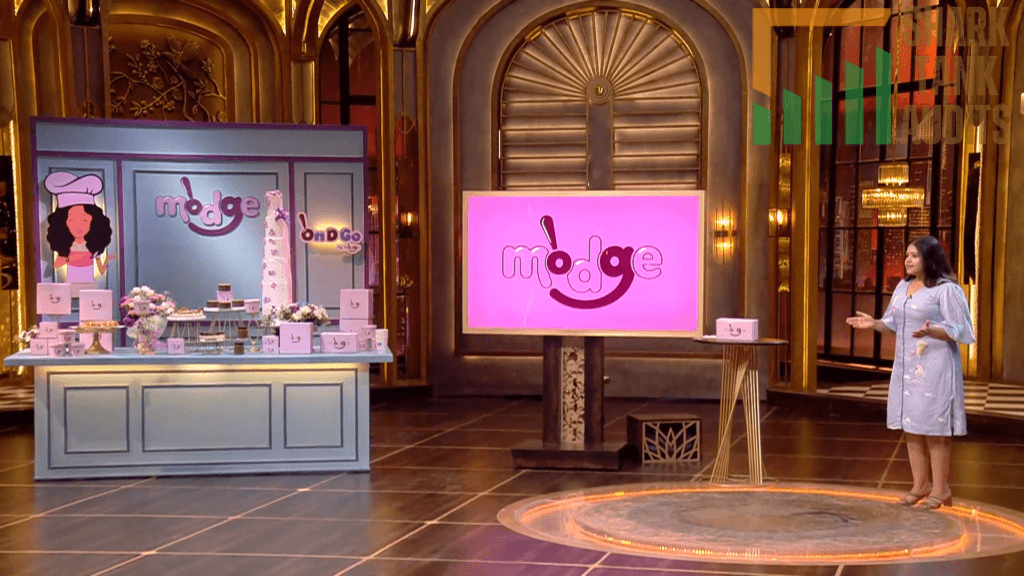
In Shark Tank India Season 5, Episode 41, which aired on March 2, 2026, entrepreneur Megha Sarayan presented her premium Kolkata-based confectionery brand, Modge by Land of Cakes. Established in 2017 while Megha was still an economics student, the brand has grown into a significant regional player in the D2C food and beverage segment. Megha’s commitment to the venture was a major highlight of the pitch, as she famously declined an admission offer from IIM Kozhikode in 2021 to focus entirely on scaling her business. Modge positions itself as an “emotion-led cravings solution,” specializing in 100% vegetarian, eggless handcrafted baked goods, ranging from intricate designer theme cakes to assorted brownies and savory treats.
During her appearance, Megha sought an investment of ₹1 Crore for 4% equity, valuing the company at ₹25 Crore. The Sharks were impressed by the brand’s operational track record, having already served over 600,000 customers through a combination of cloud kitchens and physical cafes in West Bengal. Anupam Mittal, in particular, showed strong confidence in the brand’s premium positioning and its resonance with urban consumers who seek “Instagrammable” and ethical dessert options. The 100% eggless USP was recognized as a powerful trust marker in the Indian market, providing Modge with a distinct competitive edge over traditional bakeries.
The negotiation centered on the brand’s valuation and the challenges of scaling a high-touch, artistic product nationally. While the brand currently enjoys healthy organic traffic of nearly 2,400 visitors per month, the Sharks identified the need for a robust cold-chain logistics strategy to ensure that delicate fondant work remains intact during delivery. Anupam Mittal ultimately provided a counter-offer to help fuel this national expansion. A deal was finalized at ₹1 Crore for 9% equity, which Megha accepted to transition Modge from a regional hero to a national D2C contender.
With the fresh capital infusion, Modge by Land of Cakes plans to enter major metros like Delhi and Mumbai through a strategic “Hub and Spoke” model. This involves preparing base cakes in central kitchens and applying final artistic touches at local city hubs to maintain quality. The brand also aims to integrate with Quick Commerce platforms like Blinkit and Zepto for the 10-minute delivery of standardized items like cupcakes and brownies. By focusing on increasing customer retention and diversifying into B2B corporate gifting, Megha aims to drive the company toward a ₹100 Crore valuation by 2028, making it a leader in the artisanal, eggless dessert space.
Pitch 2
Orbit Wallet Shark Tank India Episode Review

In Shark Tank India Season 5, Episode 41 (aired Monday, March 2, 2026), the Bengaluru-based fintech startup Orbit Wallet presented a high-stakes pitch that tested the founders’ resilience and the brand’s market positioning. Co-founded by Harshvardhan Zaveri, Aman Bisht, and Shikha Chouksey, the company operates under Sakaera Technologies Private Limited and focuses on simplifying urban mobility. Their core product is an all-in-one, NCMC-enabled (National Common Mobility Card) digital wallet and RuPay-powered physical card, designed to handle both transit fares and retail payments with a single “tap.” Despite an initial valuation ask of ₹50 Crore, which faced heavy scrutiny from the Sharks, the founders managed to secure a deal with Aman Gupta for ₹60 Lakhs for 4% equity, valuing the company at ₹15 Crore.
The investor reactions during the episode were among the most intense of the season. Anupam Mittal was particularly vocal, questioning the business’s fundability due to a perceived lack of differentiation, while Kunal Bahl expressed skepticism over their claims of exclusive permissions. However, the tide turned when Shikha Chouksey took the lead, impressing Aman Gupta with her clarity and grit under pressure. Aman ultimately chose to back the founders’ resilience, seeing value in their “utility-first” engagement model that targets daily commuters at their highest point of friction.
Financially, Orbit Wallet has shown promising early traction with 55,000 total users and 9,000 weekly active users. The platform processes roughly ₹62 Lakhs in monthly top-ups, earning revenue through interchange fees, corporate SaaS dashboards, and float income. By utilizing a B2B2C model, they acquire users through corporate partnerships and transit agencies, significantly lowering the customer acquisition costs (CAC) typically associated with fintech ventures. Their ideal target audience is the “Urban Hustler”—working professionals and students in Tier-1 cities like Bengaluru and Delhi who are tired of juggling multiple apps and cards for their daily commute.
Looking toward the future, Orbit Wallet aims to scale its presence across India’s smart city networks, specifically targeting high-density corporate corridors like Bengaluru’s Electronic City. Their roadmap includes an SEO overhaul to improve their current organic traffic of 768 visitors per month and the potential launch of “Orbit Credits”, a micro-credit line for transit top-ups. By achieving their goal of 250,000 users and proving the interoperability of their platform, Orbit Wallet aspires to become the default payment interface for urban India, aiming for a ₹100 Crore+ valuation in their next funding round.
Pitch 3
Hobfit Shark Tank India Episode Review
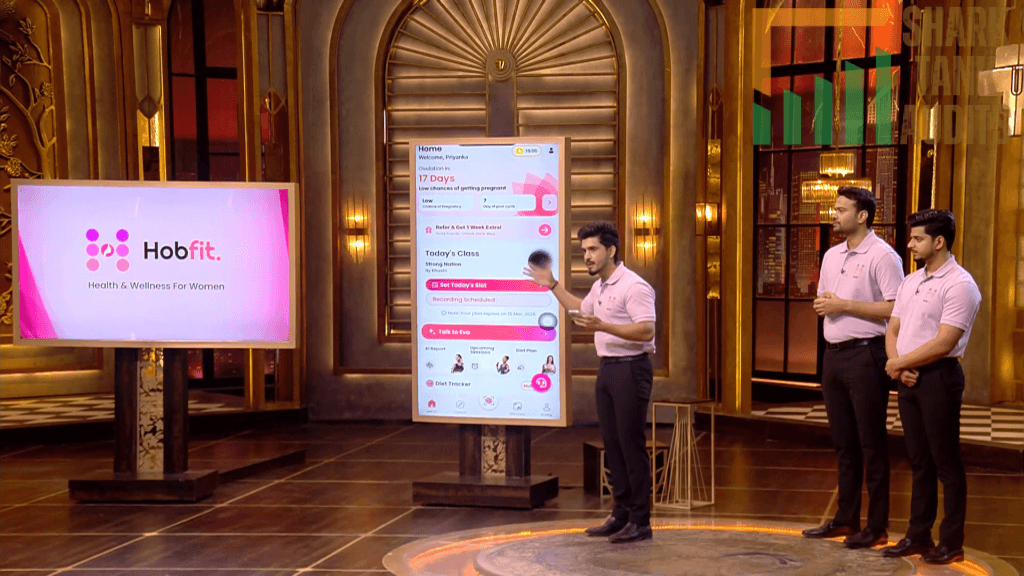
Hobfit appeared on Shark Tank India Season 5, Episode 41, with Faridabad-based co-founders Gaurav Dua, Arpit Tyagi, and Lakshay Rohilla (childhood/college friends reuniting during COVID-19 pandemic 2020 building digital solution, initially starting hobby-centric platform pivoting via user data analysis toward women’s health under Hobfit/Hofit brands) seeking ₹75 lakh for 1.5% equity (₹50 Crore valuation) but left with no deal after Sharks chose not to invest despite impressive user metrics citing high valuation, medical depth concerns, and long-term user retention issues.
Beginning as “Hobit” platform for hobbies (dance/cooking), the brand pivoted January 2024 after identifying majority traction/revenue from women seeking dance-based fitness into specialized Hormonal Health Ecosystem positioning as strategic partner for individual women and corporate entities transforming health through holistic preventive healthcare model integrating physical/mental well-being, offering comprehensive PCOD/PCOS management app moving beyond simple period tracking through multifaceted approach (PCOD assessment tests, personalized diet plans, exercise programs, lifestyle management) with integrated gynecologist consultations (utilized by 15% paying users) tracking specific progress metrics (weight, acne reduction, hair fall, cycle regularity), achieving 500,000+ registered users, 92,000 Monthly Active Users (MAU), 5,000 active paying users, 67% success rate in symptom improvement (weight/cycle regularity) for users completing 70% of 3-month journey with ₹5,000-8,000 premium pricing and 4.5-month average user lifetime but 30 monthly organic visitors requiring SEO improvement. Sharks reacted with admiration/skepticism mix—worrying app focused too heavily on lifestyle (diet/exercise) lacking deep clinical integration for complex endocrine disorder, questioning 4.5-month retention whether brand could keep users long-term engaged, viewing premium pricing and ₹50 Crore valuation as aggressive given current user base.
Operating amid India’s PCOD epidemic (1-in-5 Indian women suffering PCOS/PCOD within 680 million female population) and post-COVID preventive healthcare shift (Indian wellness market growing 10-12% CAGR) within $7+ billion Indian corporate wellness market addressing employee absenteeism HR pain point and 130 million women TAM (urban/semi-urban smartphone access with hormonal imbalances) with 30 million SAM (Tier 1/2 cities willing to pay ₹5,000-8,000 premium health subscriptions), Hobfit targets urban women (18-35 students/working professionals dealing with irregular cycles/acne/weight issues) and corporates seeking Employee Engagement Solutions improving female workforce health among health-conscious individuals frustrated by “pill-only” traditional medicine approach seeking holistic lifestyle changes, aiming 1 million active paying subscribers within 3-5 years representing ₹500+ Crore revenue potential, planning “Myth-Buster” Reels/carousels explaining insulin resistance-PCOD link building authority, fitness influencer/gynecologist partnerships providing expert-led credibility, 67% success rate video testimonials from real women reversing symptoms, SEO overhaul targeting high-intent keywords (“PCOS diet plan India,” “How to regularize periods naturally”), high-conversion Meta/Google Ads targeting femtech/yoga/women’s health interests, automated WhatsApp/email retention funnels reducing 4.5-month drop-off, D2C App Store individual subscriptions, B2B MNC direct tie-ups for on-ground/virtual wellness workshops, diagnostic partnerships bundling subscriptions with Apollo/Dr. Lal PathLabs blood test packages, Medical Advisory Board formation with clinical trials proving lifestyle interventions scientifically sound addressing medical depth concerns, “Maintenance Phase” introduction at lower price point after 6 months keeping users in ecosystem for years versus months mitigating retention challenges, Next.js website architecture optimization driving organic traffic lowering CAC, Hobfit-branded clean-label supplements launch (Inositol/Omega-3) increasing average revenue per user, Middle East/SE Asia international expansion where similar hormonal health gaps exist, and ₹150-200 Crore next-round valuation target demonstrating 12-month retention rate with diversified revenue (Supplements + Subscriptions) reducing employee absenteeism providing sustainable long-term hormonal imbalance management solution worldwide evolving into global female preventive healthcare leader introducing specialized supplements, diagnostic tie-ups, and advanced hormonal testing bridging gap between simple tracking apps and clinical medical intervention.
The Episode Verdicts
Episode 41 was a night of strategic bets and high-valuation reality checks. While two brands secured the backing of veteran Sharks to fuel their national ambitions, the third highlighted the challenges of long-term retention in the competitive “FemTech” space.
| Pitch | Brand | Ask | Deal Status | Shark(s) Involved |
| Pitch 1 | Modge | ₹1 Cr for 4% | ₹1 Crore for 9% | Anupam Mittal |
| Pitch 2 | Orbit Wallet | ₹50 Lakh for 1%* | ₹60 Lakh for 4% | Aman Gupta |
| Pitch 3 | Hobfit | ₹75 Lakh for 1.5% | No Deal | Sharks cited high valuation and retention concerns. |
Key Highlights
- The “IIM-Dropout” Success: Megha Sarayan of Modge won over Anupam Mittal with her “skin in the game.” By proving that her eggless, “Instagrammable” cakes have already served 600,000 customers, she justified a move into the national D2C market. Her “Hub and Spoke” model was a key point of interest for maintaining quality across borders.
- Grit over Gimmicks: Orbit Wallet faced one of the most intense “grillings” of the season. While Anupam and Kunal were skeptical of the tech moat, Shikha Chouksey’s performance under pressure convinced Aman Gupta to invest. He bet on the team’s ability to solve the “tap-and-go” friction for daily commuters.
- The Retention Hurdle: Hobfit presented impressive numbers, including 92,000 Monthly Active Users. However, the Sharks were wary of the 4.5-month user lifetime. They felt that for a ₹50 Crore valuation, the brand needed deeper clinical integration to move beyond being a “lifestyle app” into a permanent healthcare necessity for women with PCOD.


Leave feedback about this
You must be logged in to post a comment.