
Uptown Shark Tank India Episode Review
Uptown appeared on Shark Tank India Season 5, Episode 48, with leadership team featuring deep construction/professional services roots, core founders Sandeep Rajkhowa (Founder/CEO, engineer/MBA with 17 years PwC firm experience), Sanjoy Chanda (Co-founder/COO bringing media/marketing expertise), and Dr Kumari Sukanya who launched first Guwahati campus July 2021 successfully scaling into prominent regional player, seeking ₹75 lakh for 3% equity (₹25 Crore valuation) but left with no deal despite professional presentation/solid early-stage traction as Sharks appreciated founders’ background/Northeast market success though didn’t reach investment terms agreement or current business model scalability consensus.
Operating as tech-enabled co-living/”Smart Hostel” brand under “Upgrade Your Living” tagline positioned as lifestyle platform versus traditional rental service specifically targeting students/young professionals recognized by Startup India/DPIIT earning accolades (2022 Hospitality Startup Award) growing to operate 300+ beds across five Northeast India campuses offering managed accommodation service core product replacing traditional “Paying Guest” (PG) setup with community-centric infrastructure utilizing seamless online booking digital platform managing strategically located (near educational hubs/corporate offices) physical properties as “Smart Living” environment balancing private space with vibrant social ecosystems featuring community-focused prioritizing networking/social interaction over mere lodging, modern amenities (high-speed Wi-Fi/professional interior design/ample storage solutions), 24/7 CCTV surveillance/controlled entry access safety-first peace of mind, strategic college/office commute-minimizing property placement locations, and simplified digital booking/property management interface tech-driven approach with 177 monthly organic visitors requiring SEO improvement. Shark panel (Aman Gupta/Anupam Mittal/Namita Thapar/Ritesh Agarwal) offered praise/caution mix with Ritesh given OYO experience delving deep into operational complexities—while Sharks noted founders’ clear “Generation Rent” understanding they expressed significant high operational cost concerns, capital-intensive real estate tech industry nature, and heavy established giant (Stanza Living/Zolo) competing “burn” requirement.
Operating in Indian co-living market expected to grow 17% CAGR reaching nearly $12 billion valuation by 2030 as “Generation Rent” demographic expands with 30%+ India’s population living in cities and massive student migration to education hubs (Kota/Pune/Bengaluru) tapping perennial quality housing demand within currently 90% unorganized Indian PG market where Uptown has potential capturing by providing traditional PG-lacking standardized safety/hygiene/community and 37 million higher education students/80 million migrant working professionals TAM and 10-12 million Tier 1/2 city individuals seeking premium/smart hostel accommodations SAM, Uptown targets student cohort (18-23 pursuing higher education prioritizing high-speed Wi-Fi/campus proximity/”cool” social environment) and early professionals (22-30 working IT/Finance/Startups seeking seamless digital booking/security/career-building networking opportunities) among middle/upper-middle class tech-savvy individuals valuing “experience” over “ownership” willing paying 15-20% premium for managed services aiming 1% organized market capture within 5 years targeting 50,000+ bed nationwide capacity through “Passion Economy” philosophy centering where housing viewed as networking/social interaction facilitator versus just “providing bed” engaging customers by fostering community atmosphere through common lounges/social events ensuring residents feel part of modern secure socially active tribe, planning Wix-to-custom-coded/SEO-friendly CMS SEO overhaul improving 177 monthly organic visitors focusing keywords (“Smart Hostels Guwahati,” “Best Co-living Professionals”), student resident Instagram/YouTube “Day in the Life” vlogs leveraging showcasing community lifestyle social proof/influencers, major corporate park/university nearby user geo-fenced Google/Meta Ads performance marketing, Uptown social event/workshop/networking mixer frequent Reels showcasing emphasizing Passion Economy community highlights, founder Sandeep Rajkhowa urban living trend blogs/LinkedIn posts establishing Uptown as real estate tech thought leader educational content, room/common area high-quality 360-degree videos building pre-visit trust virtual tours, existing building leasing/renovating “Managed Operator” model focusing minimizing capital expenditure while maintaining brand standards asset-light approach, college placement cell/corporate HR department partnerships becoming “Preferred Housing Partner” hyper-local presence, AI-driven rent collection/maintenance tickets/community voting property management system integrating tech stack, cluster-based expansion implementing ensuring one-city profitability before next-city moving controlling burn financial mitigation, rigorous facility management SOPs implementing ensuring identical across-city Uptown experience operational mitigation, digital footprint fixing optimizing SEO reaching 5,000+ organic visitors/month scaling to 1,000 Northeast beds, Eastern India Tier 2 city (Kolkata/Bhubaneswar) entry introducing senior professional premium suite “Uptown Plus,” and national expansion targeting valuation increase pivoting from “Hostel” to Uptown brand name third-party owner property management handling “Tech-Platform” becoming leading D2C lifestyle brand standardizing India-wide urban living capitalizing rising high-quality tech-enabled housing demand expanding Smart Hostel model beyond Guwahati transitioning more urban dwellers into comfort/safety/community-prioritizing Smart Living environments leveraging Northeast India largest player regional dominance providing high-growth under-penetrated geography first-mover advantage, construction (Sandeep)/marketing (Sanjoy) combined 17+ years experience ensuring structurally sound brand-heavy Uptown properties founders’ pedigree, and Zolo/Stanza-unlike “tribe” focus reducing tenant churn increasing referral bookings community stickiness addressing Gen Z “owning” to “accessing” asset shift amid high >85% occupancy rate break-even requiring physical asset scaling capital-intensive operational burn, local municipal law/fire safety norm/different state commercial-vs-residential zoning navigating regulatory hurdles, and Uptown market share gaining price-undercutting well-funded unicorn competing market giants challenges.
Website Information
- Website:- Uptown
- Build on CMS WIX
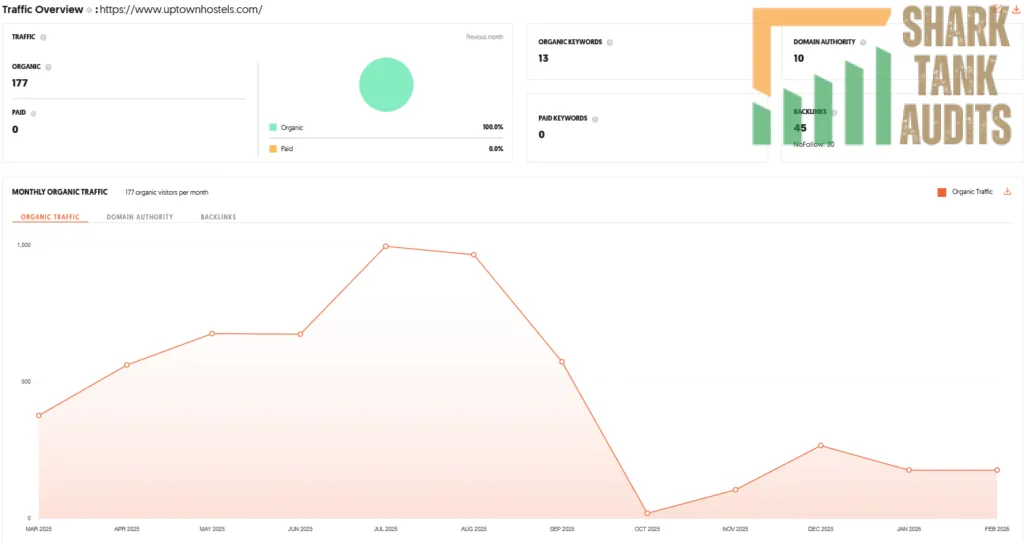
- Poor SEO Performance, SEO Improvement Needed.
- ORGANIC TRAFFIC: 177 visitors per month.
The Founders of Uptown
- Uptown was established by a leadership team with deep roots in construction and professional services.
- The core founders include Sandeep Rajkhowa (Founder & CEO), an engineer and MBA with 17 years of experience at firms like PwC; Sanjoy Chanda (Co-founder & COO), who brings expertise in media and marketing; and Dr Kumari Sukanya.
- Together, they launched their first campus in Guwahati in July 2021, successfully scaling it into a prominent regional player.
Uptown Brand Overview
- Uptown operates as a tech-enabled co-living and “Smart Hostel” brand under the tagline “Upgrade Your Living.”
- It is positioned as a lifestyle platform rather than a traditional rental service, specifically targeting students and young professionals.
- Recognized by Startup India and DPIIT, the brand has already earned accolades, such as the 2022 Hospitality Startup Award, and has grown to operate over 300 beds across five campuses in Northeast India.
Uptown Shark Tank India Appearance & Ask
- Appearing in Season 5, Episode 48, the founders of Uptown entered the tank seeking an investment of ₹75 lakhs for 3% equity in their company.
- The pitch focused on their ability to disrupt the fragmented rental market by providing a standardized, high-quality living experience in an industry often plagued by a lack of transparency and safety.
Season and Episode Air Date
- Season: 05
- Episode: 48
- Episode Air Date: Wednesday, 11 March, 2026
Uptown Product Overview
- The Uptown product is a managed accommodation service that replaces the traditional “Paying Guest” (PG) setup with a community-centric infrastructure.
- It utilizes a digital platform for seamless online bookings and manages physical properties that are strategically located near educational hubs and corporate offices.
- The “product” is essentially a “Smart Living” environment that balances private space with vibrant social ecosystems.
Uptown Investor Reactions
- The Shark panel, including Aman Gupta, Anupam Mittal, Namita Thapar, and Ritesh Agarwal, offered a mix of praise and caution.
- Ritesh Agarwal, given his experience with OYO, delved deep into the operational complexities.
- While the Sharks noted the founders’ clear understanding of “Generation Rent,” they expressed significant concerns regarding the high operational costs, the capital-intensive nature of the real estate tech industry, and the heavy “burn” required to compete with established giants like Stanza Living and Zolo.
Uptown Customer Engagement Philosophy
- The Uptown philosophy centers on the “Passion Economy,” where housing is viewed as a facilitator for networking and social interaction.
- Instead of just “providing a bed,” the brand engages customers by fostering a community atmosphere through common lounges and social events, ensuring that residents feel part of a modern, secure, and socially active tribe.
Uptown Product Highlights
- Community Focused: Prioritizes networking and social interaction over mere lodging.
- Modern Amenities: High-speed Wi-Fi, professional interior design, and ample storage solutions.
- Safety First: Features 24/7 CCTV surveillance and controlled entry access for peace of mind.
- Strategic Locations: Properties are placed to minimize commute times to colleges and offices.
- Tech-Driven: A simplified digital interface for bookings and property management.
Uptown Future Vision
- The Uptown future vision is to become a leading D2C lifestyle brand that standardizes urban living across India.
- By capitalizing on the rising demand for high-quality, tech-enabled housing, they aim to expand their “Smart Hostel” model beyond Guwahati, transitioning more urban dwellers into “Smart Living” environments that prioritize comfort, safety, and community.
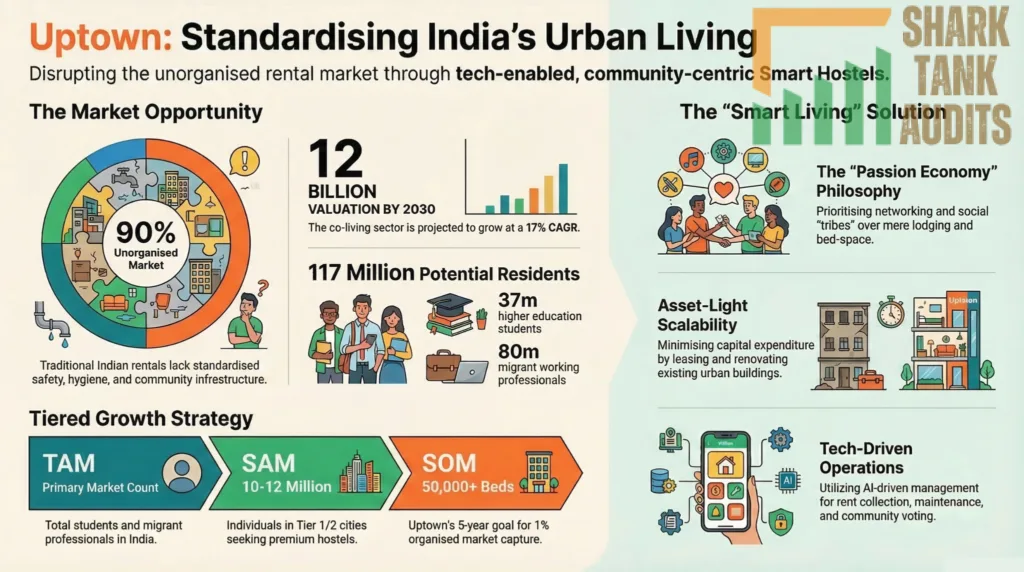
Uptown Deal Finalized or Not
- Despite a professional presentation and solid early-stage traction, the Uptown pitch ended in No Deal.
- While the Sharks appreciated the founders’ background and their success in the Northeast market, they did not reach an agreement on the investment terms or the scalability of the current business model.
| Topic | Information |
|---|---|
| Brand | Uptown |
| Built On | CMS WIX |
| SEO Performance | Poor SEO Performance, SEO Improvement Needed |
| Organic Traffic | 177 visitors per month |
| Founders of Uptown | Sandeep Rajkhowa (Founder & CEO), Sanjoy Chanda (Co-founder & COO), and Anangaraj Saikia (Co-founder & Head of B2B) |
| Founder Background | Sandeep Rajkhowa is an engineer and MBA with 17 years of experience including work at PwC |
| Founder Expertise | Sanjoy Chanda specializes in media and marketing |
| Founder | Dr Kumari Sukanya |
| First Campus Launch | Guwahati in July 2021 |
| Uptown Brand Overview | Tech-enabled co-living and Smart Hostel brand positioned as a lifestyle platform |
| Tagline | Upgrade Your Living |
| Target Audience | Students and young professionals |
| Recognition | Recognized by Startup India and DPIIT |
| Awards | 2022 Hospitality Startup Award |
| Current Scale | Over 300 beds across five campuses in Northeast India |
| Shark Tank India Appearance | Season 5 Episode 48 |
| Investment Ask | ₹75 Lakhs for 3% equity |
| Pitch Focus | Disrupting fragmented rental market with standardized living experience |
| Season | 05 |
| Episode | 48 |
| Episode Air Date | Wednesday, 11 March, 2026 |
| Product Overview | Managed accommodation replacing traditional PG with community-centric living |
| Platform Type | Digital platform for seamless online bookings |
| Property Locations | Near educational hubs and corporate offices |
| Product Concept | Smart Living environment combining private space and social ecosystems |
| Investor Reactions | Sharks praised concept but raised concerns about operational costs and scalability |
| Key Sharks Involved | Aman Gupta, Anupam Mittal, Namita Thapar, and Ritesh Agarwal |
| Major Concern | High operational burn and capital-intensive real estate model |
| Competitive Concern | Competing with established players like Stanza Living and Zolo |
| Customer Engagement Philosophy | Focus on Passion Economy and community-driven living |
| Engagement Strategy | Social events, common lounges, and networking opportunities |
| Brand Experience Goal | Create a modern, secure, socially active community |
| Product Highlight | Community-focused living experience |
| Amenities | High-speed Wi-Fi, modern interiors, and storage solutions |
| Safety Features | 24/7 CCTV surveillance and controlled access |
| Location Strategy | Properties near colleges and offices to reduce commute |
| Technology Feature | Digital platform for booking and property management |
| Future Vision | Become a leading D2C lifestyle brand for urban living |
| Expansion Plan | Expand beyond Guwahati to other cities in India |
| Vision Statement | Standardize Smart Living environments across urban India |
| Deal Status | No Deal |
| Reason for No Deal | Concerns regarding scalability and investment terms |
| Business Plan Section | Uptown Shark Tank India Business Plan |
| Market Growth | Indian co-living market expected to grow at 17% CAGR reaching $12 billion by 2030 |
| Urbanization Trend | Over 30% of India’s population lives in cities |
| Market Gap | 90% of PG market remains unorganized |
| TAM | 37 million higher education students and 80 million migrant professionals |
| SAM | 10–12 million people seeking premium co-living |
| SOM | Target to capture 1% of organized market with 50,000+ beds |
| Target Audience Segment 1 | Students aged 18–23 |
| Target Audience Segment 2 | Early professionals aged 22–30 |
| Demographic Profile | Middle to upper-middle class tech-savvy individuals |
| Marketing Strategy | SEO improvement and digital marketing |
| SEO Focus Keywords | Smart Hostels in Guwahati, Best Co-living for Professionals |
| Social Marketing | Instagram and YouTube lifestyle content |
| Advertising Strategy | Geo-targeted Google and Meta Ads |
| Content Strategy | Community highlight reels and networking event coverage |
| Thought Leadership | Blogs and LinkedIn posts by founder Sandeep Rajkhowa |
| Visual Content | 360-degree virtual property tours |
| Distribution Model | Asset-light managed operator model |
| Partnerships | Tie-ups with college placement cells and corporate HR departments |
| Technology Stack | AI-driven property management system |
| Competitive Advantage | First mover advantage in Northeast India |
| Founder Strength | Strong background in construction and marketing |
| Retention Advantage | Community-driven living reduces tenant churn |
| Business Challenge | High operational costs and capital intensity |
| Regulatory Challenge | Fire safety and zoning regulations |
| Competition | Large players like Zolo and Stanza Living |
| Success Factor | Growing Gen Z preference for access over ownership |
| Financial Strategy | Cluster-based expansion to control burn |
| Operational Strategy | Standardized SOPs across all campuses |
| Roadmap Phase 1 | Improve SEO and scale to 1,000 beds in Northeast |
| Roadmap Phase 2 | Expand to Tier 2 cities like Kolkata and Bhubaneswar |
| Roadmap Phase 3 | National expansion and tech platform pivot |
| Long-term Goal | Become a property management tech platform under the Uptown brand |
Uptown Shark Tank India Business Plan
1. Uptown Business Potential in India: Facts and Data
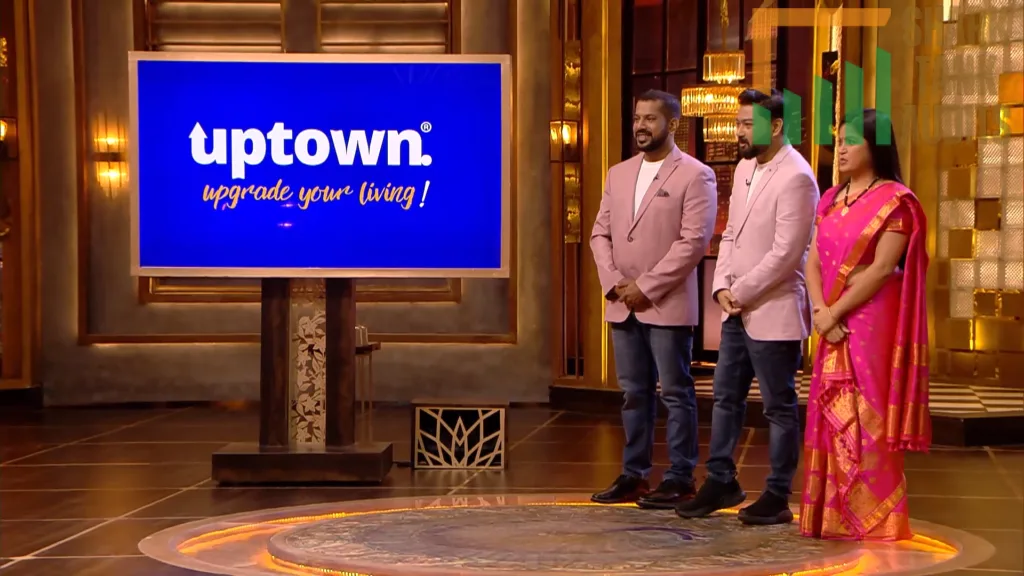
- Market Upsurge: The Indian co-living market is expected to grow at a CAGR of 17%, reaching a valuation of nearly $12 billion by 2030 as the “Generation Rent” demographic expands.
- Urban Shift: With over 30% of India’s population living in cities and a massive migration of students to education hubs (Kota, Pune, Bengaluru), Uptown taps into a perennial demand for quality housing.
- The “Unorganized” Gap: Currently, 90% of the PG market in India is unorganized. Uptown has the potential to capture this by providing standardized safety, hygiene, and community—elements traditional PGs lack.
2. Uptown Total Addressable Market (TAM): Facts and Data
- TAM (Total Addressable Market): Approximately 37 million higher education students and 80 million migrant working professionals in India.
- SAM (Serviceable Addressable Market): The 10-12 million individuals in Tier 1 and Tier 2 cities seeking premium/smart hostel accommodations like Uptown.
- SOM (Serviceable Obtainable Market): Uptown aims to capture 1% of the organized market within 5 years, targeting a capacity of 50,000+ beds nationwide.
3. Uptown Ideal Target Audience and Demographics
- The Student Cohort: Ages 18–23, pursuing higher education. They prioritize high-speed Wi-Fi, proximity to campus, and a “cool” social environment.
- The Early Professional: Ages 22–30, working in IT, Finance, or Startups. They look for Uptown’s seamless digital booking, security, and networking opportunities to build their careers.
- Demographic Profile: Middle to Upper-Middle class, tech-savvy, valuing “experience” over “ownership,” and willing to pay a 15–20% premium for managed services.
4. Uptown Marketing and Digital Marketing Strategy
- SEO Overhaul: Transitioning from Wix to a custom-coded or SEO-friendly CMS to improve the current 177 monthly organic visitors. Focus on keywords like “Smart Hostels in Guwahati” and “Best Co-living for Professionals.”
- Social Proof & Influencers: Uptown should leverage “Day in the Life” vlogs by student residents on Instagram and YouTube to showcase the community lifestyle.
- Performance Marketing: Geo-fenced Google and Meta Ads targeting users near major corporate parks and universities.
5. Uptown Content Strategy for the Target Audience
- Community Highlights: Frequent Reels showcasing Uptown social events, workshops, and networking mixers to emphasize the “Passion Economy.”
- Educational Content: Blogs and LinkedIn posts by founder Sandeep Rajkhowa on urban living trends, establishing Uptown as a thought leader in real estate tech.
- Virtual Tours: High-quality 360-degree videos of rooms and common areas to build trust before the user visits the property.
6. Uptown Distribution and Operations Strategy
- Asset-Light Model: Uptown should focus on the “Managed Operator” model—leasing existing buildings and renovating them—to minimize capital expenditure while maintaining brand standards.
- Hyper-Local Presence: Partnering with college placement cells and corporate HR departments to become the “Preferred Housing Partner” for Uptown.
- Tech Stack: Integrating an AI-driven property management system for rent collection, maintenance tickets, and community voting.
7. Uptown Competitive Advantages
- Regional Dominance: Being the largest player in Northeast India gives Uptown a “first-mover” advantage in a high-growth, under-penetrated geography.
- Founders’ Pedigree: The combined 17+ years of experience in construction (Sandeep) and marketing (Sanjoy) ensures Uptown properties are both structurally sound and brand-heavy.
- Community Stickiness: Unlike Zolo or Stanza, Uptown’s focus on the “tribe” reduces tenant churn and increases referral bookings.
8. Uptown Business Challenges
- High Operational Burn: As noted by the Sharks, scaling physical assets is capital-intensive and requires high occupancy rates (>85%) to break even.
- Regulatory Hurdles: Navigating local municipal laws, fire safety norms, and “commercial vs. residential” zoning in different states for Uptown campuses.
- Market Giants: Competing with well-funded unicorns who can afford to undercut prices to gain Uptown’s market share.
9. Uptown Success Factors and Mitigation Strategies
- Reason for Success: The shift from “owning” to “accessing” assets among Gen Z.
- Mitigation Strategy (Financial): Uptown should implement a “cluster-based expansion,” ensuring one city is profitable before moving to the next to control burn.
- Mitigation Strategy (Operational): Implement rigorous SOPs (Standard Operating Procedures) for facility management to ensure the Uptown experience is identical across all cities.
10. Uptown Future Business and Roadmap to Increase Valuation
- Phase 1 (Year 1): Fix the Uptown digital footprint. Optimize SEO to reach 5,000+ organic visitors/month. Scale to 1,000 beds in the Northeast.
- Phase 2 (Year 2-3): Enter Tier 2 cities in Eastern India (Kolkata, Bhubaneswar). Introduce Uptown “Plus”—premium suites for senior professionals.
- Phase 3 (Year 5): National expansion. Target a valuation increase by pivoting from a “Hostel” to a “Tech-Platform” that handles property management for third-party owners under the Uptown brand name.






Uptown Shark Tank India Episode Review