
Shark Tank India Season 5 Episode 48 Review
Aired on Wednesday, March 11, 2026, Episode 48, titled “Innovation & Immersion”, featured a clash between high-IQ technical “genius” and deep-rooted family legacy. From a browser-native 3D engine that could revolutionize e-commerce to a multi-generational “bath-tech” brand attempting to bring spa luxury into Indian homes, the episode explored how technology and craftsmanship are reshaping the “lifestyle-as-a-service” economy.
The Shark panel included: Anupam Mittal, Namita Thapar, Vineeta Singh, Aman Gupta, and Kanika Tekriwal (with Ritesh Agarwal in the co-living segment).
Pitch 1
Ctruh Shark Tank India Episode Review
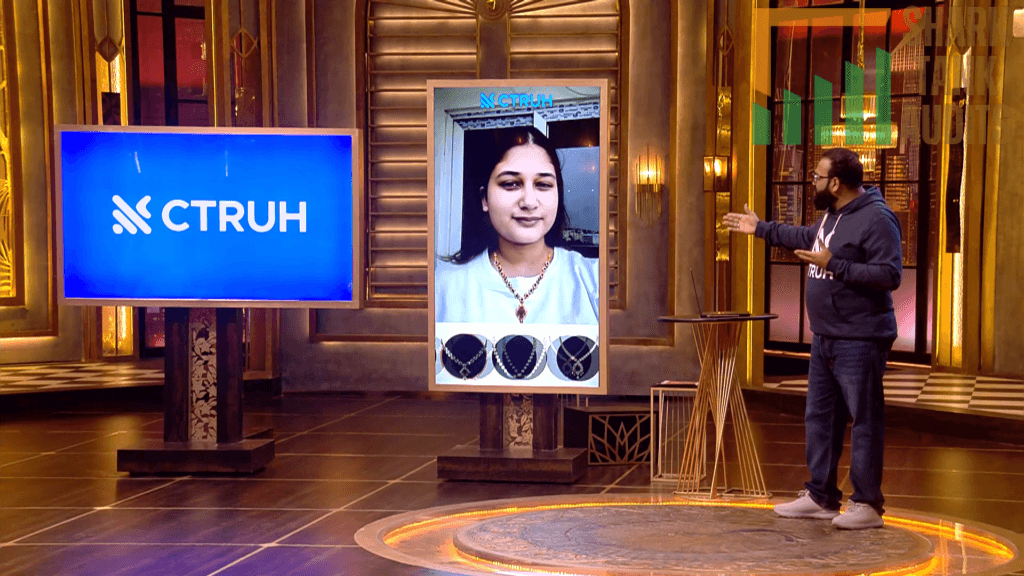
Ctruh (pronounced “see-through”) appeared on Shark Tank India Season 5, Episode 48, with Bengaluru-based co-founders Vinay Agastya (CEO described by Sharks as “genius”/”good guy” though presentation style polarizing, integrating spiritual values into leadership possessing deep 3D engine technical understanding successfully patenting core platform-powering technology) and Chandresh Sethia seeking ₹1 Crore for 1.2% equity (₹83.33 Crore valuation) and successfully closed a deal for ₹1 Crore for 2.4% equity (₹41.67 Crore valuation, effectively halving original valuation) with Sharks Anupam Mittal and Vineeta Singh despite “bad pitch” critique as they recognized underlying technology value with deal locked under specific conditions subject to patent technical due diligence and separate ₹15 Crore funding round successful completion founder previously mentioned.
Founded 2022, the AI-powered Extended Reality (XR) commerce studio positioned as “World’s First AI-Powered XR Commerce Studio” aims bridging physical/digital shopping gap operating as no-code/low-code platform allowing businesses (real estate to D2C retail) creating immersive 3D/AR/VR environments working seamlessly through browsers without app installations offering sophisticated 3D engine core product enabling “browser-native” renditions allowing real estate developers showing virtual unbuilt property tours and cosmetics brands offering virtual try-ons claiming 3D environments built within one hour delivered via simple URL/QR code making highly accessible for Indian market where app-heavy AR/VR often fails featuring 90% partner brand conversion rate increase efficiency, 40% product return reduction through accurate virtual visualization cost-effectiveness, patented engine rapid 3D asset generation/2.4x longer customer engagement speed, and no app/specialized hardware requirement working on standard mobile/desktop browsers accessibility with only 2 monthly organic visitors requiring SEO improvement delivering high-stakes cinematic pitch featuring moment where Shark Aman Gupta tried virtual lipstick though technology impressed panel while pitch itself criticized by Aman as “very bad” due to information disclosure way leading to tense exchange where founder directly told Aman “No, you’re wrong” regarding AI impact on 3D agencies. Sharks reacted with technical admiration/presentational frustration mix—Aman/Namita both opting out with Aman feeling pitch poor fearing AI disruption while Namita worried about Google/OpenAI “core companies” integrating features making third-party startups obsolete, Kanika loving product wanting to be customer though opting out due to high valuation/pre-signed term sheets, and Vineeta/Anupam recognizing product “genius” with Anupam highlighting browser 3D rendering under one hour is “nowhere in India” leading them teaming up for deal.
Operating in global XR market valued at $346.09 billion (2026) with projected growth to $2+ trillion by 2034 and India AR/VR market expected to reach $214.05 billion by 2031 (software segment where Ctruh operates being largest/fastest-growing revenue generator) within India’s $200 billion projected e-commerce market (2026), $108.76 billion India D2C market (2026), and $46.65 billion global automotive XR market (2026) amid rapid digitization where Ctruh positioned to capture growth as brands move from 2D images to immersive shopping with browser-working versus app-install competitor requirement ideal for 78% Indian Tier 2/3 city smartphone users often having limited device storage and 70%+ real estate companies expected to use AI by 2026 where Ctruh’s under-one-hour virtual property tour creation provides massive first-mover advantage, Ctruh targets D2C brands in Beauty/Fashion/Home Decor (18-45 digital-native founders) primary B2B segment, real estate developers/automotive dealerships seeking “Virtual Showrooms” secondary B2B segment, and Gen Z (53% using TikTok for research)/millennials prioritizing “visual trials”/interactive shopping experiences end-user (B2B2C) through “lack of touch and feel” e-commerce solving philosophy providing immersive experiences focusing reducing online shopping psychological barrier with data suggesting immersion leads to higher purchasing confidence directly translating to fewer product returns/significantly higher brand digital storefront time spent, planning 2 monthly visitor to high-intent inbound engine SEO/content transition targeting keywords (“Web-based AR e-commerce,” “Browser-native 3D property tours,” “AI 3D engine Shopify”), “Reducing RTO (Return to Origin) via XR” technical whitepapers/90% conversion lift video case studies content, LinkedIn (B2B decision-makers)/Instagram (visual product demos) digital presence focus using GSAP/Next.js capabilities making website itself 3D demo, “Free 3D Scan to Web” trial offering for any D2C brand first 5 products lead magnets, Shark Tank India alumni/D2C giants (Sugar/Mamaearth) enterprise-level integration direct sales targeting, Shopify/Magento/WooCommerce marketplace “one-click” app Ctruh integration platform partnerships, digital marketing agency partnerships offering Ctruh XR as existing retail client add-on service agency channel, verticalized solutions (specialized automotive features) focus generic Jasper/ChatGPT engines cannot easily replicate mitigating Apple/Google/Meta big tech competition risk, seasoned CMO/Brand Storyteller hire handling public-facing communication allowing “genius” founders focusing deep-tech R&D addressing pitch performance, SEO fixing/₹15 Crore funding round stabilization, “Automotive Virtual Showroom” vertical launch, North America (largest $142.68 billion XR market) global expansion, and ₹500+ Crore valuation target (6x-10x SaaS multiple) within 24 months achieving $10 million ARR through subscription model expanding beyond D2C retail/real estate into automotive industry making 3D commerce global standard moving from flat 2D images backed by Microsoft/NVIDIA/Amazon scaling infrastructure as subscription-based “commerce transformation” tool becoming “Canva of 3D world” leveraging patented high-defensibility 3D engine, no-app-required seamless browser-based UX, and market-leading 1-hour 3D asset generation speed addressing 40% product return reduction solving critical Indian e-commerce pain point where COD (Cash on Delivery) returns eat 25-30% margins.
Pitch 2
SteamPRO Shark Tank India Episode Review
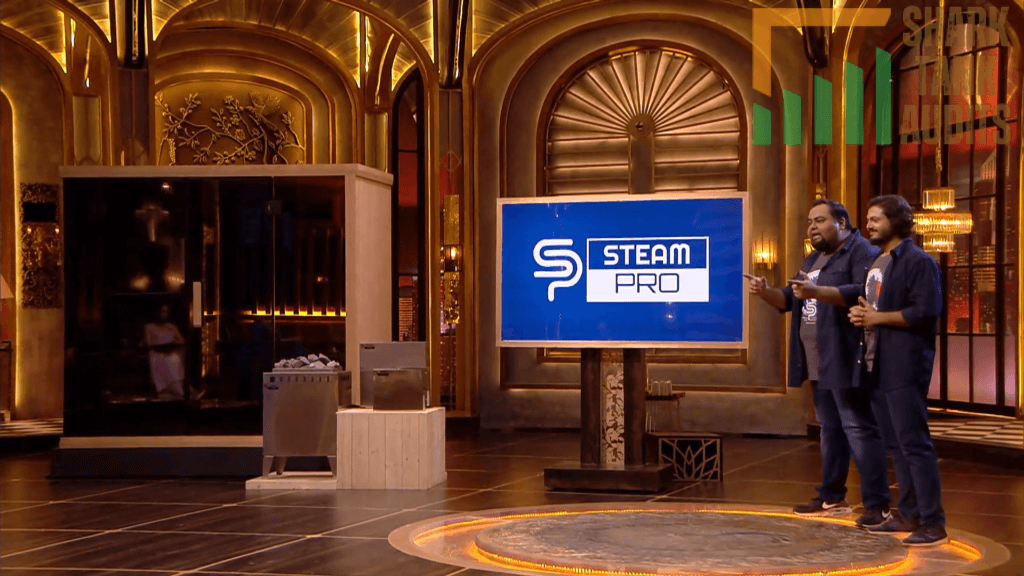
SteamPRO appeared on Shark Tank India Season 5, Episode 48, with New Delhi-based co-founder brothers Sumir Chadha (overseeing marketing/operations) and Pravir Chadha (handling technical development/corporate strategy) carrying forward multi-generational legacy beginning with father who worked with immersion rods in 1990s, traveled world studying spa technology, began manufacturing handcrafted equipment 2000-2010 which sons modernized under SteamPRO banner, seeking ₹1 Crore for 2% equity (₹50 Crore valuation) but left with no deal as SteamPRO walked away without Shark investment despite unique product nature/founders’ background with primary roadblocks being significant monthly losses, lack of clear scaling strategy, and current business model concerns.
Operating under corporate name Baleno Wellness Technology Private Limited (established 2020), the “bath-tech” startup specializes in manufacturing compact intelligent steam bath systems designed for home installation transforming standard daily shower into professional-grade wellness ritual through sustainable hydro-technology often referred to by founders as “Water Joy” offering home-use steam/sauna device core product designed providing “full-blown spa experience” with single button click as compact handcrafted unit claiming more efficiency than traditional systems with under-30-second steam generation ability currently used by high-end professional spas though founders attempting pivot into consumer-facing household product featuring rapid under-30-second steam generation heating, one-touch operation simplicity providing spa experience with single button press, handcrafted design heritage based on decade-perfected (2000-2010) craftsmanship, and residential bathroom-fitting compact design specifically engineered versus commercial spa layout requirement with 475 monthly organic visitors requiring SEO improvement. Sharks expressed product admiration/business metrics skepticism mix—Aman critiquing device as “less user-friendly” arguing founders “complicated simple business” feeling product not suited for D2C model, Anupam questioning spending strategy asking “Paisa kahaan jaa raha hai?” (Where is money going?) noting expansion plan “lack of strategy,” Vineeta pointing out fundamental pricing mistake noting 20% gross margin too low for luxury HNI product, Namita advising Meta marketing was wrong channel suggesting focusing on architect/builder “advocates,” and Kanika raising serious safety certification/installation standard concerns noting malfunction could be catastrophic for brand.
Operating in Indian spa market valued at $2.22 billion (2025) projected to reach $4.93 billion by 2034 (9.28% CAGR) at luxury/health intersection with post-2024 trends showing 14.4% CAGR in “at-home” wellness category as consumers shift from public spas to private hygienic home solutions and Indian home automation market expected to hit $13.5 billion by 2026 providing perfect SteamPRO “bath-tech” integration ecosystem within $30+ billion luxury housing/premium bathroom fitting TAM (including wellness tourism/smart bathrooms) and India’s 1.65 million projected HNI population by 2027 with 50% UHNI segment growth, SteamPRO targets HNI professionals (35-55 CXOs/Founders/senior executives residing in metros valuing time-efficiency/stress relief), luxury homeowners (building/renovating bungalows/villas in premium South Delhi/South Mumbai/Gurugram pockets), health-conscious millennials (28-40 new-age wealth creators focused on biohacking/recovery/holistic wellness rituals), and B2B stakeholders (architects/interior designers/luxury real estate developers like DLF/Lodha specifying “bath-tech” in premium projects) among Tier 1 city luxury residential projects (Mumbai/Delhi NCR/Bangalore) where ₹3+ Crore high-end homes saw doubling sales between 2024-2026 through “Water Joy” philosophy aiming bringing spa luxury into customer home privacy though Sharks pointing out engagement strategy disconnect where founders attempted reaching customers via digital marketing while investors suggested for luxury bath-tech item philosophy should instead focus high-touch engagement through B2B luxury real estate developer/architect partnerships, planning pure B2C digital ads to “Pull” strategy shift by placing SteamPRO in HNI home interior shopping experience centers “Luxury Specifier” approach, not-as-machine but-as-“Legacy Wellness Ritual” utilizing 30-second rapid-steam technology exclusivity branding positioning, ₹50-60% gross margin premium luxury status reflecting pricing revision versus current 20% as HNIs prioritize quality over price strategic pricing, SEO targeting high-intent keywords (“best home steam bath India,” “luxury bathroom automation,” “spa-grade steam generator”) increasing 475 monthly organic visitors, steam health benefit (respiratory health/skin glow/muscle recovery) explaining blogs/videos educational long-form content justifying investment, luxury interior designer (Gauri Khan Designs)/wellness influencer collaborations showcasing high-end home SteamPRO installations social proof/influencer marketing, top 5,000 Indian architect/luxury builder targeted LinkedIn professional content outreach, high-end sanitaryware showroom (Kohler/Jaquar experience centers) “SteamPRO Experience Zones” establishing channel partner network, ultra-luxury penthouse project pre-installed “wellness feature” SteamPRO including developer partnerships real estate tie-ups, SteamPRO project blueprint-integrating interior designer incentive-based “Expert Circle” architect referral program, product pricing immediate increase fixing gross margin cutting Meta-marketing spend reallocating to B2B relationship management financial discipline, ISO/safety certification 6-month obtaining neutralizing Shark-raised safety concerns certification sprint, Aman Gupta “less user-friendly” critique addressing “iPhone-simple” control interface redesign UX fix, supply chain optimization/price point doubling achieving break-even operational reset, Mumbai/Bangalore local experience center partnership launches expansion, “Smart Saunas”/”Aromatherapy Infusion Modules” introduction increasing AOV product diversification, and ₹200+ Crore valuation target (2028 Series A) demonstrating recurring major real estate developer B2B revenue model scaling beyond current Delhi-centric operations to ₹100 Crore business recently achieving February 2026 ₹3.8 Crore seed funding round milestone led by Anicut Capital/Zeropearl VC providing runway fixing operational inefficiencies addressing Sharks’ feedback fixing gross margins, securing international safety certifications, pivoting sales strategy toward HNI/real estate sectors leveraging under-30-second commercial-grade competitor significantly faster steam generation technological edge, urban residential bathroom specifically designed compact footprint versus industrial units, and founders’ father-inherited 20+ years handcrafted engineering legacy reliability as no dominant “D2C Luxury Bath-Tech” Indian brand exists providing first-mover advantage amid India becoming world’s 3rd largest economy where home “Lifestyle-as-a-Service” (LaaS) demand exploding with market tailwinds though currently losing ₹10 lakh monthly with low 20% gross margin high cash burn, international safety/electrical certification (CE/UL) absence making HNIs/big builders hesitant, and highly skilled service team-requiring high installation complexity limiting rapid geographic expansion scaling friction.
Pitch 3
Uptown Shark Tank India Episode Review
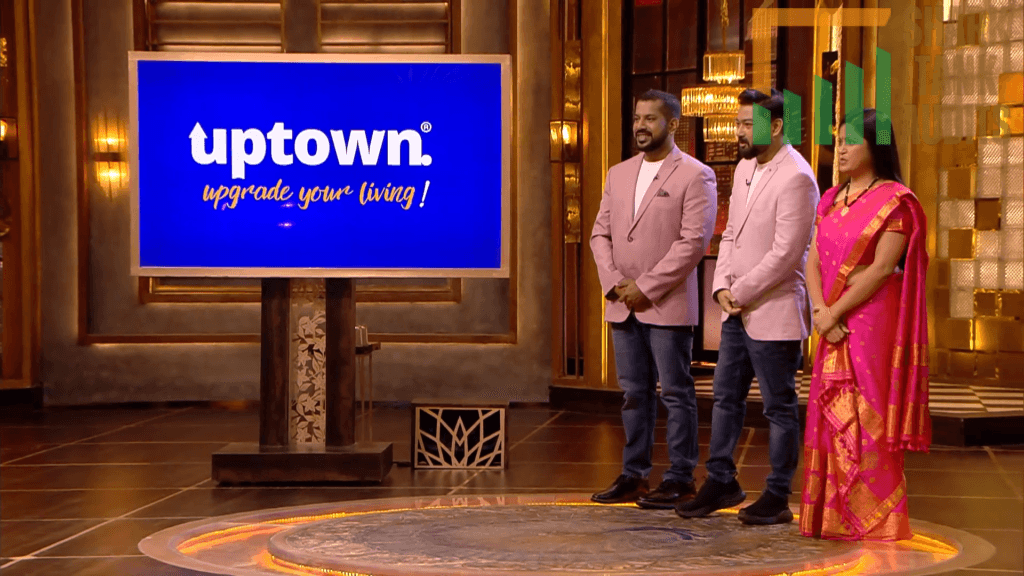
Uptown appeared on Shark Tank India Season 5, Episode 48, with leadership team featuring deep construction/professional services roots, core founders Sandeep Rajkhowa (Founder/CEO, engineer/MBA with 17 years PwC firm experience), Sanjoy Chanda (Co-founder/COO bringing media/marketing expertise), and Dr Kumari Sukanya who launched first Guwahati campus July 2021 successfully scaling into prominent regional player, seeking ₹75 lakh for 3% equity (₹25 Crore valuation) but left with no deal despite professional presentation/solid early-stage traction as Sharks appreciated founders’ background/Northeast market success though didn’t reach investment terms agreement or current business model scalability consensus.
Operating as tech-enabled co-living/”Smart Hostel” brand under “Upgrade Your Living” tagline positioned as lifestyle platform versus traditional rental service specifically targeting students/young professionals recognized by Startup India/DPIIT earning accolades (2022 Hospitality Startup Award) growing to operate 300+ beds across five Northeast India campuses offering managed accommodation service core product replacing traditional “Paying Guest” (PG) setup with community-centric infrastructure utilizing seamless online booking digital platform managing strategically located (near educational hubs/corporate offices) physical properties as “Smart Living” environment balancing private space with vibrant social ecosystems featuring community-focused prioritizing networking/social interaction over mere lodging, modern amenities (high-speed Wi-Fi/professional interior design/ample storage solutions), 24/7 CCTV surveillance/controlled entry access safety-first peace of mind, strategic college/office commute-minimizing property placement locations, and simplified digital booking/property management interface tech-driven approach with 177 monthly organic visitors requiring SEO improvement. Shark panel (Aman Gupta/Anupam Mittal/Namita Thapar/Ritesh Agarwal) offered praise/caution mix with Ritesh given OYO experience delving deep into operational complexities—while Sharks noted founders’ clear “Generation Rent” understanding they expressed significant high operational cost concerns, capital-intensive real estate tech industry nature, and heavy established giant (Stanza Living/Zolo) competing “burn” requirement.
Operating in Indian co-living market expected to grow 17% CAGR reaching nearly $12 billion valuation by 2030 as “Generation Rent” demographic expands with 30%+ India’s population living in cities and massive student migration to education hubs (Kota/Pune/Bengaluru) tapping perennial quality housing demand within currently 90% unorganized Indian PG market where Uptown has potential capturing by providing traditional PG-lacking standardized safety/hygiene/community and 37 million higher education students/80 million migrant working professionals TAM and 10-12 million Tier 1/2 city individuals seeking premium/smart hostel accommodations SAM, Uptown targets student cohort (18-23 pursuing higher education prioritizing high-speed Wi-Fi/campus proximity/”cool” social environment) and early professionals (22-30 working IT/Finance/Startups seeking seamless digital booking/security/career-building networking opportunities) among middle/upper-middle class tech-savvy individuals valuing “experience” over “ownership” willing paying 15-20% premium for managed services aiming 1% organized market capture within 5 years targeting 50,000+ bed nationwide capacity through “Passion Economy” philosophy centering where housing viewed as networking/social interaction facilitator versus just “providing bed” engaging customers by fostering community atmosphere through common lounges/social events ensuring residents feel part of modern secure socially active tribe, planning Wix-to-custom-coded/SEO-friendly CMS SEO overhaul improving 177 monthly organic visitors focusing keywords (“Smart Hostels Guwahati,” “Best Co-living Professionals”), student resident Instagram/YouTube “Day in the Life” vlogs leveraging showcasing community lifestyle social proof/influencers, major corporate park/university nearby user geo-fenced Google/Meta Ads performance marketing, Uptown social event/workshop/networking mixer frequent Reels showcasing emphasizing Passion Economy community highlights, founder Sandeep Rajkhowa urban living trend blogs/LinkedIn posts establishing Uptown as real estate tech thought leader educational content, room/common area high-quality 360-degree videos building pre-visit trust virtual tours, existing building leasing/renovating “Managed Operator” model focusing minimizing capital expenditure while maintaining brand standards asset-light approach, college placement cell/corporate HR department partnerships becoming “Preferred Housing Partner” hyper-local presence, AI-driven rent collection/maintenance tickets/community voting property management system integrating tech stack, cluster-based expansion implementing ensuring one-city profitability before next-city moving controlling burn financial mitigation, rigorous facility management SOPs implementing ensuring identical across-city Uptown experience operational mitigation, digital footprint fixing optimizing SEO reaching 5,000+ organic visitors/month scaling to 1,000 Northeast beds, Eastern India Tier 2 city (Kolkata/Bhubaneswar) entry introducing senior professional premium suite “Uptown Plus,” and national expansion targeting valuation increase pivoting from “Hostel” to Uptown brand name third-party owner property management handling “Tech-Platform” becoming leading D2C lifestyle brand standardizing India-wide urban living capitalizing rising high-quality tech-enabled housing demand expanding Smart Hostel model beyond Guwahati transitioning more urban dwellers into comfort/safety/community-prioritizing Smart Living environments leveraging Northeast India largest player regional dominance providing high-growth under-penetrated geography first-mover advantage, construction (Sandeep)/marketing (Sanjoy) combined 17+ years experience ensuring structurally sound brand-heavy Uptown properties founders’ pedigree, and Zolo/Stanza-unlike “tribe” focus reducing tenant churn increasing referral bookings community stickiness addressing Gen Z “owning” to “accessing” asset shift amid high >85% occupancy rate break-even requiring physical asset scaling capital-intensive operational burn, local municipal law/fire safety norm/different state commercial-vs-residential zoning navigating regulatory hurdles, and Uptown market share gaining price-undercutting well-funded unicorn competing market giants challenges.
The Episode Verdicts
Despite some of the most impressive technology seen this season, the episode was a lesson in the importance of the “Pitch Performance.” While one deep-tech startup secured a massive deal despite a “bad pitch,” others with solid traction were held back by unit economics and safety concerns.
| Pitch | Brand | Ask | Deal Status | Shark(s) Involved |
| Pitch 1 | Ctruh | ₹1 Cr for 1.2% | ₹1 Cr for 2.4% | Anupam Mittal & Vineeta Singh |
| Pitch 2 | SteamPRO | ₹1 Cr for 2% | No Deal | Concerns over 20% gross margins and safety certifications. |
| Pitch 3 | Uptown | ₹75 Lakh for 3% | No Deal | High operational costs and “burn” requirements in co-living. |
Key Market Insight: The Browser-Native Edge
- The deal for Ctruh underscores a massive 2026 trend: Frictionless UX. In a market where 78% of users in Tier 2/3 cities have limited device storage, any XR (Extended Reality) tech that requires an app-install is likely to fail.
- Ctruh’s “browser-native” approach is the new gold standard for Indian e-commerce.


Leave feedback about this
You must be logged in to post a comment.