
Littlecherrymom Shark Tank India Episode Review
Littlecherrymom appeared on Shark Tank India Season 5, Episode 45, with co-founders Jyoti Srivastava (chemical engineer/UNICEF-certified Infant and Young Child Feeding expert serving as primary brand face, transition from engineering to entrepreneurship sparked by own mother journey struggling to find child balanced nutrition) and Gaurav (leading International Business/Marketing strategies) seeking ₹75 lakh for 3% equity (₹25 Crore valuation) but left with no deal despite compelling presentation and strong child nutrition improvement mission as Sharks appreciated founder expertise/product quality but discussions didn’t result in investment.
The emerging Meerut-based Indian health-food brand dedicated to organic/chemical-free/nutrient-dense infant/toddler meal options bridges traditional Indian nutritional wisdom with modern convenience providing natural processed junk food alternative specializing in millet-based nutrition (Ragi/Jowar/Bajra ancient grains) through clean-label philosophy excluding all preservatives/artificial flavors offering Cereals/Flours (Sprouted Ragi/Jowar mixes), Snacks/Meals (healthy pancake mixes/millet noodles), Health Boosters (Amlaprash immunity/Happy Tummy Mix digestion specialized products), and Natural Sweeteners (healthier refined sugar alternatives) featuring 100% preservative/artificial color/synthetic flavor-free formulations, supergrain high iron/fiber/protein through sprouted millets, toddler-sensitive digestive system formulation with gluten-free options, and busy modern parent easy preparation without nutritional integrity sacrifice with 1,023 monthly organic visitors requiring SEO improvement highlighting iron-rich millet-based growing children diet importance. Sharks reacted positively to Jyoti’s deep UNICEF-certified IYCF expert domain expertise noting high premium organic baby food segment growth potential with discussions revolving around online-first distribution model and how Littlecherrymom competes against larger established players maintaining homemade feel/traditional taste profiles.
Operating in Indian baby food market valued at $1.16 billion (2024) projected to reach $1.98 billion by 2030 (9.3% CAGR) with organic segment growing 7.05% CAGR reaching $327 million by 2030 within $10.55 billion entire infant formula market (2026) and $260 million (₹2,150+ Crore) urban premium organic baby food/healthy snacks segment amid government heavy millet promotion (PLI scheme with ₹800 Crore budget) positioning to leverage supergrain status for premium pricing at pivotal conventional mass-market to premium health-conscious alternative transition, Littlecherrymom targets “Conscious Urban Parent” (25-40, Tier 1/2 cities Mumbai/Delhi/Bangalore/Pune)—dual-income high disposable income households and working mothers prioritizing time-saving without homemade quality compromise—who scrutinize clean labels, avoid refined sugar, and value traditional Indian grains (Ragi/Bajra) over Western processed wheat aiming 2-3% premium urban market (₹40-60 Crore) within 3 years optimizing digital presence expanding D2C reach, positioning as parenting partner versus manufacturer through parenting workshops (child nutrition/eating habits sessions), expert webinars providing educational content helping parents navigate solid food transition, and supportive community building where parents share experiences/nutritional tips, planning product-pushing to expert-led content transition creating Jyoti-led “Nutritional Wiki” covering IYCF guidelines/weaning charts/millet recipes, SEO overhaul targeting high-intent long-tail keywords (“best sprouted ragi 6 month old,” “sugar-free snacks toddlers India”) capturing consideration-stage users, Instagram/YouTube “Behind the Science” videos explaining chemical-free sprouting process building trust via social commerce, WordPress site mobile speed optimization implementing subscription models (“Monthly Milestone Boxes”) increasing LTV, Amazon/FirstCry/BigBasket e-commerce aggregator presence expansion, Zepto/Blinkit quick-commerce partnerships for Tier 1 city “Emergency Snack” refills, unique functional blend (“Amlaprash”) patenting combating copycats leveraging UNICEF-certified scientific authority trust moat versus generic competitor marketing, “Cloud Kitchen” small-batch manufacturing model using keeping fresh inventory reducing waste maintaining preservative-free freshness amid tight logistics supply chain requirements, 10x SEO traffic growth achieving ₹50 lakh MRR, Ready-to-Eat travel pouch launches (highest 7.9% CAGR growth segment), Middle East/UK international market entry targeting Indian diaspora seeking traditional grains, and product-brand to parenting-platform shift (including consultations/workshops) commanding tech-enabled FMCG 5x-8x revenue multiples building healthy next generation making traditional Indian supergrains every household staple scaling distribution beyond current online-first model reaching wider health-conscious parent demographic across India and potentially international markets combating rising children processed food consumption.
Website Information
- Website:- Littlecherrymom
- Build on WordPress
- Average SEO Performance, SEO Improvement Needed.
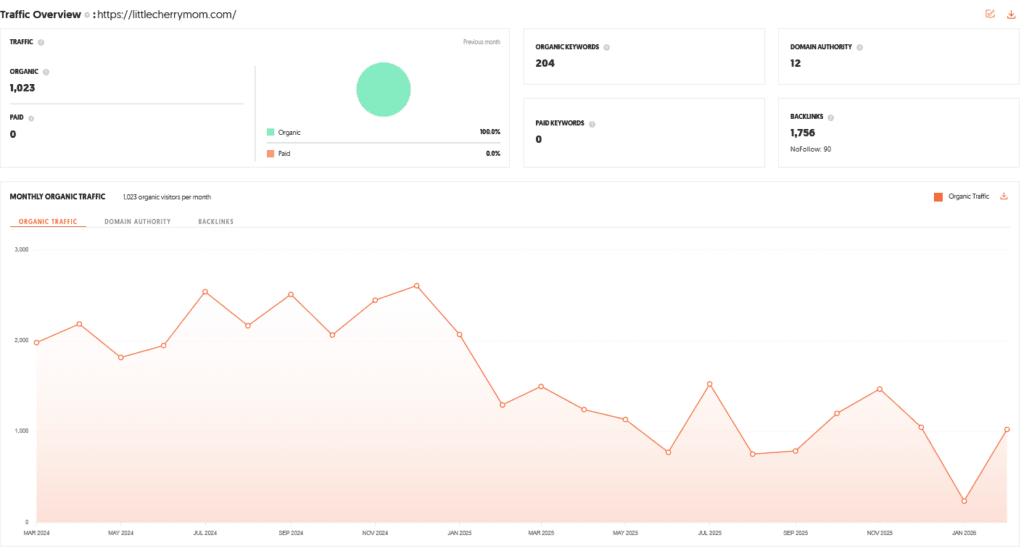
- ORGANIC TRAFFIC: 1023 visitors per month.
Littlecherrymom Founders
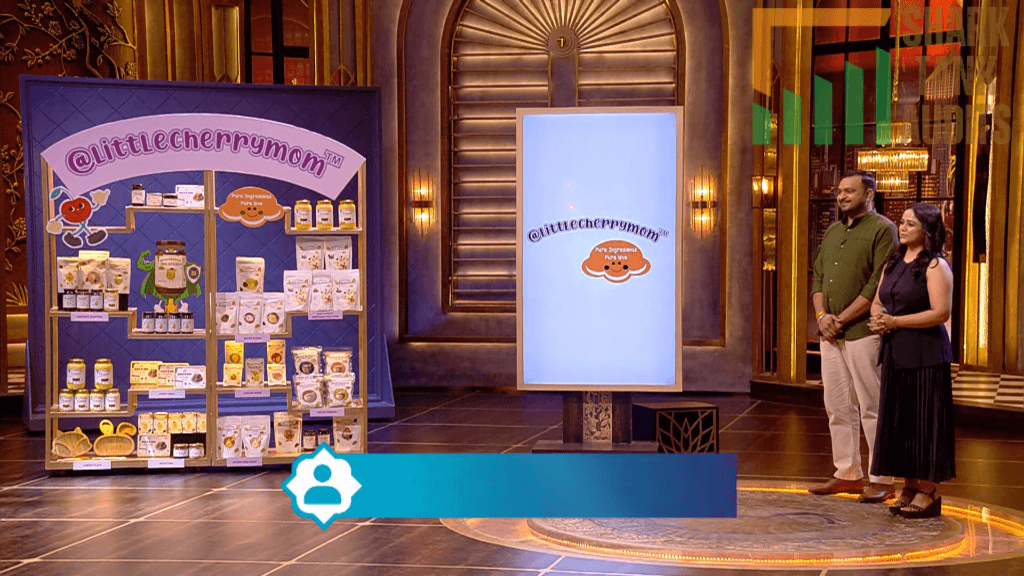
- The brand was co-founded by Jyoti Srivastava and Gaurav.
- Jyoti, a chemical engineer and UNICEF-certified expert in Infant and Young Child Feeding (IYCF), serves as the primary face of the brand.
- Her transition from engineering to entrepreneurship was sparked by her own journey as a mother struggling to find balanced nutrition for her child.
- Gaurav complements this mission by leading the company’s International Business and Marketing strategies.
Littlecherrymom Brand Overview
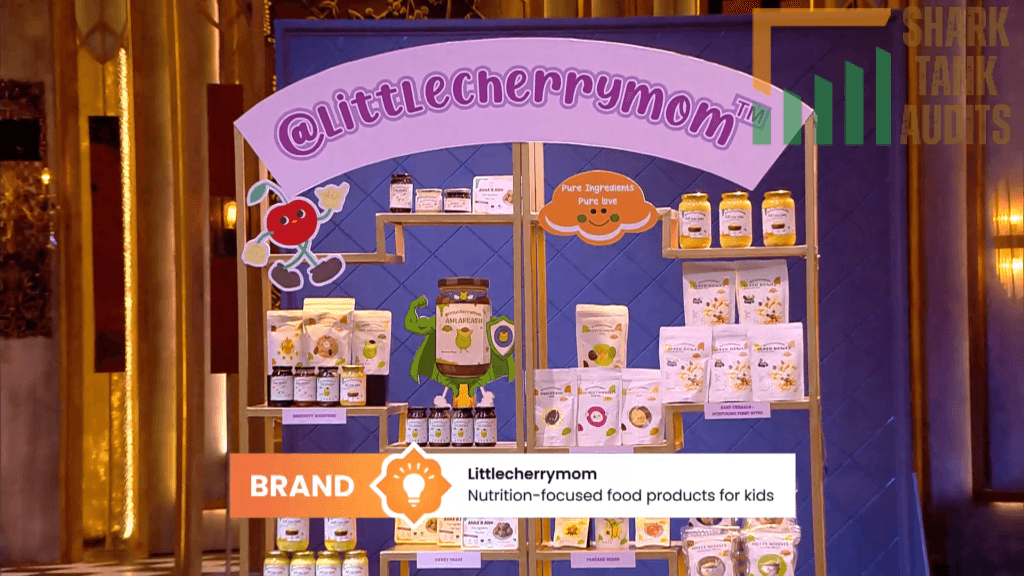
- Littlecherrymom is an emerging Indian health-food brand dedicated to organic, chemical-free, and nutrient-dense meal options for infants and toddlers.
- By bridging the gap between traditional Indian nutritional wisdom and modern convenience, the brand provides a natural alternative to processed junk food.
- They specialize in millet-based nutrition, focusing on a “clean label” philosophy that excludes all preservatives and artificial flavors.
Littlecherrymom Shark Tank India Appearance and Ask
- The founders of Littlecherrymom appeared on Shark Tank India Season 5, Episode 45.
- During their pitch, they highlighted the importance of iron-rich, millet-based diets for growing children.
- They entered the tank with a valuation-backed request, seeking an investment of ₹75 lakhs in exchange for 3% equity in the company.
Season and Episode Air Date
- Season: 05
- Episode: 45
- Episode Air Date: Friday, 06 March, 2026
Littlecherrymom Product Overview
The Littlecherrymom product portfolio is centered around millet-based nutrition, utilizing ancient grains such as Ragi, Jowar, and Bajra. Their offerings are categorized into:
- Cereals & Flours: Sprouted Ragi and Jowar mixes.
- Snacks & Meals: Healthy pancake mixes and millet noodles.
- Health Boosters: Specialized products like Amlaprash for immunity and Happy Tummy Mix for digestion.
- Natural Sweeteners: Healthier alternatives to refined sugar.
Littlecherrymom Investor Reactions
- The sharks reacted positively to Jyoti’s deep domain expertise as a UNICEF-certified IYCF expert.
- The panel noted the high growth potential in the premium organic baby food segment.
- Discussions primarily revolved around the brand’s “online-first” distribution model and how Littlecherrymom competes against larger, established players by maintaining a “homemade” feel and traditional taste profiles.
Littlecherrymom Customer Engagement Philosophy
Littlecherrymom positions itself as a partner in parenting rather than just a manufacturer. Their engagement strategy includes:
- Parenting Workshops: Hosting sessions on child nutrition and eating habits.
- Educational Content: Providing expert webinars to help parents navigate the transition to solid foods.
- Community Building: Fostering a supportive environment where parents can share experiences and nutritional tips.
Littlecherrymom Product Highlights
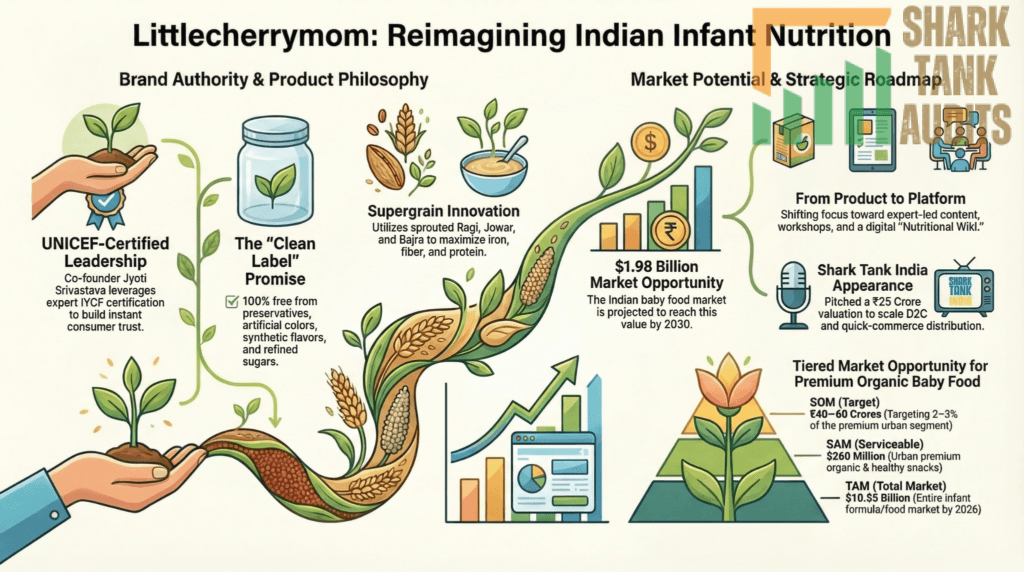
- Clean Label: 100% free from preservatives, artificial colors, and synthetic flavors.
- Supergrain Focused: High in iron, fiber, and protein through the use of sprouted millets.
- Digestive Friendly: Formulated specifically for the sensitive digestive systems of toddlers, with many gluten-free options.
- Convenience: Designed to be easy to prepare for busy, modern parents without sacrificing nutritional integrity.
Littlecherrymom Future Vision
- The future vision for Littlecherrymom is to build a healthy next generation by making traditional Indian supergrains a staple in every household.
- Based in Meerut, the founders aim to scale their distribution beyond their current online-first model to reach a wider demographic of health-conscious parents across India and potentially international markets, continuing to combat the rise of processed food consumption in children.
Littlecherrymom Deal Finalized or Not
- Despite a compelling presentation and a strong mission to improve child nutrition in India, a deal was not finalized for Littlecherrymom.
- While the Sharks appreciated the founder’s expertise and the quality of the products, the discussions did not result in an investment during the episode.
| Title | Details |
|---|---|
| Brand Name | Littlecherrymom |
| Website Platform | Built on WordPress |
| SEO Performance | Average SEO performance, SEO improvement needed |
| Organic Traffic | 1,023 visitors per month |
| Founder 1 | Jyoti Srivastava |
| Founder 2 | Gaurav |
| Founder Expertise | Jyoti Srivastava is a chemical engineer and UNICEF-certified IYCF expert |
| Founder Role | Jyoti Srivastava serves as the primary face of the brand |
| Founder Motivation | Inspired by her own journey finding balanced nutrition for her child |
| Co Founder Role | Gaurav manages international business and marketing |
| Company Location | Meerut, India |
| Business Type | Organic baby food and toddler nutrition brand |
| Brand Focus | Organic, chemical-free and nutrient-dense meals for infants and toddlers |
| Brand Philosophy | Clean label nutrition without preservatives or artificial flavors |
| Core Ingredient Focus | Millet-based nutrition |
| Key Grains Used | Ragi, Jowar and Bajra |
| Brand Positioning | Natural alternative to processed baby food |
| Shark Tank Appearance | Shark Tank India Season 5 |
| Episode Number | Episode 45 |
| Episode Air Date | Friday, 06 March 2026 |
| Investment Ask | ₹75 Lakhs for 3% equity |
| Implied Valuation | ₹25 Crores |
| Product Category 1 | Baby cereals and flour mixes |
| Product Category 2 | Healthy snacks and ready meal mixes |
| Product Category 3 | Health boosters and immunity products |
| Product Category 4 | Natural sweeteners |
| Product Example 1 | Sprouted ragi mix |
| Product Example 2 | Jowar flour mix |
| Product Example 3 | Healthy pancake mix |
| Product Example 4 | Millet noodles |
| Product Example 5 | Amlaprash immunity booster |
| Product Example 6 | Happy Tummy digestive mix |
| Product Feature | High iron, fiber and protein content |
| Digestive Benefit | Formulated for sensitive toddler digestion |
| Diet Feature | Many products are gluten free |
| Preparation Benefit | Easy to prepare for busy parents |
| Investor Reaction | Sharks appreciated founder expertise and mission |
| Discussion Focus | Online first distribution model and competition |
| Customer Philosophy | Brand positions itself as a parenting partner |
| Community Strategy | Build community of parents sharing nutrition tips |
| Customer Engagement Method 1 | Parenting workshops |
| Customer Engagement Method 2 | Educational webinars on infant nutrition |
| Customer Engagement Method 3 | Community discussions among parents |
| Deal Outcome | No deal finalized |
| Reason for No Deal | Investment discussions did not conclude with agreement |
| Brand Impact | National exposure through Shark Tank India |
| Industry Market | Indian baby food market |
| Baby Food Market Size | USD 1.16 Billion in 2024 |
| Baby Food Market Forecast | USD 1.98 Billion by 2030 |
| Baby Food Market Growth Rate | 9.3 percent CAGR |
| Organic Baby Food Market | Expected to reach USD 327 Million by 2030 |
| Organic Segment Growth | 7.05 percent CAGR |
| Government Millet Promotion | Millet promotion programs including PLI scheme |
| Government Budget Support | ₹800 Crore millet promotion support |
| Total Addressable Market | USD 10.55 Billion Indian baby food market |
| Serviceable Addressable Market | USD 260 Million premium organic baby food segment |
| Serviceable Obtainable Market | ₹40 to ₹60 Crores potential market share |
| Primary Target Audience | Parents aged 25 to 40 |
| Consumer Segment | Conscious urban parents |
| Geographic Target | Tier 1 and Tier 2 cities |
| Major Target Cities | Mumbai, Delhi, Bangalore and Pune |
| Household Profile | Dual income families with working parents |
| Consumer Behavior | Parents preferring clean label and natural grains |
| Consumer Preference | Avoid refined sugar and processed foods |
| Marketing Strategy | Expert led educational content |
| Content Strategy | Nutrition guides, weaning charts and millet recipes |
| SEO Strategy | Target keywords like sprouted ragi for babies |
| Social Media Strategy | Instagram and YouTube science based videos |
| Trust Strategy | Highlight UNICEF certified expertise |
| Distribution Phase 1 | Direct to consumer website optimization |
| Website Strategy | Improve WordPress mobile speed and UX |
| Subscription Strategy | Monthly milestone nutrition boxes |
| Distribution Phase 2 | Marketplace expansion |
| Online Marketplace Strategy | Sell on Amazon, FirstCry and BigBasket |
| Distribution Phase 3 | Quick commerce expansion |
| Quick Commerce Partners | Zepto and Blinkit |
| Competitive Advantage | Founder authority in infant nutrition |
| Product Advantage | 100 percent preservative free clean label products |
| Market Advantage | Leveraging rising popularity of millets |
| Competition | Slurrp Farm |
| Competition 2 | Happa Foods |
| Pricing Challenge | Premium pricing limits Tier 3 expansion |
| Supply Chain Challenge | Maintaining freshness without preservatives |
| Success Factor | Trust built through scientific nutrition expertise |
| Differentiation Strategy | Patent unique nutrition blends like Amlaprash |
| Manufacturing Strategy | Small batch cloud kitchen production |
| Year 1 Plan | Achieve 10x SEO traffic growth |
| Year 1 Revenue Goal | ₹50 Lakhs monthly recurring revenue |
| Year 2 Plan | Launch ready to eat travel pouches |
| High Growth Segment | Ready to eat baby food |
| Year 3 Plan | Expand to international markets |
| International Target Markets | Middle East and United Kingdom |
| Diaspora Target | Indian families living abroad |
| Valuation Strategy | Build parenting platform with workshops and consultations |
| Long Term Goal | Become a trusted nutrition platform for parents |
Littlecherrymom Shark Tank India Business Plan
1. Littlecherrymom Business Potential in India
The Indian baby food market is at a pivotal transition from conventional mass-market products to premium, health-conscious alternatives.
- Market Growth: The India Baby Food Market is valued at approximately USD 1.16 Billion in 2024 and is projected to reach USD 1.98 Billion by 2030, growing at a CAGR of 9.3%.
- The Organic Shift: The organic segment specifically is expected to grow at a CAGR of 7.05%, reaching nearly USD 327 Million by 2030.
- Millet Advantage: With the Indian government’s heavy promotion of millets (PLI scheme with an ₹800 crore budget), Littlecherrymom is perfectly positioned to leverage “supergrain” status for premium pricing.
2. Littlecherrymom Total Addressable Market (TAM)
- TAM (Total Addressable Market): The entire Indian baby food and infant formula market, valued at USD 10.55 Billion in 2026.
- SAM (Serviceable Available Market): The urban, premium organic baby food and healthy snacks segment, estimated at USD 260 Million (₹2,150+ Crores).
- SOM (Serviceable Obtainable Market): Littlecherrymom can realistically target 2-3% of the premium urban market (approx. ₹40–60 Crores) within 3 years by optimizing its digital presence and expanding D2C reach.
3. Littlecherrymom Ideal Target Audience & Demographics
- Primary Persona: “The Conscious Urban Parent” (Ages 25–40) residing in Tier 1 and Tier 2 cities (Mumbai, Delhi, Bangalore, Pune).
- Demographics: Dual-income households, high disposable income, and working mothers who prioritize time-saving without compromising on “homemade” quality.
- Psychographics: Parents who scrutinize “Clean Labels,” avoid refined sugar, and value traditional Indian grains (Ragi, Bajra) over Western processed wheat.
4. Littlecherrymom Marketing & Digital Strategy
Currently, Littlecherrymom has a baseline organic traffic of ~1,023 visitors/month, indicating a massive “blue ocean” for SEO growth.
- Content Strategy: Transition from product-pushing to “Expert-Led Content.” Create a “Nutritional Wiki” led by Jyoti (UNICEF-certified) covering IYCF guidelines, weaning charts, and millet recipes.
- SEO Overhaul: Target high-intent long-tail keywords like “best sprouted ragi for 6 month old” or “sugar-free snacks for toddlers India” to capture users at the consideration stage.
- Social Commerce: Use Instagram/YouTube for “Behind the Science” videos, explaining the chemical-free sprouting process to build trust.
5. Littlecherrymom Distribution Strategy
- Phase 1 (D2C Excellence): Optimize the WordPress site for mobile speed and implement subscription models (e.g., “Monthly Milestone Boxes”) to increase Life-Time Value (LTV).
- Phase 2 (E-commerce Aggregators): Expand presence on Amazon, FirstCry, and BigBasket.
- Phase 3 (Quick Commerce): Partner with Zepto/Blinkit for “Emergency Snack” refills in Tier 1 cities.
6. Littlecherrymom Advantages & Challenges
| Littlecherrymom Advantages | Littlecherrymom Challenges |
| Founder Authority: UNICEF-certified expertise provides instant trust. | Market Saturation: Competition from Slurrp Farm and Happa Foods. |
| Clean Label: 100% preservative-free is a major USP in a “chemical-wary” market. | Price Sensitivity: Premium pricing may limit reach to Tier 3 markets. |
| First-Mover in Millets: Leveraging the “International Year of Millets” momentum. | Supply Chain: Maintaining freshness without preservatives requires tight logistics. |
7. Why Littlecherrymom Can Succeed & Mitigation Strategies
- Trust as a Moat: While competitors use generic marketing, Littlecherrymom uses scientific authority.
- Mitigation: Combat copycats by patenting unique functional blends like “Amlaprash.”
- Operational Agility: Being a leaner brand allows for faster product iteration based on community feedback.
- Mitigation: Use a “Cloud Kitchen” model for small-batch manufacturing to keep inventory fresh and reduce waste.
8. Littlecherrymom Future Business Roadmap & Valuation
To reach the valuation sought on Shark Tank India (₹25 Cr post-money), the brand must focus on:
- Year 1 (Foundation): Achieve 10x SEO traffic growth and hit ₹50 Lakhs Monthly Recurring Revenue (MRR).
- Year 2 (Expansion): Launch “Ready-to-Eat” (RTE) travel pouches (highest growth segment at 7.9% CAGR).
- Year 3 (Scaling): Enter international markets (Middle East/UK) targeting the Indian diaspora seeking traditional grains.
- Valuation Strategy: Shift from a “Product Brand” to a “Parenting Platform” (including consultations/workshops) to command tech-enabled FMCG multiples (5x–8x Revenue).







Littlecherrymom Shark Tank India Episode Review