RehabVeda Shark Tank India Episode Review
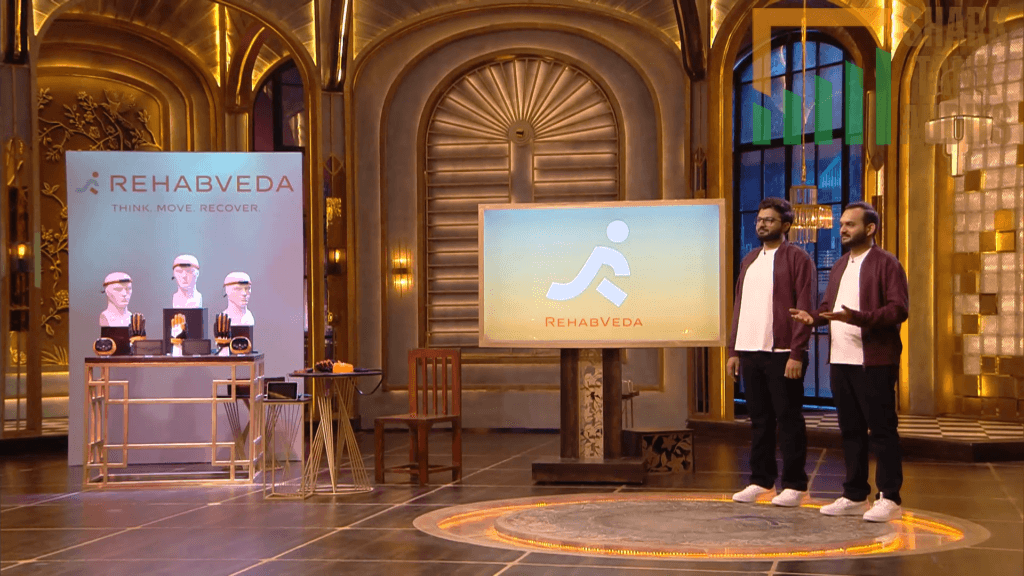
RehabVeda appeared on Shark Tank India Season 5, Episode 40, with co-founders Shyam Parmar (IIT Roorkee alumnus, lead technical visionary with AI/robotics/Brain-Computer Interface expertise) and Neel Patel (operations/product strategy manager focusing practical engineering solutions application for therapists/patients) seeking ₹1 Crore for 2.5% equity (₹40 Crore valuation) and successfully closed a deal for ₹1 Crore for 3% equity (₹33.33 Crore valuation) with Sharks Namita Thapar and Mohit Yadav after delivering compelling pitch educating Sharks on brain stroke severity with live R1 system demonstration showing real-time brain signal translation.
The deep-tech medical device startup rooted in neuroscience specializes in AI-powered neurotechnology-based rehabilitation solutions for stroke/paralysis recovery through flagship R1 System comprehensive BCI (Brain-Computer Interface) kit integrating EEG Headband (reading motor-imagery brain activity), AI Processing Unit (decoding brain signals in milliseconds), and Pneumatic Glove (physically moving patient fingers based on thoughts) designed for clinic/physiotherapist accessibility and eventual home use focusing on active intent-driven recovery utilizing brain neuroplasticity helping patients relearn movements versus traditional passive physiotherapy, achieving 80% patient improvement rate with average 8-point Fugl-Meyer Assessment increase, filed patent (Application No. 202521010955), initiated FDA 510(k) process pursuing ISO/UL certifications, developed through PIERC Startup Growth Pad Program at Parul University providing critical mentoring/investor readiness, and 50x post-Shark Tank inquiry increase with 0 organic visitors requiring SEO improvement. Sharks impressed by “Make in India” potential and technical sophistication—Namita (Emcure Pharmaceuticals) valued clinical/pharmaceutical synergy while Mohit (Minimalist) saw D2C distribution potential, noting rarity of advanced deep-tech medical devices on platform.
Operating in global stroke rehabilitation market valued at $95-143 billion (7% CAGR) with India witnessing 1.8 million annual new stroke cases (one every 40 seconds) and <20% survivor access to advanced neuro-rehabilitation creating massive gap within immediate $1.2 billion Indian addressable robotic/AI-rehab device market targeting private hospitals, premium physiotherapy chains, and high-income home-care patients, RehabVeda targets B2B (multi-specialty hospital neurology departments, physiotherapy/rehabilitation clinics, old-age homes/assisted living facilities) and B2C (stroke survivors 45-75 years, caregivers/children 25-45 tech-savvy urban metros) among middle/upper-middle-class Tier 1/2 city families prioritizing quality of life and intent-driven recovery, offering locally ma
Website Information
- Website:- RehabVeda
- Build on WordPress
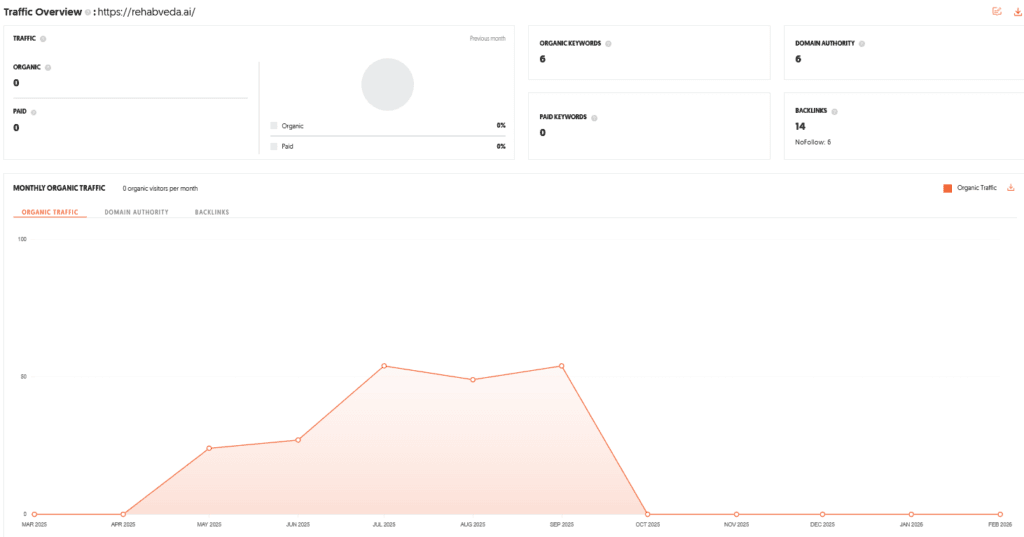
- Poor SEO Performance, SEO Improvement Needed.
- ORGANIC TRAFFIC: 0 visitors per month.
The Founders of RehabVeda
- The startup was co-founded by Shyam Parmar and Neel Patel.
- Shyam Parmar, an alumnus of IIT Roorkee, serves as the lead technical visionary with expertise in AI, robotics, and Brain-Computer Interface (BCI) technology.
- Neel Patel manages operations and product strategy, focusing on the practical application of their engineering solutions for therapists and patients.
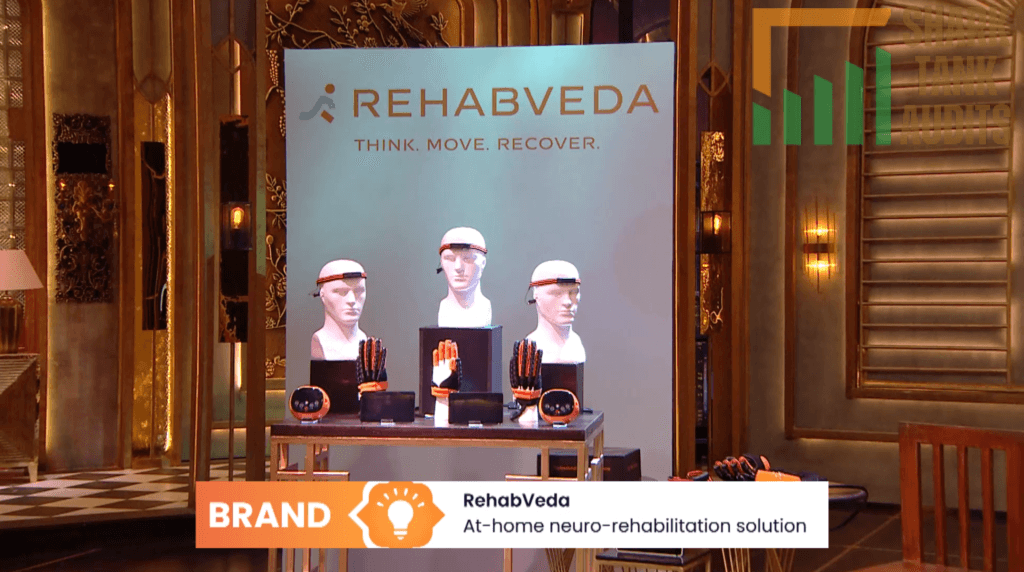
Brand Overview of RehabVeda
- RehabVeda is a deep-tech medical device startup rooted in neuroscience.
- It specializes in AI-powered, neurotechnology-based rehabilitation solutions designed specifically for stroke and paralysis recovery.
- Unlike traditional passive physiotherapy, RehabVeda focuses on active, intent-driven recovery by utilizing the brain’s neuroplasticity to help patients relearn movements.
Shark Tank India Appearance & Ask for RehabVeda
- RehabVeda appeared in Season 5, Episode 40 (aired February 27, 2026).
- The founders delivered a compelling pitch by first educating the Sharks on the severity of brain strokes.
- They presented a live demonstration of their R1 system, showing real-time brain signal translation.
- Original Ask: ₹1 Crore for 2.5% equity.
Season and Episode Air Date
- Season: 05
- Episode: 40
- Episode Air Date: Friday, 27 February, 2026
Product Overview of RehabVeda
- The flagship product is the R1 System, a comprehensive BCI (Brain-Computer Interface) kit. It consists of three integrated components:
- EEG Headband: Reads motor-imagery brain activity.
- AI Processing Unit: Decodes brain signals in milliseconds.
- Pneumatic Glove: Physically moves the patient’s fingers based on their thoughts. The system is designed to be accessible for clinics, physiotherapists, and eventually for home use.
Investor Reactions to RehabVeda
- The Sharks were impressed by the “Make in India” potential and the technical sophistication of the device.
- Namita Thapar (Emcure Pharmaceuticals) valued the clinical and pharmaceutical synergy, while Mohit Yadav (Minimalist) saw potential in their D2C distribution model.
- The Sharks noted the rarity of seeing such advanced deep-tech medical devices on the platform.
Customer Engagement Philosophy of RehabVeda
- RehabVeda’s philosophy centers on restoring dignity and independence.
- The brand focuses on solving the lack of motivation in traditional therapy by making rehabilitation “active.”
- By allowing a patient to move through their own “thought intent,” the company provides hope and measurable progress to families and survivors who previously felt stuck in stagnant recovery cycles.
Product Highlights of RehabVeda
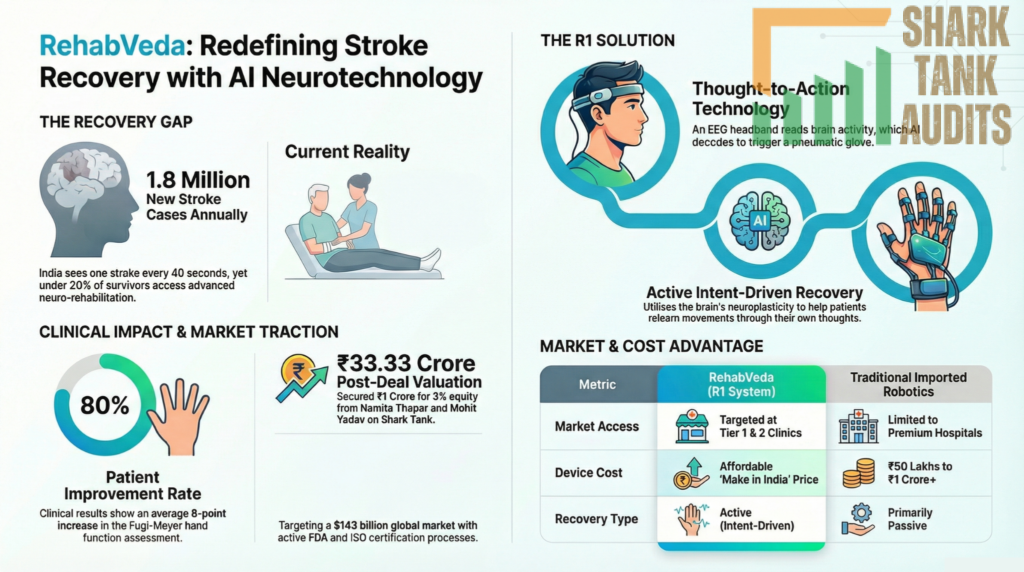
- Clinical Success: 80% of patients showed improvement in hand function with an average 8-point increase in the Fugl-Meyer Assessment.
- Intellectual Property: A patent has been filed (Application No. 202521010955).
- Global Standards: The startup has initiated the FDA 510(k) process and is pursuing ISO and UL certifications.
- Incubation Support: Developed through the PIERC Startup Growth Pad Program at Parul University, which provided critical mentoring and investor readiness.
Future Vision of RehabVeda
The company aims to make advanced neuro-rehabilitation affordable and accessible globally. Key future milestones include:
- Completing a 17,000 sq ft robotic rehabilitation center in Ahmedabad.
- Expanding international distribution through existing partnerships in Singapore and operations in the US (Florida) and Europe.
- Scaling their impact following a 50x increase in inquiries post-Shark Tank to become a leader in the $95–$143 billion global stroke rehab market.
Deal Finalized for RehabVeda
- Yes, a deal was successfully finalized.
- After demonstrating the clinical impact and technical viability of their product, the founders secured an investment from Sharks Namita Thapar and Mohit Yadav.
- Final Deal: ₹1 Crore for 3% equity.
| Title | Details |
|---|---|
| Brand Name | RehabVeda |
| Website Platform | Built on WordPress |
| SEO Performance | Poor SEO performance, SEO improvement needed |
| Organic Traffic | 0 visitors per month |
| Founders | Shyam Parmar and Neel Patel |
| Shyam Parmar Background | IIT Roorkee alumnus, expertise in AI, robotics, and Brain-Computer Interface (BCI) technology |
| Neel Patel Role | Manages operations and product strategy |
| Brand Category | Deep-tech medical device startup rooted in neuroscience |
| Core Focus | AI-powered neurotechnology-based rehabilitation for stroke and paralysis recovery |
| Therapy Approach | Active, intent-driven recovery using neuroplasticity |
| Shark Tank Appearance | Season 5, Episode 40 |
| Episode Air Date | Friday, 27 February 2026 |
| Original Ask | ₹1 Crore for 2.5% equity |
| Final Deal | ₹1 Crore for 3% equity |
| Investors | Namita Thapar and Mohit Yadav |
| Flagship Product | R1 System (Brain-Computer Interface Kit) |
| R1 Component 1 | EEG Headband (reads motor-imagery brain activity) |
| R1 Component 2 | AI Processing Unit (decodes brain signals in milliseconds) |
| R1 Component 3 | Pneumatic Glove (moves patient’s fingers based on thoughts) |
| Product Accessibility | Designed for clinics, physiotherapists, and future home use |
| Clinical Success | 80% patients showed improvement with average 8-point Fugl-Meyer increase |
| Intellectual Property | Patent filed (Application No. 202521010955) |
| Regulatory Progress | Initiated FDA 510(k), pursuing ISO and UL certifications |
| Incubation Support | Developed under PIERC Startup Growth Pad Program at Parul University |
| Robotic Center Plan | 17,000 sq ft robotic rehabilitation center in Ahmedabad |
| International Presence | Partnerships in Singapore; operations in US (Florida) and Europe |
| Inquiry Growth | 50x increase post Shark Tank appearance |
| Global Stroke Rehab Market | $95–$143 Billion, ~7% CAGR |
| India Stroke Incidence | 1.8 million new stroke cases annually (1 every 40 seconds) |
| Access Gap | Less than 20% of survivors access advanced neuro-rehabilitation |
| Imported Device Cost | ₹50 Lakhs to ₹1 Crore |
| India Addressable Market | $1.2 Billion for robotic & AI rehab devices |
| Expansion Scope | Adaptable for Spinal Cord Injuries (SCI) and Traumatic Brain Injuries (TBI) |
| B2B Target Segment | Multi-specialty hospitals, rehab clinics, old-age homes |
| B2C Target Segment | Stroke survivors (45–75 years), caregivers (25–45 years) |
| Target Demographic | Middle & upper-middle-class families in Tier 1 & 2 cities |
| SEO Strategy | Target keywords like AI stroke recovery & robotic physiotherapy glove |
| Content Strategy | Video testimonials and 3D “How it Works” animations |
| Social Proof Strategy | Patient success stories on Instagram and LinkedIn |
| Webinar Strategy | Monthly sessions with neurologists and founders |
| Distribution Model 1 | Direct-to-Consumer (D2C) home-use kits |
| Distribution Model 2 | Institutional hospital partnerships |
| International Expansion Plan | ASEAN via Singapore; US via Florida entity post-FDA |
| Competitive Advantage 1 | 80% clinical improvement rate |
| Competitive Advantage 2 | Patented AI EEG decoding algorithms |
| Key Challenge 1 | Regulatory approvals (FDA, ISO) |
| Key Challenge 2 | High initial system cost |
| Key Challenge 3 | Training physiotherapists on BCI tools |
| Mitigation Strategy 1 | Hire global clinical consultants |
| Mitigation Strategy 2 | Rehab-as-a-Service (RaaS) leasing model |
| Phase 1 Goal | Launch Ahmedabad center; reach 50,000+ monthly visitors; finalize ISO |
| Phase 2 Goal | Launch lower-limb BCI exoskeleton; secure FDA approval |
| Phase 3 Goal | Integrate VR for gamified recovery |
| Long-Term Valuation Target | ₹500 Crore+ valuation within 3–5 years |
RehabVeda Shark Tank India Business Plan
1. Business Potential of RehabVeda in India: Facts and Data
- High Incidence Rates for RehabVeda: India witnesses approximately 1.8 million new stroke cases annually, which translates to one stroke every 40 seconds.
- Unmet Medical Need for RehabVeda: Less than 20% of stroke survivors in India have access to advanced neuro-rehabilitation, creating a massive gap that RehabVeda’s R1 system can fill.
- The “Make in India” Advantage for RehabVeda: By manufacturing locally, RehabVeda can offer BCI (Brain-Computer Interface) technology at a fraction of the cost of imported robotic systems, which currently cost upwards of ₹50 Lakhs to ₹1 Crore.
- Healthcare Infrastructure Growth for RehabVeda: With the Indian government’s push via Ayushman Bharat and digital health missions, the demand for tech-enabled recovery tools in Tier 2 and Tier 3 cities is surging.
2. Total Addressable Market (TAM) for RehabVeda
- Global Market Scope for RehabVeda: The global stroke rehabilitation market is valued between $95 billion and $143 billion, growing at a CAGR of ~7%.
- Serviceable Obtainable Market (SOM) for RehabVeda: In India alone, the immediate addressable market for robotic and AI-rehab devices is estimated at $1.2 billion, targeting private hospitals, premium physiotherapy chains, and high-income home-care patients.
- Expansion Potential for RehabVeda: Beyond stroke, the R1 system’s technology can be adapted for Spinal Cord Injuries (SCI) and Traumatic Brain Injuries (TBI), potentially doubling the TAM for RehabVeda.
3. Ideal Target Audience and Demographics for RehabVeda
- B2B Segment for RehabVeda: * Multi-specialty hospitals (Neurology departments).
- Physiotherapy and Rehabilitation clinics.
- Old-age homes and assisted living facilities.
- B2C Segment for RehabVeda: * Stroke survivors (Primary age group: 45–75 years).
- Caregivers (Children of stroke patients, aged 25–45, tech-savvy, residing in urban metros).
- Demographics for RehabVeda: Middle to upper-middle-class families in Tier 1 and Tier 2 cities who prioritize quality of life and “intent-driven” recovery over traditional methods.
4. Marketing, Content, and Digital Strategy for RehabVeda
- SEO & Website Overhaul for RehabVeda: Since current organic traffic is zero, the WordPress site needs an immediate technical SEO audit, targeting keywords like “AI stroke recovery,” “BCI rehabilitation India,” and “robotic physiotherapy glove.”
- Educational Content Strategy for RehabVeda: Produce high-quality video testimonials and “How it Works” 3D animations explaining BCI technology to simplify the complex “thought-to-action” process for laypeople.
- Social Proof for RehabVeda: Leverage the 50x increase in inquiries post-Shark Tank by featuring “Patient Success Stories” on Instagram and LinkedIn to build clinical trust.
- Webinars and E-clinics for RehabVeda: Host monthly live sessions with neurologists and the founders (Shyam and Neel) to discuss neuroplasticity and the benefits of the RehabVeda R1 system.
5. Distribution Strategy for RehabVeda
- Direct-to-Consumer (D2C) for RehabVeda: Utilizing Mohit Yadav’s expertise to create a seamless e-commerce funnel for home-use R1 kits.
- Institutional Sales for RehabVeda: Partnering with Namita Thapar’s network in the pharmaceutical and hospital sectors (Emcure ecosystem) to place devices in major neurological hubs.
- International Hubs for RehabVeda: Scaling the existing Singapore distribution partnership to enter the ASEAN market and leveraging the Florida entity for US market entry post-FDA 510(k) clearance.
6. Advantages and Challenges for RehabVeda
- Competitive Advantages of RehabVeda: * Clinical Efficacy: 80% improvement rate and an 8-point Fugl-Meyer score increase.
- Proprietary Tech: Patented AI algorithms (No. 202521010955) that decode EEG signals in milliseconds.
- Business Challenges for RehabVeda: * Regulatory Hurdles: Navigating the complex FDA and ISO certification timelines.
- High Initial Cost: Despite being cheaper than imports, the R1 system remains a significant investment for small clinics.
- Technical Adoption: Training traditional physiotherapists to use AI-driven BCI tools.
7. Success Factors and Mitigation Strategies for RehabVeda
- Why RehabVeda Can Succeed: It solves the “motivation gap” in recovery. By making therapy active (powered by thought), it yields faster results, ensuring high patient compliance and referrals.
- Mitigation for Regulatory Risks at RehabVeda: Hiring dedicated global clinical consultants to expedite the FDA 510(k) and CE marking processes.
- Mitigation for Affordability at RehabVeda: Introducing “Rehab-as-a-Service” (RaaS) models, allowing clinics to lease the RehabVeda equipment on a monthly subscription or per-session fee.
8. Future Business and Roadmap to Increase Valuation for RehabVeda
- Phase 1 (Year 1): Launch the 17,000 sq ft robotic center in Ahmedabad; scale SEO to reach 50,000+ monthly visitors; finalize ISO certifications for RehabVeda.
- Phase 2 (Year 2): Expand the product line to include lower-limb BCI exoskeletons under the RehabVeda brand; secure FDA approval for US exports.
- Phase 3 (Year 3-5): Integrate VR (Virtual Reality) into the R1 system for gamified recovery; achieve a target valuation of ₹500 Crore+ by dominating the Southeast Asian and Indian neuro-rehab markets.
RehabVeda Shark Tank India Episode Review