
Shark Tank India Season 5 Episode 38 Review
Aired on Wednesday, February 25, 2026, Episode 38 of Shark Tank India Season 5 was a masterclass in the “Modern Indian Household.” This episode, titled “The Household Revolution,” brought three distinct solutions to the Tank: a clean-label shortcut to authentic Indian kitchens, a deep-tech bridge for regional content, and a premium furniture brand reimagining the “Montessori” lifestyle for children.
The Sharks, including guest Shark Mohit Yadav (Minimalist), found themselves at the intersection of tradition and high technology. From the thermal science of “Autoclave” sterilization in masalas to the “Human-in-the-Loop” AI dubbing that left the Sharks hearing their own voices in multiple languages, the entrepreneurs pushed the boundaries of what it means to be a “Made in India” brand in 2026. However,
Pitch 1
CURRYiT Shark Tank India Episode Review
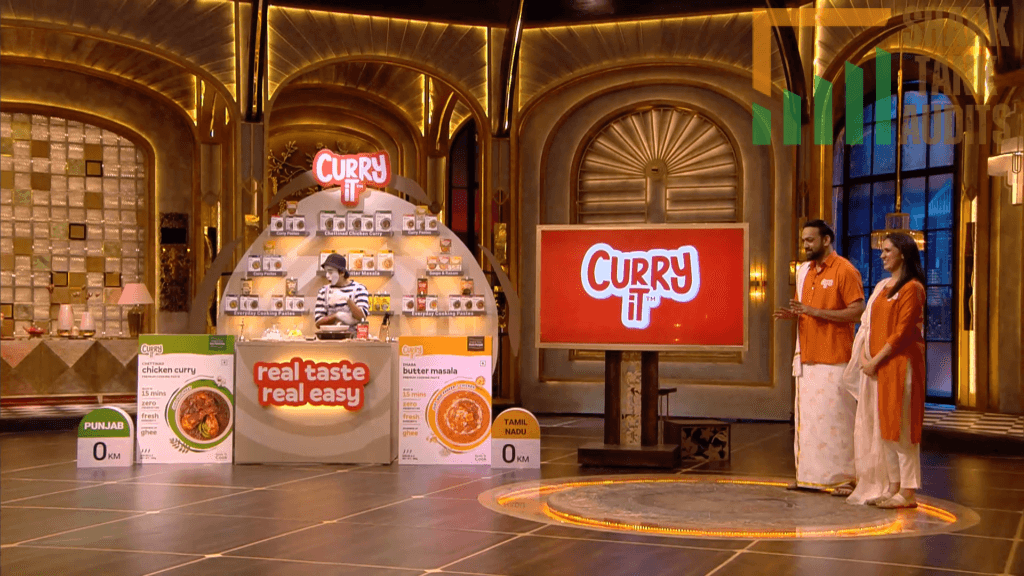
In Shark Tank India Season 5, Episode 38 (aired Wednesday, February 25, 2026), the Delhi-based ready-to-cook brand CURRYiT made a significant impact by showcasing a “clean-label” solution to traditional Indian cooking. Founded by IIM Udaipur alumni Richa Sharma and Nischal Kandula, the brand addresses the modern dilemma of wanting authentic, home-cooked meals without the labor-intensive preparation. By utilizing advanced autoclave technology and multi-layer vacuum sealing, CURRYiT offers 100% preservative-free curry pastes and masalas with a 12-month shelf life. Their pitch for ₹60 lakhs for 1% equity sparked a competitive discussion, ultimately leading to a massive deal with Guest Shark Mohit Yadav (Co-founder of Minimalist), who invested ₹1.5 crore for 3.3% equity plus 1.2% advisory equity, valuing the company at ₹45 crore.
The Sharks were particularly impressed by the brand’s technical moat. Unlike traditional legacy FMCG players that rely on chemical preservatives, CURRYiT’s use of heat-pressure sterilization (autoclave) allows for high-quality “wet” masalas that taste fresh-off-the-stove. Mohit Yadav praised their “health-first” lens, noting that transparency in ingredients is the primary driver of trust for the 2026 consumer. With the Indian ready-to-cook (RTC) market projected to hit $1.54 billion by 2030, CURRYiT is strategically positioned to capture the urban millennial segment that prioritizes both convenience and clean nutrition.
Pitch 2
Dubpro.ai Shark Tank India Episode Review

In Shark Tank India Season 5, Episode 38 (aired Wednesday, February 25, 2026), the AI-powered dubbing startup Dubpro.ai showcased a disruptive “Human-in-the-Loop” technology aimed at localizing global video content. Founded by Ishan Sharma and Rishikesh Kumar, the platform automates 90% of the dubbing process while utilizing human verifiers for the final 10% to ensure linguistic accuracy. Despite a stunning demonstration where the AI cloned the Sharks’ voices in 11 different languages, the founders’ request for ₹1.25 crore for 5% equity resulted in no deal. The Sharks were primarily deterred by a “screwed up” capital table where previous investors already held 45.9% of the company, and concerns that Big Tech giants like YouTube might soon integrate similar features natively.
Despite the lack of a deal, Dubpro.ai sits at the center of India’s vernacular explosion. With over 700 million regional internet users in 2026, the demand for content in Hindi, Tamil, and Telugu is 2.5 times higher than in English. By offering studio-grade quality at 1/10th the cost, Dubpro.ai remains a powerful tool for middle-tail creators and the $12.1 billion Indian EdTech sector, which requires rapid localization of educational modules into multiple dialects.
Pitch 3
Boingg Shark Tank India Episode Review
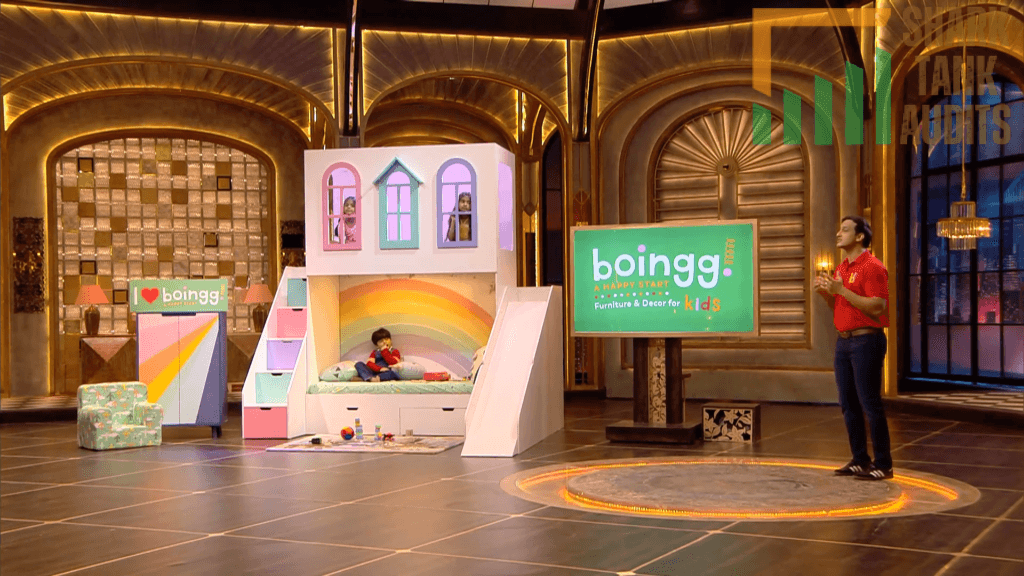
Boingg! appeared on Shark Tank India Season 5, Episode 38, with Gurugram-based founders Dhruvan Barar (IIT/IIM Kozhikode alumnus) and co-founder Neha Indoria (launched 2018, incorporated 2020 addressing lack of specialized high-quality kids furniture in India) seeking ₹2 Crore for 5% equity (₹40 Crore valuation) but left with no deal after Sharks collectively declined citing high inventory costs, capital-intensive furniture business nature, heavy logistics challenges, and perceived scaling difficulty maintaining high margins.
The D2C mid-to-premium home decor brand operates as “internet-first” with strategic physical presence targeting urban millennial parents seeking “Montessori-inspired” functional spaces promoting child independence/safety/imagination versus mass-produced plastic alternatives, offering 900+ designs (beds, bunk beds, study tables, soft furnishings, decor including mirrors/curtains/bedsheets) with flagship “Little Hut Bed” selling 900 units providing “total room solution” for cohesive children’s environment design featuring non-toxic polishes, rounded edges, smooth finishes, motor skill-developing furniture (rockers/climbers), high customization (colors/sizes/storage configurations), and eco-friendly wood-based materials with warranty/after-sales service, achieving 4,146 monthly organic visitors requiring SEO improvement but pivotal 0.02% online conversion rate jumping to 30% in physical stores creating “Physical-First” conversion philosophy stating “If we do not have a store in a city, we do not market in that city” for high-involvement furniture category where parents want touch-and-feel quality. Sharks reacted with admiration/skepticism mix praising design aesthetics and founder credentials while wary of “death by a thousand cuts” funding history (eight different small rounds suggesting constant liquidity struggles) and consistent -12% to -13% EBITDA losses indicating unit economics not improving fast enough, with one noting local carpenters as massive unorganized competitor.
Operating in Indian furniture market growing from $29.27 billion (2025) to $31.51 billion (2026) reaching $45.52 billion by 2031 (7.63% CAGR) with specialized kids’ furniture segment growing faster (13-15% CAGR) within organized $1.2-1.5 billion kids’ furniture segment and $27.27 billion overall home furniture TAM as millennial parents prioritize safety/ergonomics/developmental Montessori environments amid average 30% YoY interior spending jump (2025-2026) with parents allocating 15-20% home furnishing budget specifically to children’s rooms, Boingg! targets urban millennial parents (28-42, ₹15-20 lakh+ annual household income, Tier 1 Delhi NCR/Mumbai/Bengaluru/Pune/Hyderabad and Tier 2 growth hubs Ahmedabad/Chandigarh/Jaipur)—design-conscious, safety-obsessed, “Montessori” believers viewing furniture as child development tool versus utility—within ₹500-800 Crore obtainable market (top 10% urban households) over 5 years, having recently opened Pune/Hyderabad/Ahmedabad stores (total six) planning aggressive offline expansion establishing physical footprint in every major metro, implementing “Experience” Bridge using digital ads driving experience center footfall versus online checkouts, mommy blogger/pediatric interior designer influencer partnerships showcasing safety/”growth-with-child” aspects, weekend “Safe Play” workshops engaging parents/children simultaneously, high-quality Reels showing unboxing/stress-testing/360-degree room transformations, SEO targeting keywords (“Montessori beds India,” “Sustainable kids furniture,” “Safe bunk beds”), AR Room Visualizer enabling parents seeing Little Hut Bed fits in specific dimensions, web-to-store omnichannel model with marketplace presence (FirstCry/Pepperfry/Urban Ladder) leveraging traffic for brand awareness, geographic geofencing ads only marketing in cities with physical touchpoints capturing 30% conversion, EMI/no-cost financing making ₹40,000 beds accessible, “Growth Kits” launch modifying toddler beds into study desks as child ages capturing repeat business, just-in-time modular manufacturing reducing inventory burn optimizing logistics, high-margin decor products (curtains/sheets) with lower shipping costs increasing EBITDA neutrality, 15+ micro-stores (1,000 sq ft) Tier 2 city expansion, furniture subscription/rental model capturing 50% parents hesitating at high upfront costs, and Middle East/SE Asia global expansion where “Indianized Montessori” designs have high appeal significantly boosting valuation multiples targeting ₹100+ Crore valuation.
Summary: The Verdicts
Episode 38 was a night of high-stakes negotiation and tactical “no’s.” While one brand secured a massive valuation-boosting investment, others fell victim to the “red flags” of previous funding rounds and the daunting operational costs of high-ticket furniture.
| Pitch | Brand | Ask | Deal Status | Shark(s) Involved |
| Pitch 1 | CURRYiT | ₹60 Lakh for 1% | ₹1.5 Crore Deal | Mohit Yadav (at ₹45 Cr valuation) |
| Pitch 2 | Dubpro.ai | ₹1.25 Cr for 5% | No Deal | Sharks were spooked by the “screwed up” 45.9% equity already held by prior investors. |
| Pitch 3 | Boingg! | ₹2 Crore for 5% | No Deal | Concerns over heavy logistics and -13% EBITDA losses. |
Key Highlights
- The “Clean-Label” Victory: CURRYiT was the standout success. By solving the “freshness” problem with autoclave technology instead of chemicals, they won over Mohit Yadav, who saw them as the “Minimalist” of the food world—transparent, science-backed, and highly scalable.
- The AI Paradox: Dubpro.ai presented perhaps the most impressive tech demo of the season, cloning the Sharks’ voices with eerie accuracy. However, the business “sank” due to its cap table; the Sharks refused to enter a company where the founders had already diluted nearly half of their ownership at an early stage.
- The Omnichannel Reality: Boingg! provided a fascinating insight into the furniture business. Their “Physical-First” conversion strategy (30% in-store vs. 0.02% online) highlighted the challenge of selling high-ticket items. Ultimately, the high inventory burn and “death by a thousand cuts” funding history kept the Sharks’ checkbooks closed.

Leave feedback about this
You must be logged in to post a comment.