
Avishkaar Shark Tank India Episode Review
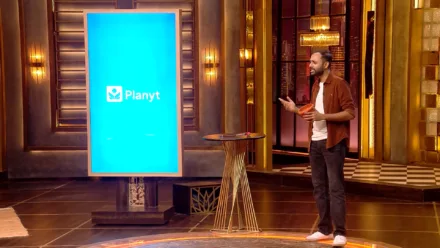
Avishkaar appeared on Shark Tank India Season 5, Episode 4, with founders Tarun Bhalla, Yogita Bhalla, and Rajeev Gaba seeking ₹80 lakh for 1% equity (₹80 Crore valuation). Despite showcasing their “Butler Robot” serving candies, they left with no deal due to concerns over unit economics and pricing.
Avishkaar Robotics offers modular robotics kits, AI coding platforms, and STEM curriculum for students aged 5-17, founded by ex-Microsoft engineers with global credentials (University of Washington, Virginia Tech, BITS Pilani). With labs in 30+ countries and over 10 lakh students trained, they operate on hybrid B2B (school partnerships, Atal Tinkering Labs) and B2C models focused on “learning by doing.” While Sharks praised the technology and founders’ pedigree, they criticized high variable costs and B2C pricing as impractical for mass-market India, with Aman Gupta questioning feasibility for individual households, leading all Sharks to opt out.
Website Information
- Website:- Avishkaar
- Build on Programming languages:- Node.js
- JavaScript frameworks:- Nuxt.js Vue.js
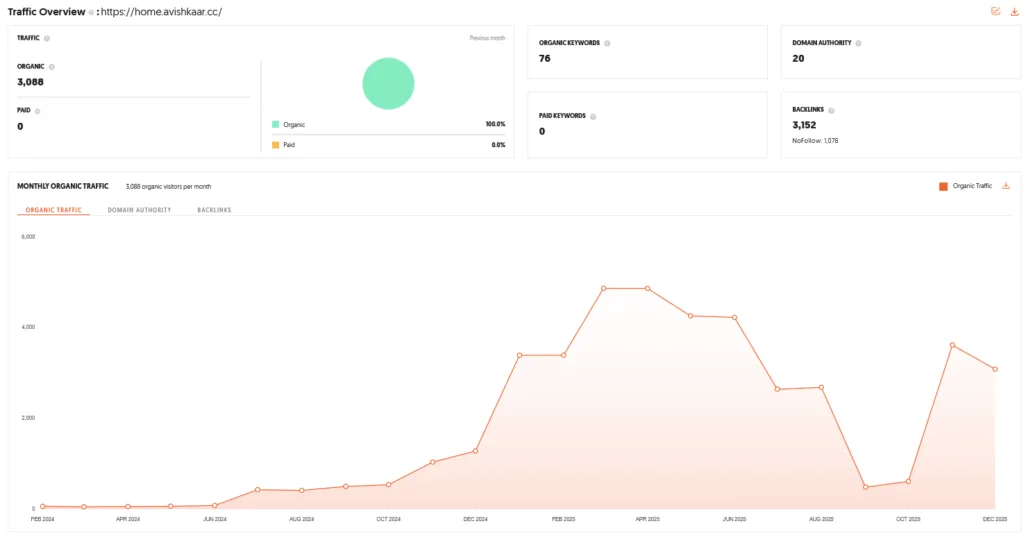
- Average SEO Performance, SEO Improvement Needed.
- ORGANIC TRAFFIC: 3088 visitor per month.
Avishkaar Founders
The leadership team at Avishkaar consists of highly qualified professionals with extensive global experience:
- Tarun Bhalla: A Computer Science Engineer from the University of Delhi with a Master’s from the University of Washington. He previously worked at Microsoft before founding Avishkaar.
- Yogita Bhalla: Originally from Himachal, she holds a Bachelor’s in Computer Science from the University of Delhi and a Master’s from Virginia Tech, USA. Like Tarun, she is also a Microsoft alumna.
- Rajeev Gaba: Hailing from Yamunanagar, he completed his B.Tech in Punjab followed by an MS from BITS Pilani.
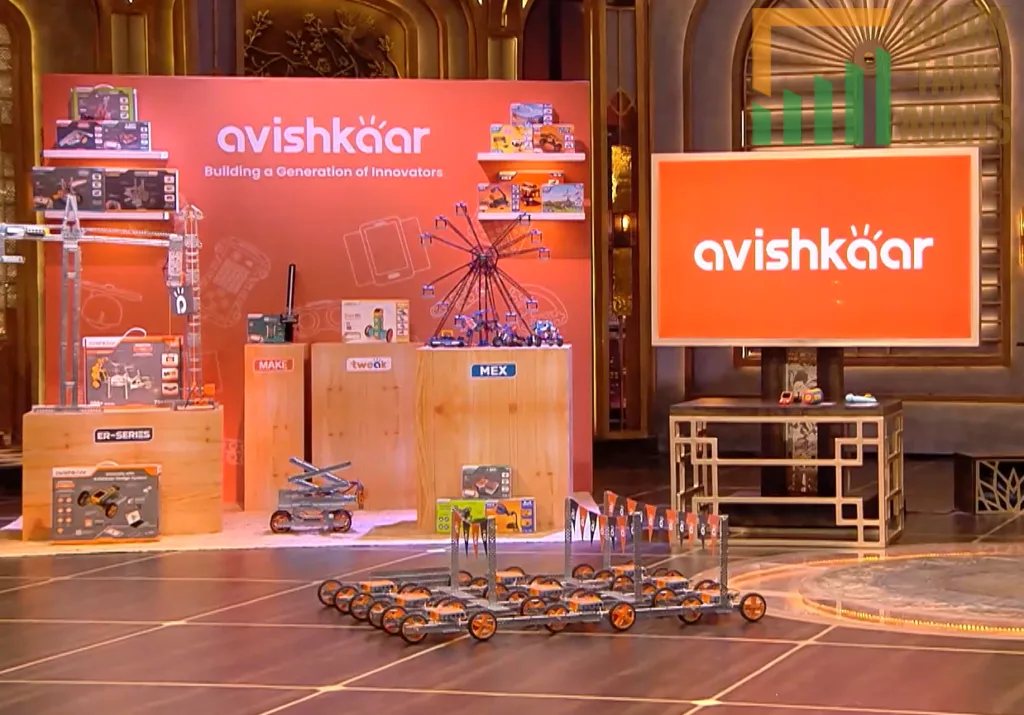
Avishkaar Brand Overview
- Avishkaar Robotics is a purpose-driven startup positioned at the forefront of India’s STEM (Science, Technology, Engineering, and Mathematics) education sector. The brand aims to bridge the gap between theoretical schooling and real-world application.
- By focusing on “learning by doing,” Avishkaar provides a comprehensive ecosystem that includes hardware, software, and structured curriculum to foster innovation in children.
Avishkaar Shark Tank India Appearance & Ask
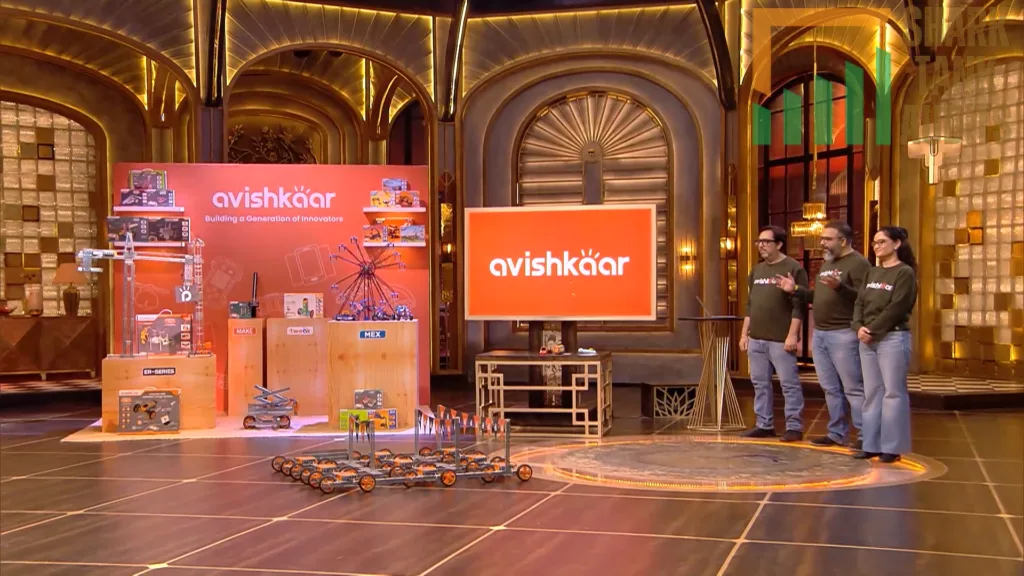
- The Pitch: The founders demonstrated their robotics kits and highlighted how their platform builds confidence and curiosity in students. A highlight of the pitch was their “Butler Robot,” which served candies to the Sharks.
- The Ask: ₹80 Lakhs for 1% equity.
- Valuation Sought: ₹80 Crore.
Avishkaar Season and Episode Air Date
- Season: 05
- Episode: 04
- Episode Air Date: Thursday, 08 January 2026
Avishkaar Product Overview
Avishkaar offers a robust product ecosystem designed to grow with the student:
- Fully Modular Robotics Kits: Hardware that allows children to build various mechanical structures.
- AI Modules & Coding Platform: Integrated software that teaches children how to program their creations using Artificial Intelligence.
- Butler Robot: A specialized creation used during their pitch to showcase the practical utility of their technology.
Avishkaar Investor Reactions
The Sharks had mixed feelings regarding the business model:
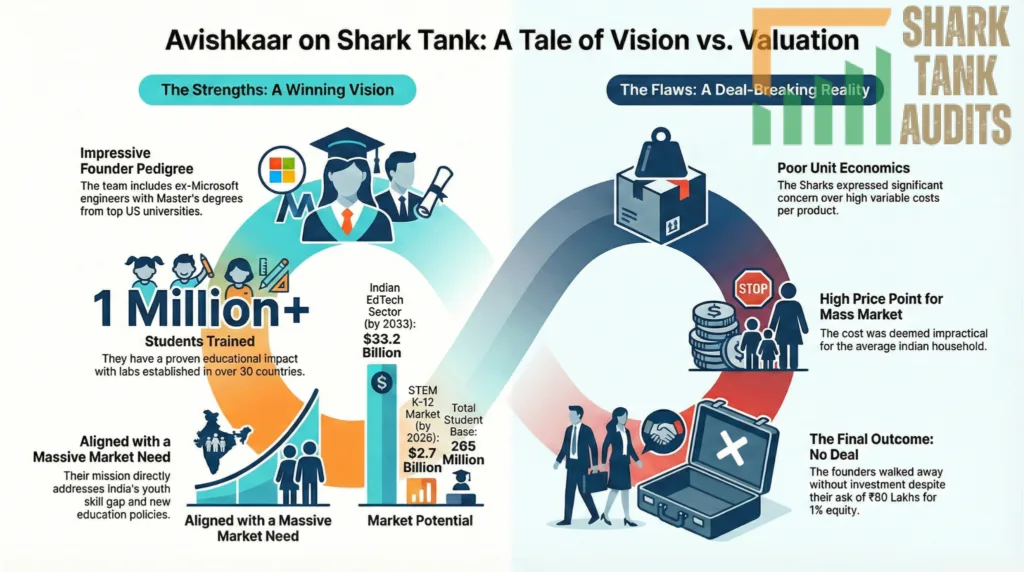
- Innovation vs. Economics: While they praised the technology and the founders’ vision, they expressed significant concerns over unit economics and high variable costs.
- Pricing Concerns: The Sharks felt the high cost-to-benefit ratio might make the product impractical for the mass Indian consumer market.
- B2C Critique: Aman Gupta specifically criticized the B2C packaging and the feasibility of the pricing model for individual households.
Avishkaar Customer Engagement Philosophy
Avishkaar operates on a “Learning Ecosystem” philosophy rather than a simple retail model. They engage customers through:
- Age-Appropriate Learning: Tailoring kits so beginners are not overwhelmed and advanced learners remain engaged.
- Hands-on Experience: Ensuring children assemble and experiment themselves to turn abstract concepts into physical reality.
- Community & Competition: Using workshops and bootcamps to keep students motivated and involved in the STEM community.
Avishkaar Product Highlights
- Global Presence: Successfully set up labs in more than 30 countries.
- Educational Impact: Trained over 10 lakh (1 million) students to date.
- Diverse Revenue Streams: A hybrid model featuring B2B (school partnerships and lab setups) and B2C (direct sales to parents).
Avishkaar Future Vision
- The long-term goal for Avishkaar is to cultivate a “problem-solving mindset” in the next generation.
- They envision a future where Indian children are creators and innovators rather than just job seekers.
- Their roadmap includes making high-quality robotics education more affordable and accessible to schools across all tiers of India, ensuring that future skills like AI and automation are available to every student.
Avishkaar Deal Finalized or Not
- No Deal.
- Despite the impressive background of the founders and the quality of the product, the founders walked away without a commitment from the Sharks.
| Parameter | Details |
|---|---|
| Website | Avishkaar |
| Backend Technology | Node.js |
| Frontend Frameworks | Nuxt.js, Vue.js |
| SEO Performance | Average SEO, improvement required |
| Organic Traffic | ~3,088 visitors per month |
| Brand Name | Avishkaar Robotics |
| Brand Category | STEM Education / Robotics / EdTech |
| Core Philosophy | Learning by Doing |
| Founded By | Tarun Bhalla, Yogita Bhalla, Rajeev Gaba |
| Founder – Tarun Bhalla | Computer Science Engineer (University of Delhi), Master’s (University of Washington), ex-Microsoft |
| Founder – Yogita Bhalla | B.Sc CS (University of Delhi), Master’s (Virginia Tech, USA), ex-Microsoft |
| Founder – Rajeev Gaba | B.Tech (Punjab), MS (BITS Pilani) |
| Founders’ Experience | Global exposure, enterprise-grade tech background |
| Business Inception | Purpose-driven STEM education startup |
| Shark Tank Appearance | Season 05 |
| Episode Number | Episode 04 |
| Episode Air Date | Thursday, 08 January 2026 |
| Sharks Present | Aman Gupta, Anupam Mittal, Namita Thapar, Amit Jain, Ritesh Agarwal |
| Investment Ask | ₹80 Lakhs |
| Equity Offered | 1% |
| Valuation Asked | ₹80 Crore |
| Pitch Highlight | Butler Robot serving candies |
| Product Type | Modular Robotics Kits + AI Coding Platform |
| Product Ecosystem | Hardware + Software + Curriculum |
| Product Variants | Age-based modular kits |
| AI Integration | AI modules and coding interface |
| Butler Robot | Demo product showcasing real-world application |
| Learning Approach | Hands-on, experiential education |
| Customer Philosophy | Ecosystem-driven, not transactional |
| Student Coverage | 5–17 years |
| Beginner Segment | Ages 5–9 (logic, block-based learning) |
| Advanced Segment | Ages 10–17 (AI, Python, robotics) |
| Global Presence | Labs set up in 30+ countries |
| Students Trained | 10 Lakh+ |
| Revenue Model | Hybrid B2B + B2C |
| B2B Revenue | School partnerships, ATL labs |
| B2C Revenue | Direct-to-parent robotics kits |
| Shark Reaction – Overall | Appreciated tech, questioned economics |
| Shark Concern | High variable cost |
| Pricing Concern | High cost-to-benefit ratio |
| Aman Gupta Feedback | Strong critique of B2C pricing & packaging |
| Market Fit Issue | Not mass-market ready |
| NEP 2020 Alignment | Strong alignment |
| Indian EdTech Market (2033) | ~$33.2 Billion |
| STEM K-12 Market (India) | ~$2.7 Billion by 2026 |
| STEM Market CAGR | ~19.7% |
| Skill Gap Statistic | Only 48% youth employable |
| TAM – India Students | 265 Million |
| Total Schools (India) | 1.49 Million |
| Government Opportunity | 50,000 Atal Tinkering Labs by 2026 |
| TAM Geography | India + 30+ countries |
| Primary Target (B2B) | Private & Government schools |
| Primary Target (B2C) | Parents aged 30–50, ₹10L+ income |
| City Focus | Tier 1 & Tier 2 |
| SEO Opportunity | High (underutilized) |
| SEO Keyword Focus | Robotics kits for kids, AI learning for schools |
| Content Strategy | Unboxing + project-build videos |
| Performance Marketing | Google Ads (coding classes, kids learning) |
| Distribution – B2B | Direct sales teams |
| Distribution – Online | Website, Amazon, FirstCry |
| Offline Presence | Hamleys, hobby stores |
| Key Strength | Proprietary end-to-end ecosystem |
| Founder Advantage | Microsoft pedigree |
| First-Mover Advantage | Early global expansion |
| Major Challenge | High unit economics |
| Consumer Barrier | Price sensitivity |
| Cost Mitigation Strategy | Robotics-as-a-Service subscription |
| B2C Expansion Plan | Lite kits for Tier 2/3 cities |
| Year 1 Goal (2026) | SEO overhaul + school acquisition |
| Year 2 Goal | AI Tutor integration |
| Year 3 Goal | Shift to SaaS-heavy model |
| Valuation Justification Path | Recurring SaaS revenue |
| Deal Status | ❌ No Deal |
| Pitch Outcome | Founders walked away without investment |
| Long-Term Vision | Create problem solvers, not job seekers |
| Overall Assessment | Strong vision, solid tech, pricing friction |
Avishkaar Shark Tank India Business Plan
1. Avishkaar Business Potential in India
- India’s EdTech Sector Growth: The Indian EdTech industry is projected to reach $33.2 Billion by 2033, with a massive surge expected between 2025 and 2027 due to the National Education Policy (NEP) 2020.
- STEM-Specific Potential: The STEM K-12 market in India is forecasted to grow at a CAGR of 19.7%, reaching a valuation of roughly $2.7 Billion by 2026.
- Skill Gap Advantage: With only 48% of Indian youth considered employable, Avishkaar addresses a critical national need for practical, industry-ready skills like AI and Robotics.
2. Avishkaar Total Addressable Market (TAM)
- Total Student Base: India has over 265 Million school students and 1.49 Million schools, representing the world’s largest untapped education market.
- Government Focus (Atal Tinkering Labs): The government is scaling to 50,000 ATLs by 2026, creating a massive B2B opportunity for Avishkaar to provide equipment and curriculum.
- Global Reach: Having already trained 10 Lakh+ students, Avishkaar’s TAM extends beyond India to 30+ countries seeking affordable robotics solutions.
3. Avishkaar Ideal Target Audience & Demographics
- Primary B2B Segment: Private and Government K-12 schools, particularly those looking to implement NEP 2020 guidelines for coding and AI.
- Primary B2C Segment: Tech-savvy parents (Ages 30–50) in Tier 1 and Tier 2 cities with a household income of ₹10L+ per annum, prioritizing “future-proofing” their children.
- Child Demographics: Students aged 5 to 17 years, segmented into:
- Early Learners (5-9): Focus on logical thinking and simple blocks.
- Advanced Learners (10-17): Focus on AI, Python, and complex robotics.
4. Avishkaar Marketing & Digital Strategy
- SEO & Web Optimization: As Avishkaar currently has low organic traffic (~3088/mo), the strategy must pivot to content-rich SEO.
- Keyword Focus: “Best robotics kit for kids,” “AI learning for schools,” and “STEM curriculum India.”
- Content Strategy: Create “Unboxing” and “Project Build” videos on YouTube/Reels to showcase the Avishkaar Butler Robot and other kits.
- Performance Marketing: High-intent Google Ads targeting “Coding classes” and “Birthday gifts for kids.”
5. Avishkaar Distribution Strategy
- Omnichannel Presence:
- B2B: Direct sales force for school partnerships and ATL setups.
- Online B2C: Avishkaar’s website (Nuxt.js/Vue.js), Amazon, and FirstCry.
- Physical Retail: Experience zones in high-end toy stores (Hamleys) and hobby centers to solve the “touch-and-feel” barrier.
6. Avishkaar Advantages & Challenges
- Advantages:
- Founders’ Pedigree: Microsoft experience and global Ivy League education.
- Proprietary Ecosystem: In-house hardware + AI coding platform (not just a reseller).
- First Mover: Established labs in 30+ countries before the major 2026 EdTech surge.
- Challenges:
- Unit Economics: High variable costs and pricing (as noted by the Sharks).
- Consumer Friction: High price point for the mass Indian middle-class market.
7. Avishkaar Success Factors & Mitigation Strategies
- Reason for Success: Avishkaar aligns perfectly with the NEP 2020 mandate for AI and coding in schools.
- Mitigation for High Costs: * Introduce a Subscription Model (Robotics-as-a-Service) for schools to lower upfront lab setup costs.
- Launch a “Lite” Kit Series for the B2C segment to reach Tier 2/3 markets at a lower price point.
8. Avishkaar Future Business & Roadmap to Valuation
- Year 1 (2026): Aggressive SEO overhaul and B2B school acquisition to increase monthly traffic and revenue stability.
- Year 2: Launch an AI-Tutor integrated into the Avishkaar coding platform for personalized learning paths.
- Year 3: Aim for a Series B funding round by showcasing a shift from a hardware-heavy model to a high-margin Software-as-a-Service (SaaS) model for schools.
- Valuation Goal: By scaling the SaaS recurring revenue, Avishkaar can justify the ₹80 Crore valuation sought on Shark Tank and aim for a 3x increase within 3 years.





Avishkaar Shark Tank India Episode Review