
Shark Tank India Season 5 Episode 20 Review
Episode 20 of Shark Tank India Season 5 delivered one of the most eclectic and philosophically diverse episodes of the season, featuring businesses spanning ancient wisdom and modern technology, agricultural innovation for India’s dairy backbone, and traditional Ayurvedic beauty rooted in Kerala’s classical formulations. From a self-taught polymath blending Vimanshastra with aerospace engineering to create motion simulators, to automated cow grooming brushes improving dairy productivity, and chemical-free hair color preserving ancient traditions, this episode showcased entrepreneurship at its most uniquely Indian—where millennia-old knowledge meets cutting-edge innovation.
The episode raised critical questions about trust and transparency (repeated NDAs triggering investor mistrust), focus versus diversification (spreading across arcades, airlines, and defense), and the tension between impressive technology and unclear business models. With two successful deals totaling ₹2.2 crore equity plus royalty mechanisms, Episode 20 proved that India’s entrepreneurial strength lies in solving indigenous problems through indigenous solutions, whether improving cattle welfare, eliminating hair color chemicals, or building aerospace-grade simulators cheaper than European imports.
Episode Summary
Total Pitches: 3
Successful Deals: 2
Total Investment Made: ₹2.2 Crore equity (with royalty structures on both deals)
Featured Sharks: Anupam Mittal, Namita Thapar, Aman Gupta, Kunal Bahl, Mohit Yadav
Pitch 1
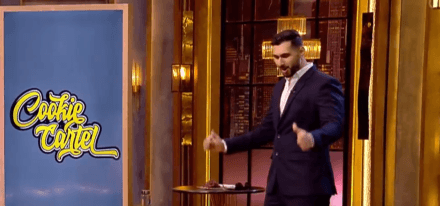
MetaDrive Shark Tank India Episode Review
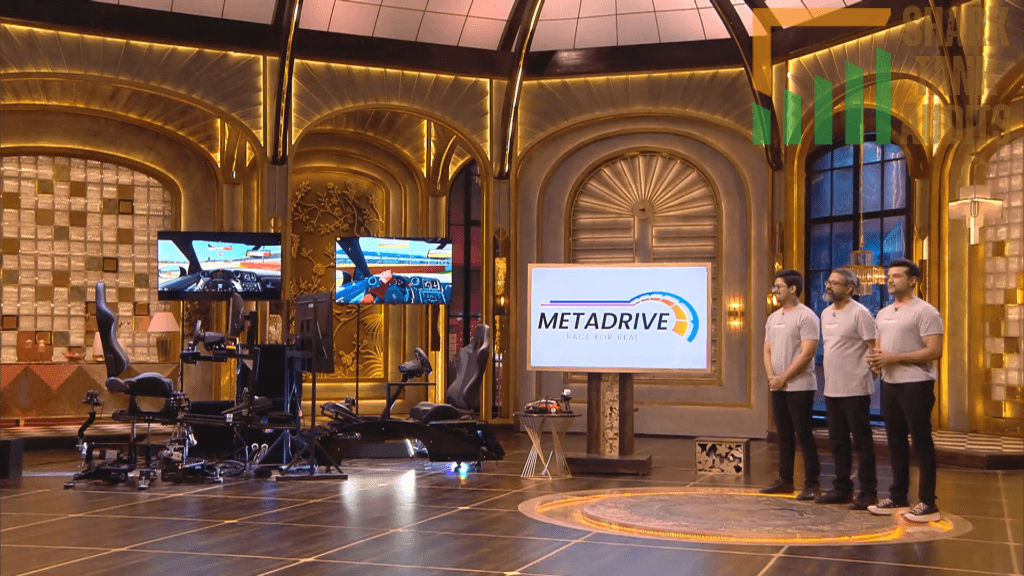
MetaDrive appeared on Shark Tank India Season 5, Episode 20, with founders Manish Kumar Malik (self-taught polymath physics tutor blending ancient Indian texts like Vimanshastra with modern aerospace, dubbed “Indian Leonardo Da Vinci/Tony Stark”), son Chaitanya Malik, and investor Suraj Juneja (ex-Horse’s Stable) seeking ₹90 lakh for 1% equity (₹90 Crore valuation) but left with no deal despite impressive product demonstration.
Launched May 2025, the motion-based simulation hardware combines aerospace precision with real-time motion feedback for high-fidelity experiences across professional racing, pilot training, and commercial gaming arcades with 137 monthly organic visitors. While Kunal was fascinated by founder’s ancient-philosophy-modern-science blend, Anupam praised “fantastic” tech but became most vocal critic citing “mistrust” from repeated NDAs hiding information, Aman enjoyed demo but deterred by “confusing financial engineering,” and Mohit questioned business focus spread too thin between arcades, B2B sales, and airline simulations.
Operating in Indian gaming market growing from $4.38 billion (2025) to $9.89 billion by 2031 (14.55% CAGR) with India facing 30,000 pilot gap over 20 years and driving simulator market reaching $212.9 million by 2030 within global $19.4 billion simulator market (2030) and $1.24 billion driving simulator market (2031), MetaDrive targets commercial gaming arcades, flight schools, regional driving academies, defense contractors, and tech-savvy users (15-35, ₹1.5 lakh+ monthly household income) in Tier 1/2 cities offering indigenous “Made in India” technology significantly cheaper than European imports like Moog/Cruden.
Pitch 2
Sparsh Brush Shark Tank India Episode Review
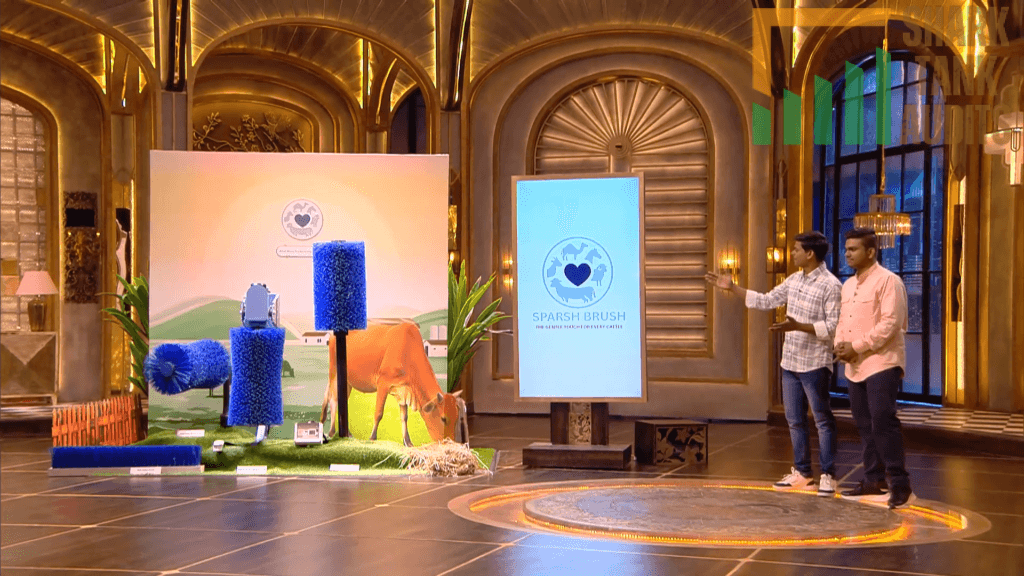
Sparsh Brush appeared on Shark Tank India Season 5, Episode 20, with founders Manish Prajapati and Sunil Prajapati seeking ₹20 lakh for 1% equity (₹20 Crore valuation) and successfully closed a deal for ₹20 lakh for 1% equity + 2% royalty on sales until ₹1 Crore recouped with Sharks Anupam Mittal and Namita Thapar after Aman, Mohit, and Kunal opted out.
The Indian cattle-tech brand offers sensor-activated automated grooming brushes for cows/buffaloes that rotate when animals approach, providing gentle massage cleaning skin, stimulating blood circulation, and removing parasites/dirt to improve animal welfare and dairy productivity with just 2 monthly organic visitors. Growing from ₹89 lakh (FY 23-24) to ₹6.17 Crore lifetime sales and projecting ₹8 Crore (FY 25-26), the “Make in India” indigenous solution designed for Indian environmental/power requirements impressed Sharks with solid financial performance and social impact.
Operating in India’s position as world’s largest milk producer (25% global production, 248 million tonnes annually) contributing 5% to GDP supporting 80 million farmers with 307.42 million bovine population (193 million cattle, 51 million high-yield crossbred) within dairy equipment market projected at ₹58,034 Crore by 2034, Sparsh Brush targets progressive farmers (25-55, tech-savvy with smartphones) and commercial dairy farms (100+ cattle) in top milk-producing states (Uttar Pradesh 18.7%, Rajasthan, Madhya Pradesh, Gujarat, Andhra Pradesh) addressing 3.5-7% potential milk yield increase through improved animal health aligned with National Digital Livestock Mission and Rashtriya Gokul Mission promoting indigenous technology.
Pitch 3
Shesha Ayurveda Shark Tank India Episode Review
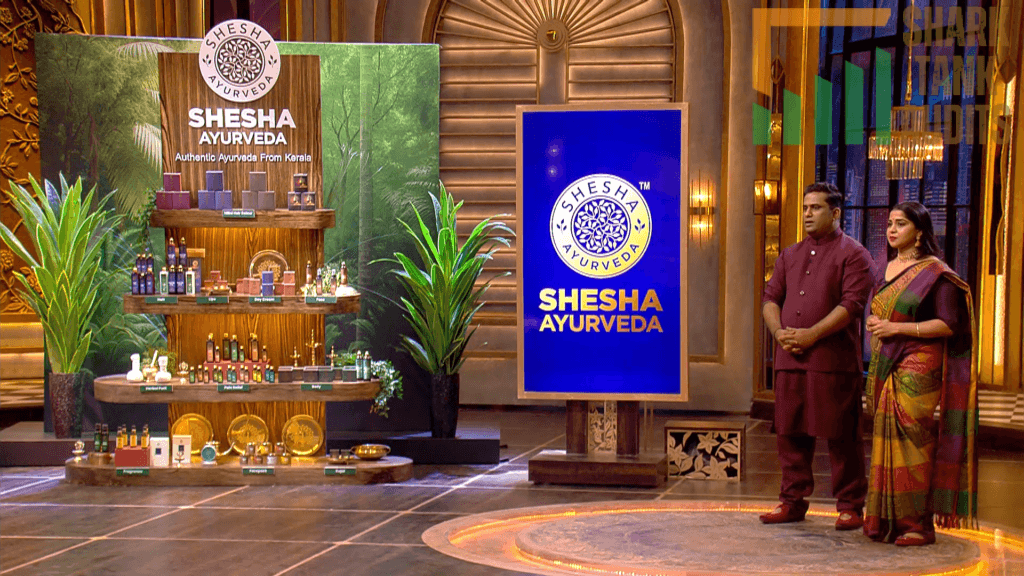
Shesha Ayurveda appeared on Shark Tank India Season 5, Episode 20, with co-founders Anooj Sreedharan and Renji R. Balachandran seeking ₹1 Crore for 1.5% equity (₹66.67 Crore valuation) and successfully closed a deal for ₹2 Crore for 8% equity + 1% royalty until ₹2 Crore recouped (₹25 Crore valuation) with Sharks Aman Gupta and Namita Thapar after Mohit, Anupam, and Kunal opted out.
The Hyderabad-based 100% natural cruelty-free brand established 2017 bridges ancient Kerala Ayurvedic traditions with modern beauty, growing from ₹4 lakh (2017) to ₹10+ Crore (FY 23-24) projecting ₹28 Crore (FY 25-26) with exceptional 50,676 monthly organic visitors and 1,200+ reviews for flagship Nilini Ayurvedic Hair Colour—India’s first without hydrogen peroxide, ammonia, or bleach. Offering herbal hair/skin solutions including Red Sandalwood Skin Brightening Cream, Kumkumadi Suvarna Ubtan, Mud & Leaf Soap, and Neeli Bringadi Hair Oil with classical Kerala-sourced formulations, they impressed Sharks with financial discipline and customer loyalty demonstrating strong product-market fit despite competitive Ayurvedic space risks.
Operating in Indian Ayurvedic products market valued at $10.2 billion (₹85,000+ Crore, 15.5% CAGR) within $30 billion Beauty & Personal Care market by 2027 and $1.5 billion clean beauty/organic segment (20%+ growth), Shesha targets conscious urbanites (25-45) with sensitive skin issues, cultural traditionalists valuing purity/roots, and ₹1 lakh+ monthly household income in Tier 1/2 cities as 30% of Indian consumers now prioritize Ayurvedic ingredients avoiding harmful chemicals, leveraging Kerala’s global authentic Ayurveda reputation for premium pricing.
Episode Highlights:
- “Indian Leonardo Da Vinci”: Most philosophically intriguing founder blending Vimanshastra with aerospace
- Trust destroyed by NDAs: Repeated secrecy triggering investor mistrust despite impressive tech
- Cattle-tech with 2 visitors: Lowest organic traffic securing funding based on B2B fundamentals
- Significant compression: Shesha’s ₹66.67 Cr → ₹25 Cr (62.5% valuation cut)
- Dual royalty structures: Both deals including revenue participation protection
- Ancient wisdom theme: Episode showcasing traditional Indian knowledge meeting modern needs
- Agricultural innovation: Cow grooming brushes improving world’s largest dairy industry
- Kerala authenticity: Traditional formulations commanding premium in clean beauty
Key Lessons:
- Excessive secrecy (NDAs) destroys investor trust faster than bad metrics
- Focus matters more than diversification—arcades + airlines + defense = red flag
- B2B fundamentals (₹6.17 Cr sales) trump digital marketing (2 organic visitors) in agriculture
- Kerala Ayurveda authenticity provides defensible positioning in competitive category
- Ancient Indian knowledge (Vimanshastra, Ayurveda) resonates but requires modern business discipline
- Impressive technology demonstrations insufficient without transparent business model
- Cattle welfare directly correlating with dairy productivity creates measurable ROI
- Chemical-free positioning (no peroxide/ammonia) addressing real consumer concerns
Deal Structure Analysis:
MetaDrive:
- Asked: ₹90L for 1% (₹90 Cr valuation)
- Got: No deal
- Reasons: Mistrust from NDAs, confusing financial engineering, unfocused diversification
- Lesson: Secrecy = death; transparency = investment prerequisite
Sparsh Brush:
- Asked: ₹20L for 1% (₹20 Cr valuation)
- Got: ₹20L for 1% + 2% royalty until ₹1 Cr recouped (₹20 Cr valuation maintained)
- Equity: None changed (maintained 1%)
- Protection: 2% royalty until ₹1 Cr (5x investment recovery)
- Rationale: Agricultural hardware with proven sales deserves funding despite zero digital presence
Shesha Ayurveda:
- Asked: ₹1 Cr for 1.5% (₹66.67 Cr valuation)
- Got: ₹2 Cr for 8% + 1% royalty until ₹2 Cr recouped (₹25 Cr valuation)
- Investment: 2x increase (₹1 Cr → ₹2 Cr)
- Equity: 5.33x increase (1.5% → 8%)
- Valuation: 62.5% reduction (₹66.67 Cr → ₹25 Cr)
- Protection: 1% royalty until ₹2 Cr (1x investment recovery)
- Rationale: Competitive category risk requiring larger equity position and downside protection
Strategic Patterns:
- Trust Premium: Transparency valued infinitely more than technology impressiveness
- Focus Requirement: Multi-vertical approach (arcades + B2B + defense) triggers “too scattered” rejection
- B2B > Digital: Agricultural business with 2 visitors funded based on sales fundamentals
- Authenticity Positioning: Kerala Ayurveda heritage creates premium brand perception
- Royalty Protection Normalized: Both deals including revenue participation (2% and 1%)
Market Context:
- Gaming/Simulation: $4.38B (2025) → $9.89B (2031) at 14.55% CAGR in India
- Pilot Gap: 30,000 shortage over 20 years creating training simulator demand
- Driving Simulators: $212.9M by 2030 India; $19.4B global (2030); $1.24B driving segment (2031)
- Dairy Production: 248M tonnes (25% global), 80M farmers, 307.42M bovines, ₹58,034 Cr equipment market by 2034
- Milk Yield Impact: 3.5-7% increase through improved animal health/welfare
- Ayurvedic Market: $10.2B (₹85,000+ Cr) at 15.5% CAGR within $30B Beauty & Personal Care by 2027
- Clean Beauty: $1.5B segment with 20%+ growth; 30% consumers prioritizing Ayurvedic ingredients
The NDA Mistrust Paradox:
MetaDrive’s rejection exposed how protecting IP can backfire:
Founder Logic:
- Proprietary technology needs protection
- NDAs prevent competitors stealing innovations
- Information secrecy maintains competitive advantage
Investor Reality:
- NDAs signal founder paranoia or something to hide
- Can’t evaluate what you can’t see
- Excessive secrecy = lack of trust = no investment
The Irony: Attempting to protect technology through NDAs resulted in zero investment, whereas transparent disclosure (even if competitors later access it) might have secured ₹90 lakh funding providing resources to stay ahead of competition.
Lesson: In fundraising, transparency risk < secrecy risk. Investors need to see everything to trust anything.
Focus vs. Diversification Debate:
MetaDrive spread across three markets:
The Diversification:
- Commercial arcades: B2C gaming experiences
- Flight schools: B2B pilot training systems
- Defense/airlines: Enterprise simulation solutions
Shark Concern (Mohit):
- Different customers (consumers, schools, military)
- Different sales cycles (walk-in, 6-month, 2-year)
- Different value propositions (entertainment, training, compliance)
- Different marketing approaches (local ads, B2B outreach, government procurement)
The Reality: Early-stage companies rarely succeed serving radically different customer types simultaneously. Better to dominate one vertical (flight schools) then expand to adjacent markets (airlines) then pursue completely different segments (arcades).
Agricultural Hardware Investment Case:
Sparsh Brush’s 2 monthly organic visitors raising obvious question: How did this secure funding?
Traditional Investment Logic:
- Digital presence = customer acquisition capability
- Organic traffic = brand strength
- SEO = scalability indicator
Agricultural Hardware Reality:
- B2B sales through trade shows, distributor networks, direct farm visits
- Dairy farmers don’t search “automated cow brush” on Google
- Word-of-mouth and demonstration more important than SEO
The Numbers That Mattered:
- ₹89L → ₹6.17 Cr → ₹8 Cr projected (proven growth)
- Real sales to real dairy farms (validation)
- 3.5-7% milk yield improvement (measurable ROI)
- ₹58,034 Cr equipment market (massive TAM)
Outcome: B2B fundamentals > digital metrics for industrial/agricultural hardware.
Kerala Ayurveda Authenticity Premium:
Shesha’s positioning leveraging Kerala’s global reputation:
Why Kerala Matters:
- Historical center of Ayurvedic knowledge for millennia
- Traditional Ayurvedic doctors (Vaidyas) maintaining authentic practices
- Classical formulation texts preserved and practiced
- Global medical tourism destination for Ayurvedic treatments
- Premium perception: “Kerala Ayurveda” = authentic vs. generic Indian Ayurveda
Business Application:
- Premium pricing justified by authenticity
- Ingredient sourcing from Kerala adds credibility
- Classical formulations (not modern inventions) build trust
- Heritage story differentiates in crowded market
Result: Can charge 2-3x versus generic Ayurvedic brands by emphasizing Kerala traditional lineage.
Chemical-Free Hair Color Innovation:
Shesha’s Nilini product solving real problem:
Traditional Hair Color Issues:
- Hydrogen peroxide damaging hair structure
- Ammonia causing irritation and odor
- Bleach weakening hair over time
- Synthetic chemicals contradicting natural lifestyle
Consumer Dilemma:
- Want to cover gray hair
- Don’t want chemical damage
- Seeking natural alternatives
- Willing to pay premium for health
Shesha’s Solution:
- India’s first without peroxide/ammonia/bleach
- Ayurvedic formulation using herbal ingredients
- Addresses both vanity (color) and health (no damage)
- 1,200+ reviews validating efficacy
Market Opportunity: 30% of Indian consumers prioritizing Ayurvedic ingredients = millions seeking chemical-free hair color paying premium prices.
Episode Thematic Coherence:
All three pitches drew from India’s ancient wisdom:
- MetaDrive: Vimanshastra (ancient aerospace) meets modern engineering
- Sparsh Brush: Indigenous cattle care improving dairy traditions
- Shesha: Kerala Ayurveda preserving classical formulations
Success pattern: Ancient wisdom requires modern business discipline (transparency, focus, execution) to secure investment.
The Ancient-Modern Tension:
Episode 20 explored whether traditional knowledge alone justifies modern investment:
MetaDrive’s Failure:
- Fascinating Vimanshastra-aerospace philosophy
- Impressive technical demonstration
- But: NDAs, unclear financials, scattered focus = rejection
- Lesson: Philosophy without transparency = unfundable
Sparsh Brush’s Success:
- Simple cattle care (ancient need)
- Modern sensor automation (technological execution)
- Clear financials, focused market = funded
- Lesson: Traditional problem + modern solution + clear business = investment
Shesha’s Conditional Success:
- Kerala classical formulations (ancient wisdom)
- Modern clean beauty positioning (contemporary trend)
- But: 62.5% valuation cut for competitive concerns
- Lesson: Heritage provides positioning advantage but doesn’t eliminate competition risk
Comparative Episode Analysis:
Episode 20’s 67% deal rate and ₹2.2 Cr equity ranks moderately:
- Matches Episodes 2, 6, 10, 12, 14, 15, 16 for success rate
- Lower total investment than recent episodes (Episodes 15-16 deployed ₹2.3-4.6 Cr)
- Features fifth and sixth royalty-protected deals this season
- Most philosophically unique founder (MetaDrive’s “Indian Leonardo Da Vinci”)
Future Implications:
- NDA Backlash: MetaDrive’s rejection may discourage excessive founder secrecy
- Agricultural Hardware Validated: Sparsh proves farm equipment fundable despite zero digital presence
- Kerala Premium Established: Ayurvedic brands can command higher valuations citing authentic heritage
- Focus Matters: Multi-vertical early-stage companies facing increased skepticism
- Royalty Structures Standard: Almost every deal now includes revenue participation protection
Episode Significance:
Episode 20 will be remembered for demonstrating that India’s greatest entrepreneurial opportunities often lie in modernizing ancient wisdom—whether aerospace knowledge from Vimanshastra, dairy productivity from cattle care traditions, or beauty formulations from Kerala Ayurveda. However, the episode’s mixed outcomes (one rejection, two compressed valuations) taught that ancient wisdom alone cannot overcome modern business requirements: transparency trumps secrecy regardless of technical sophistication, focus beats diversification despite larger TAM, and authentic heritage provides positioning advantage but demands competitive execution. MetaDrive’s “Indian Leonardo Da Vinci” founder captivated with vision but lost investment through mistrust, while Sparsh Brush’s mundane cow grooming secured funding through straightforward fundamentals—proving that in venture capital, boring clarity beats fascinating mystery every time.
Closing Reflection:
Episode 20 taught that India’s entrepreneurial strength lies in solving indigenous problems through indigenous solutions—improving the world’s largest dairy industry, creating chemical-free alternatives for health-conscious consumers, and building aerospace technology cheaper than European imports—but success requires matching ancient wisdom with modern business discipline. The episode exposed three critical insights: (1) Trust built through transparency matters infinitely more than technology protected through NDAs, (2) B2B fundamentals can overcome digital marketing weakness when serving real industrial needs with measurable ROI, and (3) Cultural authenticity (Kerala Ayurveda) provides premium positioning but cannot eliminate competitive vulnerability requiring protective investment structures. The harsh lesson: fascinating founder stories, impressive product demonstrations, and references to ancient texts might capture Shark attention, but only transparent financials, focused strategy, and clear path to profitability capture Shark investment. India’s next generation of valuable businesses will likely emerge from entrepreneurs who honor traditional wisdom while embracing modern accountability—transparency over secrecy, focus over diversification, execution over philosophy
Leave feedback about this
You must be logged in to post a comment.