
Mankomb Shark Tank India Episode Review
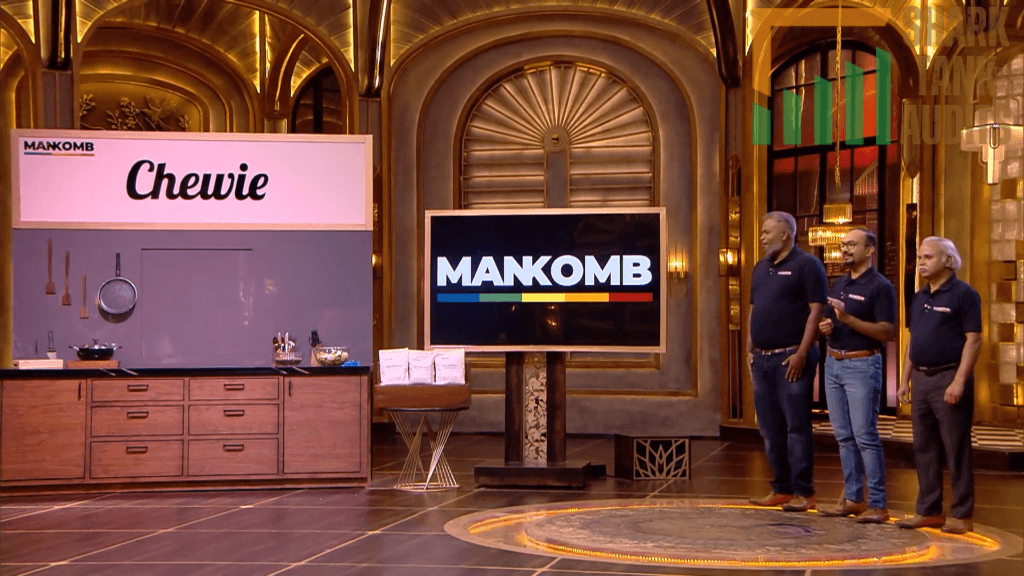
Mankomb appeared on Shark Tank India Season 5, Episode 24, with co-founders Mrudul Mudotholy (CEO), Dinesh Babu Sukumar (CMO), and Jawahar Arumugam (CTO) seeking ₹2 Crore for 1.5% equity (₹133.3 Crore valuation) but left with no deal after all Sharks opted out citing lack of actual sales (only pre-bookings), speed/readiness concerns, and high valuation for pre-revenue company.
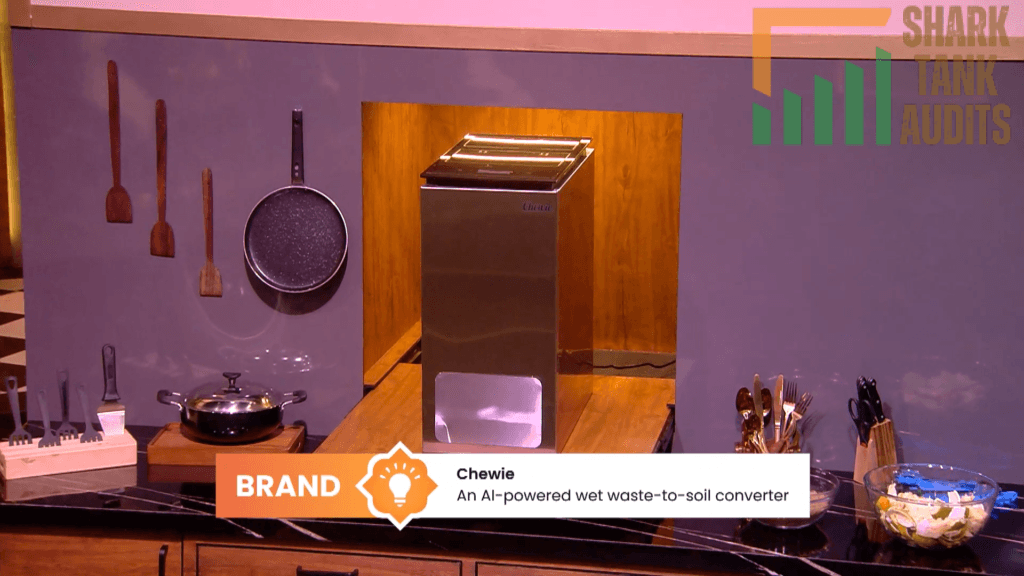
Launched July 2024, the sustainable technology company’s flagship product Chewie is an AI-powered automated kitchen appliance converting wet waste (leftovers, bones, vegetable peels) into soil within 8-30 hours priced at ₹34,999, featuring internal camera detecting non-organic items, self-cleaning mechanism, requiring power/water inlet/outlet, with 3-year warranty and 8-year lifespan, securing 1,000 pre-bookings pre-launch with 1,538 monthly organic visitors. Sharks delivered harsh reality check—Anupam virally roasted “Bhai apka jab tak dhakkan khulta hai, Blinkit delivery karke chala jata hai” (by the time lid opens, Blinkit has already delivered), Namita questioned readiness/processing speed, Vineeta/Kanika expressed concerns over market size for “nice-to-have” ₹35,000 appliance, while Aman noted founder potential advising hiring sales team proving model before seeking high valuation.
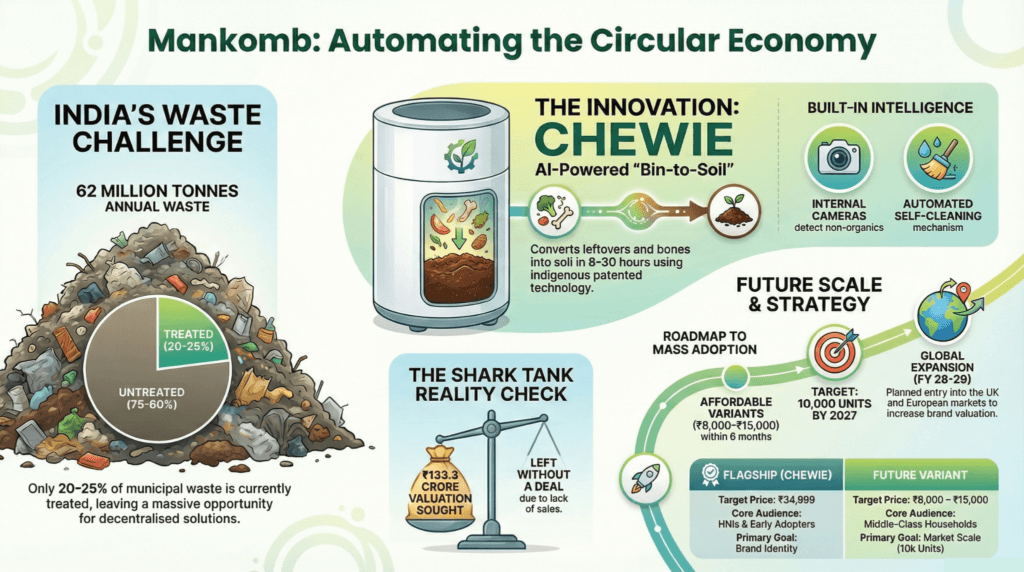
Operating in Indian smart home market valued at $6.71 billion (2026, 29.12% CAGR) with organic waste converter segment growing from $296.5 million (2024) to $574 million (2032) within India generating 62 million tonnes annual municipal solid waste (only 20-25% treated) and circular economy capturing $500 billion (11% of global $4.5 trillion by 2030), Mankomb targets HNIs (28-50) in Tier 1 cities, eco-warriors, tech-savvy early adopters, and urban gardeners within top 10% urban households (1 crore homes) amid government Swachh Bharat Mission and draft Environment Protection Rules mandating waste segregation/home-level composting, planning ₹8,000-15,000 affordable variants within 6 months targeting 10,000 units (FY 26-27) and UK expansion (FY 28-29).
Website Information
- Website:- Mankomb
- Build on JavaScript frameworks Astro Vue.js
- Good SEO Performance, SEO Improvement Needed.
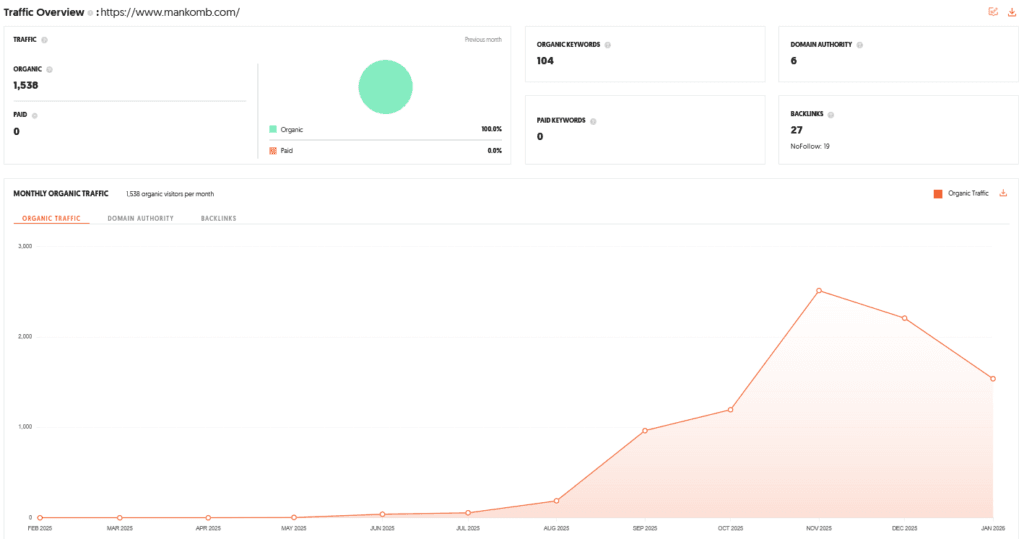
- ORGANIC TRAFFIC: 1538 visitors per month
Founders of Mankomb
- The brand was brought to life by a trio of experienced professionals who met at a previous startup.
- Their collective expertise spans engineering, industrial mobility, and global corporate leadership:
- Mrudul Mudotholy: Co-Founder & CEO
- Dinesh Babu Sukumar: Co-Founder & CMO
- Jawahar Arumugam: Co-Founder & CTO
Mankomb Brand Overview
- Launched in July 2024, Mankomb is a sustainable technology company with the ambitious mission of building a complete home-appliance value chain within India.
- The brand focuses on “Made-in-India” patented technology designed to solve urban problems.
- While their flagship product is focused on waste, the brand’s long-term identity is rooted in creating a circular, eco-friendly lifestyle through water and energy management solutions.
Mankomb Shark Tank India Appearance & Ask
The founders appeared in Season 5 of Shark Tank India, seeking a significant investment to scale their operations.
- The Ask: ₹2 Crore for 1.5% equity.
- Valuation: ₹133.3 Crore.
- The Pitch: The team emphasized the growing crisis of wet waste in urban Indian households and positioned their product as a premium, AI-powered solution to automate waste management.
Season and Episode Air Date
- Season: 05
- Episode: 24
- Episode Air Date: Thursday, 05 February, 2026
Mankomb Product Overview (Chewie)
The flagship product, Chewie, is an automated kitchen appliance designed to convert wet waste into soil within 8 to 30 hours.
- Functionality: It handles leftovers, bones, and vegetable peels.
- Installation: It requires a power connection, water inlet, and an outlet for flushing.
- Smart Features: Includes an internal camera to detect non-organic items and a self-cleaning mechanism.
- Pricing: Currently priced at a premium of ₹34,999.
Mankomb Investor Reactions
The Sharks provided a “reality check” to the founders through a mix of humor and hard-hitting business critiques:
- Anupam Mittal: Roasted the product’s slow response time with the viral remark, “Bhai apka jab tak dhakkan khulta hai, Blinkit delivery karke chala jata hai” (By the time your lid opens, Blinkit has already delivered).
- Namita Thapar: Questioned the product’s readiness and processing speed.
- Vineeta Singh & Kanika Tekriwal: Expressed concerns over the market size for a “nice-to-have” appliance priced at ₹35,000.
- Aman Gupta: Noted the potential in the founders but advised them to hire a sales team and prove the model before seeking such a high valuation.
Mankomb Customer Engagement Philosophy
- Mankomb aims to simplify the user experience by removing the “mess” factor from waste disposal.
- Their philosophy centers on contactless interaction (automated lids) and transparency (app alerts and internal photo detection).
- They aim to build trust through durability, offering a 3-year warranty on a product built to last up to 8 years.
Mankomb Product Highlights
- Waste Transformation: Converts “stinky” waste into usable potting soil.
- AI Integration: Uses sensors to detect improper waste and prevent machine damage.
- Indigenous Tech: Boasts Indian patents and a 100% local manufacturing vision.
- Pre-Market Traction: Secured 1,000 pre-bookings before the official launch.
Mankomb Future Vision
The brand’s roadmap is focused on accessibility and expansion.
- Affordability: Development of cheaper variants priced between ₹8,000 and ₹15,000 within six months.
- Scalability: Targeting the sale of 10,000 units by FY 26-27.
- Global Reach: Expansion into international markets, specifically the United Kingdom, by FY 28-29.
- Product Diversification: Moving beyond waste into broader sustainable household solutions for water and energy.
Mankomb Deal Finalized or Not
- No deal was finalized. Despite the innovative nature of the product, all Sharks opted out.
- The primary reasons cited were the lack of actual sales (only pre-bookings), concerns regarding the product’s speed and readiness, and the high valuation for a pre-revenue company.
| Category | Details |
|---|---|
| Website | Mankomb |
| Website Technology | JavaScript frameworks (Astro, Vue.js) |
| SEO Performance | Good SEO performance; further improvement needed |
| Organic Traffic | ~1,538 visitors/month |
| Launch Date | July 2024 |
| Headquarters | India |
| Founding Team | Mrudul Mudotholy, Dinesh Babu Sukumar, Jawahar Arumugam |
| CEO | Mrudul Mudotholy |
| CMO | Dinesh Babu Sukumar |
| CTO | Jawahar Arumugam |
| Founder Background | Engineering, industrial mobility & global corporate leadership |
| Brand Category | Sustainable Home Technology |
| Core Mission | Build a complete Made-in-India home-appliance value chain |
| Brand Philosophy | Circular, eco-friendly urban living |
| Primary Focus Area | Waste, water & energy management |
| Shark Tank Season | Season 05 |
| Episode Number | Episode 24 |
| Episode Air Date | Thursday, 05 February 2026 |
| Shark Tank Ask | ₹2 Crores for 1.5% equity |
| Implied Valuation | ₹133.3 Crores |
| Pitch Theme | AI-powered automation of urban wet waste |
| Flagship Product | Chewie |
| Product Category | Automated Kitchen Waste Appliance |
| Core Function | Converts wet waste into soil |
| Processing Time | 8 to 30 hours |
| Waste Types Handled | Leftovers, bones, vegetable peels |
| Installation Requirement | Power connection, water inlet & flushing outlet |
| Smart Features | Internal camera, AI detection, self-cleaning |
| Pricing | ₹34,999 |
| Warranty | 3 years |
| Product Lifespan | Up to 8 years |
| Pre-Market Traction | 1,000 pre-bookings |
| Anupam Mittal’s Feedback | Criticized slow lid response (Blinkit remark) |
| Namita Thapar’s Feedback | Questioned readiness & processing speed |
| Vineeta Singh’s Feedback | Concerned about premium “nice-to-have” market |
| Kanika Tekriwal’s Feedback | Market size concerns at ₹35K price point |
| Aman Gupta’s Feedback | Liked founders; advised sales proof & lower valuation |
| Deal Status | ❌ No Deal |
| Reason for No Deal | Pre-revenue, high valuation, speed & readiness concerns |
| Customer Experience Philosophy | Contactless, mess-free waste disposal |
| User Trust Strategy | Transparency via alerts & internal imaging |
| Core Value Proposition | “Bin to Soil” without smell or mess |
| Technology Edge | AI + sensors with indigenous IP |
| Manufacturing Vision | 100% Made-in-India |
| Market Driver | Urban wet waste crisis |
| India Urban Population (2036) | ~600 million |
| Annual Waste Generation (India) | ~62 million tonnes |
| Waste Treatment Gap | Only 20–25% treated |
| Circular Economy Opportunity | $4.5T globally by 2030 |
| India’s Circular Economy Share | ~$500 Billion |
| Government Tailwinds | Swachh Bharat, waste segregation mandates |
| Smart Home Market (India) | $6.71B (2026) |
| Smart Home CAGR | 29.12% |
| OWC Market Size | $296.5M (2024) → $574M (2032) |
| Serviceable Market (SAM) | Top 10% urban households (~1 crore homes) |
| SOM Target | 0.1% (10,000 units) |
| Primary Target Audience | HNIs aged 28–50 in Tier 1 cities |
| Psychographic Profile | Eco-conscious, tech-savvy early adopters |
| B2B Target Segments | Luxury apartments, hotels, gated communities |
| Content Strategy | “Educational aesthetic” (Bin-to-Soil demos) |
| SEO Target Keywords | Automatic home composter India, indoor wet waste solution |
| Paid Marketing Focus | Sustainability & smart-home interest targeting |
| Influencer Strategy | Sustainability & luxury home-décor creators |
| Primary Sales Channel | D2C via Mankomb website |
| Offline Strategy | Experience kiosks in premium malls |
| Channel Partnerships | Modular kitchen & interior brands |
| Marketplace Expansion | Amazon Launchpad, Tata Cliq Luxury |
| Key Advantage | Indigenous patents + end-to-end solution |
| Major Challenge | Price sensitivity |
| Secondary Challenge | Installation complexity |
| Brand Challenge | New entrant vs appliance giants |
| Success Driver | Eliminates smell & inconvenience |
| Product Improvement Focus | Faster lid response & UX |
| Growth Lever | Affordable variants |
| Affordable Variant Pricing | ₹8,000 – ₹15,000 |
| FY 26–27 Sales Target | 10,000 units |
| Phase 1 Goal | Convert pre-bookings to sales |
| Phase 2 Goal | Achieve scale & margin efficiency |
| Phase 3 Goal | Water & energy management products |
| Phase 4 Goal | UK & Europe expansion |
| Long-Term Vision | Sustainable home-tech ecosystem |
| Future Funding Potential | Series A/B pos |
Mankomb Shark Tank India Business Plan
1. Mankomb Market Potential in India: Facts & Data
- Rapid Urbanization: India’s urban population is projected to reach 600 million by 2036 (approx. 40% of the population). This demographic shift creates an immediate need for decentralized waste solutions in compact high-rise apartments.
- Waste Crisis: India generates roughly 62 million tonnes of municipal solid waste annually, of which only 20-25% is treated. This massive gap represents a significant opportunity for Mankomb to position Chewie as a primary treatment tool.
- The Circular Economy Boom: The global transition to a circular economy is valued at $4.5 trillion by 2030; India is set to capture 11% ($500 billion) of this potential, making Mankomb’s eco-friendly focus highly relevant.
- Government Push: Initiatives like the Swachh Bharat Mission and draft Environment Protection Rules (2024-2026) mandate waste segregation and encourage home-level composting, providing a tailwind for Mankomb.
2. Mankomb Total Addressable Market (TAM)
- Smart Home Market Size: The Indian smart home market is valued at $6.71 billion in 2026, growing at a 29.12% CAGR. This is the core playground for Mankomb.
- Organic Waste Converter (OWC) Segment: The specific OWC market is projected to grow from $296.5 million (2024) to $574 million (2032).
- Serviceable Market (SAM): Mankomb can target the top 10% of urban households (approx. 1 crore homes) that possess the disposable income for premium appliances.
- Market Share Goal (SOM): Capturing just 0.1% of this target segment would equate to 10,000 units, aligning with Mankomb’s FY 26-27 scalability goal.
3. Mankomb Ideal Target Audience & Demographics
- Primary Demographic: High-income professionals (HNIs) aged 28–50 years living in Tier 1 cities (Bengaluru, Mumbai, Delhi, Hyderabad).
- Psychographic Profile: Environmentally conscious “Eco-Warriors,” tech-savvy early adopters of smart home gadgets, and urban gardeners who value organic compost.
- B2B Targets: Luxury apartment developers (pre-installation), premium gated communities, and boutique sustainable hotels looking to reduce their carbon footprint.
4. Mankomb Marketing & Content Strategy
- Content Strategy: Focus on “Educational Aesthetic.” Create high-quality videos showing the “Bin to Soil” transformation, emphasizing the elimination of odors and gunk.
- Digital Marketing Strategy: * Search Engine Optimization (SEO): Improve Mankomb’s current SEO by targeting high-intent keywords like “automatic home composter India,” “indoor wet waste solution,” and “smart kitchen appliances.”
- Performance Marketing: Run Meta and Google ads specifically targeting users interested in “Sustainable Living,” “Urban Gardening,” and “Smart Home Automation.”
- Influencer Collaboration: Partner with sustainability influencers and luxury home-décor vloggers to showcase Chewie’s sleek design and utility.
5. Mankomb Distribution Strategy
- D2C (Direct-to-Consumer): Primary sales through the Mankomb website (built on Astro/Vue.js) to maintain higher margins.
- Experience Centers: Establish small kiosks in premium malls or “Experience Zones” in Tier 1 cities where customers can see the Chewie lid-opening speed and soil quality firsthand.
- Channel Partnerships: Collaborate with high-end interior designers and modular kitchen brands (e.g., Sleek, Godrej Interio) to include Chewie as a built-in appliance.
- Marketplaces: Expansion into Amazon (Launchpad) and Tata Cliq Luxury for broader trust and reach.
6. Mankomb Advantages & Challenges
- Advantages: * Indigenous IP: Indian patents protect the technology and appeal to “Make in India” sentiments.
- End-to-End Solution: Unlike simple bins, Chewie handles the shredding, processing, and cleaning.
- Challenges: * Price Sensitivity: The ₹34,999 price point is a barrier for the mass market.
- Installation Friction: Requirement for water inlets and outlets makes it harder to adopt than a standalone bin.
- Brand Awareness: Being a new brand (July 2024), Mankomb faces competition from established appliance giants.
7. Mankomb Success Reasons & Mitigation Strategies
- Success Reason (Convenience): By removing the “mess” and “smell,” Mankomb solves the #1 reason people stop composting.
- Mitigation: Continuously improve the lid-opening speed (addressing Anupam Mittal’s critique) to enhance user experience.
- Success Reason (Diversification): Moving into water/energy makes Mankomb a “Sustainable Tech” giant, not just a “Bin Company.”
- Mitigation (High Price): Stick to the roadmap of launching the ₹8,000–₹15,000 variant to capture the middle-class segment.
- Success Reason (Expertise): The founder trio’s engineering and global leadership background ensures high product quality.
- Mitigation (Sales Concern): Hire a specialized consumer-appliance sales team to convert pre-bookings into realized revenue.
8. Mankomb Future Vision & Roadmap to Increase Valuation
- Phase 1 (FY 25-26): Convert the 1,000 pre-bookings into sales; launch the “Affordable Chewie” series.
- Phase 2 (FY 26-27): Scale to 10,000 units; achieve positive net margins through manufacturing economies of scale.
- Phase 3 (FY 27-28): Diversify the Mankomb portfolio with smart water-saving sensors and home energy monitors.
- Phase 4 (FY 28-29): Enter the UK and European markets where waste disposal costs are high, significantly increasing the Mankomb brand valuation for a potential Series A/B funding round.







Mankomb Shark Tank India Episode Review