
NapTapGo Shark Tank India Episode Review
NapTapGo appeared on Shark Tank India Season 5, Episode 46, with co-founders Nitin Malhotra (electronics engineer with MBA who previously built/exited after-sales service startup for ₹45 Crore) and Himanshu Shukla (significant hospitality sector experience, longtime friends established 2023) seeking ₹2 Crore for 2.5% equity (₹80 Crore valuation) but left with no deal despite Sharks being impressed by founders’ professional backgrounds/previous successful exit as they remained unconvinced about pod concept scalability in Indian landscape concerned by high burn rate/projected losses sharing financial trajectory: ₹20 lakh revenue with ₹50 lakh loss (2023-24), ₹1.1 Crore revenue with ₹1 Crore loss (2024-25), and ₹3.5 Crore projected revenue with ₹1.5 Crore projected loss (2025-26).
The hospitality startup provides Japanese-style pod hotels designed for Indian market focusing affordable short-stay private sleeping pods specifically targeting transit hubs/hospitals/urban centers currently operational in Noida/Amritsar positioning as hygienic consistent alternative to traditional often-unpredictable franchise-led budget hotels offering compact private sleeping pods with flexible check-ins/hourly billing designed maximizing real estate efficiency while providing private tech-enabled rest environment as “middle ground” between hostel/budget hotel heavily focusing cleanliness/uniform user experience across all locations featuring flexible hourly booking transit traveler options, high hygiene core brand pillar differentiating from low-end budget hotels, integrated pod technology for modern user experience, and strategic Noida/Amritsar high-footfall area (hospitals/transit hubs) presence with 8,898 monthly organic visitors demonstrating good SEO performance requiring improvement. Sharks offered critical feedback range—Aman bluntly calling concept “useless” for personal taste noting pods felt “claustrophobic”/more like plastic-heavy hostel versus hotel, Kunal feeling business in “no man’s land” neither true budget hotel nor cost-efficient enough disrupting market, Namita comparing unfavorably to competitor BLR Pods noting NapTapGo lacked same real estate utilization/profitability level, and Anupam showing initial interest though ultimately not moving forward with offer due to business model risks.
Operating in Indian hotel market valued at $15.67 billion (2024) projected to grow to $22.41 billion by 2030 (9.32% CAGR) with global capsule hotel demand estimated at $271.4 million (2026) and Asia-Pacific region (including India) dominating market amid 43.3+ million students/massive workforce needing short-stay affordable housing near hospitals/transit hubs (Railway/Airports) at all-time high and 78% domestic cost-sensitive corporate bookings within $8 billion entire Indian budget lodging/transit accommodation market and $1.2 billion SAM (0-24 hour short-stay travelers near top 50 transit hubs/100+ major hospitals), NapTapGo targets solo business travelers (21-40 accounting for 59% India’s business travel market), patient relatives at major hospitals (Noida/Amritsar needing 4-6 hour rest periods), and middle-income professionals/Gen Z travelers (fastest-growing segment)/budget-conscious spiritual tourists (Katra pipeline) who are tech-savvy prioritizing hygiene over luxury preferring mobile-first booking (65% Indian travel bookings via mobile) aiming 5-8% urban pod market capture expanding to 15 locations targeting ₹50+ Crore revenue by 2028 through “standardized, hygienic, efficient stay model” philosophy believing traveling professionals deserve predictable standards utilizing technology/uniform design removing budget travel “guesswork” ensuring every customer receives same high cleanliness/reliability level regardless of city, planning “Visual Transparency” focus using 360-degree videos/”Day in a Pod” Reels demystifying Shark-raised claustrophobia concerns, SEO targeting long-tail keywords (“hourly stay near Noida hospital,” “budget pod hotel Amritsar”) from 8,898 monthly organic visitors, geo-fenced Google Search Ads targeting users within 5km airport/railway station radius, solo travel influencer Instagram/YouTube partnerships normalizing capsule lifestyle, Next.js 14 NapTapGo website enhancement offering “Direct Booking Discounts” bypassing OTA commissions, MakeMyTrip/Booking.com high visibility maintenance (controlling massive Indian online travel market share), SME/medical tourism agency corporate tie-ups providing employee/client “Nap-Vouchers,” Asset-Light Model shift (franchise/management contracts) reducing capital expenditure/losses mitigating scalability/burn rate challenge, “Infinite Mirrors”/better lighting/high-quality ventilation system pod interior redesign enhancing space sense addressing consumer claustrophobia perception, “Hospital-Transit” niche focus where airport-focused competitors like BLR Pods may not have stronghold, current Noida/Amritsar unit optimization achieving 70%+ occupancy reducing net losses, 15-property launch across Pune/Katra/Bangalore integrating AI-driven dynamic pricing maximizing RevPAR (Revenue Per Available Room), and ₹150+ Crore valuation target by 2028 demonstrating profitability path through Asset-Light model/ancillary revenue (in-pod vending/laundry/coworking access) aggressively expanding from current two locations to 15 hotels within next two years with upcoming Katra/Pune pipeline sites leveraging national visibility becoming leader in India’s emerging capsule hotel segment making quality budget stays accessible to wider audience offering higher revenue per square foot versus traditional hotels packing more “units” into same area with unorganized PG/local lodge-unlike “Predictable Standard” hygiene and Nitin’s tech background/Himanshu’s hospitality expertise creating “Tech-Hospitality” hybrid backed by founders’ ₹45 Crore exit track record providing institutional future funding credibility tapping into frequent working traveler service through tech-enabled standardized lodging model.
Website Information
- Website:- NapTapGo
- Build on JavaScript frameworks Next.js 14.2.4 React
- Good SEO Performance, SEO Improvement Needed.
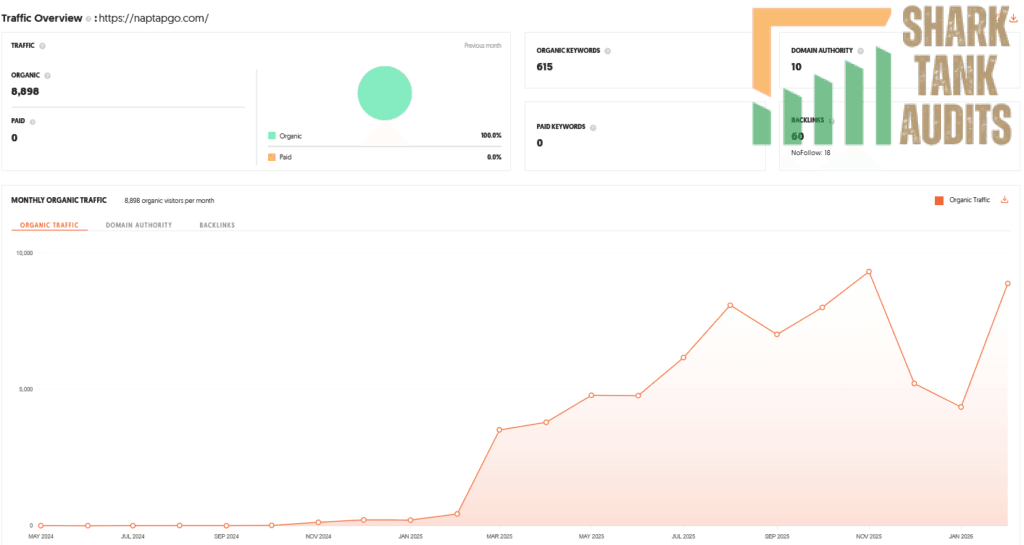
- ORGANIC TRAFFIC: 8898 visitors per month.
The Founders of NapTapGo
- NapTapGo was established by longtime friends Nitin Malhotra and Himanshu Shukla in 2023.
- The duo brings a balanced mix of expertise to the venture: Nitin is an electronics engineer with an MBA who previously built and exited an after-sales service startup for ₹45 crores.
- Himanshu contributes significant experience from the hospitality sector. Together, they aim to serve frequent working travelers through a tech-enabled, standardized lodging model.
NapTapGo Brand Overview
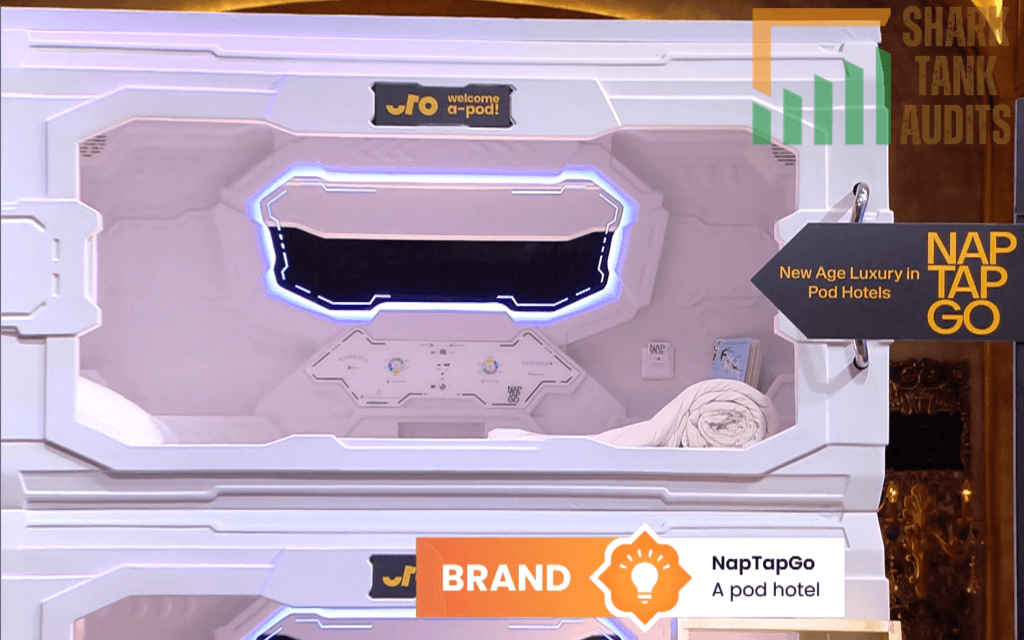
- NapTapGo is a hospitality startup that provides Japanese-style pod hotels designed for the Indian market.
- The brand focuses on offering affordable, short-stay, and private sleeping pods, specifically targeting transit hubs, hospitals, and urban centers.
- Currently operational in Noida and Amritsar, the brand positions itself as a hygienic and consistent alternative to traditional, often unpredictable, franchise-led budget hotels.
NapTapGo Shark Tank India Appearance & Ask
- Appearing in Season 5, Episode 46, the founders of NapTapGo entered the tank seeking an investment of ₹2 crores in exchange for 2.5% equity, which placed the company at an ₹80 crore valuation.
- During the presentation, they shared their financial trajectory:
- 2023-24: ₹20 lakhs revenue with a ₹50 lakhs loss.
- 2024-25: ₹1.1 crore revenue with a ₹1 crore loss.
- 2025-26 (Projected): ₹3.5 crores revenue with a projected loss of ₹1.5 crore.
Season and Episode Air Date
- Season: 05
- Episode: 46
- Episode Air Date: Monday, 09 March, 2026
NapTapGo Product Overview
- The NapTapGo product consists of compact, private sleeping pods that offer flexible check-ins and hourly billing.
- These pods are designed to maximize real estate efficiency while providing a private, tech-enabled environment for rest.
- The “Japanese-style” units are intended to be a middle ground between a hostel and a budget hotel, focusing heavily on cleanliness and a uniform user experience across all locations.
Investor Reactions to NapTapGo
The Sharks offered a range of critical feedback regarding NapTapGo:
- Aman Gupta: He was quite blunt, calling the concept “useless” for his personal taste, noting that the pods felt “claustrophobic” and more like a plastic-heavy hostel than a hotel.
- Kunal Bahl: He felt the business was in a “no man’s land”—neither a true budget hotel nor cost-efficient enough to disrupt the market.
- Namita Thapar: She compared them unfavorably to a competitor, BLR Pods, noting that NapTapGo lacked the same level of real estate utilization and profitability.
- Anupam Mittal: While showing initial interest in the idea, he ultimately did not move forward with an offer due to the business model’s risks.
NapTapGo Customer Engagement Philosophy
- The NapTapGo philosophy is rooted in providing predictable standards. The founders believe that traveling professionals deserve a “standardized, hygienic, and efficient stay model.”
- By utilizing technology and a uniform design, they aim to remove the “guesswork” out of budget travel, ensuring that every customer receives the same high level of cleanliness and reliability regardless of the city they are in.
NapTapGo Product Highlights
- Flexible Stays: Offers hourly booking options tailored for transit travelers.
- High Hygiene Standards: A core pillar of the brand to differentiate from low-end budget hotels.
- Tech-Enabled: Features integrated technology within the pods for a modern user experience.
- Strategic Locations: Current presence in Noida and Amritsar, targeting high-footfall areas like hospitals and transit hubs.
Future Vision for NapTapGo
- The future vision for NapTapGo involves aggressive physical expansion. The founders aim to grow from their current two locations to 15 hotels within the next two years.
- Upcoming sites are already in the pipeline for Katra and Pune.
- Despite the lack of a Shark Tank deal, the brand intends to leverage its national visibility to become a leader in India’s emerging capsule hotel segment, making quality budget stays accessible to a wider audience.
NapTapGo: Deal Finalized or Not?
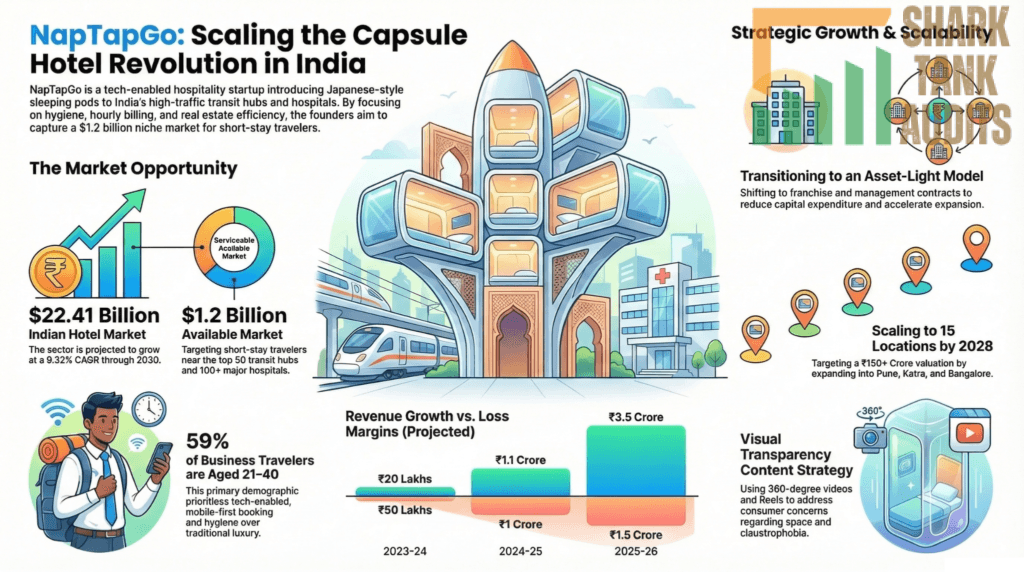
- No deal was finalized.
- Despite the Sharks being impressed by the founders’ professional backgrounds and previous successful exit, NapTapGo failed to secure an investment.
- The Sharks remained unconvinced about the scalability of the pod concept in the Indian landscape and were concerned by the high burn rate and projected losses.
| Title | Details |
|---|---|
| Brand Name | NapTapGo |
| Website Platform | Built on JavaScript frameworks Next.js 14.2.4 React |
| SEO Performance | Good SEO Performance, SEO Improvement Needed |
| Organic Traffic | 8898 visitors per month |
| Founded Year | 2023 |
| Founders | Nitin Malhotra and Himanshu Shukla |
| Founder Background | Nitin Malhotra is an electronics engineer with an MBA |
| Founder Achievement | Previously built and exited an after-sales service startup for ₹45 crores |
| Co-Founder Background | Himanshu Shukla has experience in the hospitality industry |
| Business Type | Hospitality and pod hotel startup |
| Brand Concept | Japanese-style capsule pod hotels for short stays |
| Target Market | Transit hubs, hospitals and urban centers |
| Brand Positioning | Affordable, hygienic and standardized short-stay lodging |
| Current Locations | Noida and Amritsar |
| Shark Tank Appearance | Shark Tank India |
| Season | Season 05 |
| Episode | Episode 46 |
| Episode Air Date | Monday, 09 March 2026 |
| Investment Ask | ₹2 Crores for 2.5% equity |
| Initial Valuation | ₹80 Crores |
| Financial Year 2023–24 Revenue | ₹20 Lakhs |
| Financial Year 2023–24 Loss | ₹50 Lakhs |
| Financial Year 2024–25 Revenue | ₹1.1 Crore |
| Financial Year 2024–25 Loss | ₹1 Crore |
| Financial Year 2025–26 Projected Revenue | ₹3.5 Crores |
| Financial Year 2025–26 Projected Loss | ₹1.5 Crore |
| Core Product | Private capsule sleeping pods |
| Booking Model | Hourly booking system |
| Stay Type | Short stay accommodation |
| Pod Design | Compact Japanese-style sleeping pods |
| Key Benefit | Efficient real estate usage |
| Technology Integration | Tech-enabled pod environment |
| Customer Experience | Private, hygienic and consistent stay |
| Investor Panel | Aman Gupta, Kunal Bahl, Namita Thapar, Anupam Mittal |
| Investor Reaction | Mostly critical feedback from sharks |
| Aman Gupta Feedback | Called the concept useless and claustrophobic |
| Kunal Bahl Feedback | Said the business sits in no man’s land |
| Namita Thapar Feedback | Compared unfavorably to competitor BLR Pods |
| Anupam Mittal Feedback | Initially interested but did not invest |
| Competitor Mentioned | BLR Pods |
| Deal Outcome | No deal finalized |
| Reason for No Deal | Concerns about scalability and high burn rate |
| Customer Philosophy | Provide standardized hygienic travel stays |
| Core Customer Value | Remove unpredictability from budget hotels |
| Service Promise | Consistent experience across locations |
| Expansion Plan | Grow from 2 to 15 hotels |
| Upcoming Locations | Katra and Pune |
| Long-Term Goal | Become leader in capsule hotel segment in India |
| Hospitality Market Size | $15.67 Billion in 2024 |
| Hospitality Market Forecast | $22.41 Billion by 2030 |
| Market Growth Rate | 9.32% CAGR |
| Capsule Hotel Market Size | $271.4 Million globally in 2026 |
| Transit Demand Driver | Large workforce and student population |
| Corporate Booking Share | 78% domestic travel bookings |
| Total Addressable Market | $8 Billion budget lodging market |
| Serviceable Available Market | $1.2 Billion short stay transit lodging |
| Target Market Share | 5–8% urban pod hotel segment |
| Revenue Target | ₹50 Crores by 2028 |
| Primary Target Audience | Solo business travelers aged 21–40 |
| Secondary Audience | Hospital patient relatives needing short rest stays |
| Demographic Segment | Middle-income professionals and Gen Z travelers |
| Booking Behavior | Mobile-first booking preference |
| Mobile Booking Rate | 65% of travel bookings via mobile |
| Content Marketing Strategy | 360-degree videos and day in a pod reels |
| SEO Strategy | Target keywords like hourly stay near Noida hospital |
| Paid Advertising | Geo-fenced Google Ads near airports and railway stations |
| Social Strategy | Collaborations with solo travel influencers |
| Direct Booking Strategy | Website discounts to reduce OTA commissions |
| OTA Platforms | MakeMyTrip and Booking.com |
| Corporate Partnerships | Tie-ups with SMEs and medical tourism agencies |
| Business Advantage | Higher revenue per square foot |
| Operational Advantage | Standardized hygiene and design |
| Founder Advantage | Strong entrepreneurial background and exit history |
| Major Challenge | High burn rate |
| Scalability Challenge | High capital expenditure for expansion |
| Mitigation Strategy | Shift to asset-light franchise model |
| Consumer Concern | Claustrophobia perception |
| Design Improvement | Better lighting and ventilation |
| Competitive Strategy | Focus on hospital-transit niche |
| Phase 1 Plan | Achieve 70% occupancy in existing properties |
| Phase 2 Plan | Expand to 15 properties across major cities |
| Phase 3 Plan | Implement AI-based dynamic pricing |
| Long Term Valuation Goal | ₹150+ Crores valuation |
| Additional Revenue Streams | In-pod vending, laundry services and coworking access |
NapTapGo Shark Tank India Business Plan
The Business Potential of NapTapGo in India
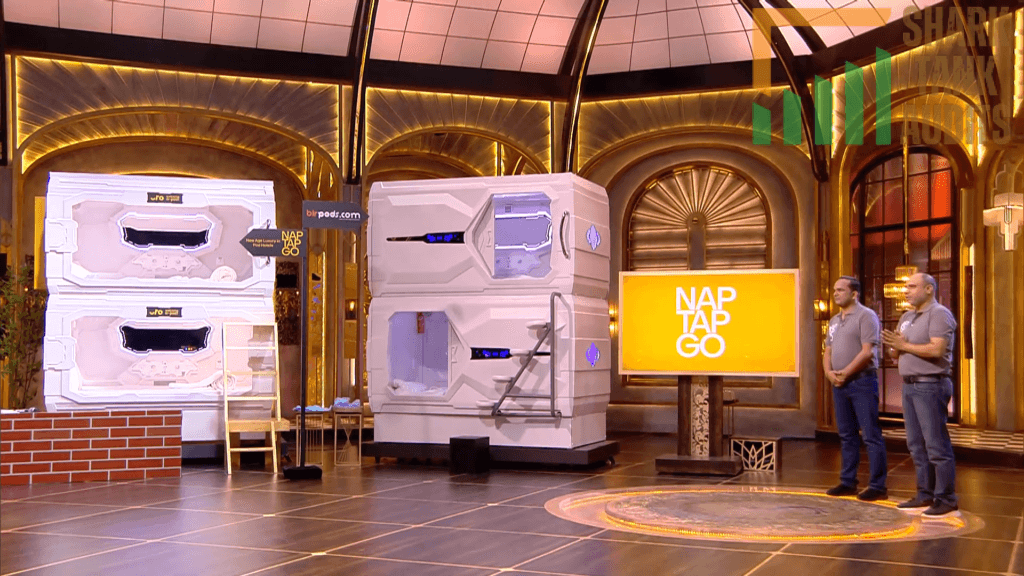
- India’s Hospitality Boom: The Indian hotel market is valued at $15.67 billion in 2024 and is projected to grow to $22.41 billion by 2030 (CAGR of 9.32%).
- The Capsule Segment: Global demand for capsule hotels is estimated at $271.4 million in 2026, with the Asia-Pacific region (including India) dominating the market.
- Transit Demand: With over 43.3 million students and a massive workforce, the need for “short-stay” affordable housing near hospitals and transit hubs (Railway/Airports) is at an all-time high.
- NapTapGo Potential: As a “middle ground” between hostels and budget hotels, NapTapGo taps into the 78% of corporate bookings that are domestic and cost-sensitive.
Total Addressable Market (TAM) for NapTapGo
- Total Addressable Market (TAM): The entire Indian budget lodging and transit accommodation market, valued at approximately $8 billion.
- Serviceable Available Market (SAM): Short-stay travelers (0-24 hours) near the top 50 transit hubs and 100+ major hospitals in India, estimated at $1.2 billion.
- Serviceable Obtainable Market (SOM): NapTapGo aims to capture 5-8% of the urban “pod” market by expanding to 15 locations, targeting a revenue of ₹50+ crores by 2028.
Ideal Target Audience and Demographics for NapTapGo
- Primary Audience: Solo business travelers (Ages 21–40) who account for 59% of India’s business travel market.
- Secondary Audience: Relatives of patients at major hospitals (e.g., Noida/Amritsar) needing 4–6 hour rest periods.
- Demographics: Middle-income professionals, “Gen Z” travelers (fastest-growing segment), and budget-conscious spiritual tourists (Katra pipeline).
- Behavioral Traits: Tech-savvy, prioritize hygiene over luxury, and prefer mobile-first booking (65% of Indian travel bookings are via mobile).
NapTapGo Marketing & Digital Strategy
- Content Strategy for NapTapGo: Focus on “Visual Transparency.” Use 360-degree videos and “Day in a Pod” Reels to demystify the claustrophobia concerns raised by Sharks.
- SEO & Digital Presence for NapTapGo:
- Current Stats: 8,898 monthly organic visitors.
- Strategy: Target long-tail keywords like “hourly stay near Noida hospital” or “budget pod hotel Amritsar.”
- Paid Media for NapTapGo: Geo-fenced Google Search Ads targeting users within a 5km radius of airports and railway stations.
- Social Strategy: Partner with “Solo Travel” influencers on Instagram and YouTube to normalize the capsule lifestyle.
NapTapGo Distribution Strategy
- Direct Channel: Enhance the NapTapGo website (Next.js 14) to offer “Direct Booking Discounts” to bypass OTA commissions.
- OTA Partnerships: Maintain high visibility on MakeMyTrip and Booking.com, which control a massive share of the Indian online travel market.
- Corporate Tie-ups: Partner with SMEs and medical tourism agencies to provide “Nap-Vouchers” for employees and clients.
Advantages and Success Factors for NapTapGo
- Real Estate Efficiency: Higher revenue per square foot compared to traditional hotels by packing more “units” into the same area.
- Standardization: Unlike unorganized PGs or local lodges, NapTapGo offers a “Predictable Standard” of hygiene.
- Strong Founders: Nitin’s tech background and Himanshu’s hospitality expertise create a “Tech-Hospitality” hybrid.
- Previous Exit: The founders’ track record (₹45 crore exit) provides institutional credibility for future funding.
Challenges & Mitigation Strategies for NapTapGo
- Challenge: Scalability & Burn Rate.
- Mitigation: Shift to an Asset-Light Model (franchise or management contracts) to reduce capital expenditure and losses.
- Challenge: Consumer Perception (Claustrophobia).
- Mitigation: Redesign pod interiors with “Infinite Mirrors,” better lighting, and high-quality ventilation systems to enhance the sense of space.
- Challenge: Competition.
- Mitigation: Focus on the “Hospital-Transit” niche where competitors like BLR Pods (airport-focused) may not have a stronghold.
Future Vision & Roadmap to Increase NapTapGo Valuation
- Phase 1 (2026): Optimize current units in Noida/Amritsar to achieve 70%+ occupancy and reduce net losses.
- Phase 2 (2027): Launch 15 properties across Pune, Katra, and Bangalore; integrate AI-driven dynamic pricing to maximize RevPAR (Revenue Per Available Room).
- Phase 3 (2028): Aim for a valuation of ₹150+ crores by demonstrating a path to profitability through the Asset-Light model and ancillary revenue (in-pod vending, laundry, and coworking access).




NapTapGo Shark Tank India Episode Review