
Shark Tank India Season 5 Episode 34 Review
Aired on Thursday, February 19, 2026, Episode 34 of Shark Tank India Season 5 was an eclectic mix of niche craftsmanship, culinary controversy, and fintech disruption. The episode, titled “Rhythm and Reality,” showcased the massive spectrum of the Indian startup ecosystem—from a father-son duo in Kolkata hand-carving wooden instruments to high-tech Surat-based engineers attempting to clean up the “wild west” of Indian stock tips.
The Sharks—Aman Gupta, Ritesh Agarwal, Namita Thapar, Anupam Mittal, and Amit Jain—found themselves navigating a series of high-tension negotiations. The evening was defined by a clash of communication styles: while one founder won over a Shark with musical passion, another’s cryptic answers led to one of the most blunt “hard-watch” exits in the show’s history. Whether it was the “Pure Soya” debate or the “AI trust-layer” for traders, Episode 34 proved that in the Tank, your ability to communicate your vision is just as important as the product itself.
Pitch 1
Gappu Shark Tank India Episode Review
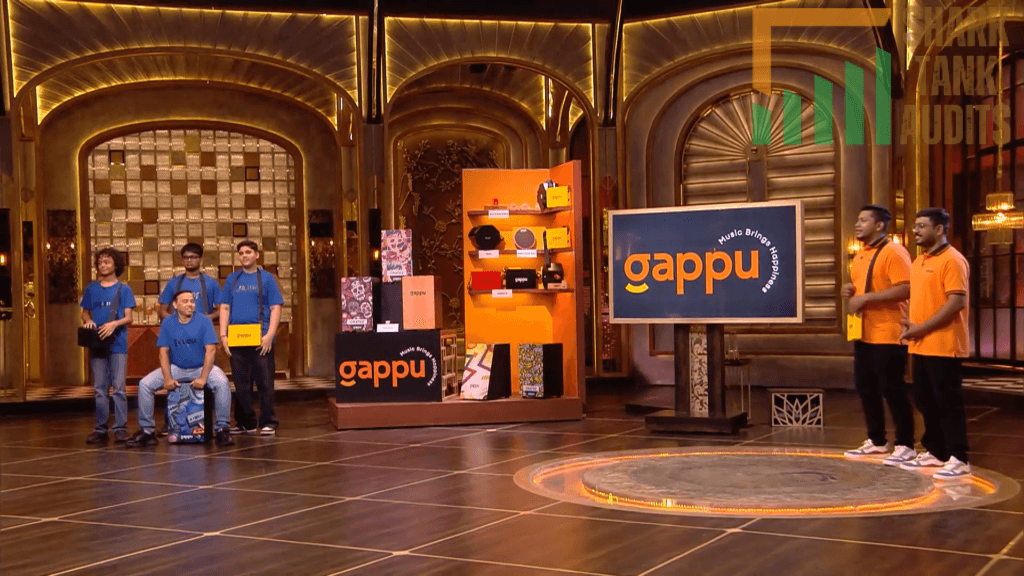
Gappu appeared on Shark Tank India Season 5, Episode 34, with Kolkata-based co-founders Anirban Bhattacharya (CEO who started venture 2017 after handcrafting cajon with father Dulal Bhattacharya, music industry veteran) and Pallab Ghosh (spearheading business strategy/digital expansion/product diversification) seeking ₹30 lakh for 1% equity (₹30 Crore valuation) and successfully closed a deal for ₹10 lakh for 3% equity + ₹20 lakh debt at 12% interest for 3 years (₹3.33 Crore valuation) with Shark Amit Jain after founders rejected counter-offer of ₹30 lakh for 3.33% equity.
The “Made-in-India” lifestyle musical instrument brand specializes in handcrafted percussion offering portability-focused rhythm instruments (cajons including travel-friendly/portable versions, bongos, tambourines, shakers, practice/performance accessories) blending traditional craftsmanship with contemporary needs organizing fragmented market dominated by subpar local goods and expensive imports, operating through D2C (45% website sales), B2B/retail (35% distributors, 15% offline stores) with ₹2,100 AOV maintaining professional-grade accessibility for beginners/hobbyists and 1,001 monthly organic visitors requiring SEO improvement projecting ₹3 Crore sales (FY 25-26). Sharks reacted mixed—Aman backed out citing scalability concerns introducing mass-market instruments, Anupam praised fundraising abilities but disagreed with high valuation, Namita questioned product-market fit suggesting too early for investment level, Ritesh lacked confidence in current marketing strategy turning Gappu into “lifestyle concept,” while Amit saw founder/niche potential offering hybrid debt-equity deal.
Operating in Indian musical instrument market valued at $654.44 million (2024) projected to reach $1.11 billion by 2033 (6.07% CAGR) with percussion as fastest-growing segment through 2030 driven by indie music rise, live unplugged sessions, and drum circles within online sales growing 11.17% CAGR and global percussion market at $1.52 billion (2026), Gappu targets ₹1,200-1,500 Crore Indian percussion/rhythm accessory SAM aiming 2-3% organized market capture (₹15-20 Crore ARR within 3 years) among aspiring creators (16-25 Gen Z students/hobbyists in metros seeking Instagrammable affordable portable instruments), gigging professionals (23-40 independent artists/band members needing travel cajons for tours/acoustic sets), educational institutions (music schools/private tutors amid NEP 2020 promoting arts in schools), and corporate/wellness (HR professionals/therapists using drum circles for team building/mental health), planning SEO overhaul targeting high-intent keywords, Meta/Google ads targeting music education interest and indie music fans, Amazon Choice badge for cajon category, product line launches (Gappu Mini kids’ line, Gappu Pro electronic-hybrid cajons increasing AOV), international expansion (US/EU via Amazon Global leveraging “Authentic Indian Craftsmanship”), and ₹50+ Crore valuation target achieving 4x-5x multiple on projected ₹12 Crore revenue by 2029.
Pitch 2
Mister Veg Shark Tank India Episode Review
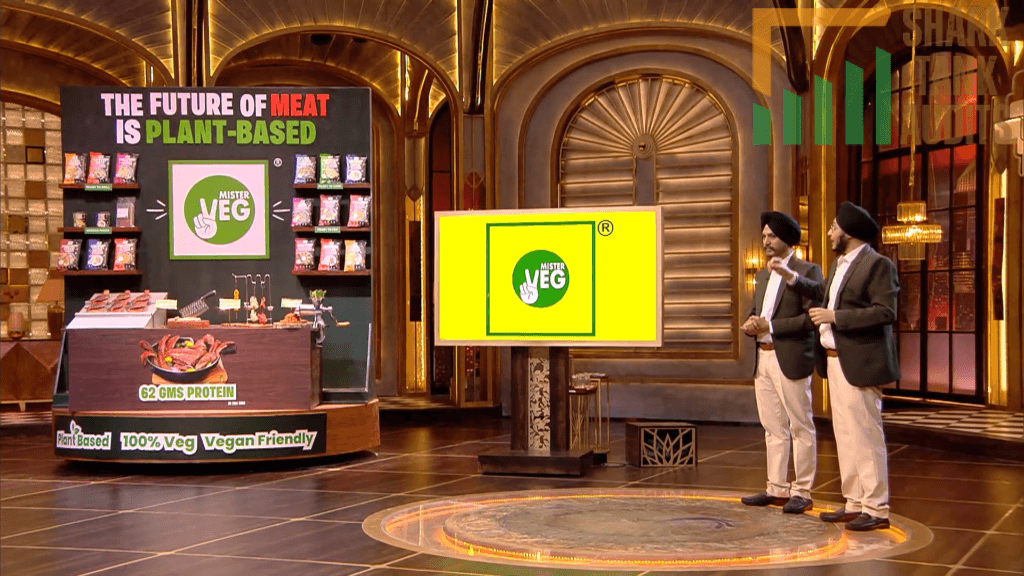
Mister Veg appeared on Shark Tank India Season 5, Episode 34, with Faridabad-based founders Simarjeet Singh and Rupinder Singh (incorporated 2020, started business journey 2018) seeking ₹2 Crore for 2.5% equity (₹80 Crore valuation) but left with no deal after performing bhangra exit despite all Sharks declining.
The DPIIT-recognized startup specializes in cruelty-free plant-based meat alternatives operating from 3,500+ MT annual capacity Haryana manufacturing facility offering 30+ ready-to-cook products (soya-based shammi kebabs, crunchy nuggets, fish-shaped plant-based fillets) including India’s first Pure Soya Chaap containing 0% maida/wheat/gluten requiring 2-5 minutes preparation (pan/air fryer/oven), backed by Jubilant Bhartia Group (₹4.25 Crore for 38% stake in 2021) with restaurant partners (King of Kulcha, Son of Swaad) and 1,128 monthly organic visitors requiring SEO improvement. Sharks reacted critically—Aman enjoyed Shammi Kebab but Anupam/Ritesh found taste unconvincing, Namita “put off” by fish-shaped visual on vegetarian product, founders frustrated Sharks with vague answers (when asked if simply selling Soya Chaap, Simarjeet’s cryptic reply “Gangadhar hi Shaktimaan hai” irked Aman/Anupam), most felt plant-based meat industry in downturn, and Anupam jokingly stated he’d only work if they paid him to “tolerate” them (“Aapko jhelne ke liye”) citing difficult communication style.
Operating in Indian plant-based meat market projected at 15-20% CAGR by 2030 within $10+ billion health food/protein supplement market and ~400 million “flexitarians” SAM reducing meat consumption seeking vegetarian protein sources amid 73% Indians protein deficient (90% unaware of daily requirement) and traditional soya chaap often 60-80% refined flour (maida) creating trust-deficit, Mister Veg targets health-conscious professionals (25-45, Delhi-NCR/Mumbai/Bangalore seeking quick high-protein meals), parents seeking maida-free children’s snacks, gym-goers/athletes requiring plant-based protein, and flexitarian non-vegetarians observing meatless days (Tuesdays/Saturdays) craving meat texture/taste within 50-70 million urban Tier 1/2 population prioritizing clean-label ready-to-cook convenience, planning “Anti-Maida” campaign educating high-carb street chaap versus high-protein version, SEO modernization targeting keywords (“Gluten-free Soya Chaap,” “Vegan Meat India”), fitness influencer/clean-eating chef partnerships showcasing 2-5 minute preparation, quick-commerce expansion (Blinkit/Zepto/Instamart), HoReCa segment scaling utilizing 80% facility capacity improving EBITDA margins, global exports to high NRI regions (UK/Canada/UAE), and cap table cleanup with consistent 20% MoM D2C growth justifying/exceeding ₹80 Crore valuation through taste calibration R&D addressing “neither here nor there” feedback and pivoting marketing from “fake meat” to “Superior Protein” avoiding controversial vegan-meat branding.
Pitch 3
Saras Shark Tank India Episode Review
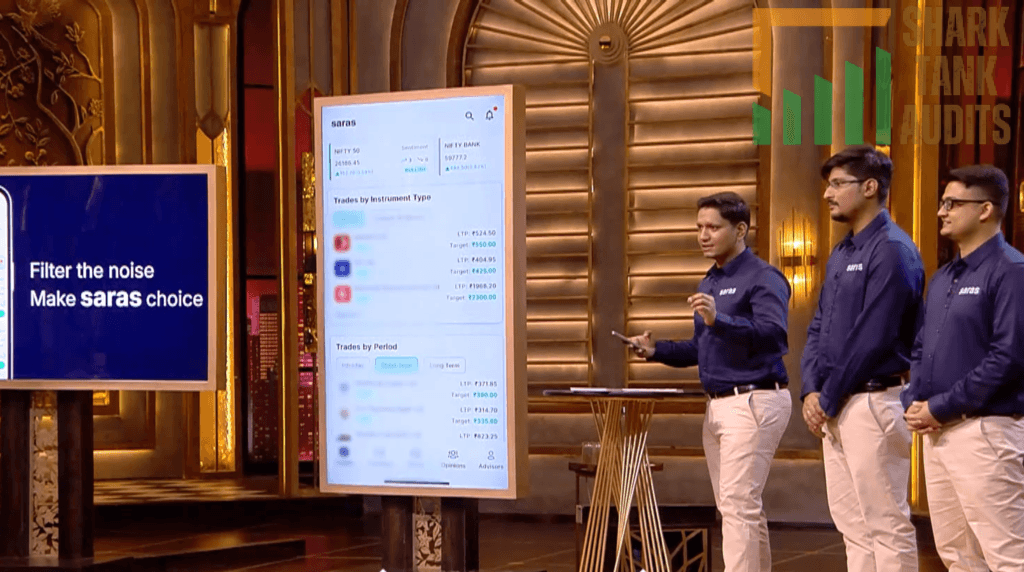
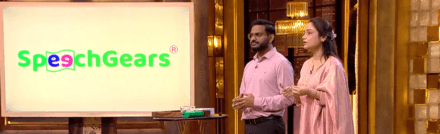
Saras appeared on Shark Tank India Season 5, Episode 34, with Surat-based co-founders Chanchal Chakrachhatri (CEO, IIM Kashipur alumnus, former Petroleum Engineer), Sarthak Joshi (COO, deep brokerage experience from London/Angel One), and Swapnil Tripathi (CTO, IIT Bombay graduate, ex-Apple) seeking ₹70 lakh for 2% equity (₹35 Crore valuation) but left with no deal despite compelling presentation and functional product with significant traction.
Operating under Finosauras Tech Private Limited (originally “Finosauras,” transitioned to “Saras” from Gujarati word for “good”), the stock research app serves as “trust layer” for Indian market aggregating 400+ daily trade ideas from public sources (Telegram/WhatsApp/research reports) using AI to track recommendations in real-time providing transparent metrics (ROI, win rates, risk-reward ratios) acting as accountability engine showing which advisors are consistently accurate versus contributing noise, achieving 124,978+ Android downloads (2,300 last 30 days, ~15-78 MB app size, 4.5-4.6 star iOS rating, 100,000+ Google Play downloads) with 50,000+ active traders community but 0 organic website visitors requiring SEO overhaul, founded after experiencing personal financial losses from unverified market “tips.” Sharks validated core problem noting retail investors desperately need transparency but raised concerns over contradiction—while aiming to eliminate unverified tips, Saras still displayed unregistered individual opinions under “Opinions” tab—and some viewed it as “feature” (advisor rating system) versus standalone scalable company comparing potential utility to Uber/Amazon ratings, citing long-term business model concerns, regulatory hurdles in brokerage space, and competitive landscape.
Operating in Indian market’s “retail revolution” where retail investors hold 19% total NSE market cap (~₹83.6 lakh crore) within 21.6 crore (216 million) demat accounts (13.6 crore unique active investors) and 90 million top income layer with investable surplus shifting from gold/FDs to equities amid 1 lakh new daily demat accounts, Saras targets “Digital Novice” (22-35, tech-savvy on Telegram/Instagram seeking quick safe trading entry) and “Busy Professional” (30-45, Tier 1/2 cities with capital lacking deep research time, 75% male with rapidly growing female base) concentrated in Maharashtra/Gujarat (Surat/Ahmedabad)/Karnataka amid 82% social-media-influenced investors acting on “finfluencer” advice (only 2% SEBI-registered) and 90% retail traders losing money in derivatives (F&O), planning SEO overhaul building “Stock Advisor Directory” ranking for high-intent keywords (“Best SEBI registered Telegram channels,” “Accuracy of [Advisor Name]”), brokerage integration partnerships (Zerodha/Groww/Angel One offering analytics as add-on tool), SEBI-registered influencer “Win-Rate Badge” accountability program, in-app trade execution prototype capturing brokerage transaction fees, AI personalization recommending advisors based on user risk profiles (intraday versus long-term), and expansion into crypto/global markets (US equities) targeting 1 million downloads with freemium model for deep advisor analytics aiming to evolve from tracking/analytics platform into full-scale digital brokerage democratizing institutional-grade data ensuring every internet stock recommendation held accountable to actual performance.
The Episode Verdicts
Episode 34 provided a stark look at the importance of “investor-founder fit.” While the Sharks were eager to support organized efforts in fragmented markets, they showed zero patience for vague business metrics or industries they perceived to be in a downward trend.
| Pitch | Brand | Ask | Deal Status | Shark(s) Involved |
| Pitch 1 | Gappu | ₹30 Lakh for 1% | ₹10 Lakh for 3% + ₹20 Lakh Debt | Amit Jain |
| Pitch 2 | Mister Veg | ₹2 Crore for 2.5% | No Deal | Sharks cited poor communication and a declining plant-meat market. |
| Pitch 3 | Saras | ₹70 Lakh for 2% | No Deal | Concerns over regulatory hurdles and business model scalability. |
Key Highlights
- The Musical Win: Gappu was the emotional heartbeat of the episode. Despite skepticism from Aman Gupta about the mass-market scalability of percussion, Amit Jain bet on the brand’s ability to organize the “Made-in-India” musical instrument sector.
- The Communication Breakdown: Mister Veg’s pitch went south when the founders responded with cryptic analogies like “Gangadhar hi Shaktimaan hai” instead of clear business answers. This, combined with Namita’s distaste for “fish-shaped” veg food, led to a unanimous rejection.
- The Trust Gap: Saras received high praise for solving a genuine pain point for retail investors (unverified stock tips). However, the “Opinions” tab—which still showed unregistered advice—created a paradox the Sharks couldn’t overlook, leading to a “no deal” despite impressive tech.
Leave feedback about this
You must be logged in to post a comment.