
Shark Tank India Season 5 Episode 39 Review
Aired on Thursday, February 26, 2026, Episode 39 of Shark Tank India Season 5 was a study in contrasts. The Tank became a testing ground for three very different visions: a socially critical pediatric therapy chain, a luxury fashion house pivoting from rentals to couture, and a “purposely dumb” hardware solution for smartphone addiction.
The episode featured a panel of Sharks—Namita Thapar, Aman Gupta, Anupam Mittal, Kunal Bahl, and Mohit Yadav—who found themselves alternating between deep empathy and sharp skepticism. While the founders’ pedigrees were impeccable (boasting degrees from IIT Kharagpur and IIM Bangalore), the Sharks proved that academic excellence doesn’t always translate to an “investable” business model. From the heartwarming success of a multidisciplinary health center to the cold rejection of a rotary-style Bluetooth phone, Episode 39 highlighted the thin line between a revolutionary “social solution” and a “market gimmick.”
Pitch 1
Pragyan Child Development Centre Shark Tank India Episode Review
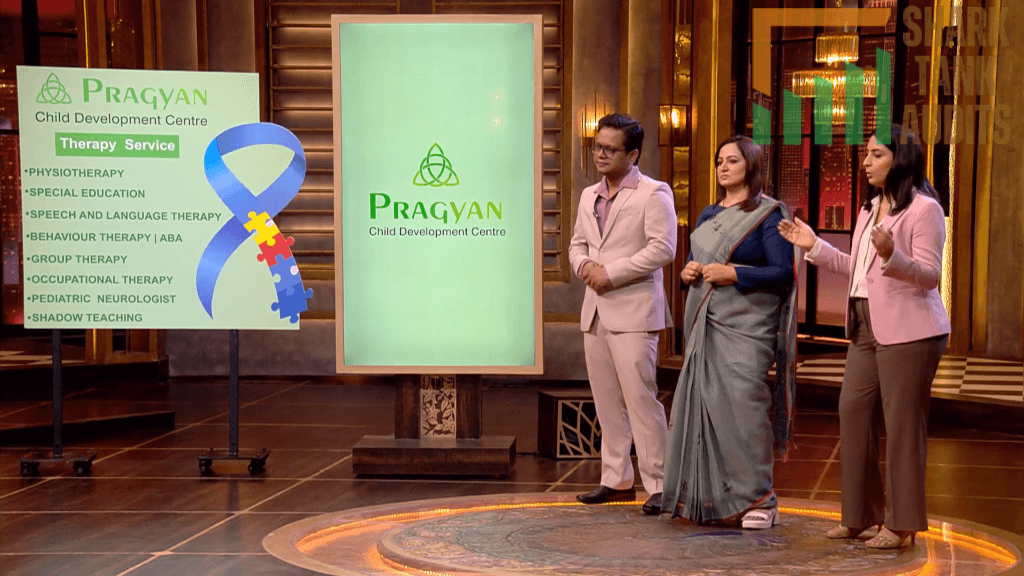
Pragyan Child Development Centre (Pragyan CDC) appeared on Shark Tank India Season 5, Episode 39, with Bengaluru-based founders Srikant Hindupur, Laxmi Bijapur, and Shreya Batra seeking ₹1 Crore for 5% equity (₹20 Crore valuation) and successfully closed a deal for ₹1 Crore for 5% equity with Sharks Namita Thapar and Mohit Yadav with conditions including 5% equity for Shreya Batra and 15% ESOP pool reserved for professional leadership scaling assistance.
The multidisciplinary pediatric therapy chain specializes in comprehensive care for children with intellectual/developmental disabilities (Autism, ADHD, Cerebral Palsy, sensory processing disorders) through integrated “one-stop” solution versus single-service clinic model operating 11 Bengaluru centers offering Speech/Language Therapy (improving communication), Occupational Therapy (developing motor skills/daily independence), ABA/Behavior Therapy (structured behavioral challenge techniques), Physiotherapy (enhancing physical strength/mobility), and Special Education (supporting academic/social growth through group sessions) plus holistic parental counseling, after-school support, and shadow teacher services with tiered pricing (sessions starting ₹300 in select locations) via Android/iOS apps serving 500+ children monthly, growing from ₹20 lakh (FY22) to ₹3.4 Crore (FY25) with healthy ₹58 lakh EBITDA (FY25 YTD) using centralized monitoring and protocol-led interventions ensuring quality standardization but only 16 monthly organic visitors requiring SEO improvement. Sharks reacted variedly—Aman admired passion opting out viewing as service versus profit-centric investment, Kunal declined citing similar existing portfolio company conflict, Anupam expressed high rental cost/session pricing concerns, while Namita/Mohit recognized massive social impact and long-term potential leading to conditional joint offer.
Operating amid India’s 165 million children (0-14) with 12% neurodevelopmental disorder prevalence creating 20 million children TAM and 6 million urban children SAM (30% demographic) within rising awareness driving 10.5% CAGR in branded childcare/development market as nuclear families and dual-income households increase professional structured intervention willingness amid approximately 1-in-8 children (12-15%) estimated with neurodevelopmental disorders, Pragyan targets millennial parents (25-40, middle/upper-middle-class ₹75,000+ monthly household income urban/semi-urban areas) seeking evidence-based care concerned about developmental milestones (speech/motor skills/social behavior) frustrated by fragmented single-doctor clinics, aiming 30,000-50,000 children annually within 5 years serving top 60 cities with 60 centers expansion, planning educational content pillars (“How to spot early ADHD/Autism signs” video series) with video testimonial success stories building trust, hyper-local SEO optimizing “Therapy centers near me” for each location, paid search bidding high-intent keywords (“speech therapy Bengaluru,” “occupational therapy kids”), WhatsApp/Facebook parent peer support groups, hub-and-spoke physical center expansion model (11-to-60 centers in 5 years focusing metropolitan clusters), remote parental counseling/progress tracking via app digital distribution, B2B school partnerships providing shadow teachers/on-campus screening camps, internal “Pragyan Academy” launch training junior therapists into specialized practitioners ensuring steady talent pipeline mitigating scarcity bottleneck, professional CEO/COO hire optimizing operational efficiency and rent-to-revenue ratios addressing high opex/infrastructure costs challenges, hybrid therapy introduction (physical + tele-therapy), and private-label assistive tools/educational kits launch adding “Product” revenue stream diversifying from service-only commanding higher valuation multiple targeting ₹100+ Crore valuation scaling from current ₹20 Crore with website organic traffic increase from 16 to 5,000+ monthly.
Pitch 2
Sanchvi Shark Tank India Episode Review
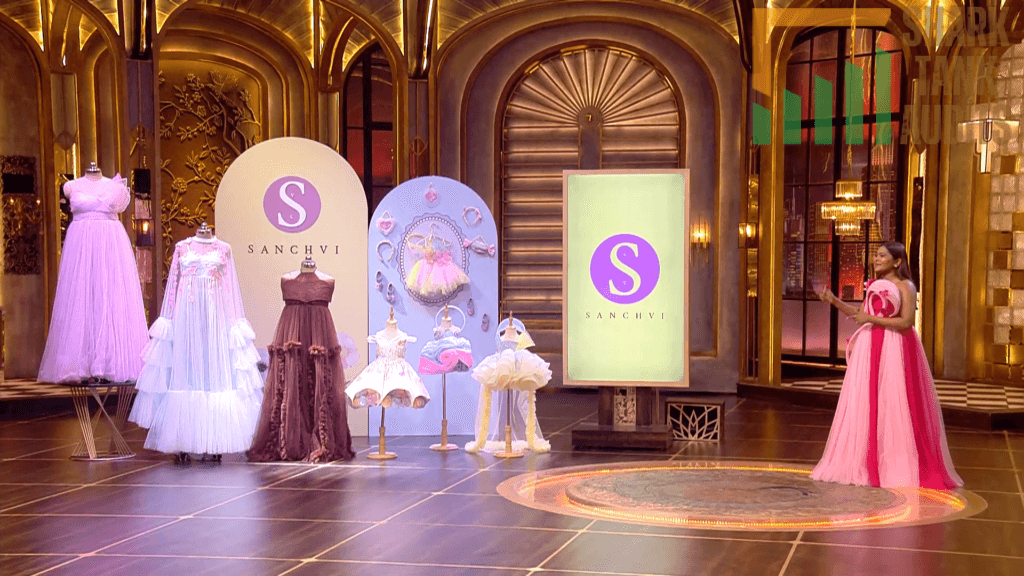
Sanchvi appeared on Shark Tank India Season 5, Episode 39, with Bangalore-based founder Sanjana Jain (established 2019 with experimental silhouettes passion originally focusing niche market bridging high fashion and functional comfort, identifying luxury rental space void eventually evolving into prominent designer couture industry name) seeking ₹1 Crore for 5% equity (₹20 Crore valuation) but left with no deal after Sharks opted not to invest though appearance provided significant national exposure validating premium fashion segment position.
The rising luxury fashion house (Sanchvi Studio) carved niche in Indian fashion industry beginning as specialized maternity wear rental service successfully transitioning into full-scale luxury label now synonymous with high-end bridal wear, designer lehengas, and occasion couture blending traditional Indian craftsmanship with modern global silhouettes offering Bridal/Occasion Wear (premium lehengas, wedding sarees, reception outfits), Maternity Couture (experimental stylish rental expecting mothers), Pre-Wedding/Kids Wear (specialized 2022 family-oriented fashion line), featuring intricate hand embroidery (Zari/mirror work) using premium fabrics (silk/velvet/fine net) with Bespoke Service allowing clients personalizing colors/fabrics/embroidery ensuring individual style/confidence reflection, achieving 374 monthly organic visitors requiring SEO improvement. Sharks reacted with interest regarding rental-to-luxury couture pivot appreciating aesthetic appeal and bespoke garment nature while primarily discussing high-end customized fashion house scalability versus mass-market ready-to-wear labels, noting kids’ wear segment as significant brand evolution move.
Operating in Indian wedding industry valued at ₹5 lakh crore ($130 billion, 2026) growing 20-25% annually with 46+ lakh weddings expected (late 2025-early 2026) recording ₹6.5 lakh crore expenditure as modern couples shift from mass-market to designer labels (bridal outfits now 15-20% total wedding budgets) within India’s fastest-growing global luxury market projected at $15 billion by 2026 and $20+ billion ethnic wear market (71% women’s wear) with luxury wedding dress market reaching $6.2 billion by 2034 (Asia-Pacific/India fastest-growing), Sanchvi targets HNIs and “Affluent India” cohort (expected 100 million people by 2027) specifically modern brides (24-35 seeking bespoke tradition-with-comfort blend), expecting mothers (25-40 seeking luxury maternity rentals for shoots/functions in dominated niche), Tier 1/2 city residents (Surat/Lucknow/Raipur/Bangalore where 50% luxury sales originate)—fashion-forward, digitally savvy, value-conscious willing to spend ₹1-5 lakh on unique personalized outfits—planning “Journey of a Lehenga” high-definition Reels showing Zari/mirror work process justifying premium pricing, Shopify store optimization scaling from 374 to 50,000+ visitors through SEO targeting long-tail keywords (“Customized Bridal Lehengas Bangalore,” “Designer Maternity Rental India”), Instagram Shopping integration enabling seamless discovery-to-checkout experience, micro-influencer bride partnerships for authentic wedding-day testimonials, omnichannel Bangalore flagship studio with digital-first model serving international NRI clients (US/UK/UAE), small-format “Sanchvi Pop-up Ateliers” in Tier 2 wedding hubs (Jaipur/Udaipur) allowing tactile fabric feeling before custom orders, rental-as-hook maternity wear building lifelong occasion wear purchase brand loyalty, modular design system implementing ready base silhouettes with bespoke-only embroidery reducing delivery time mitigating labor-intensive customization scalability challenge and high luxury fabric carrying costs/6-8-month lead times, ₹1 Crore internal accruals/debt funding digital marketing/SEO addressing biggest bottlenecks despite no-deal outcome, AI-driven virtual try-on features, international NRI expansion with shipping hub capturing high-margin dollar/pound market, “Sanchvi Home Luxury” textiles/decor diversification increasing customer lifetime value, and 10x revenue valuation target positioning as “Tech-Enabled Luxury House” versus traditional boutique leveraging underserved “Mini-Me” kids wear/maternity segments owning lifecycle (Maternity → Kids → Occasion wear).
Pitch 3
Trring Shark Tank India Episode Review
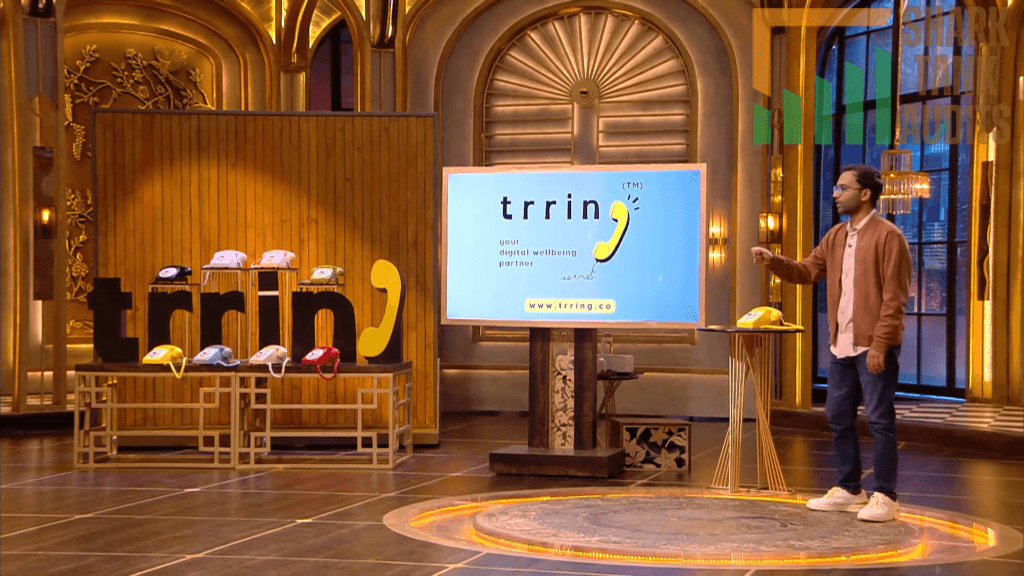
In Shark Tank India Season 5, Episode 39, which aired on February 26, 2026, Dhiraj Chaudhari, an IIT Kharagpur alumnus, presented his digital wellbeing brand, Trring. Based in Pune, the startup aims to combat smartphone addiction through a “purposely dumb” hardware solution called the TrringPhone. This device is modeled after a classic rotary telephone and connects to a user’s primary smartphone via Bluetooth to mirror voice calls. The core philosophy behind the product is to allow users to stay reachable for essential communication while keeping their actual smartphones, and the associated distractions of social media and infinite scrolling, tucked away in another room.
Appearing before the Sharks, Dhiraj sought an investment of ₹50 lakhs for 7.5% equity, valuing his venture at ₹6.67 crores. Despite his impressive academic pedigree, including declining a seat at IIM Calcutta to pursue this business, the investor panel was largely unimpressed. The Sharks highlighted several functional flaws, most notably the lack of a Caller ID on the device, which Aman Gupta criticized as a “gimmick” that would still force users to check their smartphones to see who was calling. Namita Thapar further pointed out a lack of primary market research, suggesting there was no real consumer demand for a secondary hardware middleman for calls.
The critique grew sharper as the session progressed, with Kunal Bahl expressing shock that an IITian was building a “dumb” device rather than exploring screen-less AI audio technology. Anupam Mittal offered the harshest feedback, labeling the venture as “misguided” and “uninvestable” in its current form. The Sharks collectively felt that smartphone addiction is a behavioral issue requiring self-control or sophisticated software solutions rather than a nostalgic hardware piece that creates more friction than it solves. Consequently, Trring exited the Tank without securing a deal from any of the five Sharks.
| Pitch | Brand | Ask | Deal Status | Shark(s) Involved |
| Pitch 1 | Pragyan CDC | ₹1 Cr for 5% | ₹1 Crore Deal | Namita Thapar & Mohit Yadav (Joint Deal) |
| Pitch 2 | Sanchvi | ₹1 Cr for 5% | No Deal | Sharks cited scalability concerns in bespoke luxury couture. |
| Pitch 3 | Trring | ₹50 Lakh for 7.5% | No Deal | Sharks labeled the device a “gimmick” that creates more friction. |
Summary: The Episode Verdicts
Episode 39 saw a mix of high-impact social investing and a “clean sweep” of rejections for businesses that the Sharks deemed either too niche or technically misguided.
The Deal Scoreboard
| Pitch | Brand | Ask | Deal Status | Shark(s) Involved |
| Pitch 1 | Pragyan CDC | ₹1 Cr for 5% | ₹1 Crore Deal | Namita Thapar & Mohit Yadav (Joint Deal) |
| Pitch 2 | Sanchvi | ₹1 Cr for 5% | No Deal | Sharks cited scalability concerns in bespoke luxury couture. |
| Pitch 3 | Trring | ₹50 Lakh for 7.5% | No Deal | Sharks labeled the device a “gimmick” that creates more friction. |
Key Highlights
- The Social Impact Win: Pragyan CDC provided the emotional and financial highlight of the night. With 12% of Indian children estimated to have neurodevelopmental disorders, Namita and Mohit saw a massive “one-stop” opportunity. The deal came with strict conditions: a professional leadership team and a 15% ESOP pool to ensure the center scales beyond its 11 current Bengaluru hubs.
- The Luxury Pivot: Sanchvi impressed the Sharks with its transition from maternity rentals to high-end bridal lehengas. However, in a wedding market valued at ₹5 Lakh Crore, the Sharks were wary of the labor-intensive nature of “bespoke only” models, ultimately viewing it as a successful boutique rather than a venture-scale fashion house.
- The “Dumbphone” Debate: The most contentious pitch came from Trring. Despite the founder’s IIT Kharagpur background, the Sharks were ruthless. Aman Gupta slammed the lack of a Caller ID, while Kunal Bahl expressed shock that an IITian wasn’t building Screen-less AI Audio instead of a nostalgic rotary phone. The verdict was clear: smartphone addiction is a behavioral problem that hardware “friction” cannot solve.







Leave feedback about this
You must be logged in to post a comment.