
Shark Tank India Season 5 Episode 42 Review
Aired on Friday, March 6, 2026, Episode 42 of Shark Tank India Season 5, aptly titled “The Passion & Pedigree Paradox”, presented a fascinating study in founder archetypes. The Tank became a battleground for three distinct visions: a creative collectible brand tapping into the emotional “cute economy,” a high-pedigree AI travel platform from second-time entrepreneurs, and a “clean-label” superfood brand led by a self-described “failed scientist.”
The Sharks, Namita Thapar, Aman Gupta, Anupam Mittal, Kunal Bahl, and guest Shark Shaily Mehrotra, navigated a night of high tension and high stakes. From debates over whether a brand name was too “weird” to a rare “arrogance check” for founders with a 30x exit history, the episode highlighted that in 2026, neither a great product nor a great resume is enough on its own. The investors demanded a blend of humility, technical moat, and a deep understanding of the Indian consumer’s shifting psychology.
Pitch 1
Shichisoru Shark Tank India Episode Review
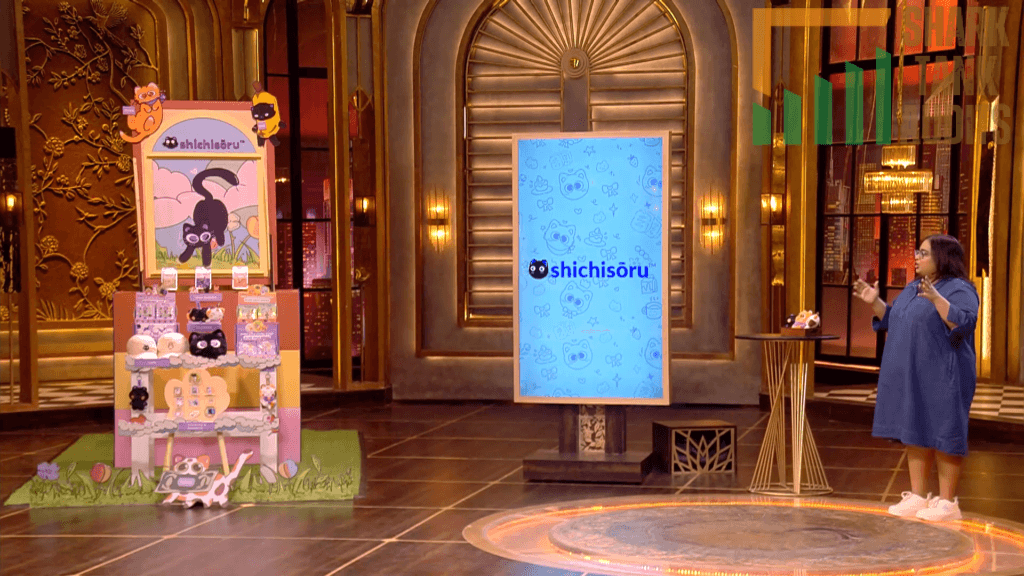
Shichisoru appeared on Shark Tank India Season 5, Episode 42, with Mumbai-based founder Maitrayee Koli (leaving stable engineering career building brand driven by creative expression passion with deeply personal self-love journey narrative) seeking ₹75 lakh for 5% equity (₹15 Crore valuation) and successfully closed a deal for ₹35 lakh for 10% equity + ₹40 lakh debt at 10% interest for 3-year tenure with Shark Shaily Mehrotra after four-of-five Sharks opted out following negotiation regarding debt terms.
Launched 2024, the creative collectible brand operates within “cute economy” featuring character-driven cat-inspired universe specifically designed appealing to young Indian adults positioning as more than toy company aiming emotional connection through unique aesthetic offering high-quality collectible soft toys/plushies with specific artistic flair (Sharks comparing to globally viral Labubu dolls) generating ₹31.53 lakh first year with significant ₹11.72 lakh monthly revenue spike (November 2025) but 33 monthly organic visitors requiring SEO improvement, defending brand name against Namita/Aman critiques feeling it difficult to recall and “weird.” Sharks reacted highly polarized—Aman most critical labeling “fad” describing product as “Labubu without teeth” stating if he invested he’d make her shut business down, Anupam praised product quality but felt founder too “raw” in business suggesting B2B focus, Kunal questioned if “cute economy” ready for Indian market noting such brands often requiring celebrity endorsements (Lisa from Blackpink) to truly scale, and Namita opted out believing brand required “deep pockets” commercializing personal passion into mass-market success.
Operating in Indian toy/collectible sector projected at $3 billion by 2028 (12% CAGR) with rising “Kidult” trend (adults buying toys for themselves generating $9+ billion annually globally) within ₹30,000 Crore Indian gift/novelty market and 40-50 million young adults (18-35, Tier 1/2 cities) spending on lifestyle aesthetics as character-based merchandise enjoys 30-40% higher margins versus unbranded goods, Shichisoru targets Gen Z/millennials (16-30, primarily female, metro cities Mumbai/Bangalore/Delhi) interested in anime, Korean “Kawaii” culture, self-care, and mental health advocacy as “Aesthetic Collectors” valuing desk decor, sharing unboxing videos, seeking emotional comfort through physical objects, aiming 1% urban collectible plush market capture within 3 years targeting ₹15-20 Crore annual revenue, planning under Shaily’s guidance aggressive diversification expanding IP into birthday party themes, anime series, and lifestyle accessories (keychains/magnets) evolving from plushie brand into comprehensive lifestyle/entertainment ecosystem dominating Indian cute economy, SEO optimization for keywords (“Designer Toys India,” “Cat Plushies,” “Collectible Characters”) reducing paid ads dependency, Instagram Reels/TikTok social media storytelling showcasing “Self-Love” backstory creating “A day in the life” character content, “Cozy Gamers”/Lifestyle Vloggers influencer partnerships seeking single viral moment as Labubu scaling lever, Shopify store enhancement with “Limited Drop” mechanics creating FOMO, high-end lifestyle store placement (Hamleys/Itsy Bitsy/curated Anime cafes), Etsy/Amazon Global listing tapping international “Kawaii” collector community, pre-order model for new launches managing working capital reducing inventory waste addressing high burn rate, simplified visual identity using recognizable logo/icon (cat ears) working even if name hard to pronounce improving brand recall, supply chain stabilization with 10,000 organic visitors/month website SEO target, IP diversification into stationery/apparel/digital stickers (LINE/WhatsApp) increasing touchpoints, character licensing for animated shorts or major cosmetic/lifestyle brand collaborations, and ₹50+ Crore valuation target by 2028 building robust IP library pivoting from “toy shop” to “media house” selling emotion versus just fabric as “companion toys” have high retention in lonely digital age.
Pitch 2
Rimigo Shark Tank India Episode Review

Rimigo appeared on Shark Tank India Season 5, Episode 42, with Bengaluru-based co-founders Aditya Shirole, Sahil Sharma, and Shubham Chintalwar (three college friends, second-time entrepreneurs who previously founded GigIndia providing online employment to 10+ lakh people in Tier 2/3 cities, successfully selling to PhonePe in 2022 reportedly giving investors 30x return before vertical eventually shut due to parent company strategic shifts) seeking ₹1 Crore for 1% equity (₹100 Crore valuation) and successfully closed a deal for ₹1 Crore for 1.5% equity (₹66.67 Crore valuation) with Shark Shaily Mehrotra after receiving two competing offers and negotiations where founders tried lowering equity ask.
The interactive AI-powered travel platform revolutionizes journey planning functioning as collaborative ecosystem providing curated travel information and personalized activity suggestions simplifying travel experience moving beyond static itineraries offering integrated intelligent planning assistant leveraging Artificial Intelligence helping travelers discover destinations and book experiences targeting “information gap” particularly for users knowing where they want to go but struggling finding high-quality curated activities pitched as 10x improvement over existing search methods (though some Sharks compared utility to current LLMs like ChatGPT), achieving 103 monthly organic visitors requiring SEO improvement with founders initially withholding specific details about previous exit and college background leading to playful yet pointed Shark frustration. Sharks reacted polarized—Namita/Aman highly critical with Namita labeling founders “arrogant” for not knowing competitors (specifically GuideGeek) while Aman quipped seeing “Artificial” but no “Intelligence” in product, Kunal opted out feeling product layer too thin versus existing travel sites, while Shaily saw Tier 2 market potential and Anupam interested in founder pedigree though felt slighted when they dismissed his offer prematurely to negotiate with Shaily.
Operating in Indian online travel market projected at $33.9 billion by 2030 (7.76% CAGR from 2025) with AI-in-tourism revenue expected to hit $595 million by 2030 (32.6% CAGR) within $23.62 billion India travel services market (2025-2026) and $23.1 billion online travel segment (mobile-first millennials) where 35% Indian travelers prioritize “accommodation/activities as destination itself” moving from traditional sightseeing (2026) and Tier 2/3 cities contributing 45% demand for international lifestyle/travel brands within niche $110 million AI-specific travel solution market aiming 10-15% share capture within 3 years, Rimigo targets “Digital Nomad”/millennial (22-40, tech-savvy seeking Instagrammable yet authentic experiences), Tier 2/3 aspirants (Indore/Jaipur/Lucknow residents with high disposable income lacking curated global itinerary exposure), “Bleisure” travelers (professionals extending work trips for leisure needing quick collaborative planning tools, 68% rise 2026), and honeymooners (couples seeking high-value personalized packages with Shaadi.com synergy highlighted) through “collaborative travel” philosophy believing travel planning should be interactive experience versus solo chore focusing on Tier 2/3 demographics whom Shaily noted “want their money’s worth” but often lack exploration guidance building trust through curated high-value suggestions catering to specific Indian traveler cultural habits, planning JavaScript-heavy rendering issue transition to SEO-friendly Next.js/SSR capturing high-volume keywords (“AI trip planner,” “collaborative travel”), user-generated itineraries leveraging travelers sharing Rimigo plans on social media creating viral “Social Proof” loop, regional travel vlogger partnerships demonstrating app in vernacular languages for Tier 2 cities, B2B2C matrimonial site (Shaadi.com)/corporate travel desk partnerships offering value-added planning layer, mobile-first Progressive Web App (PWA) features ensuring seamless performance in fluctuating internet speed areas (Tier 3 towns), “Competitor Benchmarking” unit implementation countering Namita’s arrogance/knowledge gap critique ensuring AI stays ahead of global tools, SEO-optimized framework migration fixing visitor drought addressing technical debt, 100,000 MAU target with direct booking API integration, “Rimigo Pro” launch for corporate bleisure travelers targeting $5M ARR, South East Asia global expansion, and ₹250+ Crore Series A funding round valuation target transitioning from “Escape Travel” to “Expression Travel” (2026 shift) favoring curated approach with proven second-time entrepreneur pedigree (30x exit, GigIndia scaling/exiting ability), real-time group planning multi-player mode collaborative tech, and agentic AI moving beyond answering to actually suggesting actions potentially generating ₹100 Crore returns through strategic partnerships and deep lifestyle/wedding sector integration becoming primary assistant for modern Indian traveler creating “groundbreaking” travel experience surviving/thriving in competitive global market.
Pitch 3
Everaw Nutrition Shark Tank India Episode Review
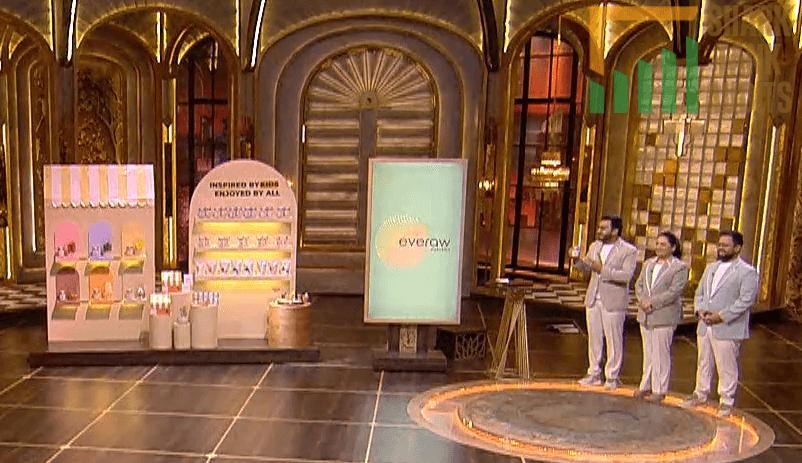
Everaw Nutrition appeared on Shark Tank India Season 5, Episode 42, with co-founders Yash Soni (self-described “failed scientist” utilizing precision background and personal spine injury recovery innovating food space focusing technical side leveraging freeze-drying technology), Lucky Soni (Mesa School of Business alumnus with decade experience at Deloitte/Decimal Health spearheading GTM strategy/business operations), and Kanika Kishnani (VGOTU production house founder overseeing visual identity/creative storytelling/premium packaging design) seeking ₹1 Crore for 8% equity (₹12.5 Crore valuation) but left with no deal despite compelling pitch and high-quality products, though receiving significant national exposure and “Sugar-Controlled Formula” validation.
Operating as unit of Habitype Superfoods Pvt Ltd. based in Ajmer (launched April 2024, rebranded September, pitched December—eight months post-debut) under guiding principle “Inspired by Kids, Enjoyed by All” focusing “Everyday Spreads made Healthy,” the brand specializes in clean-label fruit-based health foods containing no added sugars/preservatives/artificial ingredients offering Superspreads (India’s first fruit-infused nut butters with activated nuts/real freeze-dried fruit like Strawberry Cashew spread, no palm oil/refined sugar), Rawsome Bites/Snacks (whole fruit snacks via freeze-drying retaining 97% micronutrients), and Whole Fruit Toppings (enhancing yogurt bowls/granola/healthy breakfasts) formulated high in protein/healthy fats while low in sugar using freeze-drying innovation preserving natural taste/nutrition without chemical intervention, maintaining full in-house manufacturing quality control versus outsourcing with 25 monthly organic visitors requiring SEO improvement. Sharks recognized high-quality ingredient commitment and sugar-controlled formula appreciating clean-label approach catering to modern consumers reading nutritional labels, with Anupam Mittal having prior founder connection from previous Mesa School of Business campus event pitch. Operating in Indian healthy snacks market valued at $4.42 billion (2025) projected to reach $8.18 billion by 2033 (8.1% CAGR) with “Better-for-You” segment growing 9.5% significantly outperforming traditional savory snacks within $46.3 billion projected Indian Packaged Food/Beverage industry (2028) and $4.85 billion healthy snacks/spreads market (2026) amid Clean Label Revolution where 45% Indian consumers actively seeking healthier ingredients influenced by rising lifestyle diseases (diabetes affecting 1-in-11 Indians) and household healthy food expenditure expected doubling by 2026 end.
Everaw Nutrition targets proactive parents (28-45, Tier 1 cities Delhi/Mumbai/Bengaluru seeking kid-approved snacks free from hidden sugars/palm oil), fitness enthusiasts (18-35 gym-goers/athletes seeking high-protein nutrient-dense activated nut spreads for pre/post-workout fuel), conscious professionals (22-40 urban high-stress workers seeking guilt-free convenience snacks preserving 97% fruit nutrition), and “Label Readers” scrutinizing FSSAI bold-lettering for sugar/salt content (mandatory 2024/2025 regulations) within $250-400 million premium clean-label fruit-infused nut butter/freeze-dried snack niche as D2C penetration increases, planning “Science of Fresh” short-form videos explaining freeze-drying versus traditional dehydration highlighting nutrient retention, Instagram carousels comparing ingredients against “Big Food” competitors visually proving no-added-sugar claims, pediatrician/fitness coach/clean-eating influencer partnerships validating health claims, SEO overhaul targeting high-intent keywords (“best nut butter without palm oil,” “freeze-dried fruit snacks India,” “healthy chocolate spread kids”), high-ROAS Meta/Google Search ads targeting premium grocery shopper lookalike audiences (Whole Truth/Yoga Bar/Epigamia customers), WhatsApp/Email automation “Subscribe & Save” model for repeat purchases increasing LTV, aggressive Blinkit/Zepto/Instamart Q-commerce expansion (health-snack growth 13% CAGR), premium retail chain entry (Nature’s Basket/Foodhall metros), luxury hotel/high-end gym/corporate gifting platform partnerships positioning premium lifestyle choice, “Trial Packs” smaller SKU introduction lowering entry barrier for price-sensitive consumers mitigating clean-label ingredient higher MRP challenge, nitrogen-flushed packaging optimization ensuring freeze-dried crunch consistency in humid Indian climates addressing fragile snack moisture-controlled packaging logistics, “On-the-go” breakfast kit/healthy kids’ tiffin box portfolio expansion, and ₹10+ Crore ARR target dominating Q-commerce in top 5 cities proving 40%+ high repeat-purchase rate commanding 4x-6x revenue multiple for future Series A funding focusing Contribution Margin 2 (CM2) positivity becoming significant “Healthy Snacking” market player capitalizing on processed food movement-away trend maintaining strict manufacturing standards while scaling to meet national demand through transparency-first philosophy prioritizing ingredient honesty building trust with digital-first audience via D2C website/Amazon engagement (SHARKTANK10 discount code, free shipping on ₹499+ orders) using premium aesthetic packaging standing out on retail shelves and social media platforms.
The Episode Verdicts
Episode 42 was a night of strategic bets by Shaily Mehrotra, who stood alone in recognizing the potential of niche aesthetics and Tier 2 travel aspirations, while the other Sharks remained wary of “fad” markets and founder temperaments.
| Pitch | Brand | Ask | Deal Status | Shark(s) Involved |
| Pitch 1 | Shichisoru | ₹75 Lakh for 5% | ₹35 Lakh for 10% + ₹40 Lakh Debt | Shaily Mehrotra |
| Pitch 2 | Rimigo | ₹1 Cr for 1% | ₹1 Crore for 1.5% | Shaily Mehrotra |
| Pitch 3 | Everaw Nutrition | ₹1 Cr for 8% | No Deal | Sharks cited scaling concerns despite high product quality. |
Key Highlights
- The “Cute Economy” Gamble: Shichisoru split the panel. Aman Gupta famously labeled it a “fad” and “Labubu without teeth,” but Shaily Mehrotra saw the “Kidult” trend (adults buying toys for emotional comfort) as a burgeoning $3 billion opportunity. The deal was finalized with a debt-equity mix to fuel the brand’s IP expansion.
- The Pedigree Pushback: The founders of Rimigo (former GigIndia founders with a PhonePe exit) faced a “vibe check.” Namita Thapar labeled them “arrogant” for their lack of competitor knowledge. While Anupam and Aman were skeptical of the AI “thin layer,” Shaily bet on their scaling pedigree and the massive “Information Gap” in Tier 2 Indian travel.
- The Freeze-Dried Future: Everaw Nutrition showcased a “failed scientist’s” technical triumph. Their “Superspreads”—India’s first fruit-infused nut butters—were lauded for their clean-label, no-added-sugar formula. However, the Sharks felt the premium price point and niche nature of freeze-dried snacks made it a difficult “No Deal,” despite the product’s 97% nutrient retention.


Leave feedback about this
You must be logged in to post a comment.