
The Bindi Project Shark Tank India Episode Review
The Bindi Project appeared on Shark Tank India Season 5, Episode 25, with founder Meghna Khanna (daughter of Indian Air Force fighter pilot, Symbiosis management background, ran Levitate boutique accessory store in Bengaluru for 18 years before pandemic closure) seeking ₹50 lakh for 10% equity (₹5 Crore valuation) but left with no deal after all Sharks opted out citing scalability concerns and niche market despite impressive 43% EBITDA margin.
The Bengaluru-based premium brand redefines traditional bindi as “jewellery for the forehead” through handcrafted reusable artisan-driven designs using upcycled materials (vintage sarees, leather scraps) priced ₹1,300-₹2,500 per pack (~₹250/bindi) with separate glue tube targeting “divine feminine energy,” growing from ₹7 lakh to ₹13 lakh monthly revenue with 20 organic visitors requiring SEO overhaul. Sharks reacted critically—Aman bluntly called it a “project” versus scalable business (physically escorted her out as she wouldn’t stop talking), Anupam noted bindis felt flimsy and glue packaging unpremium for high price, Namita questioned targeting ages 30-50 ignoring younger trend-drivers, Kunal appreciated “free spirit” but felt external investment might dilute authentic creative vision, though all acknowledged founder’s passion and healthy profit margins.
Operating in Indian fashion accessories market projected at $24.3 billion by 2030 (9% CAGR) with 40% surge in artisanal product demand from Gen Z/millennials embracing “Ethnic Fusion/Cottage-core” aesthetics within $19 billion ethnic wear/accessories market and $1.5 billion premium women’s accessories segment, The Bindi Project targets “Modern Traditionals” (25-45, Tier 1 cities, ₹20 lakh+ household income wearing bindis as fashion statement versus religious obligation) within 5-7 million affluent Indian women (top 5%) valuing sustainability and social impact, engaging through pop-up events and social media cold DMs to stylists like Rhea Kapoor while employing marginalized community women for handcrafted production.
Website Information
- Website:- The Bindi Project
- Build on Shopify
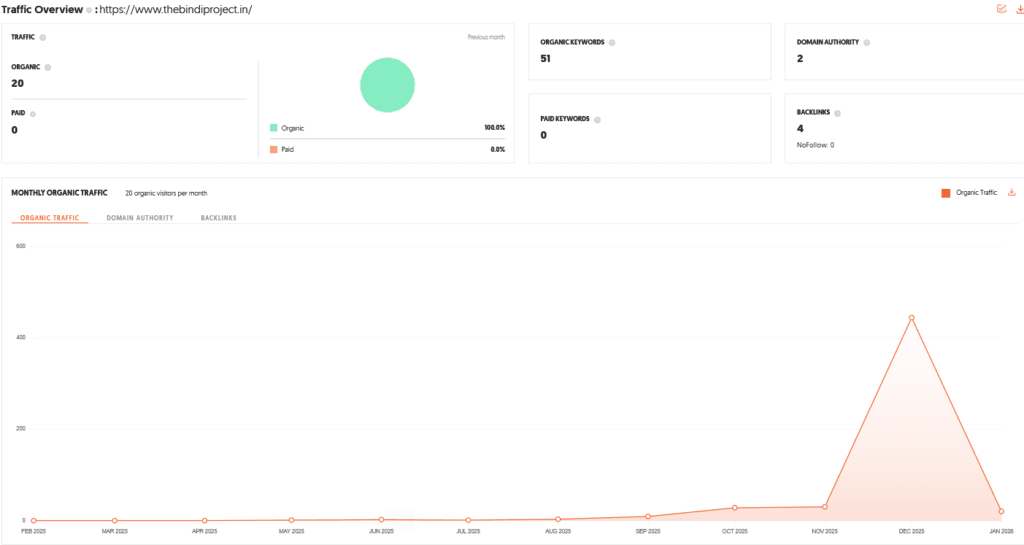
- Poor SEO Performance, SEO Improvement needed.
- ORGANIC TRAFFIC: 20 visitors per month.
The Bindi Project: Founder
- Meghna Khanna is the spirited entrepreneur behind the brand.
- A daughter of an Indian Air Force fighter pilot, she carries a “rebel energy” and a background in management from Symbiosis, Pune.
- Before this venture, she ran a boutique accessory store called Levitate in Bengaluru for 18 years, which she closed during the pandemic to pivot toward her passion for traditional aesthetics.
The Bindi Project: Brand Overview
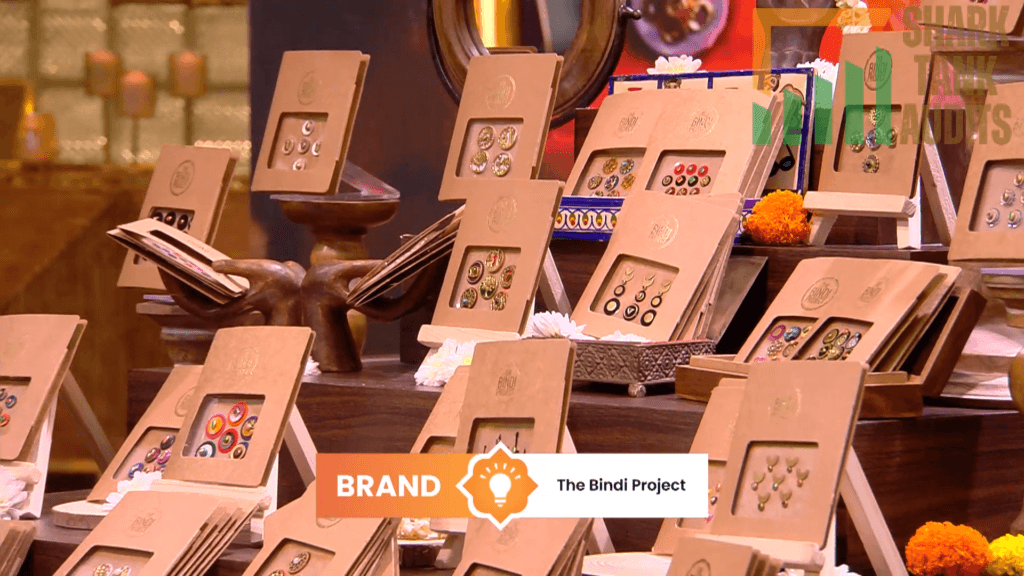
- The Bindi Project is a Bengaluru-based premium brand that seeks to redefine the traditional bindi as a piece of “jewellery for the forehead.”
- Moving away from disposable, mass-produced stickers, the brand focuses on handcrafted, reusable, and artisan-driven designs.
- It targets the “divine feminine energy” by using upcycled materials like vintage sarees and leather scraps, positioning the bindi as a bold cultural statement rather than just a cosmetic accessory.
The Bindi Project: Shark Tank India Appearance & Ask
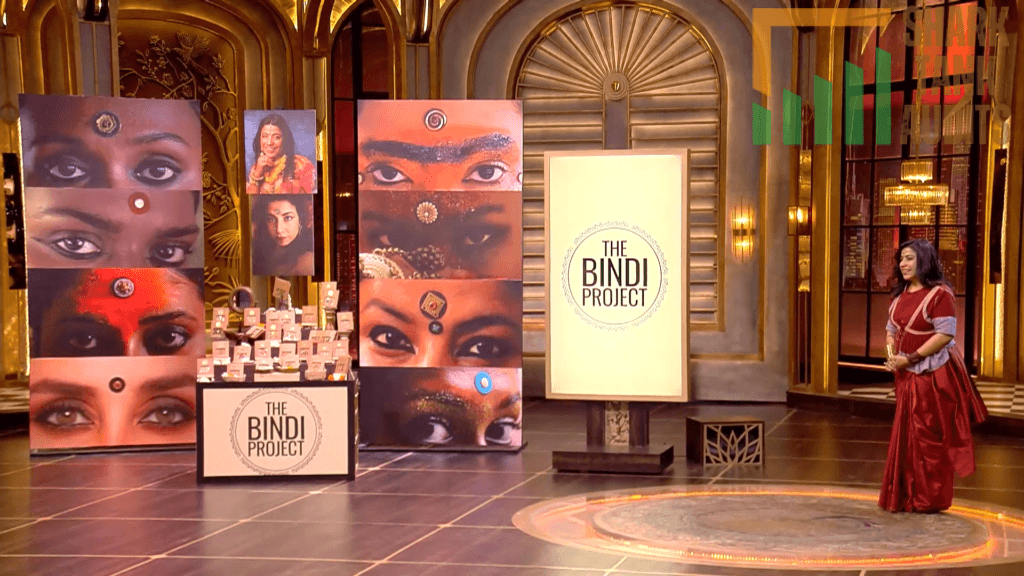
- Appearing in Season 5, Meghna Khanna entered the Tank with high energy and a poetic pitch.
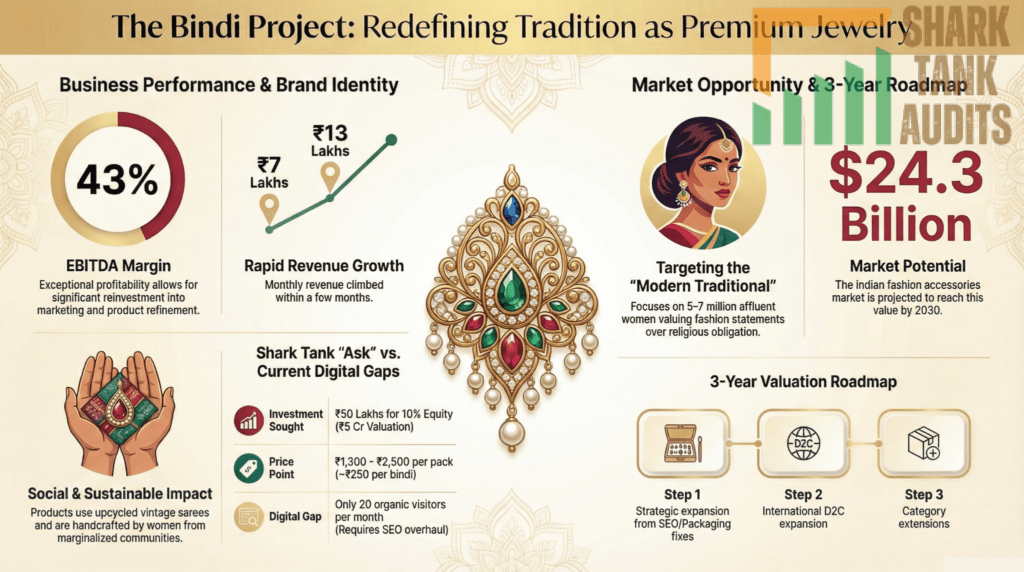
- She sought an investment of ₹50 lakhs for 10% equity, giving the company a valuation of ₹5 crore.
- The pitch featured Sharks Aman Gupta, Anupam Mittal, Namita Thapar, Kunal Bahl, and Shaily Mehrotra.
- Her enthusiasm was so overwhelming that after the pitch, Aman Gupta had to physically escort her out as she wouldn’t stop talking.
Season and Episode Air Date
- Season: 05
- Episode: 26
- Episode Air Date: Monday, 09 February, 2026
The Bindi Project: Product Overview
- The brand offers handcrafted bindis that are bold, unique, and often unusually large. Unlike standard bindis, these are sold in packs priced between ₹1,300 and ₹2,500 (roughly ₹250 per bindi).
- The products come with a separate glue tube and are packaged in vintage saree fabrics to emphasize their premium, reusable nature.
The Bindi Project: Investor Reactions
The Sharks had mixed reactions to the product’s execution:
- Aman Gupta bluntly stated it felt more like a “project” than a scalable “business.”
- Anupam Mittal noted that the bindis felt flimsy and the glue packaging did not feel premium enough for the high price tag.
- Namita Thapar questioned the target audience (ages 30–50), suggesting that younger trend-drivers were being ignored.
- Kunal Bahl appreciated her “free spirit” but felt that external investment might dilute her authentic creative vision.
The Bindi Project: Customer Engagement Philosophy
- The brand relies heavily on storytelling and personal connection. Meghna views her customers not just as consumers, but as individuals tapping into their “Kali and Parvati” energies.
- Currently, the brand engages customers through pop-up events across cities and direct interactions on social media, even reaching out to high-profile stylists like Rhea Kapoor via cold DMs.
The Bindi Project: Product Highlights
- High Margins: The business boasts an impressive 43% EBITDA margin.
- Strong Sales: Monthly revenue grew from ₹7 lakhs to ₹13 lakhs in just a few months.
- Artisanal Impact: Each piece is handcrafted by women from marginalized communities.
- Sustainability: Uses upcycled materials and vintage fabrics for both the product and packaging.
The Bindi Project: Future Vision
- Post-Shark Tank, The Bindi Project aims to bridge the gap between “premium price” and “premium experience.”
- Meghna intends to use the Sharks’ feedback to refine her packaging, improve the quality of the adhesive, and sharpen her brand positioning.
- The long-term goal is to move beyond pop-ups into curated boutiques and international markets, turning the bindi into a global fashion revolution.
The Bindi Project: Deal Finalized or Not?
- No deal was finalized.
- While the Sharks were impressed by the founder’s passion and the brand’s healthy profit margins, they ultimately felt the business was not “investor-ready.”
- Every Shark opted out, citing concerns over scalability and the niche nature of the product.
| Parameter | Details |
|---|---|
| Website | The Bindi Project |
| Platform | Shopify |
| SEO Status | Poor SEO Performance, Improvement Needed |
| Organic Traffic | 20 visitors per month |
| Founder | Meghna Khanna |
| Founder Background | Management graduate from Symbiosis, Pune |
| Family Background | Daughter of Indian Air Force fighter pilot |
| Previous Business | Ran Levitate boutique store in Bengaluru for 18 years |
| Pivot Year | Closed boutique during pandemic to start The Bindi Project |
| Brand Location | Bengaluru |
| Brand Category | Premium Handcrafted Bindi / Forehead Jewellery |
| Brand Positioning | Jewellery for the forehead |
| Core Concept | Reusable, handcrafted, artisan-driven bindis |
| Material Used | Upcycled vintage sarees and leather scraps |
| Target Emotion | Divine feminine energy (Kali & Parvati symbolism) |
| Shark Tank Season | Season 05 |
| Initial Ask | ₹50 Lakhs for 10% equity |
| Initial Valuation | ₹5 Crores |
| Sharks Present | Aman Gupta, Anupam Mittal, Namita Thapar, Kunal Bahl, Shaily Mehrotra |
| Product Type | Handcrafted bold bindis |
| Product Price Range | ₹1,300 – ₹2,500 per pack |
| Approx Price Per Bindi | ₹250 per piece |
| Packaging | Vintage saree fabric packaging with separate glue tube |
| Monthly Revenue Growth | From ₹7 Lakhs to ₹13 Lakhs |
| EBITDA Margin | 43% |
| Artisan Impact | Handcrafted by women from marginalized communities |
| Sustainability Factor | Upcycled materials and reusable designs |
| Aman Gupta Reaction | Felt like a project, not scalable business |
| Anupam Mittal Reaction | Product felt flimsy; packaging not premium enough |
| Namita Thapar Concern | Targeting 30–50 age group, ignoring younger trend drivers |
| Kunal Bahl Observation | External investment may dilute creative authenticity |
| Deal Status | No Deal |
| Reason for No Deal | Scalability concerns and niche positioning |
| Mission | Redefine bindi as global fashion jewellery |
| Market Opportunity | Indian fashion accessories market projected $24.3B by 2030 |
| Market Growth Rate | 9% CAGR |
| Cultural Trend | 40% surge in artisanal & ethnic fusion demand |
| TAM | $19 Billion Indian ethnic wear & accessories market |
| SAM | $1.5 Billion premium women’s accessories segment |
| SOM | Top 5% affluent Indian women (5–7 million) |
| Target Demographic | Women aged 25–45 in Tier 1 cities |
| Income Profile | ₹20L+ annual household income |
| Consumer Type | Modern Traditionals (fashion-led bindi wearers) |
| Current Engagement | Pop-ups and social media storytelling |
| SEO Gap | Extremely low organic visibility |
| SEO Strategy | Target keywords like Designer Bindis & Bridal Forehead Jewellery |
| Influencer Plan | Seeding kits to bold fashion influencers |
| Content Pillars | Artisan storytelling, Divine Feminine philosophy, Style Guides |
| Distribution Strategy | Premium D2C + Luxury marketplaces |
| Offline Plan | Premium boutiques & luxury wedding exhibitions |
| Global Expansion | US, UK, UAE diaspora via Etsy & D2C |
| Key Advantage 1 | 43% EBITDA margin |
| Key Advantage 2 | First mover in luxury bindi positioning |
| Key Advantage 3 | Strong social impact narrative |
| Key Challenge 1 | Product quality perception vs price |
| Key Challenge 2 | Only 20 organic visitors/month |
| Key Challenge 3 | Niche high-ticket category |
| Mitigation Strategy 1 | Upgrade adhesive & cosmetic-grade applicator |
| Mitigation Strategy 2 | Launch ₹500–₹800 bridge line |
| Year 1 Goal | Improve packaging, SEO & launch Bridal Collection |
| Year 2 Goal | Enter 10+ premium outlets & international shipping |
| Year 3 Goal | Expand into Maang Tikkas & forehead jewellery |
| Long-Term Vision | Build global luxury ethnic accessories brand |
| Valuation Target | ₹50 Crores+ within 3 years |
The Bindi Project Shark Tank India Business Plan
The Bindi Project: Business Potential in India
India is witnessing a “Premiumization” wave where consumers are trading up from commodities to branded experiences.
- Facts & Data: The Indian fashion accessories market is projected to reach $24.3 billion by 2030, growing at a 9% CAGR.
- Cultural Resurgence: There is a 40% surge in demand for artisanal products as Gen Z and Millennials embrace “Ethnic Fusion” and “Cottage-core” aesthetics.
- Growth Potential: The Bindi Project operates in a space with almost zero organized competition at the premium level (₹1,500+), allowing it to define the category’s price ceiling.
The Bindi Project: Total Addressable Market (TAM)
- TAM (Total Addressable Market): The broader Indian Ethnic Wear & Accessories market, valued at approximately $19 billion (2024).
- SAM (Serviceable Addressable Market): The premium women’s accessories segment, specifically jewelry and forehead adornments, estimated at $1.5 billion.
- SOM (Serviceable Obtainable Market): The Bindi Project can target the top 5% of affluent Indian women (roughly 5–7 million individuals) who spend on designer ethnic wear.
The Bindi Project: Ideal Target Audience & Demographics
- Primary Demographic: Women aged 25–45, residing in Tier 1 cities (Mumbai, Delhi, Bengaluru).
- Psychographics: “Modern Traditionals”—women who wear bindis as a fashion statement rather than religious obligation. They value sustainability (upcycled materials) and social impact (marginalized artisan support).
- Economic Profile: Annual household income of ₹20L+, frequent shoppers at multi-designer stores (e.g., Ogaan, Pernia’s Pop-Up Shop).
The Bindi Project: Marketing & Digital Strategy
The Bindi Project currently suffers from low organic visibility (20 visitors/month). The new strategy focuses on “Premium Storytelling.”
- SEO Overhaul: Optimize the Shopify site for high-intent keywords like “Designer Bindis,” “Bridal Forehead Jewellery,” and “Sustainable Luxury Accessories.”
- Influencer Strategy: Move from cold DMs to “Seeding Kits.” Target fashion influencers (e.g., Komal Pandey, Dolly Singh) who experiment with bold, maximalist looks.
- Content Pillars: 1. The Artisan’s Hand: Behind-the-scenes videos of marginalized women crafting each piece. 2. The Divine Feminine: Poetic content exploring the “Kali/Parvati” philosophy Meghna presented in the Tank. 3. Style Guides: “How to pair a ₹2,500 bindi with Western power suits or fusion wear.”
The Bindi Project: Distribution Strategy
To match the premium price, The Bindi Project must move away from “mass-market” distribution.
- Digital: Direct-to-Consumer (D2C) through an upgraded Shopify store and high-end marketplaces like Nykaa Fashion (Global Store) and Tata CLiQ Luxury.
- Physical: Exclusive partnerships with premium boutiques (e.g., Good Earth) and “Experience Pop-ups” at luxury wedding exhibitions like Vogue Wedding Show.
- Global: Targeting the Indian Diaspora in the US, UK, and UAE via Etsy and specialized international shipping lanes.
The Bindi Project: Advantages & Challenges
| Advantages of The Bindi Project | Challenges for The Bindi Project |
| High Profitability: 43% EBITDA margin allows for high marketing reinvestment. | Quality Perception: Investors noted “flimsy” feel; product tactile quality must match price. |
| First Mover: No other brand is marketing bindis as “Luxury Jewellery.” | Low Organic Traffic: Heavy reliance on paid ads or viral content to fix the 20-visitor/month stat. |
| Social Impact: Ethical production is a powerful marketing hook. | Niche Market: High price points limit the “everyday” customer base. |
The Bindi Project: Success Factors & Mitigation Strategies
- Why it can be Successful: It taps into “Identity Fashion.” In a world of fast fashion, a unique, handcrafted The Bindi Project piece stands out as a conversation starter.
- Mitigation Strategy (Product): Upgrade the adhesive and packaging. Move from generic glue tubes to branded, “cosmetic-grade” applicators.
- Mitigation Strategy (Scalability): Introduce a “Bridge Line” priced at ₹500–₹800 to capture a wider audience while maintaining the ₹2,500 line as “Couture.”
The Bindi Project: Future Business & Roadmap to Increase Valuation
The Bindi Project can reach a ₹50 Crore+ valuation by following this 3-year roadmap:
- Year 1 (Product-Market Fit): Fix SEO and packaging. Launch the “Bridal Collection” to increase Average Order Value (AOV).
- Year 2 (Omnichannel Expansion): Enter 10+ premium multi-brand outlets across India and start international D2C shipping.
- Year 3 (Category Extension): Expand The Bindi Project brand into other “Forehead Jewellery” like Maang Tikkas and hair accessories, using the same upcycled/handcrafted DNA.


The Bindi Project Shark Tank India Episode Review