Harsh Somaiya: A seasoned entrepreneur who established a garment manufacturing unit in 2014, supplying to global brands. His misstep in domestic expansion led to ₹18–19 crore losses by 2019, forcing factory closure.
Tanvi Somaiya: A NIFT graduate overseeing brand operations, she rejoined work just 25 days post-childbirth during the Shark Tank pitch.
Their resilience and expertise in manufacturing (₹55 crore B2B revenue at peak) underpin The Bear House’s revival as a D2C menswear brand.
Brand Overview
The Bear House is a premium men’s fashion brand offering European-inspired apparel like shirts, t-shirts, and jackets.
The Bear House known for 420 GSM fabric quality (higher than industry standards), the brand combines durability with versatile sizing.
After a failed B2B venture, the founders pivoted to D2C in 2016, leveraging their manufacturing legacy to deliver luxury at competitive prices.
Shark Tank India Appearance & Ask
Ask: ₹3 crore for 1% equity (₹300 crore valuation).
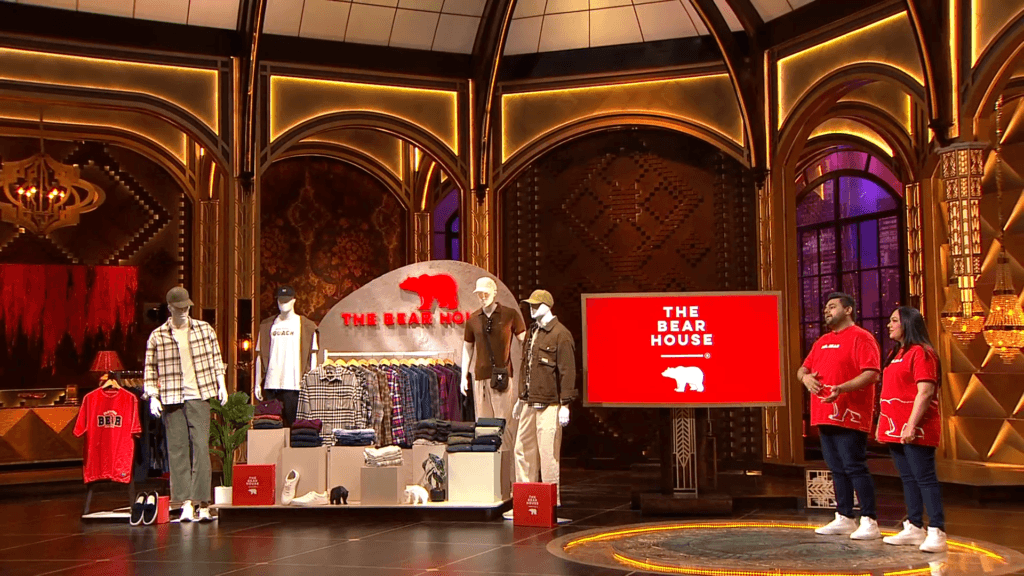
Pitch Highlights: Demonstrated fabric quality and shared their journey from ₹55 crore revenue to near-bankruptcy. Highlighted zero marketing spend and reliance on word-of-mouth growth.
Season and Episode Air Date
Season: 04
Episode: 49
Episode Air Date: Thursday, 13 March 2025
Product Overview
The Bear House’s portfolio includes:
Shirts & T-shirts: Premium 420 GSM fabric for durability.
Jackets: European-inspired designs with tailored fits.
Versatile Sizing: Caters to diverse body types, reducing returns.
Pricing: Positioned 20–30% below luxury brands like Louis Philippe.
Investor Reactions
Aman Gupta: Doubted sales authenticity until reminded he’d awarded the brand earlier. Joked, “He only remembers awards he receives!”
Namita Thapar: Advised Tanvi to “protect financial independence” as a woman entrepreneur.
Kunal Bahl: Offered ₹3 crore for 3% equity but withdrew post-Namita’s counter.
Anupam Mittal: Teased Aman’s forgetfulness but backed Namita’s deal.
Customer Engagement Philosophy
The Bear House prioritizes:
Word-of-Mouth Growth: Relies on product quality over paid ads (6–7% marketing spend).
Transparency: Shares fabric sourcing and production processes.
Community Trust: Leverages Tanvi’s story (postpartum dedication) to build emotional connections.
Product Highlights
420 GSM Fabric: 30% thicker than average menswear, enhancing durability.
European Aesthetics: Minimalist designs appealing to urban professionals.
Inclusive Sizing: Reduces returns by catering to diverse body types.
Cost Efficiency: Direct-to-consumer model cuts middlemen costs.
Future Vision
Offline Expansion: Target 50+ stores via partnerships with Shoppers Stop by 2026.
Sustainability: Introduce eco-friendly linen collections by 2027.
Global Reach: Export to EU markets using their prior manufacturing expertise.
Tech Integration: Launch AR virtual try-ons to reduce returns.
Deal Finalized or Not
Yes. Namita Thapar closed the deal with:
₹1 crore for 1% equity.
₹2 crore debt at 10% interest over five years. The negotiation followed skepticism from Aman Gupta, who doubted their “too good to be true” claims, and Kunal Bahl’s competing offer (₹3 crore for 3%).
The Bear House’s Shark Tank deal marks a strategic leap, combining Namita’s financial acumen with their operational expertise to challenge brands like Van Heusen and BlackBerry in India’s ₹1.2 lakh crore menswear market.
The Bear House Shark Tank India Review Website Data
Attribute
Details
Website
The Bear House
Platform
E-commerce (Shopify)
Advertising
Google Ads, Criteo & Snap Pixel
SEO Performance
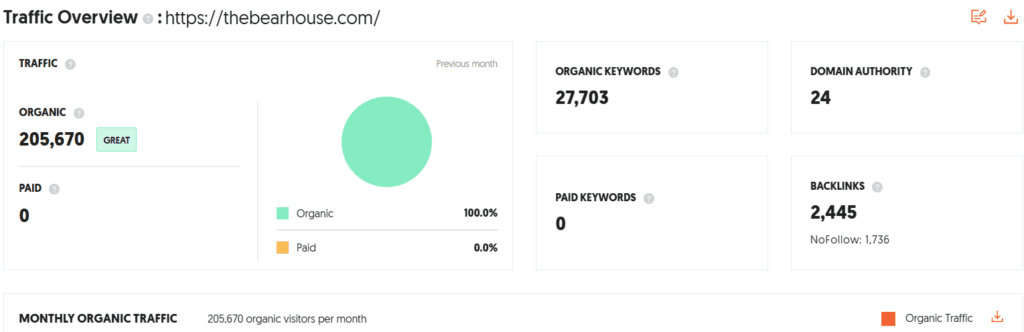
Great
Organic Traffic
205K visitors per month
Founders
Harsh Somaiya and Tanvi Somaiya (Bangalore-based husband-wife duo)
Harsh Somaiya
Established a garment manufacturing unit in 2014; faced ₹18–19 crore losses in domestic expansion
Tanvi Somaiya
NIFT graduate, oversees brand operations; resumed work 25 days post-childbirth
Mid-Term (2026): Raise ₹150 crore Series A at 3x revenue multiple.
Long-Term (2030): Aim for ₹3,000 crore valuation via global exports and IPO readiness.
The Bear House’s fusion of European aesthetics, D2C agility, and manufacturing expertise positions it to capture 5% of India’s ₹1.2 lakh crore menswear market by 2030. With Namita Thapar’s strategic backing and a focus on tech-driven scalability, it aims to rival global giants like Zara and H&M while maintaining profitability.




The Bear House Shark Tank India Episode Review