
Shark Tank India Season 5 Episode 24 Review
Episode 24 of Shark Tank India Season 5 delivered one of the season’s most emotionally charged and technically diverse episodes—spanning from a deeply personal cancer-recovery story to viral startup roasting, to the eternal challenge of scaling regional food brands. The episode explored fundamental questions about regulatory frameworks enabling innovation, the difference between “nice-to-have” and “must-have” products, and whether local authenticity can compete with global standardization. From a three-Shark competitive bidding war to the now-infamous “Blinkit delivery” roast, this episode showcased how personal connection, market readiness, and execution history determine investment outcomes.
Episode Summary
Success Rate: 1 out of 3 deals closed
Total Investment: ₹1.5 Crore deployed through strategic three-Shark partnership
Key Theme: The episode centered on the critical distinction between market opportunity and market readiness—when does being early mean being visionary, and when does it mean being premature?
Pitch 1
Wholeleaf Shark Tank India Episode Review
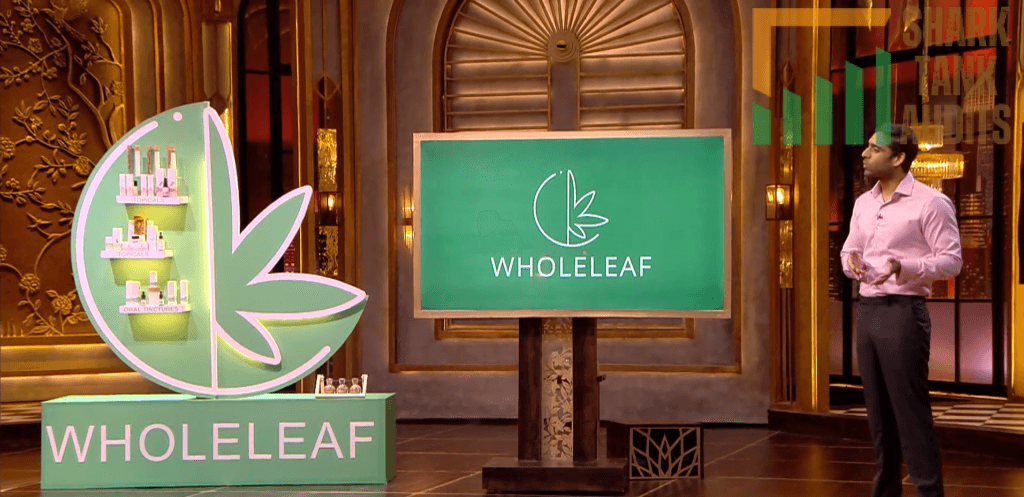
Wholeleaf appeared on Shark Tank India Season 5, Episode 24, with founder Shivraj Sharma (Delhi entrepreneur inspired after aunt’s 2009 breast cancer battle where CBD oil significantly improved appetite/pain within 10 days of chemotherapy) seeking ₹50 lakh for 2.1% equity (₹23.8 Crore valuation) and successfully closed a deal for ₹1.5 Crore for 7.5% equity (₹20 Crore valuation) with Sharks Aman Gupta, Namita Thapar, and Kanika Tekriwal after competitive offers.
Established 2020, the government-licensed all-natural pain therapeutics brand harmonizes Ayurveda with modern science using CBD (Cannabidiol) extracted from Vijaya (Cannabis) plant leaves (legal under NDPS Act 1985 versus flower/bud) addressing chronic pain, anxiety, and sleep disorders, scaling 16.5x in 18 months from minimal April 2024 revenue to ₹9 Crore ARR (October 2025) with Apollo Group partnership providing physical medical store access and 641 monthly organic visitors. Namita praised “evidence-based medicine” citing 13 clinical trials (76% participants reported significant relief, first Indian company in space conducting trials), Kanika emotionally endorsed sharing her own 17-years-ago cancer journey lamenting CBD unavailability, while Aman initially questioned legality before accepting regulatory framework explanation.
Operating in Indian pain management market valued at $10-12 billion with premium natural/herbal segment at $1.5 billion, Ayurvedic market growing 15-20% CAGR, and global medical cannabis projected at $50 billion by 2030 (India early adopter phase giving first-mover advantage), Wholeleaf targets chronic patients (45-70 with arthritis/neuropathy/cancer pain), stressed professionals (25-45 urban Tier 1 cities with insomnia/anxiety), fitness enthusiasts seeking natural recovery, and eco-conscious consumers preferring plant-based medicine within 19% Indian adult population suffering chronic pain.
Pitch 2
Mankomb Shark Tank India Episode Review
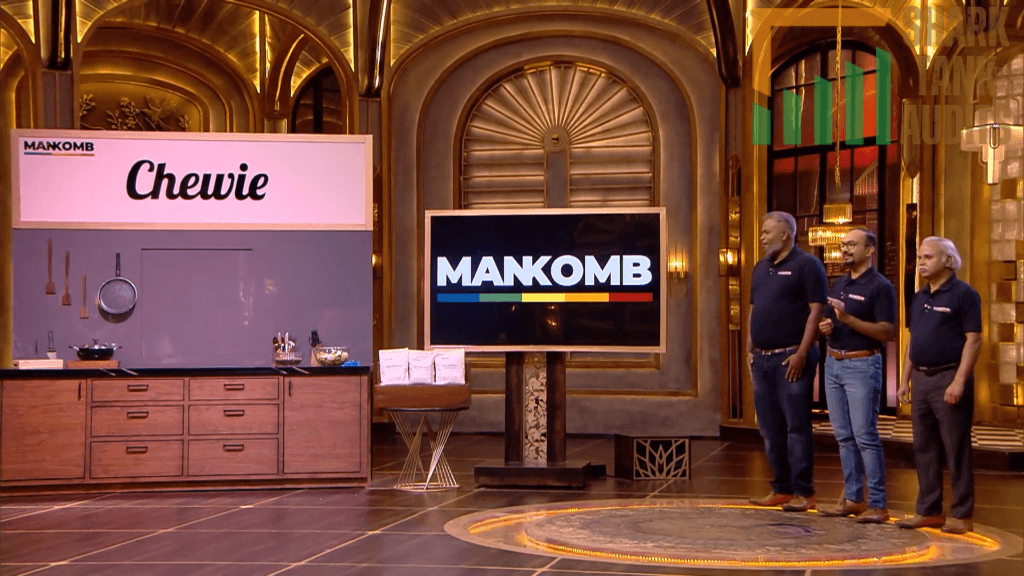
Mankomb appeared on Shark Tank India Season 5, Episode 24, with co-founders Mrudul Mudotholy (CEO), Dinesh Babu Sukumar (CMO), and Jawahar Arumugam (CTO) seeking ₹2 Crore for 1.5% equity (₹133.3 Crore valuation) but left with no deal after all Sharks opted out citing lack of actual sales (only pre-bookings), speed/readiness concerns, and high valuation for pre-revenue company.
Launched July 2024, the sustainable technology company’s flagship product Chewie is an AI-powered automated kitchen appliance converting wet waste (leftovers, bones, vegetable peels) into soil within 8-30 hours priced at ₹34,999, featuring internal camera detecting non-organic items, self-cleaning mechanism, requiring power/water inlet/outlet, with 3-year warranty and 8-year lifespan, securing 1,000 pre-bookings pre-launch with 1,538 monthly organic visitors. Sharks delivered harsh reality check—Anupam virally roasted “Bhai apka jab tak dhakkan khulta hai, Blinkit delivery karke chala jata hai” (by the time lid opens, Blinkit has already delivered), Namita questioned readiness/processing speed, Vineeta/Kanika expressed concerns over market size for “nice-to-have” ₹35,000 appliance, while Aman noted founder potential advising hiring sales team proving model before seeking high valuation.
Operating in Indian smart home market valued at $6.71 billion (2026, 29.12% CAGR) with organic waste converter segment growing from $296.5 million (2024) to $574 million (2032) within India generating 62 million tonnes annual municipal solid waste (only 20-25% treated) and circular economy capturing $500 billion (11% of global $4.5 trillion by 2030), Mankomb targets HNIs (28-50) in Tier 1 cities, eco-warriors, tech-savvy early adopters, and urban gardeners within top 10% urban households (1 crore homes) amid government Swachh Bharat Mission and draft Environment Protection Rules mandating waste segregation/home-level composting, planning ₹8,000-15,000 affordable variants within 6 months targeting 10,000 units (FY 26-27) and UK expansion (FY 28-29).
Pitch 3
Madrasi Kaapi House Shark Tank India Episode Review
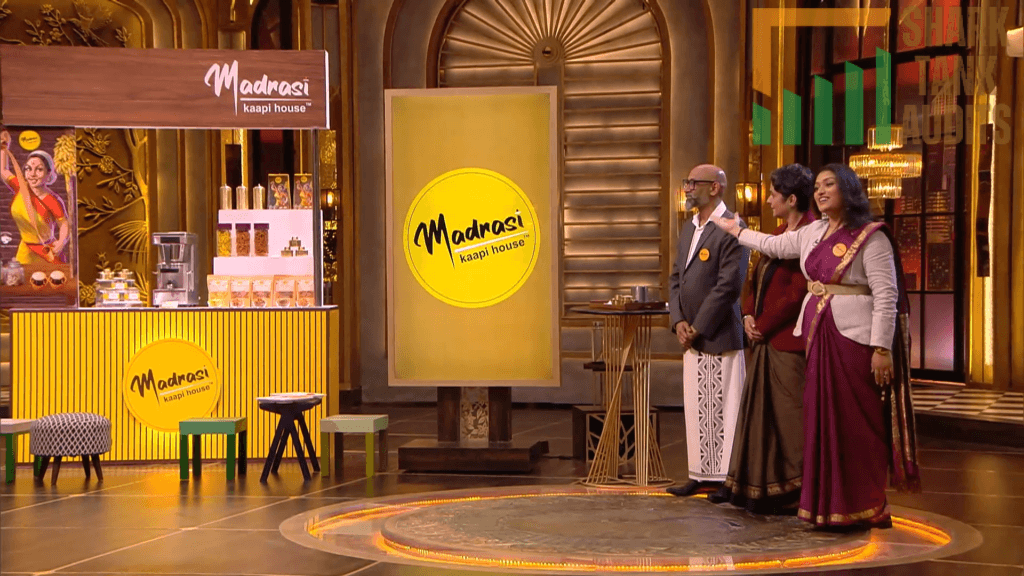
In Shark Tank India Season 5, Episode 24, the Mumbai-based QSR chain Madrasi Kaapi House, founded by neighbors Venkata Shiva, Simran Venkat, and Smita Rohan Alke, pitched their vision to take authentic South Indian filter coffee national. Seeking an investment of ₹75 lakhs for 5% equity at a ₹15 crore valuation, the founders showcased a “chef-less” operational model capable of producing 30+ beverage varieties from a single brew.
Despite impressive revenue growth (projected at ₹2.95 crores for FY 25-26) and a standardized process-driven system, the startup did not secure a deal. The Sharks, including Anupam Mittal and Namita Thapar, expressed significant concerns regarding the brand’s past failure (having closed four previous outlets), poor location choices, and the immense difficulty of scaling a local coffee chain into a pan-India powerhouse against established Western competitors.
Episode Highlights
The Emotional Evidence-Based Medicine Story
Wholeleaf’s Perfect Storm of Personal + Clinical + Commercial:
The Origin: Founder Shivraj Sharma’s aunt battled breast cancer in 2009. Within 10 days of CBD oil supplementation during chemotherapy, she experienced significantly improved appetite and pain relief—a life-changing moment that inspired a 15-year journey to legalize and commercialize cannabis-based therapeutics in India.
The Clinical Validation:
- 13 Clinical Trials Conducted: First Indian company in the CBD space to run formal trials
- 76% Efficacy Rate: Participants reported significant pain/anxiety relief
- Namita’s Endorsement: As a healthcare professional, praised “evidence-based medicine” approach
The Personal Connection:
- Kanika’s Emotional Testimony: Shared her own cancer journey from 17 years ago, lamenting that CBD wasn’t available then, expressing how it could have helped her recovery
The Commercial Explosion:
- 16.5x Growth in 18 Months: Minimal revenue (April 2024) → ₹9 Crore ARR (October 2025)
- Apollo Group Partnership: Physical medical store distribution access
- Legal Framework: Government-licensed under NDPS Act 1985 (using legal Cannabis leaf extracts, not flowers/buds)
The Deal Structure:
- Initial Ask: ₹50 lakh for 2.1% (₹23.8 Cr valuation)
- Final Deal: ₹1.5 Crore for 7.5% (₹20 Cr valuation)
- 3x Capital Increase: Sharks offered 3x the requested amount, recognizing massive opportunity
- Three-Shark Partnership: Aman (consumer brand scaling), Namita (healthcare credibility), Kanika (retail/distribution networks)
The Regulatory Education Moment: Aman initially questioned legality, requiring founders to explain NDPS Act framework distinguishing legal leaf extracts from illegal flower/bud—demonstrating how regulatory understanding can initially block even willing investors.
The Viral Roast That Defined Mankomb’s Fate
Anupam Mittal’s Legendary Line:
In Hindi: “Bhai apka jab tak dhakkan khulta hai, Blinkit delivery karke chala jata hai”
In English: “Bro, by the time your lid opens, Blinkit has already made the delivery”
Context: Mankomb’s AI-powered kitchen composter “Chewie” takes 8-30 hours to convert wet waste into soil, priced at ₹34,999. Anupam’s roast highlighted the fundamental product-market fit issue—in an era of 10-minute grocery delivery, who wants to wait 8-30 hours for waste processing?
The Deeper Critique:
- Zero Actual Sales: Only 1,000 pre-bookings, no delivered units, no real customer feedback
- ₹133.3 Crore Valuation: For a pre-revenue company with untested product-market fit
- “Nice-to-Have” vs “Must-Have”: ₹35,000 appliance solving a problem most Indians address differently (municipality pickup, home composting, not thinking about it)
- Speed Concerns: Namita questioned processing time readiness for market
The Sharks’ Consensus:
- Vineeta & Kanika: Market size concerns for expensive “nice-to-have” appliance
- Aman: Recognized founder potential but advised hiring sales team and proving model before seeking high valuation
- The Verdict: Great concept, wrong timing/pricing for mass adoption, founders should bootstrap to product-market fit
The Irony: Mankomb had 1,000 pre-bookings (customer interest validation) and 1,538 monthly organic visitors (decent awareness), but Sharks saw these as insufficient proof points for ₹133 Crore valuation in the absence of actual sales and customer satisfaction data.
The Regional Authenticity Challenge
Madrasi Kaapi House’s Scaling Dilemma:
The Vision: Take authentic South Indian filter coffee national using “chef-less” operational model producing 30+ beverage varieties from single brew—standardization meeting tradition.
The Execution Reality:
- Failed History: Already closed 4 previous outlets
- Location Mistakes: Poor site selection repeatedly
- Revenue Trajectory: ₹2.95 Crore projected FY25-26 (respectable but not explosive)
- Competition: Scaling local coffee chain against Starbucks, Costa, Blue Tokai, and established Western giants
The Sharks’ Concerns:
Anupam & Namita’s Critique:
- Past failures demonstrate execution gaps, not just bad luck
- Coffee chains require perfect location strategy—multiple failed outlets signal fundamental site selection capability issues
- Regional authenticity (South Indian filter coffee) faces enormous barriers scaling nationally when most Indians prefer espresso-based Western formats
- “Chef-less” model innovation insufficient to overcome location/brand challenges
The Fundamental Question: Can authentic regional food/beverage brands scale nationally in India, or do they remain local favorites overwhelmed by Western standardization and capital-backed competition?
The Pattern: Many regional food brands (filter coffee, regional sweets, traditional beverages) struggle to scale beyond their cultural heartlands despite authentic offerings—customer preference for “modern” Western formats and massive capital requirements for retail presence create insurmountable barriers.
Shark Dynamics
The Three-Shark Healthcare & Consumer Partnership (Wholeleaf)
The collaboration between Aman, Namita, and Kanika represented perfect strategic alignment:
Namita’s Contribution:
- Healthcare professional credibility
- Clinical trials/evidence-based medicine validation
- Doctor network access for education/prescription
Aman’s Contribution:
- Consumer brand scaling expertise (boAt’s mass-market success)
- E-commerce and digital marketing capabilities
- Young professional market reach (anxiety/stress/sleep target audience)
Kanika’s Contribution:
- Retail distribution networks beyond Apollo
- Aviation/premium travel channel access
- Personal testimonial credibility (cancer survivor endorsing product)
The Synergy: No single Shark could provide healthcare credibility + consumer scaling + distribution access—collaboration was strategically essential.
The Unanimous “Not Ready” Verdict
Mankomb and Madrasi Kaapi House both faced complete Shark consensus, but for different reasons:
Mankomb: “Great idea, wrong execution stage”
- Pre-revenue with untested product
- High valuation without sales validation
- Processing speed/convenience concerns
Madrasi Kaapi House: “Proven execution failure”
- Already closed 4 outlets (track record of poor decisions)
- Location selection capability questioned
- Insufficient differentiation against Western giants
The Regulatory Framework Education
Wholeleaf’s pitch forced an important conversation about cannabis/CBD legality in India. Aman’s initial skepticism (questioning legality) followed by acceptance (understanding NDPS Act framework) demonstrated how regulatory uncertainty can create both barriers and opportunities:
Barriers: Investors may initially avoid regulated spaces out of legal uncertainty Opportunities: Once regulations are understood, early movers have minimal competition
Market Insights Revealed
The episode showcased three distinct market opportunities with vastly different readiness levels:
- Pain Management & CBD Therapeutics (Wholeleaf): $10-12 billion Indian pain management market with ₹1.5 billion premium natural/herbal segment, global medical cannabis at $50 billion by 2030, first-mover advantage in India’s early adoption phase
- Sustainable Home Technology (Mankomb): $6.71 billion Indian smart home market (29.12% CAGR) with organic waste converters growing from $296.5M (2024) to $574M (2032), but consumer readiness questionable for ₹35,000 “nice-to-have” appliances
- Regional QSR Coffee (Madrasi Kaapi House): Massive Indian QSR market but hyper-competitive coffee segment dominated by Western brands with deeper pockets and broader appeal
Key Takeaways
1. Personal Stories + Clinical Evidence = Powerful Investment Thesis
Wholeleaf’s Combination:
- Founder’s Personal Story: Aunt’s cancer recovery with CBD
- Clinical Validation: 13 trials, 76% efficacy
- Shark’s Personal Connection: Kanika’s cancer journey testimonial
- Commercial Proof: 16.5x growth in 18 months
The Lesson: When personal narrative aligns with clinical evidence and commercial traction, investors get emotional connection + rational justification—irresistible combination.
2. Pre-Bookings ≠ Validated Product-Market Fit
Mankomb’s Illusion: 1,000 pre-bookings seemed impressive, but Sharks saw it differently:
- Pre-bookings require small/no commitment (refundable deposits)
- Actual sales require customer satisfaction with delivered product
- ₹133 Crore valuation demands proof of retention, not just acquisition
The Standard: In 2026, investors want delivered units, customer reviews, repeat purchase data—not just waitlist numbers.
3. Processing Speed Matters in the Age of Instant Everything
The Blinkit Era: India’s consumer expectations have been transformed by 10-minute grocery delivery. Products requiring 8-30 hours for basic functions face uphill adoption battles unless offering extraordinary value.
Mankomb’s Challenge:
- Problem: Takes 8-30 hours to compost waste
- Alternative 1: Municipality pickup (free, requires seconds to put garbage out)
- Alternative 2: Home composting (minimal setup, “fire and forget”)
- Alternative 3: Not caring about waste processing
The Question: Why pay ₹35,000 and wait 8-30 hours when free/faster alternatives exist?
4. Failed Outlets Signal Execution Capability Issues
Madrasi Kaapi House’s Red Flag: Closing 4 outlets isn’t bad luck—it’s a pattern:
- 1 Failed Outlet: Could be location bad luck
- 2 Failed Outlets: Concerning coincidence
- 4 Failed Outlets: Systematic execution problem (site selection, operations, marketing)
Investor Logic: If founders couldn’t make 4 locations work, why would they succeed with Shark capital at 40+ locations?
5. Regulatory Frameworks Create Moats When Understood
Wholeleaf’s Advantage:
- Government license under NDPS Act 1985
- Legal use of Cannabis leaf (not flower/bud)
- Regulatory compliance creates entry barriers for competitors
- First-mover position while others hesitate over legal uncertainty
The Opportunity: In newly regulated spaces (cannabis, drones, fintech), early regulatory expertise becomes defensible moat.
6. Regional Authenticity Struggles Against Global Standardization
Madrasi Kaapi House’s Dilemma:
- Authentic South Indian filter coffee has passionate regional following
- National scaling requires converting non-South Indian consumers
- Most Indians prefer Western coffee formats (espresso, cappuccino, latte)
- Western chains have capital, locations, and “modern” brand perception
The Reality: Local authentic brands often can’t outcompete global standardized chains except in regional heartlands—capital requirements and consumer preferences favor Western formats.
7. “Chef-less” Operations Aren’t Sufficient Differentiation
The Innovation Illusion: Madrasi Kaapi House’s “chef-less” model producing 30+ varieties from single brew is operationally clever but insufficient because:
- Doesn’t solve location selection issues
- Doesn’t create brand differentiation vs. Starbucks
- Doesn’t address consumer preference for Western formats
- Operational efficiency alone doesn’t overcome market positioning challenges
8. Three-Shark Deals Signal Complex Value Creation Needs
Wholeleaf’s Requirements:
- Healthcare credibility (Namita)
- Consumer brand scaling (Aman)
- Distribution networks (Kanika)
When Needed: Complex products (regulated, clinical, emerging categories) requiring multiple expertise areas to succeed—one Shark can’t provide everything.
What Made This Episode Different
The Emotional Healthcare Investment
Rarely do Shark Tank episodes feature such deeply personal health stories. Kanika’s emotional endorsement sharing her 17-year-old cancer journey created television gold and demonstrated how personal experience drives investment conviction beyond spreadsheets.
The Impact: Healthcare investments often involve rational clinical data analysis. Wholeleaf combined clinical evidence with personal recovery stories, making the investment both emotionally and rationally compelling.
The Viral Roast Moment
Anupam’s “Blinkit delivery” line will likely become one of Shark Tank India’s most quoted moments—perfectly encapsulating the speed expectations of modern Indian consumers and the challenges facing slow-process innovations.
The Cultural Context: In an India transformed by Blinkit, Zepto, and Swiggy Instamart (10-minute delivery), any product requiring hours or days for basic functions faces fundamental adoption challenges.
The Regulatory Education Platform
Wholeleaf’s pitch forced public discussion about cannabis/CBD legality in India, educating millions of viewers about NDPS Act framework distinguishing legal leaf extracts from illegal flower/bud.
The Ecosystem Impact: By clarifying regulatory pathways, the episode may inspire more entrepreneurs in regulated wellness spaces and educate consumers about legal CBD/cannabis products.
The Failed Outlet Pattern Recognition
Madrasi Kaapi House’s 4 closed outlets provided Sharks opportunity to teach viewers about pattern vs. anomaly:
- Anomaly: One failed venture due to bad luck
- Pattern: Multiple failures indicating systematic execution issues
The Lesson: Investors evaluate track records, not just current pitches.
Behind the Numbers
Wholeleaf’s Explosive Trajectory
- Growth: Minimal revenue April 2024 → ₹9 Crore ARR October 2025 (16.5x in 18 months)
- Clinical Validation: 13 trials, 76% reported significant relief
- Distribution: Apollo Group partnership for physical medical store access
- Organic Traffic: 641 monthly visitors (decent for niche medical product)
- Valuation Journey: ₹23.8 Cr ask → ₹20 Cr final (16% reduction)
- Capital Increase: ₹50 lakh ask → ₹1.5 Cr final (3x increase)
- Market Opportunity: $10-12B Indian pain management, $50B global medical cannabis by 2030
Mankomb’s Pre-Revenue Premium
- Valuation Ask: ₹133.3 Crore
- Actual Sales: ₹0 (only 1,000 pre-bookings)
- Product Price: ₹34,999 (₹35,000 for waste composter)
- Processing Time: 8-30 hours (fundamental speed concern)
- Planned Variants: ₹8,000-15,000 affordable versions within 6 months
- Target Units FY26-27: 10,000 units
- Revenue If Achieved: 10,000 × ₹15,000 avg = ₹15 Crore (₹133 Cr valuation = 8.9x projected revenue for unproven product)
- Market Size: $6.71B Indian smart home, but organic waste converters only $296.5M (2024)
Madrasi Kaapi House’s Execution History
- Failed Outlets: 4 closed (systematic execution concern)
- Projected Revenue FY25-26: ₹2.95 Crore
- Valuation Ask: ₹15 Crore (5.1x projected revenue)
- Beverage Varieties: 30+ from single brew (operational innovation)
- Model: “Chef-less” standardized process
- Challenge: Competing against Starbucks, Costa, Blue Tokai with 1/100th the capital
The Episode’s Three Market Readiness Levels
Ready & Validated (Wholeleaf)
Evidence of Readiness:
- 16.5x growth in 18 months (proven demand)
- 13 clinical trials completed (evidence-based)
- Apollo Group partnership (distribution secured)
- Government licensing (regulatory clarity)
- ₹9 Crore ARR (commercial validation)
Investment Decision: Three Sharks competed, offered 3x requested capital
Premature & Unproven (Mankomb)
Evidence of Prematurity:
- Zero actual sales (only pre-bookings)
- ₹133 Cr valuation without revenue
- Processing speed concerns (8-30 hours in instant delivery era)
- Untested customer satisfaction
- ₹35,000 price point for “nice-to-have”
Investment Decision: Unanimous rejection, advice to bootstrap to proof-of-concept
Proven Failure (Madrasi Kaapi House)
Evidence of Execution Issues:
- 4 closed outlets (pattern of poor decisions)
- Location selection failures
- Insufficient differentiation vs Western giants
- ₹2.95 Cr projection insufficient for QSR scaling
Investment Decision: Unanimous rejection based on track record
Founder Personalities on Display
The Mission-Driven Regulator Navigator (Wholeleaf)
Shivraj Sharma demonstrated:
- Deep personal motivation (aunt’s cancer recovery)
- 15-year persistence (2009 inspiration → 2020 launch → 2025 Shark Tank)
- Regulatory sophistication (navigating NDPS Act, securing government license)
- Clinical validation commitment (13 trials conducted)
- Evidence-based communication (76% efficacy data, not just anecdotes)
The Profile: Founder who spent years understanding regulatory frameworks before launching—patience and diligence rewarded with first-mover advantage.
The Premature Optimists (Mankomb)
Mrudul, Dinesh, and Jawahar exhibited:
- Technical capability (AI-powered, self-cleaning mechanism, internal camera detection)
- Founder potential (Aman acknowledged this)
- Premature valuation confidence (₹133 Cr without sales)
- Possible disconnect from consumer convenience expectations (8-30 hours in Blinkit era)
The Gap: Strong product development skills ≠ understanding market readiness and appropriate valuation stages.
The Repeat Location Selectors (Madrasi Kaapi House)
Venkata Shiva, Simran Venkat, Smita Rohan Alke showed:
- Authentic regional product knowledge (South Indian filter coffee)
- Operational innovation (“chef-less” 30+ variety model)
- Systematic execution failures (4 closed outlets)
- Inability to select profitable locations repeatedly
The Pattern: Operational cleverness without strategic execution capability—innovation in brewing doesn’t compensate for poor site selection.
Episode Wisdom
For Founders:
1. Personal Stories Must Combine with Commercial Proof: Wholeleaf’s founder’s aunt recovery story was powerful, but the 16.5x growth and 13 clinical trials closed the deal. Emotion opens doors; evidence closes deals.
2. Pre-Bookings Are Marketing Validation, Not Business Validation: Mankomb’s 1,000 pre-bookings impressed initially but Sharks wanted actual delivered units and customer satisfaction data. Don’t confuse interest with validated demand.
3. Understand Regulatory Frameworks as Competitive Moats: Wholeleaf’s government licensing created defensible position. In newly regulated spaces, early regulatory expertise becomes significant advantage while competitors hesitate.
4. One Failed Venture = Learning; Multiple Failed Ventures = Pattern: Madrasi Kaapi House’s 4 closed outlets signaled systematic execution issues. If you have failures, demonstrate what you learned and how you’ve changed approach.
5. Speed Expectations Have Changed: In India’s 10-minute delivery era, products requiring hours/days for basic functions need extraordinary value propositions. Mankomb’s 8-30 hours wasn’t competitive with free municipal pickup taking seconds.
6. Regional Authenticity Needs National Appeal Strategy: Madrasi Kaapi House had authentic South Indian coffee but no clear path converting non-South Indian consumers who prefer Western formats. Authenticity ≠ scalability without bridge strategy.
7. Operational Innovation Alone Doesn’t Overcome Market Positioning Failures: “Chef-less” model was clever but didn’t solve location selection, brand positioning, or consumer preference challenges Madrasi Kaapi House faced.
For Investors:
1. Clinical Evidence + Personal Testimonials = Strong Healthcare Bets: Wholeleaf combined Namita’s clinical validation with Kanika’s personal cancer story—rational and emotional conviction aligned.
2. Pre-Revenue Premium Valuations Require Extraordinary Proof: Mankomb sought ₹133 Cr without sales. Accept only when: massive pre-bookings from enterprise customers, proven founding team with exits, revolutionary IP with patents, or similar exceptional circumstances.
3. Track Records Predict Future Execution: Four failed outlets (Madrasi Kaapi House) isn’t bad luck—it’s systematic capability gap. Weight execution history heavily.
4. Regulatory Clarity Creates First-Mover Opportunities: Wholeleaf’s government licensing in cannabis/CBD space created moat. Invest early in newly regulated markets where compliance expertise limits competition.
5. Three-Shark Deals Make Sense for Complex Categories: Healthcare products needing clinical credibility + consumer scaling + distribution access benefit from multi-Shark collaboration more than solo investments.
For Viewers:
1. Evidence-Based Medicine Is the Standard: Wholeleaf’s 13 clinical trials with 76% efficacy exemplifies how modern healthcare brands must combine traditional knowledge (Ayurveda) with scientific validation.
2. The “Blinkit Effect” Has Changed Product Expectations: Any product requiring significant wait times must offer extraordinary value. Convenience and speed are now baseline expectations, not premium features.
3. Failed Outlets Are Signals, Not Noise: When founders close multiple locations, it’s pattern recognition time—systematic execution issues unlikely to resolve with just capital injection.
4. Regional Foods Face Scaling Challenges: Authentic regional brands often can’t compete nationally against Western standardized chains—capital requirements, location access, and consumer preference for “modern” formats create barriers.
5. Cannabis/CBD Is Legal in India (With Restrictions): Wholeleaf educated millions about NDPS Act framework—Cannabis leaf extracts are legal; flower/bud are not. Many Indians unaware of legal therapeutic options.
The Episode’s Defining Contrasts
Wholeleaf vs Mankomb: Evidence of Readiness
Wholeleaf (Market Ready):
- 16.5x growth proven
- ₹9 Crore ARR validated
- 13 clinical trials completed
- Apollo partnership secured
- Three Sharks competed
Mankomb (Market Premature):
- Zero sales (only pre-bookings)
- ₹133 Cr valuation unvalidated
- Processing speed concerns
- “Nice-to-have” positioning
- Unanimous rejection
The Lesson: Market readiness requires actual sales, customer satisfaction data, and evidence that convenience/value proposition overcomes alternatives—not just pre-booking interest.
Personal Connection vs Track Record
Wholeleaf (Emotional + Evidence):
- Founder’s aunt recovery story
- Kanika’s cancer testimonial
- 13 clinical trials (rational proof)
- Deal closed
Madrasi Kaapi House (Regional + Failure):
- Authentic South Indian coffee
- 4 closed outlets (execution failure)
- No clear national scaling path
- Deal rejected
The Lesson: Personal stories and authenticity enhance strong fundamentals but can’t overcome systematic execution failures or unclear scaling paths.
The Regulatory Framework Opportunity
Wholeleaf’s Insight: Government licensing in regulated spaces creates three advantages:
- Entry Barriers: Competitors must navigate complex NDPS Act framework, medical licensing, quality certifications—limiting competition
- Credibility: Government approval provides consumer trust in sensitive category (cannabis/CBD for pain)
- First-Mover Position: While others hesitate over regulatory uncertainty, licensed players capture market share and brand recognition
The Application: Drones, fintech, healthcare, cannabis—newly regulated markets reward entrepreneurs who invest time understanding compliance frameworks before competitors enter.
Leave feedback about this
You must be logged in to post a comment.