
Shark Tank India Season 5 Episode 31 Review
Episode 31 of Shark Tank India Season 5 (aired Monday, February 16, 2026) delivered a masterclass in manufacturing excellence, market timing assessment, and the delicate balance between premium positioning and scalability. From a Jharkhand-based 3D wall art manufacturer achieving explosive growth, to gaming peripheral founders facing harsh reality checks about debt and declining markets, to a Kolkata couple’s premium children’s brand securing a three-Shark partnership, this episode explored fundamental questions about vertical integration as competitive advantage, debt burdens threatening promising businesses, and when “Made in India” becomes both badge of honor and strategic necessity. Featuring Aman’s memorable threat “Tera game over kar dunga” (I’ll game over you) and the remarkable story of founders building manufacturing empires from Tier 2/3 cities demonstrating India’s entrepreneurial depth beyond metros.
Episode Summary
Success Rate: 3 out of 3 deals closed (100% success rate—rare episode!)
Total Investment: ₹3.25 Crore deployed across three strategic partnerships with royalty structures
Key Theme: The episode centered on manufacturing as moat—when does vertical integration create defensible competitive advantages, and when does it become capital-intensive burden limiting flexibility?
Pitch 1
Artociti Shark Tank India Episode Review
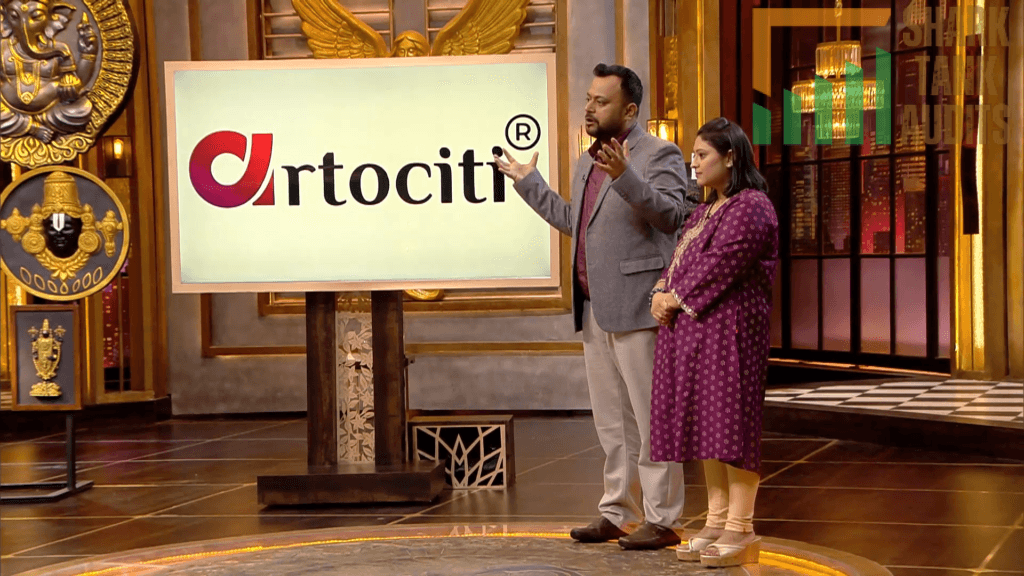
Artociti appeared on Shark Tank India Season 5, Episode 30, with founders Indrajeet Kumar (Founder & CEO who conceived idea managing Middle East exhibitions identifying massive Indian market gap for high-quality relief art) and Swatiki Prakash (Co-founder & Head of Tech/Finance managing technical/financial backbone ensuring scalable precise in-house manufacturing) from Bokaro, Jharkhand seeking ₹1 Crore for 3% equity (₹33.33 Crore valuation) and successfully closed a deal for ₹1 Crore for 7.5% equity + 2% royalty until ₹1.5 Crore recouped (₹13.33 Crore valuation) with Sharks Namita Thapar and Vineeta Singh after intense negotiations where founders requested royalty clause removal but Sharks remained firm.
The mass-premium 3D wall art brand specializes in vertically integrated manufacturing of large-format high-relief décor bridging 5,000-year-old Indian heritage with modern interior design transforming ancient murals into contemporary collectibles through “Made in Bokaro” craftsmanship, offering spiritual/cultural/architectural art including 3D murals, sculptures, Kerala murals, Pichwai paintings, Buddha collection (tranquility/mindfulness), and Radha Krishna series (vibrant colors/intricate detailing) as “statement pieces” for living areas, meditation spaces, and building elevations, employing 80+ people growing explosively from ₹12.5k (FY 20-21) to ₹3.44 Crore (FY 24-25) projecting ₹5.5-6 Crore (FY 25-26) with exceptional 56,730 monthly organic visitors and 3,000 sq ft flagship experience center in Kirti Nagar, Delhi. Sharks notably impressed by financial trajectory and manufacturing capabilities—Namita/Vineeta saw potential blending spiritual art with contemporary lifestyle aggressively pursuing deal despite valuation gap.
Operating in Indian home decor market valued at $28.27 billion (₹2.35 lakh crore, 2026) projected to reach $42.36 billion by 2034 with wall decor segment soaring to $760 million (₹6,300 Crore, 2026, 6.69% CAGR) and online home decor segment at $7.97 billion (₹66,000 Crore) within premiumization trend (61% population belonging to middle/upper-middle class by 2047, premium wall art seeing 12-15% higher margins versus standard paints/wallpapers), Artociti targets urban millennials/Gen X (28-50) in Tier 1/2 cities—homeowners moving into 3BHK+ apartments, luxury villa owners, culturally conscious NRIs bringing Indian heritage to modern homes, and B2B (luxury boutique hotels, corporate offices, meditation/yoga retreats, interior designers/architects seeking tactile 3D statement pieces)—planning experience centers in Pune/Bengaluru/Chennai, “Artociti Global” vertical targeting $300 billion US/EU home decor market via Amazon Global, and Artociti Home diversification into premium furniture/lighting aiming ₹100+ Crore valuation with ₹25+ Crore ARR.
Pitch 2
Kreo Shark Tank India Episode Review
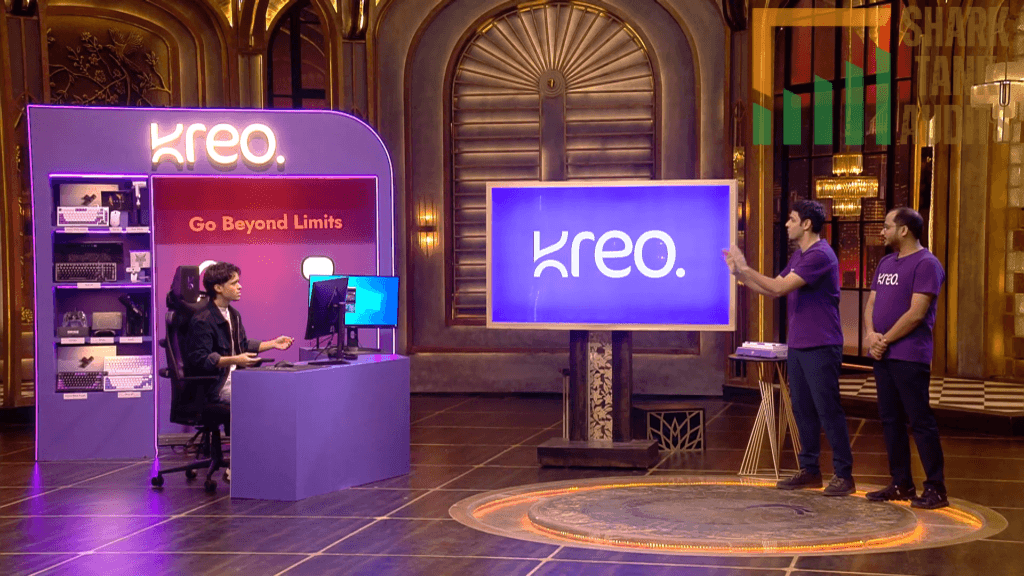
Kreo appeared on Shark Tank India Season 5, Episode 31, with Bengaluru-based founders Ishan Sukul, Himanshu Gupta, and Niraj Chitnis (established 2022) seeking ₹2 Crore for 1% equity (₹200 Crore valuation) and successfully closed a deal for ₹1 Crore for 1% equity + ₹1 Crore debt at 9% interest for 3 years with Shark Ritesh Agarwal with contingency “step-up” valuation to ₹150 Crore if company reaches operational break-even within current financial year.
The D2C consumer electronics brand targets “passion economy” gamers and digital content creators offering “pro-level” peripherals at affordable prices bridging gap between expensive international gear and budget-conscious Indian consumers through mechanical keyboards, wireless mice with precision sensors/RGB lighting, microphones, headsets, tripods, specialized lighting, and “Made-in-India” gaming monitors, achieving ₹70 Crore lifetime sales over 3 years projecting ₹55 Crore (FY 25-26) while building “Kreosphere” community-centric ecosystem where users (“Kreons”) interact and provide product development feedback with 14% repeat customer base but 0 organic visitors requiring SEO overhaul and ₹15.3 Crore total debt burden. Sharks reacted harshly—Aman warned market declining threatening “Tera game over kar dunga” if founders weren’t truthful about R&D, Kunal questioned “financial intelligence” noting business “underwater” due to high debt struggling to raise fresh capital, while Vineeta/Namita opted out citing high cash burn, low hardware margins, and scalability concerns, though Ritesh saw potential in rising Indian esports scene.
Operating in Indian gaming market projected at $9.1 billion by 2029 with gaming peripherals at $0.57 billion (₹4,700 Crore, 2026, Kreo targeting mid-range 46% segment) within 591 million active gamers and ₹3,500+ Crore creator economy amid 5G/fiber-to-home rollout surging low-latency peripheral demand and government incentives for local manufacturing providing edge over imported brands (Razer/Logitech facing higher tariffs), Kreo targets Gen Z gamers (15-24, 39.6% population prioritizing RGB lighting/fast response/high DPI), digital creators (18-30, 4 million+ needing microphones/lighting/tripods for streaming/short-form content), and working professionals (25-40, 40% audience non-gamers like engineers/coders/editors preferring mechanical keyboards/ergonomic mice for productivity) within 66% of gamers residing in Tier 2/3 cities where price sensitivity is major draw, planning SEO overhaul targeting high-intent keywords, Amazon full-funnel sponsored brand video ads (566% revenue growth from focused category targeting), influencer pay-per-performance model, specialty store expansion into gaming cafes/tech boutiques (41% market share), Made-in-India monitor line launch increasing tech IP, and lifestyle tech ecosystem pivot including ergonomic furniture and software-led customization (Kreo Kontrol).
Pitch 3
Rosada Shark Tank India Episode Review
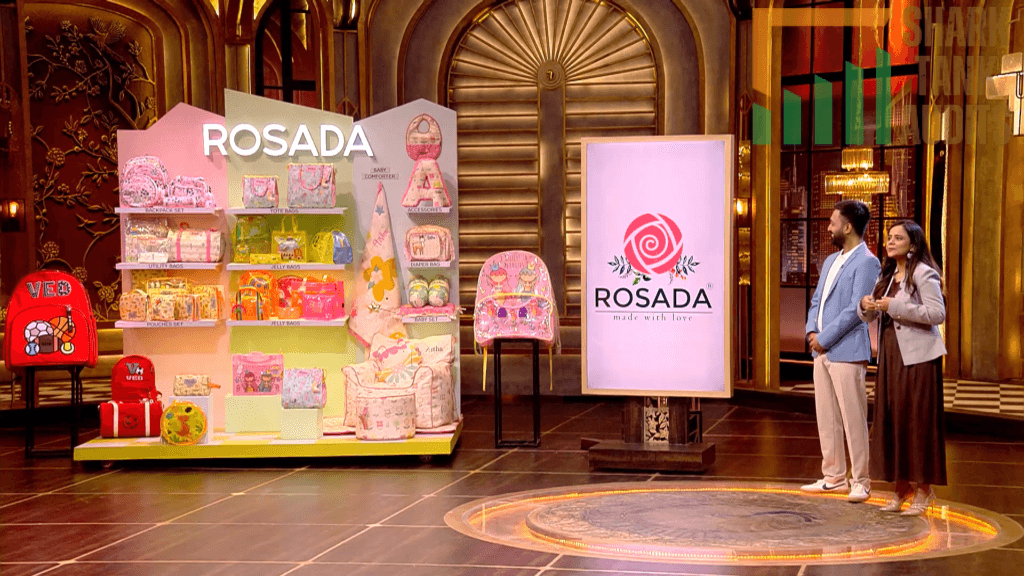
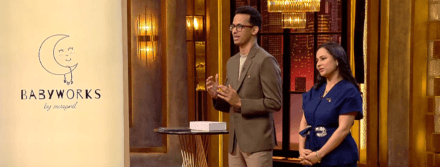
In Shark Tank India Season 5, Episode 31 (aired Monday, February 16, 2026), the Kolkata-based premium lifestyle brand Rosada Baby made a splash with its bespoke, “Made in India” children’s products. Founded by Shalu Agarwal and Bhupesh Agarwal, the brand specializes in high-quality, personalized gear, ranging from backpacks and travel kits to luxury bedding.
With a strong in-house manufacturing setup and an impressive 31% repeat customer rate, the founders proved they could scale a premium niche. Despite concerns about competition from Vineeta Singh and Kunal Bahl, the brand’s solid financials (projected ₹13 Crore revenue for FY 25-26) ultimately led to a powerful three-Shark deal.
| Category | Details |
| Brand Name | Rosada Baby |
| Founders | Shalu Agarwal & Bhupesh Agarwal |
| Initial Ask | ₹1.25 Crore for 4% Equity (₹31.25 Cr Valuation) |
| Final Deal | ₹1.25 Crore for 5% Equity + 2% Royalty |
| Investing Sharks | Namita Thapar, Ritesh Agarwal, & Aman Gupta |
| Recoup Term | 2% Royalty until ₹1.25 Crore is recovered |
Episode Highlights
The Bokaro Manufacturing Marvel
Artociti’s Jharkhand Success Story:
The Origin: Indrajeet Kumar managed Middle East exhibitions, identifying massive Indian market gap for high-quality relief art. Partnered with Swatiki Prakash (Tech/Finance) to build vertically integrated 3D wall art manufacturing in Bokaro, Jharkhand—far from traditional manufacturing hubs.
The Explosive Growth Trajectory:
- FY 20-21: ₹12,500 revenue (essentially starting from zero)
- FY 24-25: ₹3.44 Crore revenue (27,520% growth in 4 years)
- FY 25-26 Projected: ₹5.5-6 Crore (60-74% additional growth)
The Product Innovation:
- Large-format high-relief 3D décor
- Bridges 5,000-year-old Indian heritage with modern interior design
- Transforms ancient murals (Kerala murals, Pichwai paintings) into contemporary collectibles
- “Made in Bokaro” craftsmanship as brand differentiator
Product Categories:
- Spiritual/Cultural Art: Buddha collection (tranquility/mindfulness), Radha Krishna series (vibrant colors/intricate detailing)
- Architectural Art: Building elevations, large statement pieces
- Contemporary Collections: Living area art, meditation space décor
The Digital Dominance:
- 56,730 Monthly Organic Visitors: Exceptional SEO performance for niche art category
- Proves demand for premium Indian heritage art exists at scale
- Organic traffic reduces customer acquisition costs dramatically
The Physical Presence:
- 80+ Employees: Significant manufacturing workforce in Bokaro
- 3,000 Sq Ft Flagship: Experience center in Kirti Nagar, Delhi (furniture/décor hub)
- Vertically integrated production controlling quality and margins
The Deal Dynamics:
Initial Ask: ₹1 Crore for 3% (₹33.33 Cr valuation)
Namita & Vineeta’s Pursuit: Both Sharks aggressively pursued deal—saw potential blending spiritual art with contemporary lifestyle
Final Terms: ₹1 Crore for 7.5% + 2% royalty until ₹1.5 Cr recouped (₹13.33 Cr valuation)
Negotiation: Founders requested royalty clause removal but Sharks remained firm—wanted downside protection given aggressive growth assumptions
The Strategic Rationale:
- Valuation Reduction: 60% down from ask (₹33 Cr → ₹13 Cr)—Sharks valued current traction (₹3.44 Cr) over projections (₹5.5-6 Cr)
- Royalty Addition: Accelerates investor return, reduces risk
- Two-Shark Partnership: Namita (healthcare/wellness spaces, meditation/yoga retreats) + Vineeta (consumer brand scaling, retail expansion)
The Growth Vision:
- Experience Centers: Pune, Bengaluru, Chennai expansion
- Artociti Global: Target $300B US/EU home décor market via Amazon Global
- Artociti Home: Diversification into premium furniture/lighting
- Target: ₹100+ Cr valuation at ₹25+ Cr ARR
The Market Opportunity:
- $28.27B Indian home décor (2026) → $42.36B (2034)
- $760M wall décor segment (₹6,300 Cr, 6.69% CAGR)
- $7.97B online home décor (₹66,000 Cr)
- Premiumization trend: 61% population middle/upper-middle class by 2047
- Premium wall art: 12-15% higher margins vs. standard paints/wallpapers
Why This Worked:
- Vertically integrated manufacturing creates margin and quality control
- Heritage positioning (5,000-year-old art forms) differentiates from mass-market décor
- “Made in Bokaro” demonstrates Tier 2/3 city manufacturing excellence
- 56,730 organic visitors proves scalable digital demand
- B2B potential (hotels, corporate offices, yoga retreats) diversifies revenue
The Debt-Laden Gaming Dream
Kreo’s ₹15.3 Crore Burden:
The Founders: Ishan Sukul, Himanshu Gupta, Niraj Chitnis from Bengaluru established 2022, targeting “passion economy” gamers and digital creators.
The Impressive Scale:
- ₹70 Crore Lifetime Sales: Over 3 years (₹23+ Cr annual average)
- ₹55 Crore Projected FY25-26: Substantial revenue
- 14% Repeat Customer Rate: Decent for peripherals category
- “Kreosphere” Community: Users (“Kreons”) provide product development feedback
The Fatal Flaw:
- ₹15.3 Crore Total Debt Burden: Crushing debt load
- 0 Organic Visitors: Complete SEO failure despite 3 years in business
- Underwater Business: Kunal’s assessment—struggling to raise fresh capital due to debt
The Product Range:
- Mechanical keyboards
- Wireless mice (precision sensors, RGB lighting)
- Microphones, headsets, tripods
- Specialized lighting for creators
- “Made-in-India” gaming monitors (tech IP development)
The Sharks’ Harsh Reality Check:
Aman’s Memorable Warning: “Tera game over kar dunga” (I’ll game over you) if founders weren’t truthful about R&D investment—recognized gaming market declining, needed honest assessment of differentiation
Kunal’s “Financial Intelligence” Question: Called business “underwater” due to high debt—questioned why founders accumulated ₹15.3 Cr debt reaching ₹70 Cr revenue
Vineeta & Namita’s Concerns: High cash burn, low hardware margins (typically 15-25% for peripherals), scalability concerns
Ritesh’s Contrarian Bet: Saw potential in rising Indian esports scene, offered structure addressing both equity and debt needs
The Deal Structure:
Initial Ask: ₹2 Crore for 1% (₹200 Crore valuation)
Ritesh’s Offer:
- ₹1 Crore equity for 1% (₹100 Cr valuation—50% reduction)
- ₹1 Crore debt at 9% interest for 3 years (₹27 lakh annual interest)
- Contingency “Step-Up”: Valuation increases to ₹150 Cr if operational break-even achieved in current FY
Why This Structure:
- Debt Component: Addresses immediate working capital needs without massive equity dilution
- Break-Even Incentive: Aligns founder/investor interests around profitability
- Valuation Protection: Ritesh gets upside if company reaches profitability (₹100 Cr → ₹150 Cr = 0.67% → 1% effective ownership)
The Market Reality:
- Aman’s Warning: Gaming market declining (post-pandemic normalization, mobile gaming cannibalizing PC gaming)
- Competition: International brands (Razer, Logitech, Corsair) with established reputation
- Margin Pressure: Hardware typically 15-25% gross margins vs. 40-60% for software/services
- SEO Failure: 0 organic visitors after 3 years signals digital marketing breakdown
The Growth Plan (To Justify Investment):
- SEO Overhaul: Target high-intent keywords (critical—0 visitors unacceptable)
- Amazon Strategy: Sponsored brand video ads (claimed 566% revenue growth from category targeting)
- Influencer Model: Pay-per-performance (vs. flat fees)
- Specialty Stores: Gaming cafes, tech boutiques (41% market share potential)
- Made-in-India Monitors: Increase tech IP and margins
- Lifestyle Tech Pivot: Ergonomic furniture, software customization (Kreo Kontrol)
The Market Opportunity (If Executed):
- $9.1B Indian gaming market by 2029
- $0.57B gaming peripherals (₹4,700 Cr, 2026)
- 591 million active gamers
- ₹3,500+ Cr creator economy
- 66% gamers in Tier 2/3 cities (price-sensitive segment Kreo targets)
- 40% buyers non-gamers (engineers, coders, editors wanting productivity peripherals)
The Cautionary Tale: ₹70 Cr revenue with ₹15.3 Cr debt demonstrates growth-at-all-costs mentality—Kreo prioritized revenue scale over profitability, now faces existential pressure to reach break-even or “game over.”
The Premium Children’s Brand Trinity
Rosada Baby’s Three-Shark Power:
The Founders: Shalu Agarwal and Bhupesh Agarwal from Kolkata built premium “Made in India” children’s products brand.
The Product Range:
- Bespoke personalized backpacks
- Travel kits for children
- Luxury bedding
- High-quality children’s gear
The Strong Fundamentals:
- In-House Manufacturing: Vertical integration (like Artociti)
- 31% Repeat Customer Rate: Exceptional for children’s products (kids outgrow items)
- ₹13 Crore Projected FY25-26: Substantial scale
The Deal:
Initial Ask: ₹1.25 Crore for 4% (₹31.25 Cr valuation)
Final Deal: ₹1.25 Crore for 5% + 2% royalty until ₹1.25 Cr recouped
Three-Shark Partnership:
- Namita Thapar: Healthcare/parenting expertise, mother’s perspective
- Ritesh Agarwal: Hospitality connections (children’s amenities for OYO properties)
- Aman Gupta: Consumer brand scaling, youth market understanding
Why Three Sharks:
- Namita: Parenting credibility, healthcare distribution (pediatric clinics, maternity hospitals)
- Ritesh: B2B hospitality channel (family-friendly hotels need premium children’s products)
- Aman: D2C expertise, social media marketing to millennial parents
The Competitive Concerns:
- Vineeta & Kunal: Noted competition concerns (likely portfolio conflicts or market saturation worries)
- Despite concerns, Namita/Ritesh/Aman saw differentiation in “Made in India” premium positioning and personalization
The Market Positioning:
- Premium segment (bespoke/personalized)
- “Made in India” manufacturing pride
- High-quality materials justifying premium prices
- 31% repeat rate proves customer satisfaction
Shark Dynamics
The Heritage Art Believers (Artociti)
Namita & Vineeta’s Partnership: Both saw immediate potential in spiritual/cultural art meeting contemporary lifestyle needs.
Strategic Fit:
- Namita: Healthcare/wellness spaces (hospitals, clinics, meditation centers need calming art)
- Vineeta: Consumer brand expertise, retail expansion strategies
The Negotiation: Founders wanted royalty removed but Sharks held firm—wanted downside protection given 60% valuation reduction.
The Contrarian Debt-Equity Hybrid (Kreo)
Ritesh’s Unique Structure:
- Most Sharks saw declining market and debt burden as red flags
- Ritesh saw esports growth potential and structured deal addressing immediate needs (debt relief) while preserving founder equity
The Innovation: Break-even contingent step-up (₹100 Cr → ₹150 Cr valuation) aligns incentives—founders motivated to reach profitability to unlock higher valuation.
The Three-Parent Partnership (Rosada Baby)
Namita, Ritesh, Aman’s Trinity:
- Parenting/healthcare perspective (Namita)
- Hospitality B2B channel (Ritesh)
- Consumer brand scaling (Aman)
The Synergy: Children’s brand benefits from parenting credibility + hotel distribution + social marketing—three distinct value-adds.
Market Insights Revealed
The episode showcased three manufacturing-centric businesses demonstrating India’s production capabilities:
- Premium Home Décor (Artociti): $28.27B market (2026) → $42.36B (2034), wall décor at $760M growing 6.69% CAGR, premiumization trend creating 12-15% margin advantages
- Gaming Peripherals (Kreo): $9.1B gaming market by 2029, $0.57B peripherals segment, but Aman’s warning about declining post-pandemic market and mobile gaming cannibalization
- Premium Children’s Products (Rosada Baby): Indian children’s market with millennial parents valuing “Made in India” premium quality and personalization
Key Takeaways
1. Vertical Integration Creates Margin Moats
The Episode’s Pattern:
- Artociti: 80+ employee manufacturing in Bokaro—controls quality and margins
- Kreo: “Made-in-India” monitors—building tech IP versus pure distribution
- Rosada Baby: In-house manufacturing—premium quality control
The Advantage: When you own production:
- Higher gross margins (30-40% vs. 15-25% for resellers)
- Quality consistency (critical for premium positioning)
- Faster iteration (design to production without third-party delays)
- Brand story (“Made in Bokaro,” “Made in India” as differentiator)
The Trade-Off: Capital intensive, requires operational expertise, less flexible than asset-light models.
2. Debt Without Profitability Is Existential Threat
Kreo’s Cautionary Tale:
- ₹70 Cr lifetime revenue over 3 years (impressive scale)
- ₹15.3 Cr total debt burden (crushing load)
- Kunal’s “underwater” assessment—struggling to raise capital
The Math:
- If ₹15.3 Cr debt at average 10% interest = ₹1.53 Cr annual interest expense
- On ₹55 Cr projected revenue, ₹1.53 Cr interest = 2.78% revenue to debt service
- If gross margins are 20% (₹11 Cr), interest consumes 14% of gross profit
- Reaching break-even requires cutting operating expenses to ~₹9.5 Cr (very tight)
The Lesson: Growth funded by debt only works if:
- Path to profitability is clear and near-term
- Gross margins support debt service + operations
- Revenue growth is sustainable (not artificially inflated)
Kreo’s Challenge: Must reach operational break-even in current FY to unlock ₹150 Cr valuation step-up—high-pressure scenario.
3. Heritage Positioning Differentiates Commodity Categories
Artociti’s Innovation:
- Wall décor is commoditized (IKEA prints, Amazon posters)
- 5,000-year-old Indian art forms (Kerala murals, Pichwai) create unique positioning
- “Heritage-meets-contemporary” story justifies 3-5x premium over mass-market
The Replicability Challenge:
- Hard to copy artisan techniques and historical authenticity
- “Made in Bokaro” as manufacturing pride point
- Vertical integration ensures quality and story consistency
The Broader Application: Any commodity category can be differentiated through:
- Cultural heritage storytelling
- Artisan craftsmanship narratives
- Regional manufacturing pride (“Made in [Place]”)
- Vertical integration ensuring authenticity
4. Organic Traffic Is Leading Indicator of Scalability
The Episode’s Traffic Comparison:
- Artociti: 56,730 monthly organic visitors (exceptional)
- Kreo: 0 organic visitors (catastrophic failure)
- Rosada Baby: Not disclosed
What This Reveals:
Artociti: 56,730 visitors proves:
- SEO strategy working (people searching “3D wall art India,” “Kerala murals,” “spiritual art”)
- Content marketing effective (blog/social driving organic discovery)
- Product-market fit validated (demand exists at scale)
- Low CAC sustainability (organic >> paid for long-term unit economics)
Kreo: 0 visitors after 3 years proves:
- Complete SEO failure (no keyword ranking, no content strategy)
- Over-reliance on paid acquisition (Facebook/Instagram ads, influencer spend)
- Unsustainable CAC (must pay for every customer—no organic flywheel)
- Scalability limited by marketing budget, not product demand
The Investment Implication: Ritesh likely required SEO overhaul as condition—₹1 Cr debt at 9% is expensive; needs organic traffic to reduce CAC and reach break-even.
5. Royalty Clauses Protect Downside While Preserving Upside
The Episode’s Royalty Pattern:
- Artociti: 2% royalty until ₹1.5 Cr recouped (on ₹1 Cr investment = 150% return before royalty ends)
- Rosada Baby: 2% royalty until ₹1.25 Cr recouped (on ₹1.25 Cr investment = 100% return)
Why Sharks Use Royalties:
- Downside Protection: Get capital back faster if business succeeds but doesn’t become unicorn
- Founder-Friendly: Better than excessive equity dilution at low valuations
- Alignment: Incentivizes revenue growth (royalty on sales) not just profitability
Artociti Example:
- At ₹5.5 Cr revenue (FY25-26 projection), 2% royalty = ₹11 lakh
- Need ₹1.5 Cr recoupment = 13.6 years at ₹11 lakh/year
- BUT if revenue grows to ₹15 Cr (3 years), royalty = ₹30 lakh/year = 5 years to recoup
- After recoupment, founders keep 2% equity back effectively
The Negotiation: Artociti founders requested royalty removal but Sharks refused—with 60% valuation haircut (₹33 Cr → ₹13 Cr), royalty provides return acceleration if growth materializes.
6. Tier 2/3 City Manufacturing Is Competitive Advantage
Artociti’s Bokaro Success:
- 80+ employees in Jharkhand (not Mumbai/Delhi/Bengaluru)
- Lower labor costs + lower real estate = better unit economics
- “Made in Bokaro” as authentic Indian manufacturing story
Rosada Baby’s Kolkata Base:
- Manufacturing in West Bengal (not traditional apparel hubs like Tirupur or NCR)
- Premium children’s products from heritage textile city
The Advantage:
- Cost Structure: 30-50% lower labor and real estate costs vs. metros
- Talent Access: Manufacturing expertise available, less competition for workers
- Brand Story: Tier 2/3 city manufacturing demonstrates authentic “Make in India” commitment
- Government Support: State incentives for local employment and manufacturing
The Lesson: Don’t assume manufacturing must be in traditional hubs—India’s Tier 2/3 cities offer cost advantages and authentic brand narratives.
7. “Passion Economy” Requires Profitability, Not Just Passion
Kreo’s Targeting:
- Gamers (passion for RGB lighting, mechanical keyboards)
- Creators (passion for content production)
- “Kreosphere” community (engaged users providing feedback)
The Problem:
- Passion doesn’t pay bills—₹15.3 Cr debt despite ₹70 Cr revenue
- Hardware margins too low (15-25%) to support debt service and growth
- Must reach operational break-even or face “game over” (Aman’s warning)
The Reality: “Passion economy” businesses still need:
- Sustainable unit economics
- Path to profitability
- Defensible margins (hardware tough; software/services better)
- Capital efficiency (not growth-at-all-costs)
8. Repeat Rates Validate Premium Positioning
Rosada Baby: 31% repeat rate for children’s products (kids outgrow items—shouldn’t have high repeat)
What This Proves:
- Parents satisfied with quality (willing to buy again as child grows or for second child)
- Premium pricing justified (wouldn’t repurchase if poor value)
- Brand loyalty developed (easier to get repeat customer than acquire new)
The Benchmark:
- Children’s products: 20-25% repeat typical (kids outgrow)
- Fashion/apparel: 30-40% repeat typical
- Beauty/wellness: 40-60% repeat typical (consumables)
Rosada’s 31% for children’s products is excellent—signals premium quality justifies prices and parents become loyal customers.
What Made This Episode Different
The 100% Success Rate
Rare episode where all three pitches closed deals—demonstrated founders with real traction, defensible positioning, and Sharks seeing clear value despite negotiation gaps.
The Manufacturing Excellence Theme
All three pitches featured vertically integrated manufacturing as competitive advantage:
- Artociti: 80+ employee facility in Bokaro
- Kreo: “Made-in-India” monitors (tech IP development)
- Rosada Baby: In-house production
The Pattern: Sharks increasingly value manufacturing control in post-COVID supply chain environment—vertical integration creates margins, quality, and brand story.
The Debt Discussion
Kreo’s ₹15.3 Cr debt burden sparked frank discussion about growth-at-all-costs mentality—Kunal’s “underwater” assessment and Ritesh’s debt-equity hybrid structure highlighted that even impressive revenue (₹70 Cr) doesn’t justify unsustainable debt loads.
Aman’s “Game Over” Warning
“Tera game over kar dunga” became memorable moment—Aman’s blunt assessment that gaming market declining and debt burden threatens survival unless Kreo reaches break-even.
The Tier 2/3 City Manufacturing Pride
Artociti’s “Made in Bokaro” and Rosada’s Kolkata base demonstrated India’s entrepreneurial depth beyond metros—founders building meaningful businesses from non-traditional locations.
Behind the Numbers
Artociti’s Explosive Trajectory
- FY20-21: ₹12,500 revenue (baseline)
- FY24-25: ₹3.44 Crore (27,520% growth in 4 years—100x+ in 4 years)
- FY25-26 Projected: ₹5.5-6 Crore (60-74% additional growth)
- Organic Traffic: 56,730 monthly visitors
- Valuation Journey: ₹33.33 Cr ask → ₹13.33 Cr final (60% reduction)
- Deal Structure: ₹1 Cr for 7.5% + 2% royalty until ₹1.5 Cr recouped
- Manufacturing: 80+ employees, 3,000 sq ft Delhi flagship
- Market: $28.27B home décor (2026), $760M wall décor, 12-15% premium margins
The Royalty Math:
- At ₹5.5 Cr revenue: 2% = ₹11 lakh/year → 13.6 years to recoup ₹1.5 Cr
- At ₹15 Cr revenue (3-4 years): 2% = ₹30 lakh/year → 5 years to recoup
- Growth incentivizes faster investor return
Kreo’s Debt Challenge
- Lifetime Sales: ₹70 Crore over 3 years (₹23+ Cr annual average)
- FY25-26 Projected: ₹55 Crore
- Total Debt: ₹15.3 Crore
- Organic Traffic: 0 monthly visitors (critical failure)
- Repeat Rate: 14% (decent for peripherals)
- Valuation Ask: ₹200 Crore
- Final Deal: ₹1 Cr equity @ ₹100 Cr + ₹1 Cr debt @ 9% (3 years) = ₹27 lakh annual interest
- Step-Up: Valuation → ₹150 Cr if operational break-even in current FY
- Market: $9.1B gaming by 2029, $0.57B peripherals, 591M gamers
The Break-Even Pressure:
- At ₹55 Cr revenue with 20% gross margin = ₹11 Cr gross profit
- Interest expense: ₹27 lakh (Ritesh’s new debt) + existing debt service ~₹1.5 Cr = ₹1.77 Cr
- Operating expenses must be < ₹9.23 Cr to reach break-even
- Extremely tight—requires ruthless cost discipline
Rosada Baby’s Premium Validation
- Projected FY25-26: ₹13 Crore revenue
- Repeat Rate: 31% (excellent for children’s products)
- Valuation Ask: ₹31.25 Crore (4% for ₹1.25 Cr)
- Final Deal: ₹1.25 Cr for 5% + 2% royalty until ₹1.25 Cr recouped
- Manufacturing: In-house production in Kolkata
The Royalty Math:
- At ₹13 Cr revenue: 2% = ₹26 lakh/year → 4.8 years to recoup ₹1.25 Cr
- Relatively fast payback given revenue scale
The Episode’s Three Manufacturing Philosophies
Philosophy 1: Heritage Craftsmanship (Artociti)
Approach: Transform 5,000-year-old Indian art forms into contemporary 3D wall décor through skilled artisan manufacturing in Bokaro.
Competitive Advantage:
- Cultural authenticity hard to replicate
- Artisan techniques developed over centuries
- “Made in Bokaro” manufacturing pride
- Vertical integration ensures quality/story consistency
Outcome: 60% valuation reduction accepted but deal closed with two-Shark partnership—heritage positioning validated.
Philosophy 2: Tech-Enabled Commodity (Kreo)
Approach: Manufacture gaming peripherals in India targeting mid-range segment (between expensive international brands and budget domestic options).
Challenge:
- Hardware commoditization (difficult to differentiate keyboards/mice)
- Low margins (15-25% typical for peripherals)
- Debt-funded growth (₹15.3 Cr burden)
- Zero organic traffic (must pay for all customer acquisition)
Outcome: Debt-equity hybrid deal with break-even contingency—Ritesh betting on esports growth but requiring profitability proof.
Philosophy 3: Premium Personalization (Rosada Baby)
Approach: In-house manufacturing of bespoke children’s products combining quality with personalization at premium prices.
Advantage:
- Personalization creates switching costs (parents emotionally attached)
- 31% repeat rate proves quality and value perception
- “Made in India” premium positioning (not cheap imports)
Outcome: Three-Shark partnership for scaling—premium + personalization + manufacturing control validated model.
Episode Wisdom
For Founders:
1. Tier 2/3 City Manufacturing Is Competitive Advantage: Artociti’s Bokaro success proves you don’t need metro location for manufacturing excellence—lower costs + authentic story + government support create advantages.
2. Debt Without Profitability Path Is Fatal: Kreo’s ₹15.3 Cr burden with ₹70 Cr revenue shows growth-at-all-costs danger—must reach operational break-even or face “game over.”
3. Organic Traffic Is Non-Negotiable: Artociti’s 56,730 visitors vs. Kreo’s 0 visitors demonstrates SEO importance—paid acquisition alone unsustainable at scale.
4. Heritage Positioning Differentiates Commodities: Artociti transformed wall décor (commodity) into cultural heritage story justifying 3-5x premium—applicable to any category.
5. Royalty Negotiation Is Equity Preservation: Both Artociti and Rosada Baby accepted royalties rather than excessive dilution—founders get capital back to Sharks faster but preserve long-term ownership.
6. Vertical Integration Requires Operational Excellence: All three pitches featured manufacturing—only invest in vertical integration if you have operational discipline to manage production, quality, inventory.
7. Repeat Rates Validate Premium Pricing: Rosada’s 31% repeat for children’s products proves premium positioning works when quality justifies price—parents vote with wallets.
For Investors:
1. Manufacturing Control Creates Margin Moats: Post-COVID supply chain chaos elevated value of vertical integration—Artociti’s 80+ employee facility, Rosada’s in-house production create defensible margins.
2. Debt Loads Signal Growth Desperation: Kreo’s ₹15.3 Cr debt reaching ₹70 Cr revenue signals unsustainable unit economics—debt-equity hybrid structure addresses immediate needs while requiring profitability proof.
3. Organic Traffic Reveals Sustainable CAC: 56,730 visitors (Artociti) vs. 0 visitors (Kreo) tells immediate story about marketing efficiency and scalability potential.
4. Royalties Accelerate Returns at Lower Risk: 2% royalty until 100-150% recoupment provides faster capital return if business grows moderately—better downside protection than equity alone.
5. Heritage Stories Create Premium Positioning: Artociti’s 5,000-year-old art forms command premium prices and high margins—look for cultural authenticity hard to replicate.
For Viewers:
1. India’s Manufacturing Beyond Metros: Bokaro (Jharkhand) and Kolkata producing world-class products demonstrates entrepreneurial depth across India—not just Bengaluru/Mumbai/Delhi.
2. Debt Can Kill Promising Businesses: ₹70 Cr revenue sounds impressive until you learn about ₹15.3 Cr debt burden—growth funded by debt only works with clear profitability path.
3. SEO Is Critical for D2C: Three years with 0 organic visitors (Kreo) vs. 56,730 visitors (Artociti) shows SEO determines long-term sustainability—paid acquisition doesn’t scale.
4. Personalization Justifies Premium: Rosada’s 31% repeat rate proves parents pay premium for bespoke quality—mass customization at scale possible with right manufacturing.
5. Heritage Meets Contemporary Sells: Artociti’s ancient art forms transformed for modern homes proves cultural preservation can be commercially viable—tradition needn’t be museum-only.
Leave feedback about this
You must be logged in to post a comment.