
SVS Foods Shark Tank India Episode Review
In Shark Tank India Season 5, Episode 36, which aired on February 23, 2026, founder Paras Jain presented SVS Foods, a Satna-based venture attempting a unique “dual-track” business model by combining the Quick Service Restaurant (QSR) chain Supreme Burger with a premium line of kitchen staples and spices. Seeking an investment of ₹3 Crores for 5% equity at a ₹60 Crore valuation, Jain highlighted his brand’s commitment to “100% Pure Vegetarian and Jain” food, powered by a “chefless” operational model that ensures speed and consistency without high-skilled labor. While the brand demonstrated impressive hustle and regional success—boasting a 94% customer repeat rate and in-house, preservative-free bun manufacturing—the Sharks remained highly skeptical of the valuation and the maturity of the business.
The investor panel, led by Kunal Bahl and Kanika Tekriwal, raised significant red flags regarding the brand’s rapid franchise expansion. Bahl provided a stern reality check, advising that a QSR brand should ideally hit a revenue benchmark of ₹1 Crore per store before franchising to ensure the unit economics are bulletproof; he warned that premature scaling often leads to a “risky space” where quality and SOPs collapse. Additionally, the Sharks questioned the long-term scalability of a menu focused on high-calorie indulgent burgers in an increasingly health-conscious Indian market. Despite Anupam Mittal praising the founder’s aspirational drive and the brand’s local roots, the consensus was that the industry lacked sufficient novelty at such a steep price point. Consequently, SVS Foods exited the tank with no deal finalized, leaving the founder to focus on refining his store-level profitability and building organic digital traffic, which currently sits at a low 375 visitors per month.
Website Information
- Website:- SVS Foods
- Build on JavaScript libraries jQuery 3.5.1 Slick core-js 3.32.2
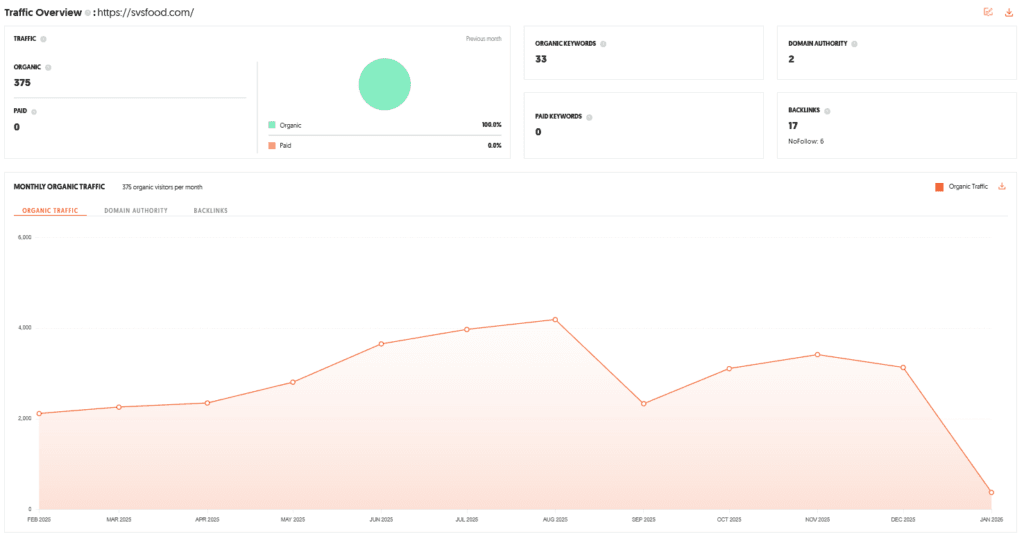
- Poor SEO Performance, SEO Improvement Needed.
- ORGANIC TRAFFIC: 375 visitors per month.
The Founder of SVS Foods
- The visionary behind SVS Foods is Paras Jain.
- As the founder, he has been instrumental in steering the brand toward the Quick Service Restaurant (QSR) sector and expanding its reach into the Indian spice and staple market.
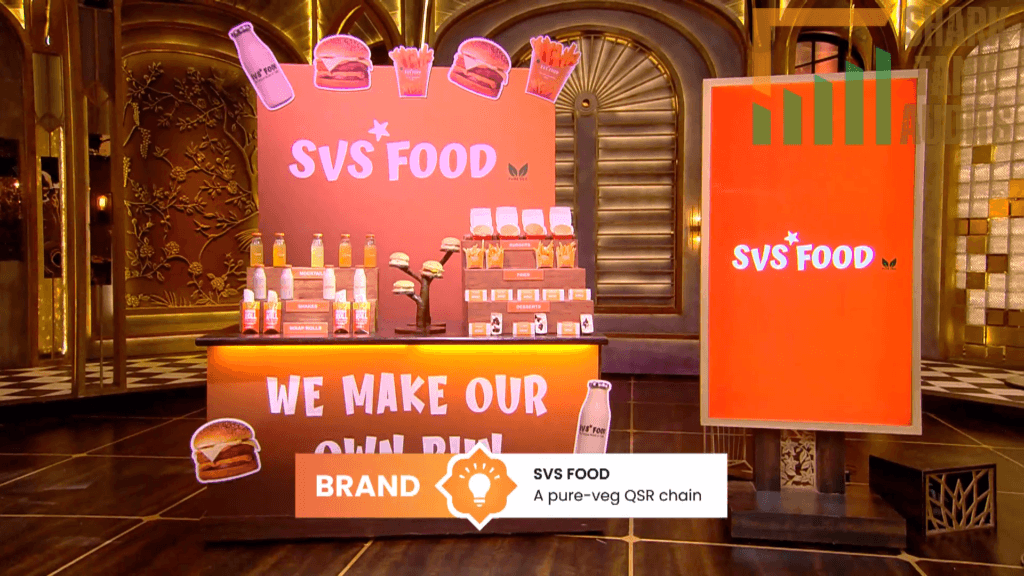
SVS Foods Brand Overview
- SVS Foods is an emerging Indian food brand that operates with a dual focus: high-quality QSR dining through its “Supreme Burger” outlet and premium kitchen essentials.
- The brand is built on the pillars of purity, trust, and authentic taste. It positions itself as a reliable name in the food industry by emphasizing rigorous quality standards and safe packaging for its wide range of products, including spices and grains.
SVS Foods Shark Tank India Appearance & Ask
- The brand appeared in Season 5, Episode 36 of Shark Tank India, which aired on February 23, 2026.
- During the pitch, the founder presented the business’s growth trajectory and its flagship model, “Supreme Burger.”
- The Ask: The founder sought an investment of ₹3 Crores for 5% equity in the company.
Season and Episode Air Date
- Season: 05
- Episode: 36
- Episode Air Date: Monday, 23 February, 2026
SVS Foods Product Overview
The product lineup of SVS Foods is diverse, catering to both immediate consumption and home cooking:
- Supreme Burger: Marketed as the “Hero Product,” this QSR-focused offering aims to provide a premium burger experience.
- Kitchen Staples: The brand offers a variety of high-quality spices, grains, and daily food items.
- Premium Packaging: A core part of the product strategy is moisture-resistant and hygienic packaging designed to keep the aroma and freshness of the spices intact over long periods.
SVS Foods Investor Reactions
The Sharks had a mixed but ultimately cautious reaction to the SVS Foods pitch:
- Kunal Bahl: He expressed significant concern regarding the franchise model. He advised that a brand should ideally hit a revenue of ₹1 Crore per store before franchising, warning that premature expansion is a “risky space” that could compromise quality.
- Kanika Tekriwal: She raised questions regarding the high calorie count and health implications of indulgent QSR foods.
- Anupam Mittal: He took a more liberal view, noting that Shark Tank is about “aspirational experiences” and sampling, though he remained aligned with the others on the difficulty of the QSR market.
- General Sentiment: The investors felt the industry lacked enough novelty and that the unit economics needed to be more robust before taking on such a high valuation.
SVS Foods Customer Engagement Philosophy
- The philosophy of SVS Foods centers on building a relationship of trust rather than just executing a transaction. The brand prioritizes:
- Customer Satisfaction: A dedicated focus on resolving grievances and ensuring a positive user experience.
- Digital Accessibility: Leveraging an official website and social media to stay connected with modern, tech-savvy consumers.
- Transparency: Providing clear information about quality control processes to reassure customers of the purity of their ingredients.
SVS Foods Product Highlights
- Purity & Hygiene: SVS Foods guarantees that its spices and grains are free from adulteration, meeting high safety standards.
- Traditional Taste: The products are designed to replicate the “old-world” authentic flavors of the traditional Indian kitchen.
- Affordability: The brand maintains a “Value for Money” strategy, ensuring premium quality remains accessible to the average household.
- Quality Control: Every batch undergoes a strict inspection process before reaching the market.
SVS Foods Future Vision
- The future vision for SVS Foods involves aggressive portfolio expansion and national recognition.
- The founder aims to strengthen the distribution network to reach more cities and states across India.
- By integrating digital marketing and maintaining its strict quality control, the company aspires to become a household name that defines the standard for pure and safe food products in the Indian market.
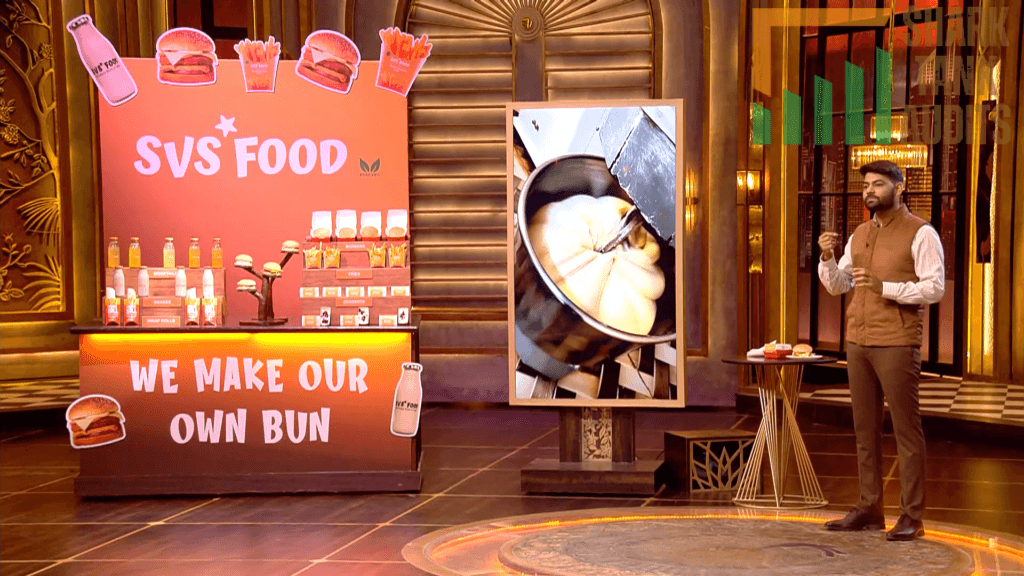
SVS Foods Deal Finalized or Not
- No deal was finalized.
- Despite the brand’s hustle and clear vision, the Sharks decided not to invest, and the founder walked away without a commitment from the panel.
| Category | Details |
|---|---|
| Brand Name | SVS Foods |
| Founder | Paras Jain |
| Website Tech | Built on JavaScript libraries (jQuery 3.5.1, Slick, core-js 3.32.2) |
| SEO Performance | Poor SEO; optimization required |
| Organic Traffic | 375 visitors/month |
| Business Model | Dual model – QSR (Supreme Burger) + Packaged Spices & Staples (FMCG) |
| Core Positioning | Purity, Trust & Authentic Traditional Taste |
| Hero Product | “Supreme Burger” (Premium QSR offering) |
| FMCG Products | Spices, grains, kitchen staples with moisture-resistant packaging |
| Shark Tank Season | Season 05 |
| Episode | Episode 36 |
| Air Date | Monday, 23 February 2026 |
| Ask | ₹3 Crores for 5% equity |
| Implied Valuation | ₹60 Crores |
| Investor Concerns | Franchise risk, weak unit economics, high-calorie QSR perception, intense competition |
| Key Shark Feedback | ₹1 Crore/store benchmark before franchising; improve health positioning; strengthen novelty & margins |
| Deal Status | ❌ No Deal |
| Customer Philosophy | Trust-based relationship, grievance resolution focus, transparency in quality control |
| Product Highlights | Adulteration-free spices, premium hygienic packaging, value-for-money pricing |
| Market Opportunity (QSR) | $30.37B Indian QSR market (2026), 9%+ CAGR |
| Market Opportunity (Spices) | ₹2,21,832 Cr (2025-26), 67% branded share shift |
| TAM – QSR Segment | Burger/Sandwich = 41.69% of fast-food revenue |
| TAM – Staples Segment | ₹5.28 Lakh Crore (Projected 2034) |
| Digital Reach | 950M+ internet users in India |
| Target Audience | 22–40 working professionals; health-conscious homemakers; Gen Z & Millennials |
| Marketing Strategy | Value-based positioning, experiential QSR stores, B2B spice supply |
| Digital Strategy | SEO overhaul, transparency videos, influencer marketing (food bloggers & mom influencers) |
| Distribution Strategy | Omnichannel – QSR outlets + D2C website + Blinkit/Zepto + Modern Trade + Kirana |
| Business Advantages | Dual revenue stream, hygienic edge, clean-label positioning |
| Key Challenges | Franchise consistency, global competition (McDonald’s, Everest, MDH), health perception |
| Mitigation Strategy | COFO model, “Smart Choice” menu, strict SOPs |
| Phase 1 Goal (Year 1) | Achieve ₹1 Cr/store revenue benchmark |
| Phase 2 Goal (Year 2–3) | 50+ locations + blended masala expansion |
| Phase 3 Goal (Year 5) | National expansion; IPO/strategic acquisition target |
| Long-Term Target | 15%+ EBITDA margin with strong retention & brand recall |
SVS Foods Shark Tank India Business Plan
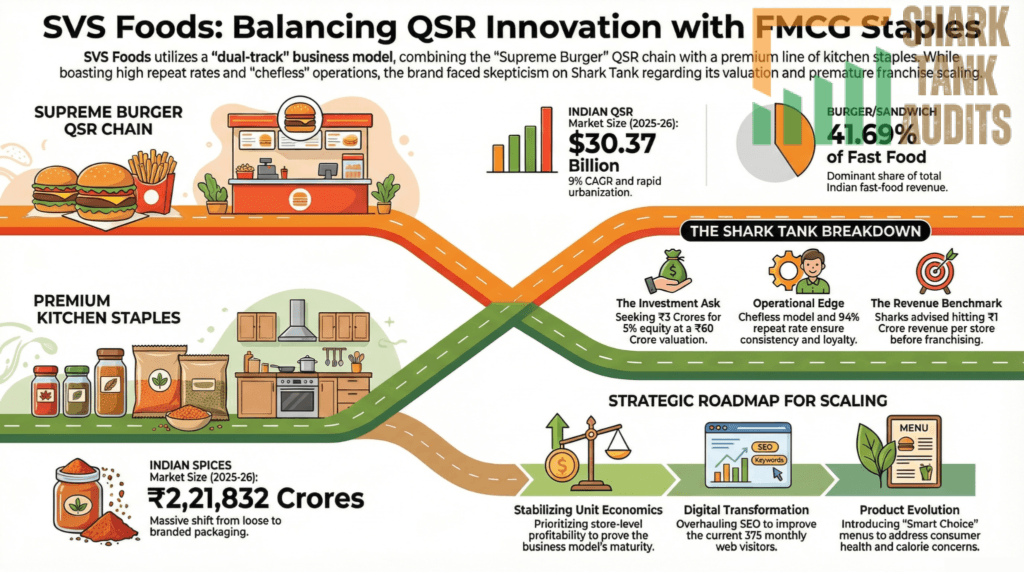
SVS Foods Business Potential in India
- Rapid Urbanization: With nearly 40% of the Indian population (600 million people) expected to live in urban centers by 2036, the demand for quick, branded food options is at an all-time high.
- QSR Market Surge: The Indian Quick Service Restaurant (QSR) market is valued at $30.37 billion in 2026, growing at a CAGR of over 9%.
- The Spice Opportunity: The Indian spices market is projected to reach ₹2,21,832 Crores by 2025-26, with a shift from loose to branded, packaged spices (67% market share) due to health and hygiene awareness.
SVS Foods Total Addressable Market (TAM)
- QSR Segment: SVS Foods operates within the burger/sandwich segment, which holds a massive 41.69% share of the total fast-food revenue in India.
- Staples Segment: The brand targets the ₹5.28 Lakh Crore spices and staples market (projected for 2034), focusing on the 30% market share located in North India.
- Digital Reach: With over 950 million internet users in India, the addressable market for SVS Foods’ online and quick-commerce sales is expanding beyond Tier-1 cities into Tier-2 and Tier-3 hubs.
SVS Foods Ideal Target Audience and Demographics
- The Busy Professional (Ages 22–40): Residents of Tier-1 and Tier-2 cities who prioritize convenience and speed but are wary of unhygienic street food.
- Health-Conscious Homemakers: Decision-makers looking for “Pure & Safe” kitchen essentials (spices/grains) with premium packaging to ensure family health.
- The Youth & Student Segment: Gen Z and Millennials who seek “aspirational” yet affordable dining experiences like the SVS Foods “Supreme Burger.”
SVS Foods Marketing Strategy
- Value-Based Positioning: Leveraging the “Value for Money” philosophy to compete with global giants while emphasizing local, authentic “Traditional Taste.”
- Local Experience Stores: Using the “Supreme Burger” outlets as experiential hubs to sample and sell SVS Foods packaged spices and staples.
- B2B Partnerships: Supplying high-quality spices to other local cafes and restaurants to build a secondary revenue stream under the SVS Foods umbrella.
SVS Foods Content & Digital Marketing Strategy
- SEO Overhaul: SVS Foods must address its poor SEO (currently only 375 monthly visitors) by targeting keywords like “unadulterated spices” and “best gourmet burger franchise.”
- Transparency Campaigns: High-quality video content showcasing the “Quality Control Process” and “Behind the Scenes” of spice sourcing to build trust.
- Influencer Collaboration: Partnering with regional food bloggers and “Mom-influencers” to validate the purity of SVS Foods kitchen staples.
SVS Foods Distribution Strategy
- Omnichannel Presence: A mix of physical “Supreme Burger” outlets, a revamped SVS Foods D2C website, and a presence on quick-commerce apps like Blinkit and Zepto.
- Micro-Franchising: Following the “Burger Singh” or “PICO” models by launching low-investment, compact kiosks (80–100 sq ft) to penetrate high-footfall areas like metro stations.
- FMCG Retail: Placing SVS Foods spices in modern trade (supermarkets) and local Kirana stores through a robust distributor network.
SVS Foods Business Advantages
- Dual-Revenue Stream: Unlike traditional QSRs, SVS Foods earns from both ready-to-eat meals and high-margin kitchen staples.
- Strong Founder Vision: Paras Jain’s focus on “purity” resonates with the post-pandemic “clean label” trend in India.
- Hygienic Edge: Premium, moisture-resistant packaging gives SVS Foods a significant advantage over unorganized spice vendors.
SVS Foods Business Challenges
- Franchise Quality Control: As noted by Kunal Bahl, rapid expansion can lead to inconsistent taste and service across SVS Foods outlets.
- High Competition: Facing global giants (McDonald’s) and established spice brands (Everest/MDH) creates a high barrier to entry.
- Health Perception: The “Supreme Burger” must navigate the rising demand for low-calorie, high-protein options to avoid being labeled as “unhealthy.”
SVS Foods Success & Mitigation Strategies
- Reason for Success: The brand fills the gap between “cheap/unhygienic” and “expensive/global” by offering high-quality, local flavors at affordable prices.
- Mitigation Strategy (Franchising): To prevent “messed up” operations, SVS Foods should implement a “Company-Owned, Franchise-Operated” (COFO) model initially to maintain strict quality standards.
- Mitigation Strategy (Health): Introducing “Smart Choices” on the menu, such as whole-grain buns and air-fried patties, to address health concerns raised during the Shark Tank pitch.
SVS Foods Future Business Roadmap & Valuation
- Phase 1 (Year 1): Stabilize unit economics. Aim for the ₹1 Crore per store revenue benchmark suggested by Sharks to prove the model.
- Phase 2 (Year 2-3): Scale to 50+ locations using the micro-franchise model and expand the SVS Foods spice range to include “Blended Masalas.”
- Phase 3 (Year 5): National Expansion. Position SVS Foods for an IPO or strategic acquisition by a larger FMCG player by demonstrating high customer retention and a 15%+ EBITDA margin.

SVS Foods Shark Tank India Episode Review