Launch offline stores (metros), enter Southeast Asia, build customer data insights
Long-Term (3–5 Years)
Diversify into maternity wear/toys, establish global brand presence
Roadmap to Increase Valuation
Branding
Influencer & pediatrician collaborations
Regional Expansion
South India growth (15–17% CAGR)
Innovation
R&D for eco-friendly baby materials
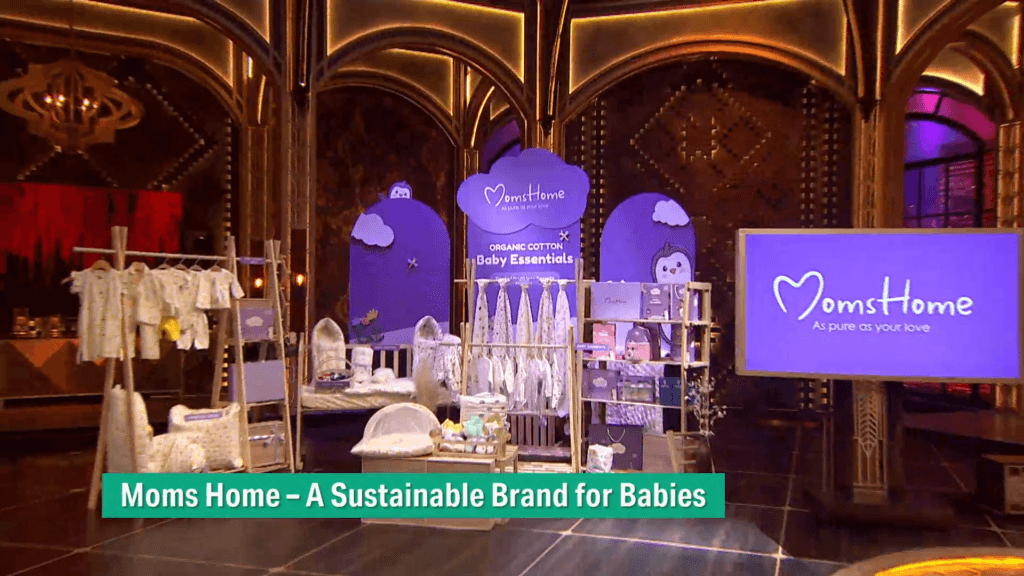
Moms Home Shark Tank India Business Plan
Business Potential in India
Market Context: The Indian baby care products market was valued at $7.3 billion in 2024 and is expected to grow at a CAGR of 15.3% to reach $30.31 billion by 2034. The organic baby skincare segment, valued at $44 million in 2024, is projected to grow at a CAGR of 19.69% to reach $236 million by 2033.
Opportunity: Increasing parental awareness about the harmful effects of synthetic baby products and the growing demand for organic, sustainable alternatives create a favorable environment for Moms Home.
Drivers:
Rising disposable income among urban parents.
Increased preference for eco-friendly, toxin-free baby products.
Rapid growth of e-commerce platforms and online shopping trends.
Total Addressable Market (TAM)
TAM Calculation:
Target audience: ~27 million babies born annually in India.
Estimated spend per child on sustainable baby products: ₹10,000/year.
TAM = ₹27,000 crore (~$3.3 billion).
Serviceable Addressable Market (SAM):
Focus on urban middle-class families (~30% of births).
SAM = ₹8,100 crore (~$1 billion).
Serviceable Obtainable Market (SOM):
Targeting early adopters (~5% of SAM initially).
SOM = ₹405 crore (~$50 million).
Ideal Target Audience and Demographics
Age Group: Parents aged 25–40 years.
Income Level: Middle-class to affluent families (₹8–20 lakh annual income).
Location: Urban and semi-urban areas with high internet penetration (metros and Tier-1/2 cities).
Psychographics
Health-conscious parents prioritizing sustainability and safety for their children.
Parents seeking affordable alternatives to premium international baby brands.
Marketing Strategy
Content Marketing:
Publish blogs on parenting tips, benefits of sustainable baby products, and eco-friendly living.
Create video tutorials on product usage and care tips for newborns.
SEO Optimization:
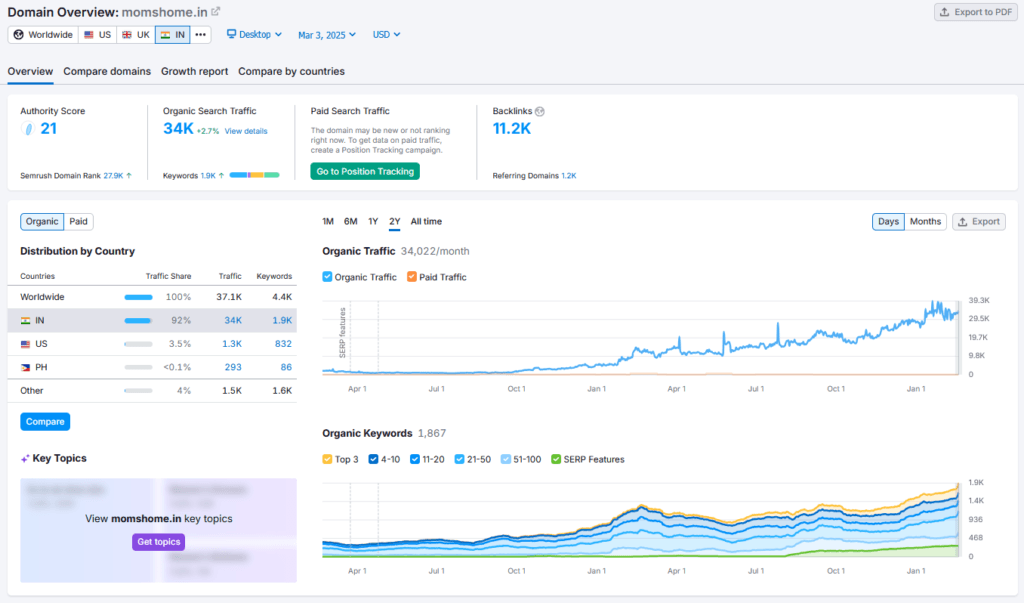
Leverage existing strong SEO performance (34K organic visitors/month) by targeting keywords like “organic baby products India” and “sustainable baby essentials.”
Aim to increase traffic to 50K monthly visitors within six months.
Social Media Campaigns:
Use Instagram, Facebook, and Pinterest to showcase product aesthetics and customer testimonials.
Collaborate with parenting influencers for product reviews.
Paid Ads:
Run Google Ads campaigns targeting search terms related to organic baby products.
Retarget website visitors with personalized offers.
Distribution Strategy
Direct-to-consumer (D2C) sales via the Moms Home website.
Partner with e-commerce platforms like Amazon, FirstCry, and Flipkart for wider reach.
Expand offline presence through partnerships with premium retail stores and maternity hospitals.
Introduce subscription models for repeat purchases of essentials like nappies and swaddles.
Advantages
High demand for organic, sustainable products in India’s growing baby care market.
GOTS-certified materials ensure product credibility and appeal to health-conscious parents.
Strong SEO performance (34K monthly visitors) provides a solid foundation for scaling digital marketing efforts.
Challenges
High competition from established brands like Mamaearth, The Moms Co., and Johnson & Johnson.
Price sensitivity among Indian consumers may limit adoption of premium-priced products.
Limited offline presence compared to competitors.
Reasons for Success
Growing awareness about the benefits of organic products among Indian parents.
Strong e-commerce penetration in India supports D2C sales growth.
Unique selling proposition (USP): Affordable pricing compared to international sustainable brands.
Mitigation Strategies
Introduce smaller product sizes or trial packs to attract price-sensitive customers.
Invest in customer education campaigns about the long-term benefits of sustainable baby products.
Build partnerships with maternity hospitals to establish trust and credibility.
Future Business Roadmap
Short-Term Goals (0–1 Year)
Expand product range to include more reusable items like diapers and feeding accessories.
Increase monthly website traffic from 34K to 50K through targeted SEO campaigns.
Achieve profitability by optimizing supply chain costs.
Medium-Term Goals (1–3 Years)
Launch exclusive offline stores in metros like Bangalore, Mumbai, and Delhi.
Enter international markets such as Southeast Asia, where demand for sustainable baby products is rising.
Develop a proprietary database of customer preferences for personalized marketing.
Long-Term Goals (3–5 Years)
Diversify into adjacent categories like maternity wear or organic toys.
Establish Moms Home as a household name in sustainable parenting solutions globally.
Roadmap to Increase Valuation
Strengthen brand equity through collaborations with parenting influencers and pediatricians.
Scale operations by entering high-growth regions like South India (CAGR: 15–17%).
Invest in R&D to innovate new eco-friendly materials for baby care products.
Moms Home has immense potential to capitalize on the growing demand for sustainable baby products in India’s fast-expanding market segment. By focusing on branding, affordability, and strategic expansion, it can become a leader in this space while achieving long-term profitability and scalability.




Moms Home Shark Tank India Episode Review