
Shark Tank India Season 5 Episode 23 Review
Episode 23 of Shark Tank India Season 5 (aired Wednesday, February 4, 2026) presented a powerful narrative arc—from a heartwarming rural empowerment success story to cautionary tales of over-funded underperformance and niche positioning challenges.
The episode explored fundamental tensions between social impact and scalability, between prior funding validation and current execution quality, and between passion-driven ventures and investor-ready businesses. From zero customer acquisition cost miracles to concerning investor warnings, this episode delivered lessons on what truly matters beyond the pitch deck.
Episode Summary
Success Rate: 1 out of 3 deals closed
Total Investment: ₹75 Lakhs deployed with strategic royalty structure
Key Theme: The episode centered on the disconnect between story appeal and business fundamentals—when does an inspiring narrative overcome operational concerns, and when does it merely distract from deeper issues?
Pitch 1
Taasha Craft Shark Tank India Episode Review
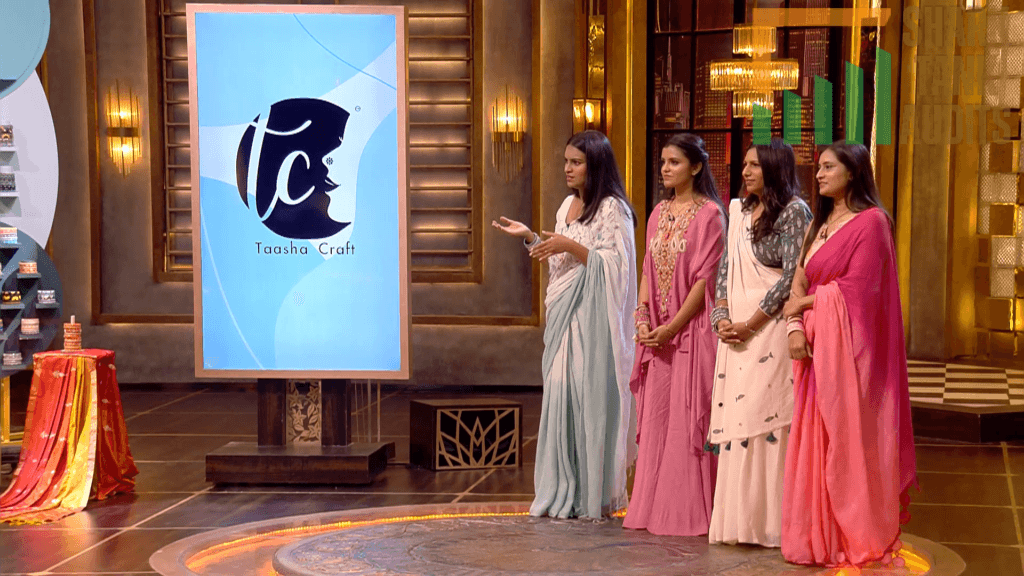
In Shark Tank India Season 5, Episode 23 (aired Wednesday, February 4, 2026), Taasha Craft—a handcrafted jewelry brand from the small village of Kosamba, Gujarat—made a powerful impression with its story of women’s empowerment. Founded by Anjali Wadiwala, Anjali Tandel, Khushbu Tandel, and Ankita Tandel, the brand employs over 120 women artisans to create vibrant, customizable bangles that blend traditional craftsmanship with modern aesthetics.
Seeking ₹75 lakhs for 5% equity, the founders secured a deal with Aman Gupta and Namita Thapar for ₹75 lakhs at 5% equity plus a 1% royalty on net sales until the investment is recouped. The pitch was notable for its “Zero CAC” (Customer Acquisition Cost) due to massive organic viral reach and for a rare warning from Shark Kanika Tekriwal.
Pitch 2
Mishmash Naturals Shark Tank India Episode Review
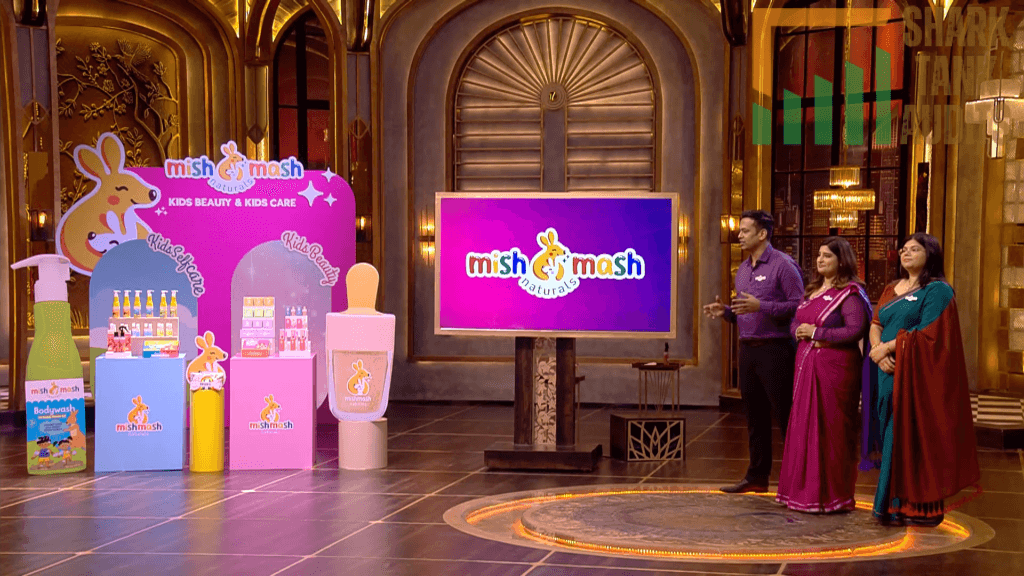
Mishmash Naturals appeared on Shark Tank India Season 5, Episode 23, with founders Kanika Singh Chopda, Labdhi Chopda, and Aditi Chaturvedi from Raipur seeking ₹50 lakh for 2% equity (₹25 Crore valuation) but left with no deal after all Sharks backed out citing multiple concerns.
Positioned as India’s first Ayurvedic toxin-free beauty/personal care brand for children aged 3-14, the venture was inspired after Kanika’s daughter suffered adverse reaction to adult cosmetics during school function, offering vegan cruelty-free dermatologist-tested products (Ayurvedic Play Safe Makeup Set with natural beetroot/sunflower wax ingredients, sunscreen, shampoo, lotion, body wash, hair oil) free from parabens/sulfates/artificial fragrances, growing from ₹22 lakh (FY24-25) to ₹43 lakh YTD projecting ₹2 Crore (FY25-26) with 90% sales from website and prior ₹2.4 Crore funding from Inflection Point Ventures and IIT Delhi Angels Network with 257 monthly organic visitors. Sharks criticized extensively—Vineeta questioned “ROI-first vs consumer-first” approach and third-party manufacturing undermining formulation uniqueness, Anupam challenged improper market size analysis, Namita expressed dissatisfaction with packaging and website UX, and Kanika found pricing/margins unimpressive.
Operating in kids’ personal care market valued at $14.17 billion (2024) projected to reach $41.42 billion by 2032 (14.35% CAGR) with children’s cosmetics growing 6.33% CAGR within $30-35 billion Indian BPC industry by 2030 amid rising “Sephora Kids” phenomenon and 377 million Gen-Z/Alpha population (ages 3-14), Mishmash targets millennial/Gen-X parents (28-45, ₹1 lakh+ monthly dual-income households) in Tier 1/2 cities prioritizing “clean labels” and ingredient transparency as 71% of Indian consumers prefer natural over synthetic beauty products.
Pitch 3
Indian School of Calisthenics Shark Tank India Episode Review

Indian School of Calisthenics appeared on Shark Tank India Season 5, Episode 23, with co-founders Shubham Mishra (7+ years experience, mentored 150 elite athletes, trained 5,000+ individuals) and Joel Prince (extreme endurance feats like 3,000 push-ups in 2.5 hours, coached 2,000+ students including celebrities) seeking ₹75 lakh for 5% equity (₹15 Crore valuation) but left with no deal after all Sharks backed out citing multiple concerns.
Established 2022 in Mumbai, the specialized bodyweight-only training academy focuses on functional strength, mobility, balance, and body control versus machine-based workouts, offering membership-based professional coaching (silver/gold/platinum/annual tiers ₹7,000-₹75,000) at Goregaon/Malad centers with structured progression plans, injury prevention personalization, and community workshops, scaling from ₹24 lakh (FY 22-23) to projected ₹1.68 Crore (FY 25-26) maintaining healthy 35% EBITDA with 8,362 monthly organic visitors. Sharks criticized extensively—Aman felt branding too narrow/confused viewing it as local gym versus massive vision, Anupam pointed out structural risks of high rental costs for expanding physical centers, Namita questioned marketing quality and niche presentation, and Kanika couldn’t justify high valuation.
Operating in Indian fitness market growing from ₹16,200 Crore ($1.9B, 2024) to ₹37,700 Crore ($4.5B) by 2030 (15% CAGR) with boutique studios (calisthenics/HIIT) fastest-growing segment at 18.8% annually and virtual fitness expected to reach $2.8 billion by 2030, Indian School targets Gen Z/millennials (18-35, 65% of gym memberships preferring aesthetic/skill-based workouts) and working professionals (30-50 seeking longevity/functional mobility) within 12.3 million fitness facility members concentrated in Top-10 cities amid low 0.15-0.8% penetration rate offering massive “blue ocean” opportunity.
Episode Highlights
The Zero CAC Miracle
Taasha Craft’s Organic Phenomenon: In an era where customer acquisition costs can make or break D2C brands, Taasha Craft achieved the holy grail—”Zero CAC” through massive organic viral reach. The handcrafted jewelry brand from rural Gujarat employed 120+ women artisans, creating a powerful narrative of traditional craftsmanship meeting modern aesthetics.
What Made It Special:
- Social Impact at Scale: 120+ women artisans from Kosamba village employed
- Organic Virality: Zero paid customer acquisition, all growth from word-of-mouth and social sharing
- Cultural Authenticity: Vibrant, customizable bangles blending traditional Indian craftsmanship with contemporary design
- Strategic Deal Structure: ₹75 lakh at 5% equity (exact ask) + 1% royalty until recoupment—Sharks got downside protection while founders maintained valuation
The Warning: Despite the successful deal, Shark Kanika Tekriwal issued a rare warning (details suggest concern about maintaining quality/authenticity during scaling or potential over-dependence on artisan network).
The Over-Funded Underperformer
Mishmash Naturals’ Paradox: The pitch exposed a troubling scenario increasingly common in India’s startup ecosystem—companies that raise significant capital but fail to demonstrate proportional growth or execution quality.
The Numbers Tell the Story:
- Previous Funding: ₹2.4 Crore from Inflection Point Ventures + IIT Delhi Angels Network
- Current Performance: ₹22 lakh (FY24-25) → ₹43 lakh YTD (projecting ₹2 Crore FY25-26)
- Digital Presence: 257 monthly organic visitors (alarmingly low for funded company)
- The Question: What happened to ₹2.4 Crore in funding that produced less than ₹50 lakh in current revenue?
The Sharks’ Brutal Assessment:
Vineeta’s ROI Critique: Questioned “ROI-first vs consumer-first” approach, noting third-party manufacturing undermines formulation uniqueness—suggests founders focused on investor returns rather than genuine product innovation
Anupam’s Market Analysis: Challenged improper market size analysis—founders likely presented inflated TAM/SAM without realistic SOM
Namita’s UX Disappointment: Expressed dissatisfaction with packaging and website UX despite ₹2.4 Cr in the bank—basic execution failures
Kanika’s Margin Concerns: Found pricing and margins unimpressive—fundamental business model issues
The Red Flag: When a company has raised ₹2.4 Crore but still has poor website UX, weak organic traffic, and uninspiring margins, it signals either capital misallocation or founder execution gaps.
The Passion Project That Couldn’t Scale
Indian School of Calisthenics’ Identity Crisis: Two deeply passionate founders (Shubham Mishra with 5,000+ trained individuals, Joel Prince with extreme feats like 3,000 push-ups in 2.5 hours) created a legitimate business (₹24 lakh → ₹1.68 Crore projected, 35% EBITDA, 8,362 monthly organic visitors) but failed to convince Sharks it could be more than a “local gym.”
The Disconnect:
- Founders’ Vision: Elite bodyweight training academy revolutionizing fitness in India
- Sharks’ Perception: Well-run local gym business with strong margins but limited scalability
- The Reality: Probably somewhere in between—solid business, unclear venture trajectory
The Sharks’ Concerns:
Aman’s Branding Issue: Felt branding was too narrow and confused, viewing it as local gym versus massive scalable vision
Anupam’s Structural Risk: Pointed out high rental costs for expanding physical centers—each new location requires significant capital and time to breakeven
Namita’s Marketing Critique: Questioned marketing quality and niche presentation—despite 8,362 organic visitors, positioning didn’t convey scalability
Kanika’s Valuation Mismatch: Couldn’t justify ₹15 Crore valuation for what appeared to be a regional fitness center business
The Irony: The business had better fundamentals than many funded companies (35% EBITDA, strong organic traffic, proven demand) but couldn’t articulate a venture-scale vision.
Shark Dynamics
Aman & Namita’s Social Impact Alignment (Taasha Craft)
The joint investment in Taasha Craft reflected both Sharks’ interest in businesses with strong social narratives:
- Aman: boAt’s mass-market success gives him appreciation for organic, viral growth models
- Namita: Healthcare background aligns with empowerment-focused businesses improving livelihoods
The 1% royalty addition showed sophisticated deal structuring—Sharks get faster capital return while founders maintain equity structure.
The Unanimous Rejection of Over-Funded Underperformance
Mishmash Naturals faced complete Shark consensus—when a company has raised ₹2.4 Crore from institutional investors but still struggles with basic execution (UX, organic traffic, margins), additional capital won’t solve fundamental problems. The Sharks essentially said: “You don’t need more money; you need better execution.”
The “Good Business, Not Venture Business” Dilemma
Indian School of Calisthenics highlighted the hardest truth in venture capital: not every profitable, growing business is venture-backable. The founders had:
- Impressive credentials
- Healthy margins (35% EBITDA)
- Strong organic growth (8,362 monthly visitors)
- Proven business model
…but Sharks couldn’t see the path to ₹100 Crore+ exits within reasonable timeframes due to physical location constraints and niche market positioning.
Market Insights Revealed
The episode showcased three distinct consumer markets with varying venture potential:
- Handcrafted Jewelry (Taasha Craft): Riding India’s cultural revival and premiumization trends, with authentic artisan networks creating defensible moats and organic virality potential
- Kids’ Personal Care (Mishmash Naturals): $14.17 billion market (2024) growing to $41.42 billion by 2032 (14.35% CAGR), driven by “Sephora Kids” phenomenon and 377 million Gen-Z/Alpha population—massive opportunity poorly executed
- Boutique Fitness (Calisthenics): ₹16,200 Crore market growing to ₹37,700 Crore by 2030 (15% CAGR) with boutique studios fastest-growing at 18.8% annually—but high real estate costs and regional nature limit venture scalability
Key Takeaways
1. Zero CAC Is the Ultimate Competitive Advantage
Taasha Craft’s Magic: In an era where D2C brands burn millions on Facebook/Instagram ads, achieving organic viral growth is transformative. Zero CAC means:
- Every sale is profitable from day one
- Word-of-mouth validates product-market fit
- Scaling becomes a distribution challenge, not a unit economics problem
The Caveat: Organic growth is hard to force or replicate—it requires genuine authenticity and product excellence, not just marketing tactics.
2. Prior Funding ≠ Validation of Current State
Mishmash Naturals’ Lesson: Raising ₹2.4 Crore from Inflection Point Ventures and IIT Delhi Angels doesn’t excuse:
- Poor website UX (basic execution failure)
- 257 monthly organic visitors (SEO/content marketing failure)
- Minimal growth trajectory (₹22 lakh → ₹43 lakh with millions in the bank)
The Reality: Early-stage investors bet on potential; later-stage investors bet on execution. Mishmash got the former but failed to demonstrate the latter.
3. Third-Party Manufacturing Can Be a Double-Edged Sword
Vineeta’s Critique: Using third-party manufacturers for personal care products undermines:
- Formulation uniqueness (contract manufacturers serve multiple clients with similar formulas)
- Quality control perception (you don’t own the IP or process)
- Brand defensibility (competitors can replicate easily)
When It Works: Low-margin commodity products where speed to market matters more than differentiation
When It Fails: Premium/niche positioning (like Mishmash’s “India’s first Ayurvedic toxin-free kids’ care”) where formulation uniqueness is the entire value proposition
4. Niche Can Mean “Sustainable Business” or “Unscalable Business”
The Calisthenics Paradox:
- Sustainable: 35% EBITDA, loyal community, growing demand for bodyweight training
- Unscalable: Physical locations require capital and time, niche market limits total addressable customers, regional brand perception
The Investor Perspective: VCs need businesses that can achieve ₹100+ Crore valuations within 5-7 years. If your path requires opening 50+ physical locations with high capex each, the math doesn’t work for venture returns.
5. Passion + Performance ≠ Venture Scale
Indian School of Calisthenics founders had:
- Extreme personal achievements (3,000 push-ups in 2.5 hours)
- Professional credentials (trained 5,000+ individuals, mentored elite athletes)
- Healthy business metrics (₹1.68 Crore projected, 35% EBITDA)
What they lacked:
- Clear path to venture-scale outcomes
- Brand positioning beyond “premium local gym”
- Digital-first scalability story (physical locations constrain growth)
The Lesson: Being excellent at your craft and running a profitable business doesn’t automatically make you venture-backable. Know which capital source suits your model.
6. Social Impact Narratives Must Come With Business Fundamentals
Taasha Craft’s Balance:
- Impact: 120+ women artisans employed in rural Gujarat
- Business: Zero CAC, organic viral growth, sustainable margins
- Result: Deal closed
The Standard: Sharks will invest in social impact businesses, but only when business fundamentals justify returns. Impact enhances the story; it doesn’t replace sound economics.
7. Website UX in 2026 Is Non-Negotiable
Mishmash Naturals’ Failure: Despite ₹2.4 Crore in funding, Namita criticized poor website UX—inexcusable for any consumer brand in 2026. This signals:
- Misplaced priorities (raising money over serving customers)
- Lack of consumer-first thinking
- Fundamental execution gaps
The Benchmark: In 2026, with tools like Shopify, Wix, and AI design assistants, there’s no excuse for poor e-commerce UX regardless of budget.
What Made This Episode Different
The Rare Shark Warning
Taasha Craft received a deal but also an unusual warning from Kanika Tekriwal (specific concerns not detailed, but likely related to scaling challenges or artisan network dependencies). This highlighted that even successful pitches come with risk factors investors notice.
Possible Warning Areas:
- Maintaining quality consistency across 120+ artisans
- Dependence on specific artisan skills (key person risk at scale)
- Challenges replicating organic virality in new markets
- Preserving authenticity while scaling production
The Over-Funded Underperformer Phenomenon
Mishmash Naturals represented a growing Indian startup problem—companies that raise seed/angel rounds but fail to execute proportionally. The Sharks’ harsh critique sent a message: previous funding doesn’t guarantee future funding; execution does.
The Ecosystem Implication: As India’s angel/seed funding becomes more accessible, more founders will raise capital without proportional pressure to execute. Subsequent investors (like Sharks) won’t overlook poor fundamentals just because someone else funded you.
The “Good Business, Wrong Capital” Conversation
Indian School of Calisthenics forced an important discussion—some excellent businesses aren’t venture-backable:
- Venture Capital: Seeks 10x+ returns, rapid scalability, massive TAM, digital-first models
- Traditional Capital: Banks, revenue-based financing, private equity—better suited for steady, profitable, location-based businesses
The Founders’ Mistake: Seeking venture capital for what’s essentially a premium service business with location constraints. They should have pursued:
- Revenue-based financing (pay back from cash flow)
- Small business loans (collateralized by equipment/lease)
- Franchise model (capital-light expansion)
Behind the Numbers
Taasha Craft’s Organic Excellence
- CAC: ₹0 (Zero customer acquisition cost—unprecedented for D2C)
- Artisan Network: 120+ women employed from rural Kosamba, Gujarat
- Deal Structure: ₹75 lakh for 5% + 1% royalty until recoupment
- Royalty Logic: Sharks get faster capital return; founders keep equity intact
- Valuation: ₹15 Crore maintained (exact ask met)
Mishmash Naturals’ Capital Misallocation
- Previous Funding: ₹2.4 Crore from Inflection Point Ventures + IIT Delhi Angels
- Current Revenue: ₹22 lakh (FY24-25) → ₹43 lakh YTD
- Projected: ₹2 Crore (FY25-26)
- Organic Traffic: 257 monthly visitors (catastrophically low for funded company)
- Sales Channel: 90% from website (yet website has poor UX and minimal traffic)
- The Math: ₹2.4 Crore invested → ₹43 lakh current revenue = ~₹1.97 Crore “missing” (either spent on operations, salaries, inventory, or burnt on ineffective marketing)
Indian School of Calisthenics’ Solid Fundamentals
- Revenue Growth: ₹24 lakh (FY22-23) → ₹1.68 Crore projected (FY25-26) = 600% growth in 3 years
- EBITDA: 35% (exceptional for service business)
- Organic Traffic: 8,362 monthly visitors (strong digital presence)
- Membership Tiers: ₹7,000-₹75,000 (diversified pricing)
- Trained Students: 5,000+ individuals by Shubham, 2,000+ by Joel
- Locations: 2 centers (Goregaon, Malad, Mumbai)
- Expansion Challenge: Each new center requires high capex (Mumbai rent) + 6-12 months to breakeven
The Three Business Archetypes
Archetype 1: The Authentic Social Enterprise (Taasha Craft)
Characteristics:
- Genuine social impact (120+ women artisans employed)
- Organic growth model (zero CAC)
- Cultural authenticity (traditional craftsmanship meets modern design)
- Sustainable economics (no paid acquisition means profitable from day one)
Investment Thesis: Impact + economics alignment—when doing good also means building a defensible, profitable business
Risk Factors: Artisan dependency, quality consistency at scale, replicating organic virality
Archetype 2: The Over-Capitalized Underperformer (Mishmash Naturals)
Characteristics:
- Raised significant early funding (₹2.4 Crore)
- Minimal growth relative to capital (₹22 lakh → ₹43 lakh)
- Basic execution failures (poor UX, low organic traffic)
- Third-party manufacturing undermining differentiation
Investment Thesis: None—capital without execution won’t solve fundamental problems
Lesson: More money amplifies execution quality; it doesn’t create it
Archetype 3: The Profitable But Unscalable (Indian School of Calisthenics)
Characteristics:
- Strong fundamentals (35% EBITDA, ₹1.68 Cr revenue)
- Passionate, credible founders (extreme personal feats)
- Location-dependent model (physical gyms in Mumbai)
- Niche positioning (bodyweight training specialists)
Investment Thesis: Great lifestyle business, wrong capital type—needs revenue-based financing or franchise model, not venture capital
Lesson: Know your business model and match it to appropriate capital sources
Founder Personalities on Display
The Empowering Collective (Taasha Craft)
Anjali Wadiwala, Anjali Tandel, Khushbu Tandel, Ankita Tandel demonstrated:
- Authentic commitment to social impact (not just marketing narrative)
- Understanding of organic growth mechanics (didn’t overspend on CAC)
- Patience and community-building (120+ artisans is multi-year relationship development)
- Realistic valuation (₹15 Crore for zero-CAC business is reasonable, not aggressive)
The Over-Funded, Under-Executing Team (Mishmash Naturals)
Kanika Singh Chopda, Labdhi Chopda, Aditi Chaturvedi exhibited:
- Personal motivation (daughter’s adverse reaction to cosmetics) but questionable execution
- ₹2.4 Crore raised but poor deployment (website UX, organic traffic failures)
- Third-party manufacturing dependency without clear IP advantage
- Market analysis issues (Anupam’s critique of TAM/SAM calculation)
The Pattern: Strong origin story + capital access ≠ business execution competence
The Passionate Specialists (Indian School of Calisthenics)
Shubham Mishra and Joel Prince showcased:
- Extreme personal dedication (3,000 push-ups in 2.5 hours)
- Deep domain expertise (7+ years, trained thousands)
- Solid business fundamentals (35% EBITDA)
- Disconnect between passion and venture scalability narrative
The Gap: Excellence in craft ≠ ability to communicate venture-scale vision
Episode Wisdom
For Founders:
1. Zero CAC Beats Paid Growth (When Possible): Taasha Craft proved that organic, authentic storytelling can eliminate customer acquisition costs entirely. If you can build this through:
- Social impact narratives
- Cultural authenticity
- Product excellence that creates organic sharing
- Community-building
…you create a business that’s profitable from day one and highly defensible.
2. Prior Funding Doesn’t Excuse Poor Execution: Mishmash Naturals raised ₹2.4 Crore but still had terrible website UX and minimal organic traffic. Subsequent investors see this as red flag—capital access without execution quality signals founder capability issues.
3. Know Your Business Model’s Capital Type:
- Venture Capital: Digital-first, rapid scalability, massive TAM, 10x return potential
- Revenue-Based Financing: Profitable, steady growth, predictable cash flows
- Bank Loans: Asset-collateralized, proven business model
- Franchise: Service-based, location-dependent, requires brand replication
Indian School of Calisthenics sought venture capital when revenue-based financing or franchise model would better suit their location-based service business.
4. Third-Party Manufacturing Requires Strategic Justification: If you’re positioning as “India’s first” or claiming unique formulations, third-party manufacturing undermines credibility. Own your IP or explain clearly why contract manufacturing doesn’t compromise differentiation.
5. Social Impact Must Enhance, Not Replace, Business Logic: Sharks invest in businesses that happen to do good, not charities that happen to sell products. Taasha Craft balanced both; impact story enhanced strong organic growth metrics.
For Investors:
1. Zero CAC Signals Authentic Product-Market Fit: When customers find and promote your product organically, it validates genuine value creation—not just marketing-driven demand.
2. Prior Funding Is a Signal, Not Validation: Just because Inflection Point Ventures or IIT Delhi Angels invested doesn’t mean current execution is strong. Evaluate the company today, not its past funding narrative.
3. Royalty Structures Provide Downside Protection: Aman and Namita’s 1% royalty until recoupment creates faster capital return while maintaining founder equity structure—smart deal structuring for uncertain ventures.
4. Some Great Businesses Aren’t Venture-Backable: Indian School of Calisthenics demonstrated profitable, growing business with limited venture scalability—help founders understand capital-model fit rather than just rejecting.
For Viewers:
1. Organic Growth > Paid Growth (When Sustainable): Taasha Craft’s zero CAC proves the power of authentic storytelling and product excellence—more defensible than paid acquisition strategies.
2. Capital Doesn’t Solve Execution Problems: Mishmash had ₹2.4 Crore but couldn’t build good UX or drive organic traffic—more money won’t fix fundamental capability gaps.
3. Passion Doesn’t Equal Venture Scale: Joel Prince’s 3,000 push-ups in 2.5 hours is impressive; doesn’t make the business venture-scalable. Understand the difference between personal achievement and business model scalability.
4. Social Impact Works When Economics Align: Taasha Craft employed 120+ women AND achieved zero CAC—impact + economics, not impact instead of economics.
The Episode’s Defining Questions
1. Can Social Impact + Zero CAC Create Defensible Businesses?
- Taasha Craft’s Answer: Yes, when authenticity drives organic sharing and artisan networks create supply-side moats
2. Does Prior Institutional Funding Validate Current Performance?
- Mishmash Naturals’ Answer: No—₹2.4 Crore raised ≠ excuse for poor UX, low traffic, or weak margins
3. Can Passion-Driven Service Businesses Be Venture-Backable?
- Indian School of Calisthenics’ Answer: Not necessarily—location-dependent, high-capex models need different capital structures regardless of founder passion or margins


Leave feedback about this
You must be logged in to post a comment.