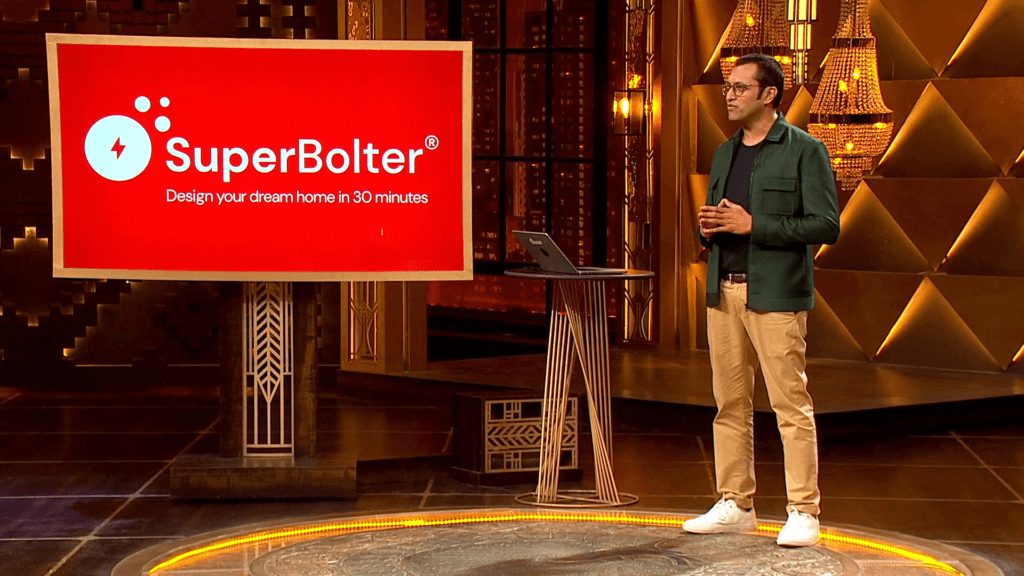
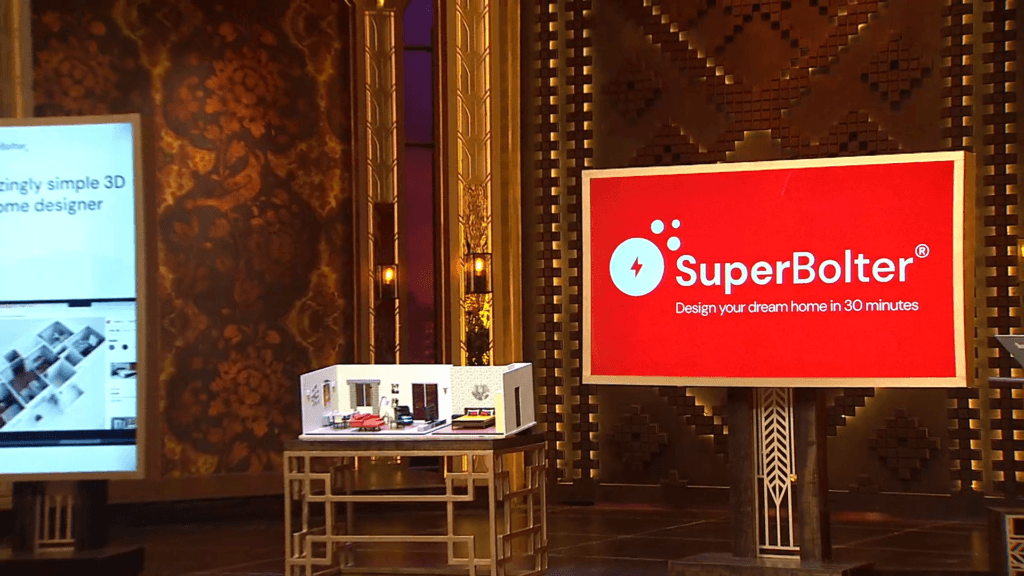
SuperBolter Shark Tank India Episode Review

Website Information
- Website:- SuperBolter
- Build on JavaScript libraries- Goober, Lodash 4.17.21, core-js 2.6.12
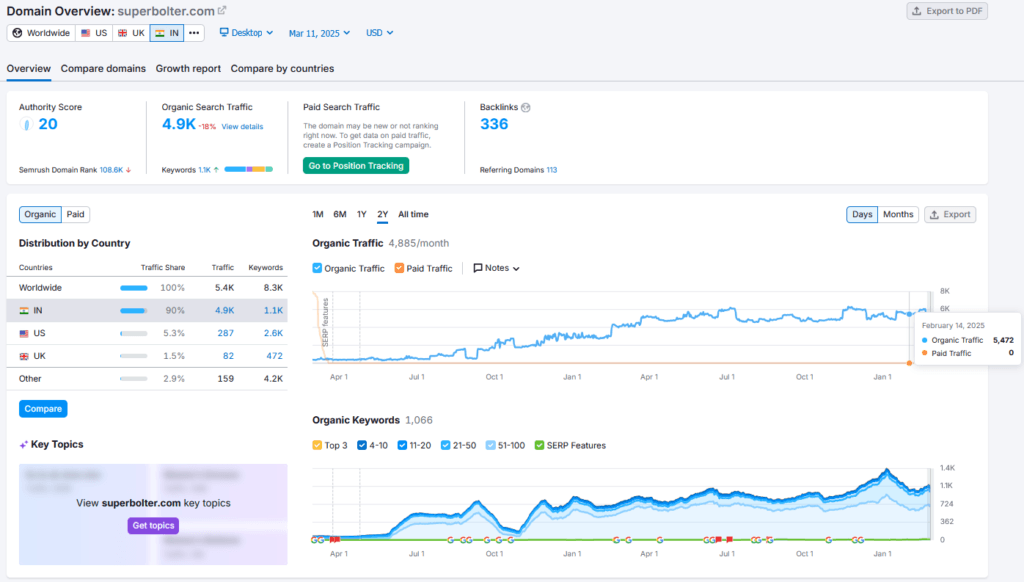
- Good SEO Performance, but SEO Improvement Needed.
- ORGANIC TRAFFIC: 4.9K visitors per month.
Founders
- Arvind Prakash Singh, a serial entrepreneur from Bengaluru, founded SuperBolter.
- With a background in technology and business, this is his third startup. He previously raised ₹1.3 crore (2019) and ₹1.4 crore (2022) from friends and family but exhausted funds without achieving product-market fit.
- Despite five years of effort, the platform has no revenue, and Arvind now invests his own money to keep it operational.

Brand Overview
SuperBolter is a Bengaluru-based 3D interior design platform aiming to democratize home renovation. It allows users to:
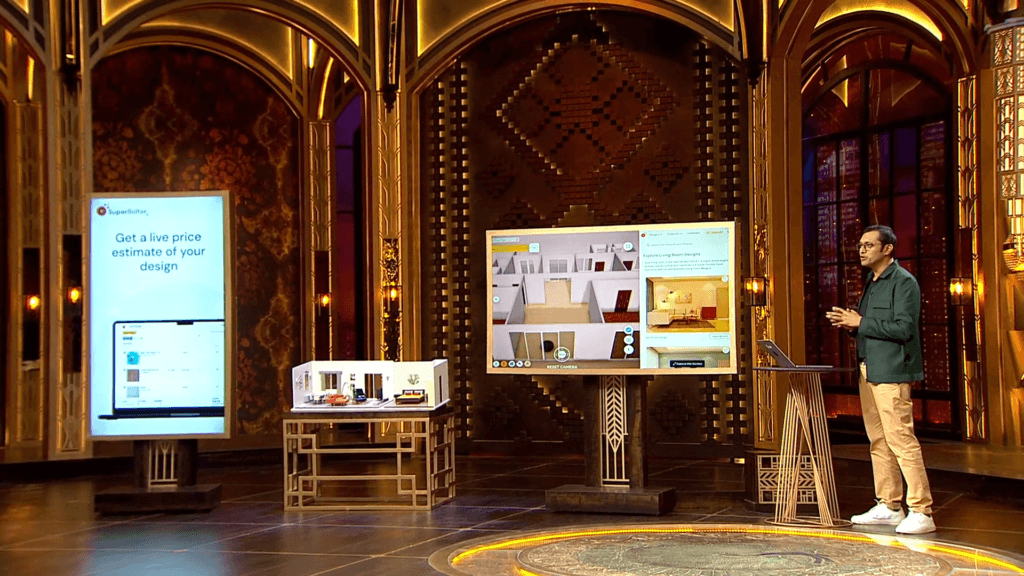
- Convert floor plans into interactive 3D home models.
- Customize designs using 20,000+ real products.
- Generate live cost estimates for projects.
The platform targets homeowners, designers, merchants, and builders but struggles with monetization and user adoption.
Shark Tank India Appearance & Ask
- Pitch: Arvind sought ₹75 lakh for 0.5% equity, valuing SuperBolter at ₹150 crore.
- Problem Addressed: Empowering homeowners to design interiors independently.
- Progress: 300 daily users but zero revenue in five years.
Season and Episode Air Date
- Season: 04
- Episode: 47
- Episode Air Date: Tuesday, 11 March 2025
Product Overview
- 3D Design Tools: Interactive modeling for DIY home design.
- Product Catalog: Integration with 20,000+ real products (furniture, fixtures).
- Cost Estimation: Real-time budget calculations.
- Target Users: Homeowners, designers, and builders.
Investor Reactions
- Anupam Mittal: Criticized Arvind for being “out of touch with reality,” citing stagnant growth and inflated valuation.
- Aman Gupta: Compared the startup to Will Smith’s struggle in The Pursuit of Happyness, advising Arvind to “get a job.”
- Peyush Bansal: Praised the app’s interface but doubted mass appeal.
- Vineeta Singh: Questioned the lack of product-market fit.
- Kunal Bahl: Highlighted the absence of a clear revenue model.
Customer Engagement Philosophy
SuperBolter focuses on:
- Empowerment: Enabling homeowners to visualize and plan renovations independently.
- Accessibility: Offering free tools to attract users.
- Collaboration: Connecting designers, merchants, and builders on one platform.
Product Highlights
- 3D Modeling: Intuitive tools for realistic home visualization.
- Live Cost Estimates: Transparent budgeting for projects.
- Extensive Catalog: Partnerships with 20,000+ products.
- Multi-Stakeholder Platform: Bridges gaps between homeowners and professionals.
Future Vision
Arvind plans to:
- Expand the product catalog to 50,000+ items.
- Integrate AI for personalized design recommendations.
- Partner with real estate developers for pre-sales home customization.
- Pilot a subscription model for premium features.
Deal Finalized or Not
- No deal was finalized.
- All sharks opted out due to concerns about scalability, monetization, and unrealistic valuation.

| Category | Details |
|---|
| Website Information |
| Website | SuperBolter |
| Built On | JavaScript libraries – Goober, Lodash 4.17.21, core-js 2.6.12 |
| SEO Performance | Good SEO performance, but improvement needed |
| Organic Traffic | 4.9K visitors per month |
| Founders |
| Founder | Arvind Prakash Singh |
| Background | Serial entrepreneur from Bengaluru, third startup |
| Previous Funding | ₹1.3 crore (2019) and ₹1.4 crore (2022) from friends and family |
| Financial Status | No revenue in five years, currently self-funded |
| Brand Overview |
| Business Model | 3D interior design platform |
| Key Features | Convert floor plans into 3D models, customize designs with 20,000+ products, generate live cost estimates |
| Target Audience | Homeowners, designers, merchants, builders |
| Key Challenge | Struggles with monetization and user adoption |
| Shark Tank India Appearance & Ask |
| Ask | ₹75 lakh for 0.5% equity (₹150 crore valuation) |
| Problem Addressed | Empowering homeowners to design interiors independently |
| Progress | 300 daily users, zero revenue in five years |
| Season & Episode Air Date |
| Season | 04 |
| Episode | 47 |
| Air Date | Tuesday, 11 March 2025 |
| Product Overview |
| 3D Design Tools | Interactive modeling for DIY home design |
| Product Catalog | Integration with 20,000+ real products (furniture, fixtures) |
| Cost Estimation | Real-time budget calculations |
| Target Users | Homeowners, designers, builders |
| Investor Reactions |
| Anupam Mittal | Criticized lack of growth and inflated valuation |
| Aman Gupta | Compared it to “The Pursuit of Happyness” and advised Arvind to get a job |
| Peyush Bansal | Liked interface but doubted mass appeal |
| Vineeta Singh | Questioned lack of product-market fit |
| Kunal Bahl | Highlighted absence of a clear revenue model |
| Customer Engagement Philosophy |
| Empowerment | Enables homeowners to visualize and plan renovations |
| Accessibility | Free tools to attract users |
| Collaboration | Connects designers, merchants, and builders |
| Product Highlights |
| 3D Modeling | Intuitive tools for realistic home visualization |
| Live Cost Estimates | Transparent budgeting for projects |
| Extensive Catalog | 20,000+ real products integrated |
| Multi-Stakeholder Platform | Bridges homeowners and professionals |
| Future Vision |
| Expansion | Grow product catalog to 50,000+ items |
| AI Integration | Personalized design recommendations |
| Real Estate Partnerships | Pre-sales home customization |
| Subscription Model | Premium features with a paid tier |
| Deal Finalized? | No deal – all sharks opted out |
| Business Potential in India |
| Market Size (2025) | ₹30,000 crore, growing at 12% CAGR |
| Growth Drivers | 82M urban households (NITI Aayog 2025), rising millennial demand, real estate boom (2.5 crore homes by 2030) |
| Competition | Competes with Livspace, Homelane |
| Total Addressable Market (TAM) |
| Current TAM (2025) | ₹14,000 crore tech-enabled home design market |
| Serviceable Market | 10M urban homeowners (25-45 years), 500K+ architects/designers |
| Projected Revenue | 0.5% market share by 2027 = ₹70 crore annually |
| Ideal Target Audience |
| Primary | Homeowners (₹8L+ annual income), interior designers |
| Secondary | Real estate developers, furniture retailers |
| Marketing Strategy |
| Brand Positioning | “Design Your Dream Home, Digitally” |
| Google Ads | Keywords – “3D home design app India,” “DIY interior tools” |
| Influencer Marketing | Home decor influencers (YouTube, Instagram) |
| SEO Optimization | Improve ranking for “free home design software” |
| Content & Digital Marketing Strategy |
| Tutorial Videos | “How to Design a 2BHK in 30 Minutes with SuperBolter” |
| Case Studies | “From Floor Plan to Reality” user stories |
| Blogs | “Top 2025 Interior Trends for Indian Homes” |
| Platforms | Instagram Reels, LinkedIn, Pinterest |
| Distribution Strategy |
| Freemium Model | Free tools + premium subscriptions (₹499–₹1,999/month) |
| Partnerships | Real estate (Sobha), e-commerce (Amazon, Pepperfry) |
| Offline Presence | DIY design workshops in major cities |
| Advantages |
| Tech Edge | Patented 3D modeling tools, 20,000+ product integrations |
| Cost Savings | Saves ₹50K–₹2L compared to hiring designers |
| Multi-Sided Platform | Connects homeowners, designers, retailers |
| Challenges & Mitigation |
| Zero Revenue | Launch tiered subscriptions (₹299/month for premium features) |
| High CAC (₹2,000/user) | Partner with real estate portals for co-marketing |
| Competition | Focus on affordability vs. high-cost competitors |
| Why SuperBolter Can Succeed |
| Market Gap | No dominant player in DIY 3D home design |
| Unit Economics | 70% gross margins on premium subscriptions |
| Post-Shark Tank Momentum | Exposure to 4.8M+ viewers |
| Future Roadmap (2025-2027) |
| 2025 | 10,000 paid users (₹5 crore ARR) |
| 2026 | Partner with 10+ real estate developers |
| 2027 | Expand to Southeast Asia |
| Valuation Goal | ₹200 crore by 2027 (50,000 MAUs, ₹15 crore revenue) |
| Risk Mitigation & Exit Strategy |
| Pivot Option | SaaS for architects if B2C growth stalls |
| Acquisition Potential | Possible acquisition by Livspace or Asian Paints |
SuperBolter Shark Tank India Business Plan

Business Potential in India
- Market Size: India’s home interiors market is worth ₹30,000 crore (2025), growing at 12% CAGR, driven by urbanization and rising disposable income.
- Growth Drivers:
- 82 million urban households (NITI Aayog 2025) seeking affordable renovation solutions.
- Rising millennial demand for DIY home design tools (63% prefer digital planning).
- Real estate boom: 2.5 crore homes to be built by 2030 (CREDAI).
- Gap Addressed: SuperBolter taps into the underserved tech-driven interior design niche, competing with Livspace and Homelane.
Total Addressable Market (TAM) for SuperBolter
- Current TAM: ₹14,000 crore tech-enabled home design segment (2025).
- Serviceable Market:
- 10 million urban homeowners (ages 25–45) in Tier 1/2 cities.
- 500k+ architects/designers seeking collaboration tools.
- Projected Revenue: Capturing 0.5% market share by 2027 could yield ₹70 crore annually.
Ideal Target Audience for SuperBolter
- Primary:
- Homeowners: Ages 25–45, urban professionals (income ₹8L+ annually).
- Interior Designers: Freelancers and small firms needing cost-effective tools.
- Secondary:
- Real Estate Developers: Pre-sales customization for apartments.
- Furniture Retailers: Cross-selling through product partnerships.
Marketing Strategy
- Brand Positioning: “Design Your Dream Home, Digitally” – Affordable 3D tools for DIY enthusiasts.
- Tactics:
- Google Ads: Target keywords like “3D home design app India,” “DIY interior tools.”
- Influencer Collaborations: Partner with home decor influencers (e.g., YouTube, Instagram).
- SEO Optimization: Improve ranking for “free home design software” (current traffic: 4.9K/month).
Content & Digital Marketing Strategy
- Content Types:
- Tutorial Videos: “How to Design a 2BHK in 30 Minutes with SuperBolter.”
- Case Studies: Showcase user-designed homes (e.g., “From Floor Plan to Reality”).
- Blogs: “Top 2025 Interior Trends for Indian Homes.”
- Platforms:
- Instagram Reels: Bite-sized design hacks and product demos.
- LinkedIn: Target architects/designers with collaboration tools.
- Pinterest: Curate mood boards linked to SuperBolter’s catalog.
Distribution Strategy
- Freemium Model: Free basic tools + premium subscriptions (₹499–₹1,999/month).
- Partnerships:
- Real Estate: Tie-ups with builders like Sobha for pre-sales customization.
- E-commerce: Integrate with Amazon/Pepperfry for furniture sales.
- Offline Workshops: Host DIY design sessions in Bengaluru, Mumbai, Delhi.
Advantages
- Tech Edge: Patented 3D modeling tools with 20,000+ product integrations.
- Cost Savings: Users save ₹50,000–₹2 lakh vs. hiring designers.
- Multi-Sided Platform: Connects homeowners, designers, and retailers.
Challenges & Mitigation
- Challenge 1: Zero revenue despite 300 daily users.
- Mitigation: Launch tiered subscriptions (e.g., ₹299/month for advanced features).
- Challenge 2: High CAC (₹2,000/user) due to niche appeal.
- Mitigation: Partner with real estate portals (99acres, Magicbricks) for co-marketing.
- Challenge 3: Competition from established players.
- Mitigation: Focus on affordability (Livspace charges ₹3–5 lakh per project).
Why SuperBolter Can Succeed
- Market Gap: No dominant player in DIY 3D home design for mid-income households.
- Unit Economics: 70% gross margins on premium subscriptions.
- Post-Shark Tank Momentum: Potential traffic surge from 4.8M+ viewers.
Future Roadmap (2025–2027)
- 2025: Achieve 10,000 paid users (₹5 crore ARR).
- 2026: Partner with 10+ real estate developers for B2B revenue.
- 2027: Expand to Southeast Asia (Indonesia, Vietnam).
- Valuation Goal: ₹200 crore by 2027 via:
- 50,000 MAUs (Monthly Active Users).
- ₹15 crore annual revenue.
Risk Mitigation & Exit Strategy
- Pivot Option: Transition to SaaS for architects if B2C growth stalls.
- Acquisition Potential: Attract buyers like Livspace or Asian Paints post-scale.