
Zen Barefoot Shark Tank India Episode Review
Zen Barefoot appeared on Shark Tank India Season 5, Episode 9, with founder Sahib Aggarwal seeking ₹1 Crore for 5% equity (₹20 Crore valuation) but left with no deal despite a passionate pitch. The minimalist footwear brand offers barefoot shoes with wide toe boxes, zero-drop heels, and thin flexible soles designed to mimic natural walking, challenging traditional footwear norms.
Founded by Sahib after failing to find quality barefoot shoes in India, the brand has 5,798 monthly organic visitors and secured early sales through partnership with importer Gambol. While customers praised relief from foot pain and gym stability for deadlifts, Sharks were skeptical—Vineeta questioned unclear target market positioning (elite athletes vs. office-goers) and Varun remained unconvinced about direction. Operating in India’s footwear market projected to reach $35.15 billion by 2030 (5.7-8.45% CAGR), with 54% premium segment dominance and global barefoot market expected at $2.8 billion by 2032, Zen Barefoot targets health-conscious professionals, modern athletes, and yoga enthusiasts in Tier 1 cities suffering from bunions and back pain caused by traditional raised-heel shoes.
Zen Barefoot Website Information
- Website:- Zen Barefoot
- Build on Shopify
- Average SEO Performance, SEO Improvement Needed.
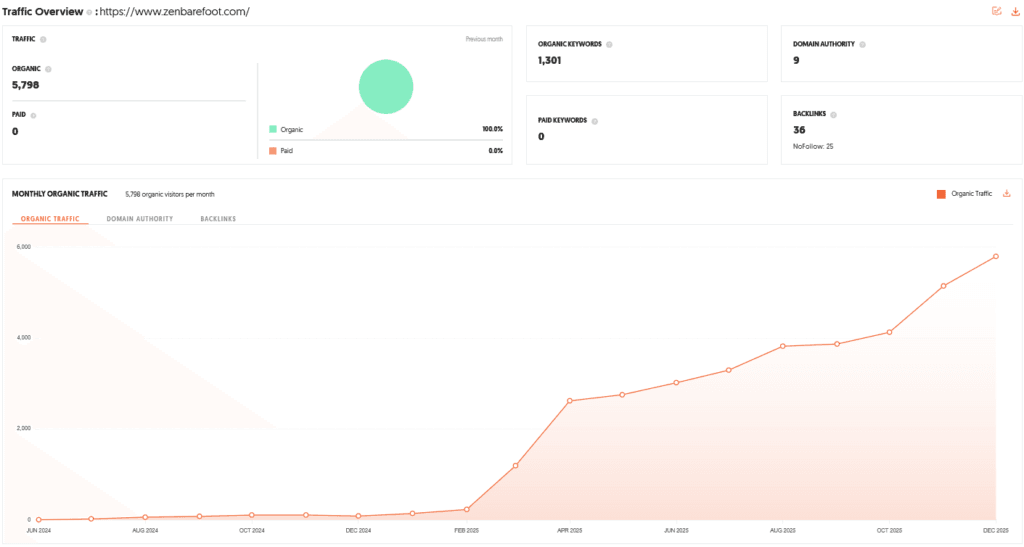
- ORGANIC TRAFFIC: 5798 visitor per month.
Zen Barefoot Founder
- Sahib Aggarwal is the visionary behind Zen Barefoot.
- His journey began out of personal necessity when he was unable to find high-quality barefoot training shoes within the Indian market.
- Despite facing initial skepticism, his dedication led him to a strategic partnership with the importer Gambol, which helped facilitate his early sales.
- Although the business operates as a sole proprietorship, Sahib emphasizes the immense behind-the-scenes support from his parents and fought to have them join him on the Shark Tank stage to acknowledge their contribution.
Zen Barefoot Brand Overview
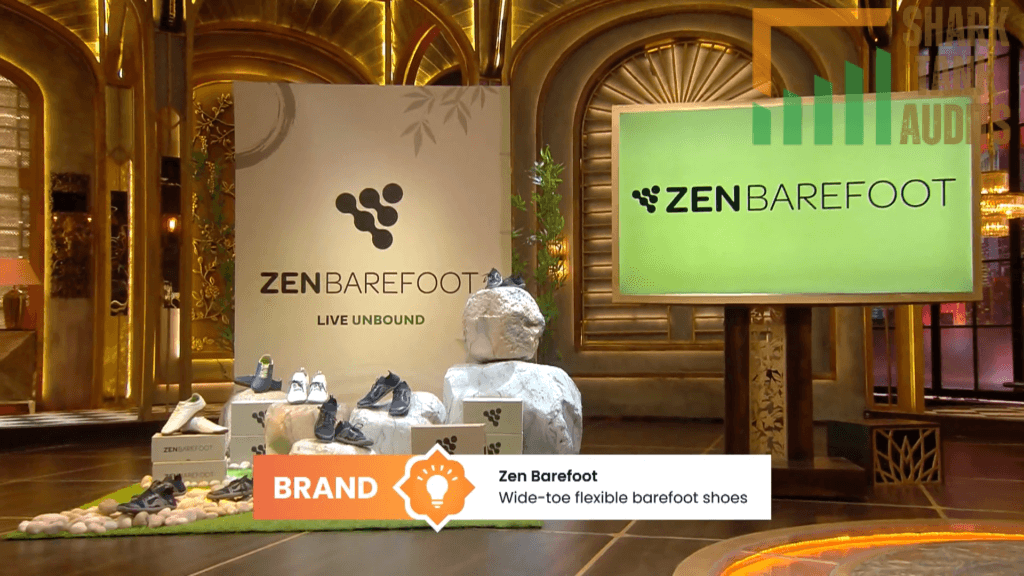
- Zen Barefoot is a pioneering minimalist footwear brand in India.
- The brand’s core philosophy centers on the belief that footwear should allow the feet to move as nature intended.
- By challenging the traditional norms of the footwear industry—which often prioritize thick padding and narrow designs—Zen Barefoot promotes grounding, improved body posture, and long-term foot health.
Zen Barefoot Shark Tank India Appearance & Ask
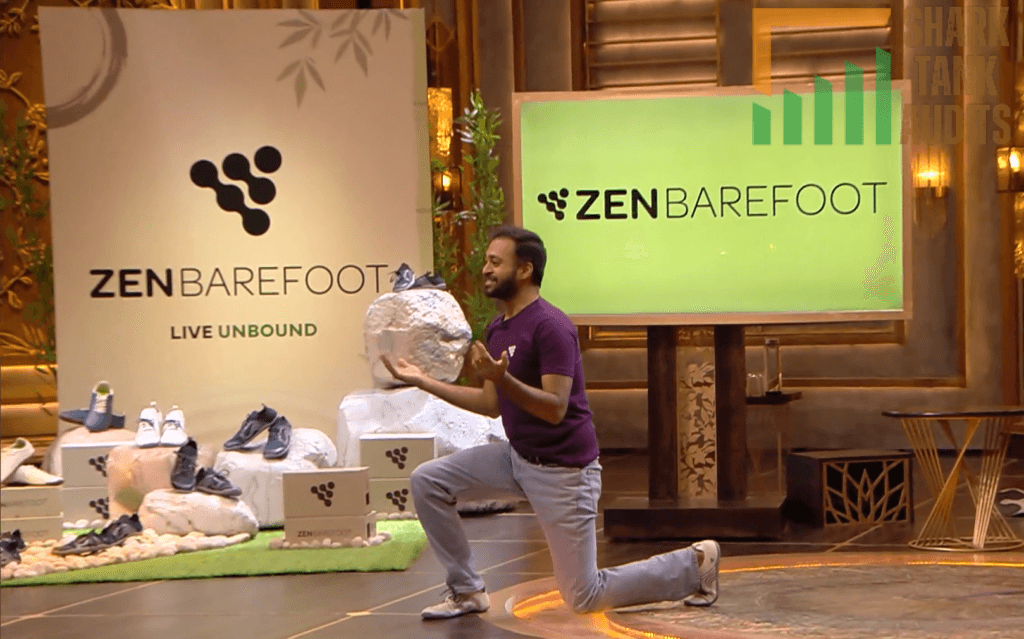
Sahib Aggarwal presented Zen Barefoot to the Sharks, highlighting the health risks associated with traditional modern shoes, such as narrow toe boxes and raised heels.
- The Pitch: He demonstrated how his minimalist design mimics the experience of walking barefoot while providing necessary protection.
- The Ask: He asked ₹ 1 crore for 5% equity, the primary goal was to secure investment to scale the barefoot revolution in India.
Zen Barefoot Season and Episode Air Date
- Season: 05
- Episode: 09
- Episode Air Date: Thursday, 15 January 2026
Zen Barefoot Product Overview
- The product range includes various barefoot shoes, sandals, and minimalist footwear designed for daily wear and a casual lifestyle.
- These shoes are engineered to provide maximum “foot freedom,” whether the user is navigating urban environments or enjoying outdoor activities.
Zen Barefoot Product Highlights
Zen Barefoot products are defined by three specific design pillars:
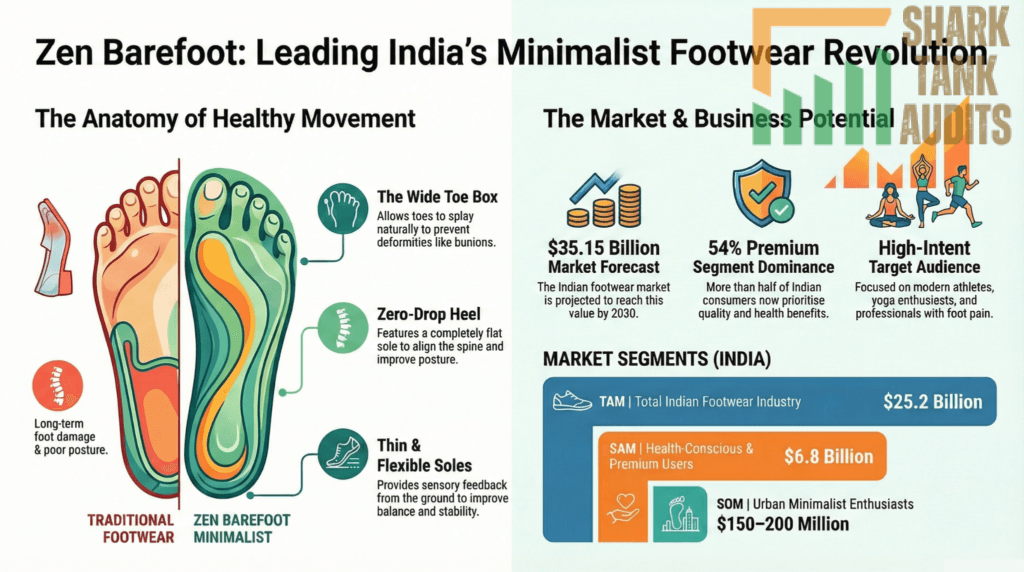
- Wide Toe Box: Allows the toes to splay naturally, preventing deformities like bunions.
- Zero-Drop Heel: A flat sole that aligns the spine and improves natural posture.
- Thin & Flexible Soles: Provides a lightweight experience that allows for better balance and sensory feedback from the ground.
Zen Barefoot Investor Reactions
The Sharks expressed several concerns regarding the business model and market positioning:
- Target Market Confusion: Shark Vineeta Singh questioned the brand’s lack of a sharp focus, noting that it wasn’t clear if the product was intended for elite athletes or general office-goers.
- General Skepticism: Shark Varun Alagh remained unconvinced by the pitch and expressed significant reservations about the brand’s current direction.
Zen Barefoot Customer Engagement Philosophy
- Zen Barefoot views its customers as part of a movement rather than just consumers.
- The philosophy is rooted in education—teaching people about the benefits of natural movement.
- Interestingly, while the Sharks were skeptical, customer sentiment remains strong.
- Users have reported significant relief from foot pain and have praised the shoes for specialized gym use, such as providing stability during heavy deadlifts.
Zen Barefoot Future Vision
- The mission of Zen Barefoot is to make the barefoot lifestyle mainstream in India.
- The brand aims to continue creating accessible footwear solutions that support freedom and comfort, eventually dismantling the “old norms” of the traditional footwear industry to ensure long-term foot health for the general population.
Zen Barefoot Deal Finalized or Not
- No Deal.
- Despite a passionate presentation and a clear mission, Zen Barefoot ended its Shark Tank journey without securing an investment from the Sharks.
| Item | Details |
|---|---|
| Website | Zen Barefoot |
| Platform | Built on Shopify |
| SEO Performance | Average SEO performance, improvement needed |
| Organic Traffic | 5,798 visitors per month |
| Founder | Sahib Aggarwal |
| Founder Background | Entrepreneur driven by personal need for quality barefoot shoes |
| Founder Journey | Faced skepticism, partnered with importer Gambol for early sales |
| Business Structure | Sole proprietorship |
| Family Support | Parents actively supported business and appeared on Shark Tank |
| Brand Category | Minimalist and barefoot footwear |
| Brand Philosophy | Footwear should allow natural foot movement |
| Core Belief | Feet should move as nature intended |
| Industry Approach | Challenges padded soles and narrow shoe designs |
| Health Focus | Promotes grounding, posture correction, and foot health |
| Shark Tank Pitch Focus | Highlighted health risks of traditional footwear |
| Product Demonstration | Showed barefoot-like walking experience with protection |
| Investment Ask | ₹1 crore for 5% equity |
| Funding Objective | Scale barefoot footwear movement in India |
| Product Range | Barefoot shoes, sandals, minimalist daily wear |
| Usage Type | Casual wear, urban use, outdoor activities |
| Core Design Feature | Maximum foot freedom |
| Design Pillar 1 | Wide toe box for natural toe splay |
| Design Pillar 2 | Zero-drop heel for spinal alignment |
| Design Pillar 3 | Thin and flexible soles for ground feedback |
| Target Market Concern | Lack of clarity between athletes and office-goers |
| Vineeta Singh’s Feedback | Questioned unclear customer focus |
| Varun Alagh’s View | Expressed skepticism about business direction |
| Shark Sentiment | Mixed, cautious, and unconvinced |
| Customer Philosophy | Customers are part of a movement |
| Engagement Strategy | Education-driven awareness of natural movement |
| Customer Feedback | Relief from foot pain reported |
| Gym Usage Feedback | Preferred for stability during heavy deadlifts |
| Brand Mission | Make barefoot lifestyle mainstream in India |
| Long-Term Vision | Redefine footwear norms for foot health |
| Industry Goal | Dismantle outdated footwear standards |
| Deal Status | No deal |
| Shark Tank Outcome | Pitch ended without investment |
| Indian Footwear Market Size | $35.15 billion projected by 2030 |
| Market Growth Rate | 5.7% to 8.45% CAGR |
| Consumer Trend | Shift toward orthopedic and athleisure footwear |
| Global Barefoot Market | Expected to reach $2.8 billion by 2032 |
| Premium Market Share | Over 54% of Indian footwear market |
| Total Addressable Market | $25.2 billion Indian footwear industry |
| Serviceable Market | $6.8 billion premium health-conscious segment |
| Obtainable Market | $150–200 million urban barefoot niche |
| Primary Audience | Athletes aged 18–35 |
| Secondary Audience | Health-conscious professionals aged 28–50 |
| Wellness Segment | Yoga and grounding practitioners |
| Income Profile | Household income above ₹15 lakhs per annum |
| Content Strategy | Education-first approach |
| Key Content Theme | Why cushioning harms foot health |
| Influencer Focus | Strength coaches and yoga instructors |
| Paid Marketing | High-intent Google search ads |
| SEO Strategy | Focus on foot health and wide toe box education |
| Core Sales Channel | D2C Shopify website |
| Marketplace Expansion | Amazon Launchpad and Myntra |
| Offline Strategy | Gym and CrossFit trial pop-ups |
| B2B Strategy | Partnerships with physiotherapy clinics |
| Competitive Advantage | First-mover in barefoot footwear in India |
| Key Differentiator | Wide toe box and zero-drop design |
| Market Challenges | Thin sole skepticism and price sensitivity |
| Usage Barrier | Muscle adaptation period for new users |
| Core Success Driver | Rising foot health and lifestyle issues |
| Customer Mitigation | 15-day transition guide |
| Growth Phase 1 | SEO optimization to 20,000+ monthly visitors |
| Growth Phase 2 | Launch kids and office barefoot footwear |
| Growth Phase 3 | Convert to Pvt Ltd and scale valuation |
| Valuation Goal | ₹100 crore+ by 2028 |
Zen Barefoot Shark Tank India Business Plan
Zen Barefoot: Business Potential in India
- Rapidly Expanding Market: The Indian footwear market is projected to reach $35.15 billion by 2030, growing at a CAGR of 5.7% to 8.45%.
- The Comfort Pivot: Post-pandemic, there is a massive shift toward “orthopedic” and “athleisure” footwear. Zen Barefoot sits at the intersection of health-tech and fashion.
- Global Barefoot Trend: The global barefoot shoe market is expected to hit $2.8 billion by 2032. India, as the world’s second-largest footwear producer, is a high-potential market for this niche.
- Premiumization: Over 54% of the Indian market is now dominated by the premium segment, indicating that consumers are willing to pay for quality and health benefits—a key advantage for Zen Barefoot.
Zen Barefoot: Total Addressable Market (TAM)
- TAM (Total Addressable Market): The entire Indian footwear industry, valued at approximately $25.2 billion (₹2.1 Lakh Crore) in 2024.
- SAM (Serviceable Addressable Market): The health-conscious, premium footwear segment, including “Athletic” and “Active Casual” users, valued at approximately $6.8 billion.
- SOM (Serviceable Obtainable Market): Urban “Barefoot” and “Minimalist” enthusiasts in Tier 1 cities, estimated at $150–200 million over the next 5 years.
Zen Barefoot: Ideal Target Audience & Demographics
- The Modern Athlete: Ages 18–35; CrossFitters, deadlifters, and runners looking for “proprioception” (ground feel) and stability.
- Health-Conscious Professionals: Ages 28–50; suffering from foot issues like bunions or back pain caused by traditional “raised-heel” office shoes.
- Yoga & Wellness Enthusiasts: Individuals practicing “grounding” and seeking a natural lifestyle.
- Demographics: Located in North & West India (biggest markets); Household income >₹15 Lakhs p.a.
Zen Barefoot: Marketing & Digital Strategy
- The “Education-First” Content Strategy: Since barefoot shoes are counter-intuitive to people used to “cushioning,” Zen Barefoot must create “Why Cushioning Kills” video series featuring podiatrists.
- Influencer Vertical: Partner with Strength Coaches (for gym stability) and Yoga Influencers (for grounding) rather than generic lifestyle models.
- Performance Marketing: High-intent Google Search ads targeting keywords like “bunion relief shoes,” “deadlift shoes,” and “minimalist sneakers India.”
- SEO Overhaul: Pivot the Zen Barefoot Shopify blog to rank for “Foot health in India” and “Benefits of Wide Toe Box” to capture organic traffic.
Zen Barefoot: Distribution Strategy
- D2C Core: Leverage the existing Shopify store for high-margin sales and data ownership.
- E-commerce Marketplaces: Launch on Amazon (Launchpad) and Myntra specifically under the “Premium Wellness” category.
- Physical Experience Zones: Partner with high-end gyms and CrossFit boxes for “Trial & Feel” pop-ups, as barefoot shoes require a physical trial to understand the comfort.
- B2B Partnerships: Collaborate with physiotherapy clinics as a “prescribed” footwear solution for posture correction.
Zen Barefoot: Advantages & Challenges
- Advantages: First-mover advantage in India; unique “Wide Toe Box” and “Zero-Drop” positioning; emotional founder story from Shark Tank India.
- Challenges: High skepticism regarding “thin soles”; price sensitivity compared to mass-market brands; the “break-in” period where muscles might ache during transition.
Zen Barefoot: Success Factors & Mitigation
- Reason for Success: Growing lifestyle diseases (flat feet, bunions) make Zen Barefoot a solution, not just a product.
- Mitigation Strategy: Offer a “15-Day Transition Guide” with every purchase to manage customer expectations during the initial muscle-adjustment phase.
Zen Barefoot: Roadmap to Increase Valuation
- Phase 1 (Growth): Optimize SEO and achieve 20,000+ organic visitors/month.
- Phase 2 (Product Expansion): Launch Zen Barefoot Kids (huge potential as children’s feet are still developing) and Barefoot Office Wear.
- Phase 3 (Scale): Move from a sole proprietorship to a Pvt Ltd structure to attract VC funding and hit a ₹100 Cr+ valuation by 2028.
Zen Barefoot Shark Tank India Episode Review