
XStep by Vivatronix Shark Tank India Episode Review
XStep by Vivatonix appeared on Shark Tank India Season 5, Episode 8, with founder Dr. Parag Gad (PhD UCLA, 17 years research, 85 publications) seeking ₹1 Crore for 1% equity (₹100 Crore valuation) and closed a deal for ₹1 Crore for 10% equity (subject to due diligence) with Sharks Namita Thapar, Vineeta Singh, and Kunal Bahl. XStep is a non-invasive wearable device using electrical signals to reactivate spinal cord neural connections for cerebral palsy, spinal cord injuries, strokes, and Parkinson’s patients, achieving 92% success rate.
XStep by Vivatonix Website Information
- Website:- XStep by Vivatronix
- Build on WordPress
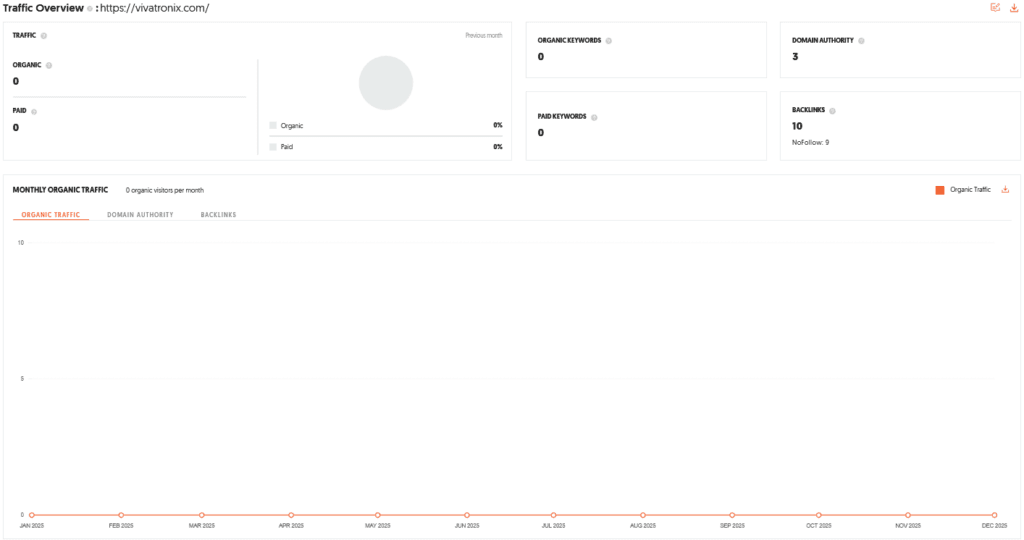
- Poor SEO Performance, SEO Improvement Needed.
- ORGANIC TRAFFIC: 0 visitor per month.
XStep by Vivatonix Founder
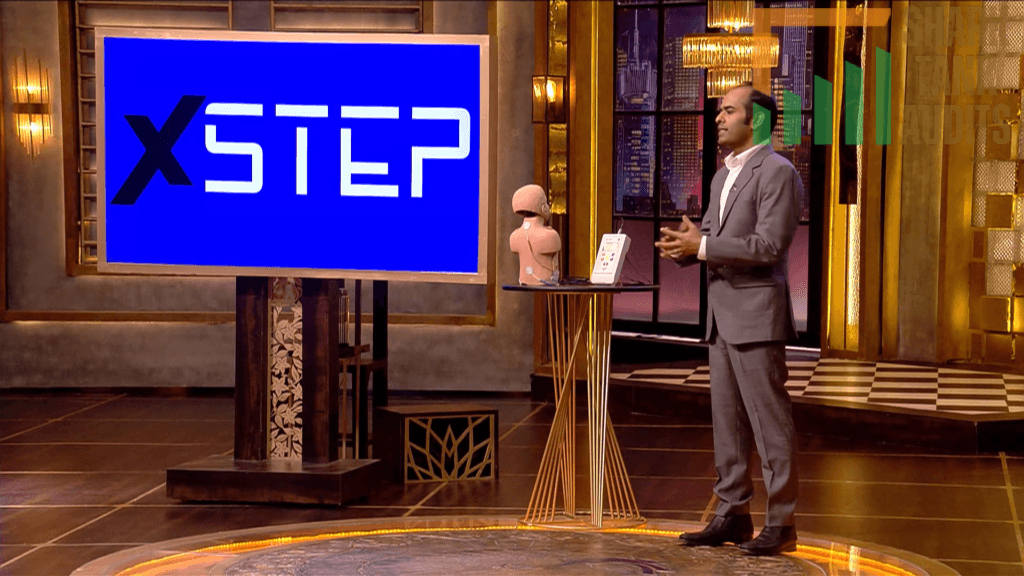
- Dr. Parag Gad is the Founder and CEO of XStep by Vivatonix.
- He holds a PhD in Neuromodulation from the University of California, Los Angeles (UCLA).
- A seasoned researcher with 17 years of experience in the field, Dr. Gad has authored 85 peer-reviewed publications and is also the Co-Founder of SpineX Inc. in the United States.
- He relocated to India in 2023 to bring this transformative technology to the Indian market.
XStep by Vivatonix Brand Overview
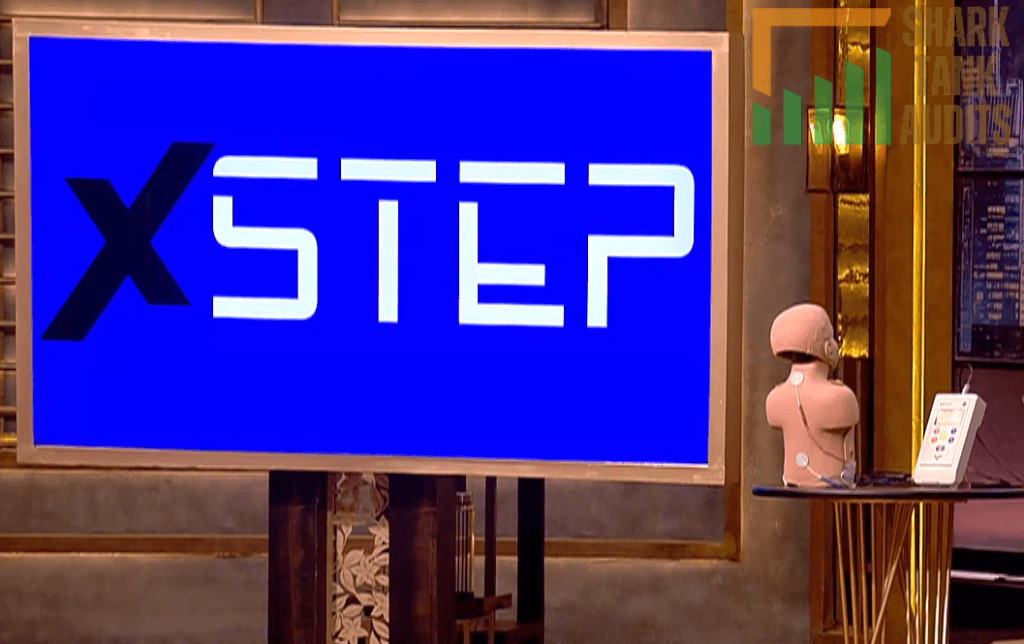
- XStep is a medical technology brand under Vivatonix that specializes in non-invasive neuromodulation.
- The company focuses on treating neurological conditions such as cerebral palsy, spinal cord injuries, strokes, and Parkinson’s disease.
- Having received CDSCO (India) approval and FDA Breakthrough Device designation, the brand stands at the forefront of global biomedical innovation, offering the world’s first non-invasive solution for spinal cord reactivation.
XStep by Vivatonix Shark Tank India Appearance & Ask
- Dr. Parag appeared on Shark Tank India seeking ₹1 crore for 1% equity at a valuation of ₹100 crores.
- He presented a compelling case by highlighting the struggles of 25 lakh children in India suffering from cerebral palsy and demonstrated how his technology could bridge the gap between neurological impairment and physical mobility.
XStep by Vivatonix Season and Episode Air Date
- Season: 05
- Episode: 08
- Episode Air Date: Wednesday, 14 January 2026
XStep by Vivatonix Product Overview
- The XStep is a wearable, non-invasive device designed to be placed on the upper and lower back.
- Unlike traditional physiotherapy that targets muscles, XStep sends electrical signals directly to the spinal cord.
- This reactivates the neural connection between the brain and the limbs, allowing the spinal cord to act as a “control system” rather than just a pathway.
- The device is easy to operate, booting in five seconds and confirming correct electrode placement automatically.
XStep by Vivatonix Investor Reactions
The Sharks were deeply impressed by the scientific rigor and the “magical” results shown in before-and-after clinical videos.
- Vineeta Singh experienced the device firsthand during a demo, noting that her muscles moved involuntarily under the device’s control.
- Kunal Bahl described the results as “magical” and expressed a strong desire to support the mission.
- Namita Thapar lauded the technology for addressing a massive “unmet need” in the healthcare sector.
- Viraj Bahl was so moved by the cause that he pledged, via the Veeba Foundation, to purchase 20 devices for underserved patients.
XStep by Vivatonix Customer Engagement Philosophy
- The brand is driven by a mission of accessibility and long-term efficacy.
- Rather than creating a dependency on the device, XStep leverages neuroplasticity, meaning the benefits of the therapy persist even after the device is turned off.
- The philosophy centers on reducing the burden of invasive treatments (like Botox) and providing a therapy schedule (1 hour sessions, 2–4 times a week) that integrates easily into a patient’s life.
XStep by Vivatonix Product Highlights
- High Efficacy: A 92% success rate across 60 treated patients, ranging from age 2 to 60.
- Global Recognition: Published in Nature Communications (2022) and recognized with FDA Breakthrough status.
- Versatility: Proven effective for cerebral palsy, stroke recovery, and spinal cord injuries; anecdotal evidence also suggests improvements in speech and seizure reduction.
- Intellectual Property: Supported by 22 filed patents, with three already granted.
- Regulatory Compliance: Fully licensed by Indian regulatory authorities (CDSCO).
XStep by Vivatonix Future Vision
- Dr. Parag aims to democratize advanced healthcare in India.
- While the current price is ₹3 lakhs per unit, the vision is to scale production and reduce the manufacturing cost from ₹46,000 to approximately ₹20,000.
- Within two years, the goal is to retail the device at ₹1 lakh, making the therapy affordable at an effective cost of roughly ₹30,000 per year for patients.
- Internationally, the brand continues to support clinical trials and humanitarian efforts, including assisting injured soldiers from the Ukraine war.
XStep by Vivatonix Deal Finalized or Not
- Yes, a deal was finalized.
- After a round of negotiations regarding the valuation and the scale of the impact, Dr. Parag accepted a combined offer from Namita Thapar, Vineeta Singh, and Kunal Bahl.
- The final deal was ₹1 crore for 10% equity, contingent upon successful due diligence.
| Item | Details |
|---|---|
| Website Name | XStep by Vivatronix |
| Website Platform | Built on WordPress |
| SEO Status | Poor SEO performance, improvement needed |
| Organic Traffic | 0 visitors per month |
| Founder Name | Dr. Parag Gad |
| Founder Role | Founder and CEO |
| Founder Qualification | PhD in Neuromodulation |
| University | University of California, Los Angeles (UCLA) |
| Research Experience | 17 years |
| Publications | 85 peer-reviewed papers |
| US Startup | Co-Founder of SpineX Inc. |
| India Relocation | Shifted to India in 2023 |
| Brand Parent Company | Vivatronix |
| Brand Category | Medical technology / Neuromodulation |
| Core Technology | Non-invasive spinal cord neuromodulation |
| Medical Conditions Treated | Cerebral palsy, spinal cord injury, stroke, Parkinson’s |
| Regulatory Approval (India) | CDSCO approved |
| Global Recognition | FDA Breakthrough Device designation |
| Industry Position | World’s first non-invasive spinal cord reactivation solution |
| Shark Tank Ask | ₹1 crore for 1% equity |
| Initial Valuation | ₹100 crores |
| Social Impact Focus | 25 lakh cerebral palsy children in India |
| Season | Shark Tank India Season 05 |
| Episode Number | Episode 08 |
| Episode Air Date | Wednesday, 14 January 2026 |
| Product Name | XStep |
| Product Type | Wearable neuromodulation device |
| Device Placement | Upper and lower back |
| Therapy Mechanism | Electrical stimulation of spinal cord |
| Functional Advantage | Reactivates brain–limb neural connection |
| Physiotherapy Difference | Targets nerves, not muscles |
| Boot Time | 5 seconds |
| Ease of Use | Automatic electrode placement confirmation |
| Investor Reaction (Overall) | Highly impressed |
| Vineeta Singh Experience | Muscle movement during live demo |
| Kunal Bahl Comment | Described results as “magical” |
| Namita Thapar View | Solves a massive unmet healthcare need |
| Viraj Bahl Contribution | Donated 20 devices via Veeba Foundation |
| Brand Philosophy | Accessibility and long-term recovery |
| Neuroplasticity Benefit | Effects continue even after device is off |
| Invasive Treatment Alternative | Reduces need for Botox and surgery |
| Therapy Schedule | 1 hour sessions, 2–4 times per week |
| Clinical Success Rate | 92% |
| Total Patients Treated | 60 patients |
| Age Range Treated | 2 to 60 years |
| Scientific Publication | Nature Communications (2022) |
| Patent Portfolio | 22 patents filed |
| Granted Patents | 3 granted |
| Regulatory Compliance | Fully licensed in India |
| Current Device Price | ₹3 lakhs |
| Current Manufacturing Cost | ₹46,000 |
| Target Manufacturing Cost | ₹20,000 |
| Future Retail Price Goal | ₹1 lakh |
| Annual Therapy Cost Goal | ~₹30,000 per year |
| International Efforts | Support for Ukraine war-injured soldiers |
| Deal Status | Deal finalized |
| Final Investors | Namita Thapar, Vineeta Singh, Kunal Bahl |
| Final Deal Amount | ₹1 crore |
| Final Equity | 10% |
| Final Valuation | ₹10 crores (post-deal) |
| Cerebral Palsy Patients (India) | 2.5 million |
| Spinal Cord Injury Patients | 1.5 million |
| New SCI Cases per Year | ~20,000 |
| Botox Cost Comparison | ₹15,000–₹18,000 per vial |
| Surgical Cost Comparison | ₹20+ lakhs |
| Government Policy Support | Rights of Persons with Disabilities Act |
| Rehab Infrastructure | 35+ DDRCs |
| Neurorehab Market Size (India) | $1.9 billion by 2030 |
| Market CAGR | 8.85% |
| Global CP Market Size | $3.43 billion |
| Primary TAM Segment | Cerebral palsy patients |
| Secondary TAM Segment | Spinal cord injury patients |
| Tertiary TAM Segment | Stroke survivors |
| Pediatric Target Group | Children aged 2–12 |
| Young Adult Segment | SCI patients aged 16–30 |
| Geriatric Segment | Stroke & Parkinson’s patients |
| B2B Customers | Physiotherapists and rehab clinics |
| SEO Objective | Move from 0 organic traffic |
| Target Keywords | Cerebral palsy treatment India |
| Content Strategy | Science-based education videos |
| Storytelling Focus | Before vs After recovery cases |
| Performance Marketing | Caregiver & special-needs parent groups |
| Professional Outreach | Neurologists & orthopedic surgeons |
| DTC Distribution | Website sales with virtual fitting |
| Hospital Partnerships | Apollo, Fortis, Max |
| Government Channel | Disability department tenders |
| Core Advantage | Deep scientific moat |
| Regulatory Advantage | CDSCO + FDA breakthrough |
| Safety Advantage | Non-invasive, zero surgery risk |
| Major Challenge | High initial device cost |
| Awareness Challenge | Neuromodulation education |
| Scalability Risk | Manufacturing scale-up |
| EMI Strategy | Installment-based affordability |
| NGO Support | Foundation-backed device access |
| Manufacturing Strategy | Component localization |
| Year 1 Focus | Cerebral palsy market |
| Year 1 Sales Target | 500+ units |
| Year 2 Expansion | Stroke & Parkinson’s |
| Revenue Model Shift | Rental & subscription |
| Year 3 Strategy | Global expansion |
| Long-Term Valuation Driver | Platform & recovery data model |
XStep by Vivatronix Shark Tank India Business Plan
1. Business Potential in India: XStep by Vivatonix
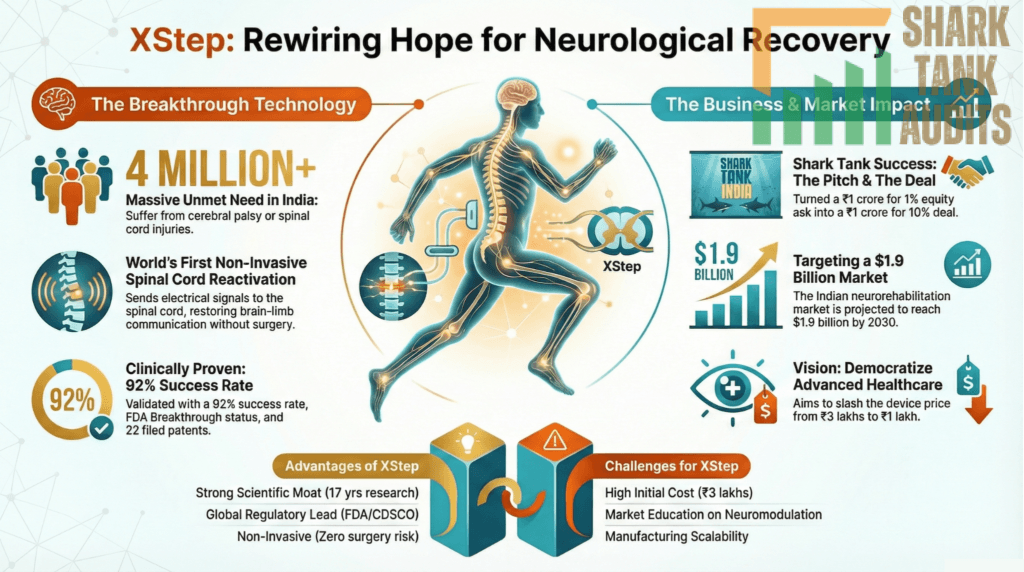
- Massive Unmet Need: India has approximately 2.5 million children living with cerebral palsy and an estimated 1.5 million people living with spinal cord injuries.
- High Incidence Rates: Around 20,000 new spinal cord injury cases occur annually in India, primarily due to road accidents and falls.
- Cost-Benefit Advantage: Current treatments like Botox (₹15,000–₹18,000 per vial) or Selective Dorsal Rhizotomy (₹20+ lakhs) are recurring or highly invasive. XStep by Vivatonix offers a non-invasive, one-time purchase solution that reduces long-term medical expenditure.
- Government Alignment: Initiatives like the Rights of Persons with Disabilities Act (2016) and the establishment of 35+ new District Disability Rehabilitation Centers (DDRC) create a favorable environment for assistive technology.
2. Total Addressable Market (TAM): XStep by Vivatonix
- Neurological Rehabilitation Market: The Indian neurorehabilitation market is projected to reach $1.9 billion by 2030, growing at a CAGR of 8.85%.
- Cerebral Palsy Segment: Globally valued at $3.43 billion (2024), with the Asia-Pacific region (led by India) identified as the fastest-growing market.
- Specific TAM Components for XStep by Vivatonix:
- Primary Segment: 2.5 million Cerebral Palsy patients.
- Secondary Segment: 1.5 million Spinal Cord Injury (SCI) patients.
- Tertiary Segment: 1.5 million annual stroke survivors requiring motor skill rehabilitation.
3. Ideal Target Audience & Demographics: XStep by Vivatonix
- Pediatric Patients: Children aged 2–12 with cerebral palsy (decision-makers: parents/caregivers).
- Young Adults: Individuals (primarily males aged 16–30) recovering from traumatic spinal cord injuries (road accidents).
- Geriatric Population: Stroke survivors and Parkinson’s patients seeking to regain independence.
- B2B Partners: 12,000+ registered physiotherapists, private rehabilitation clinics, and government disability centers (DDRCs).
4. Marketing & Digital Strategy: XStep by Vivatonix
- SEO & Website Revamp: Transition from 0 organic visitors by optimizing for high-intent keywords like “Cerebral Palsy treatment India” and “non-invasive paralysis therapy.”
- Content Strategy:
- Educational Video Series: “Science Behind the Magic”—explaining neuromodulation and neuroplasticity in simple terms.
- Patient Success Stories: High-quality “Before vs. After” documentaries (similar to the Shark Tank demo).
- Digital Marketing:
- Performance Marketing: Targeted ads on Facebook/Instagram groups for “Special Needs Parents” and “Caregiver Support.”
- LinkedIn Professional Outreach: Targeting neurologists and orthopedic surgeons for clinical referrals.
5. Distribution Strategy: XStep by Vivatonix
- Direct-to-Consumer (DTC): Selling via the XStep by Vivatonix website with virtual consultation and home-fitting support.
- Hospital & Clinic Partnerships: Placing demo units in Tier-1 city rehabilitation centers (Apollo, Fortis, Max) to serve as “XStep Centers of Excellence.”
- Government Tenders: Partnering with the Department of Empowerment of Persons with Disabilities (DEPwD) to supply devices to government-run rehab centers.
6. Advantages & Challenges: XStep by Vivatonix
| Advantages of XStep by Vivatonix | Challenges for XStep by Vivatonix |
| Scientific Moat: 17 years of PhD research and 85 publications. | High Initial Cost: ₹3 lakhs is steep for the average Indian household. |
| Regulatory Lead: CDSCO and FDA Breakthrough status provide a global edge. | Market Education: Neuromodulation is a new concept for many local therapists. |
| Non-Invasive: Zero surgery risks compared to traditional implants. | Scalability: Transitioning from 6 units to thousands requires robust manufacturing. |
7. Success Factors & Mitigation: XStep by Vivatonix
- Success Reason (Clinical Proof): The 92% efficacy rate and high neuroplasticity benefits ensure high word-of-mouth growth.
- Success Reason (Shark Ecosystem): Support from Namita (Pharma), Vineeta (D2C/Brand), and Kunal (Tech/Scaling) provides a 360-degree growth engine.
- Mitigation Strategy (Affordability): Implement EMI schemes and partnerships with NGOs (like the Veeba Foundation pledge) to lower the entry barrier.
- Mitigation Strategy (Manufacturing): Localization of components to drop production costs from ₹46k to ₹20k, enabling the ₹1 lakh retail goal.
8. Future Roadmap to Increase Valuation: XStep by Vivatonix
- Phase 1 (Year 1): Focus on the “Beachhead Market” (Cerebral Palsy). Achieve 500+ unit sales in India. Fix SEO and digital presence.
- Phase 2 (Year 2): Expand into Stroke and Parkinson’s rehabilitation. Launch a “subscription/rental model” for the device to increase recurring revenue.
- Phase 3 (Year 3): Global expansion leveraging FDA Breakthrough status. Re-enter the US/European markets as a premium, clinically-validated Indian innovation.
- Valuation Driver: Transition from a “Hardware Sales” model to a “Platform/Data” model by collecting anonymized recovery data to refine neuromodulation algorithms.







XStep by Vivatronix Shark Tank India Episode Review